Takeaways from Timberwolves’ Summer League

posted in: All news | 0

The Timberwolves’ Summer League season reached its conclusion in the consolation round Saturday in Las Vegas. Minnesota didn’t lose a game in pool play, but missed out on the semifinals thanks to point differential.

But there is plenty for Minnesota to dissect after a couple weeks of Summer League play, with much of the incoming information looking positive. Here are a few things to take away from Minnesota’s time in Las Vegas.

Not too much

Yes, it’s the antithesis of this entire article, which will dive into various aspects of the last two weeks and “what it means” for Minnesota’s future. But it’s more a sense of what it could mean. Because, in reality, it may mean very little.

Terrence Shannon Jr. will be discussed below. And he was dominant during his Summer League run for Minnesota. But he will also turn 25 years old at the end of the month, and dominating this level of competition can mean very little.

For instance, 22-year-old Jaylen Nowell dominated the 2022 Summer League for Minnesota four years ago. Bones Hyland was equally great that summer at the age of 20. Those summers weren’t exactly launch pads to NBA prominence.

It’s better to play well in Las Vegas than the alternative, but also worth noting all results should be consumed with a grain of salt.

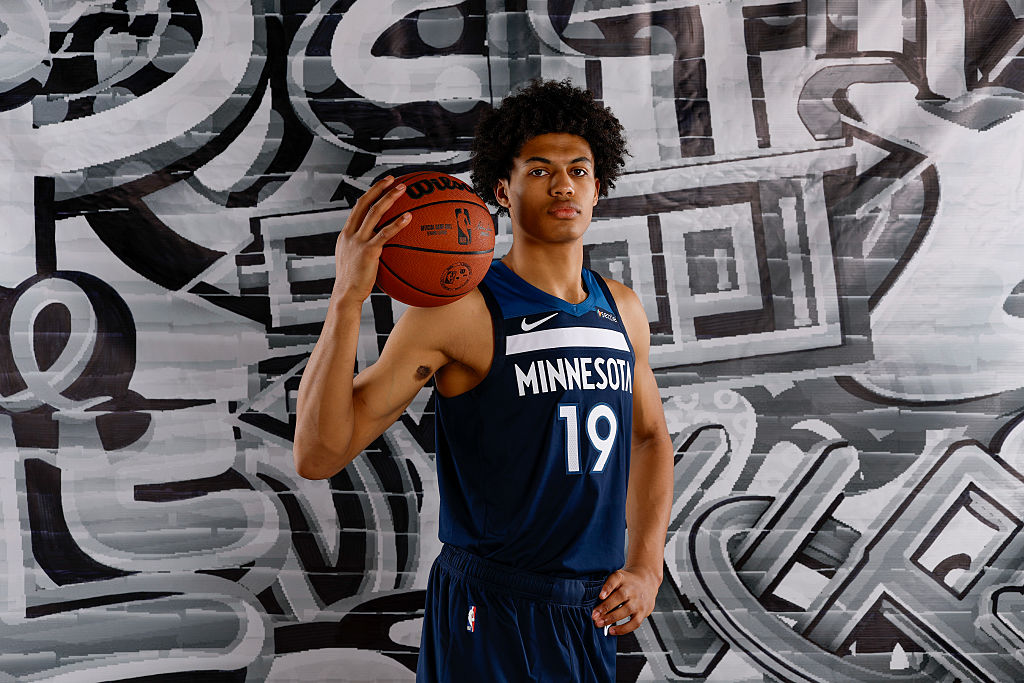
Shannon shines

That said, Shannon was excellent for Minnesota, as expected. He scored with relative ease, was part of Minnesota’s overall harassing defense and just looked bigger, faster and stronger than his competition on a night to night basis. It was a continuation of a rookie campaign in which the wing shined in most of his presented opportunities.

Minnesota tasked Shannon with more playmaking in Las Vegas, and he showed an aptitude to do so at a passable level. He was, occasionally, a little too turnover happy — any thought of him starting alongside Anthony Edwards as the sole two guards in the lineup anytime soon would be ill-advised — but Shannon does seem to be getting to the point where he can use his physical prowess to not only create opportunities for himself, but others.

He figures to open next season with a role in the rotation, and looks ready for it.

Beringer brings it

In a stunning defensive display, Joan Beringer had seven blocked shots in his Summer League debut. The dominance wasn’t quite as prevalent from there, but it’s easy to see the Wolves’ front office’s vision for the 18-year-old center, whom Minnesota selected No. 17 overall in June’s draft.

Beringer is able to cover a lot of ground defensively, effectively covering pick and rolls in multiple schemes. He’s also a dangerous rim runner who opened up the Wolves’ lob game.

Regardless of how much opportunity is available to the Frenchman in next year’s NBA season — and there may be little — the Summer League synopsis of his game had to leave onlookers encouraged about what’s to come.

What is Dillingham’s fit?

Rob Dillingham was excellent in the second half of Minnesota’s victory over Phoenix on Wednesday, as he got ultra aggressive offensively to rally the Wolves to a win. It was the point guard’s best stint of the summer.

What was notable about that was it came in the game in which Shannon didn’t play.

Minnesota was clear about its wishes for Dillingham to be more of a distributing point guard in Las Vegas, but it remains obvious that’s not the best version of Dillingham at the moment. He’s a dynamic scorer, the type of which is usually best suited for a sixth-man role unless you are the elite of the elite. Is that the role Dillingham will eventually assume on the team?

Identity determined

Minnesota’s Summer League team was defensively dominant and played with great energy and purpose. In that way, it mirrored what the NBA club has established.

That the guys who have been sitting on the end of the bench for the last year or two can so closely mimic what they’ve been watching is a testament to the organization’s established identity and the buy-in that’s been created.

Such performances in Las Vegas should only increase Timberwolves coach Chris Finch’s confidence that if and when the time strikes for Minnesota’s “young guys” to be more heavily leaned upon in the NBA rotation, he can pull those levers without fear that Minnesota will lose itself as a team.

Related Articles


Tim Connelly wants continuity for the Timberwolves … probably


The next step for Timberwolves’ title pursuit? More attention to detail


Timberwolves’ depth delivers, execution does not in Game 4 loss to Thunder


Timberwolves ditch zone defenses for their ‘fastball’ — aggressive man to man


With season on the line, do Timberwolves need to go small?

Your Money: What to do with a financial windfall

posted in: All news | 0

Bruce Helmer and Peg Webb

Sudden wealth can arrive in many forms — an inheritance, the sale of a business, a legal settlement, or even a lottery win. Whatever the source, a financial windfall offers a rare opportunity — not just to improve your own financial security, but to create meaningful, lasting change.

But before you do anything, take a breath.

Pause before you spend

The most important first step, and often the most difficult for an investor, is to do nothing fast. Emotions run high after a financial surprise — good or bad — and quick decisions can lead to regrets. We often recommend waiting at least a few weeks and even up to a year before making any major moves. During that time, assemble a team: a financial adviser, tax professional and estate attorney. Together, they’ll help you create a plan that aligns with both your values and long-term needs.

Secure your financial foundation

Once the dust settles, start by reinforcing the basics. Use part of the windfall to pay off high-interest debt — credit cards or personal loans, for example. Then make sure your emergency fund is solid: aim for six to 12 months of living expenses in an accessible account.

Don’t forget insurance. A larger net worth can bring greater liability, so it’s wise to review your home, health, life and umbrella insurance coverage. Peace of mind is one of the best purchases you can make.

Invest for the future

A sudden influx of cash can be the seed of long-term financial independence — if invested wisely. Max out retirement accounts like IRAs, Roth IRAs or 401(k)s. Consider tax-advantaged health savings accounts (HSAs) if you qualify.

Depending on the size of your windfall, you may have the wherewithal to explore more advanced investment strategies. But with added complexity and higher fees, you’ll need to tread carefully.

Rather than investing everything at once, work with your adviser to develop a diversified plan tailored to your goals and time horizon. And be cautious about putting too much into a single stock, property or “hot tip” from a friend.

Give with purpose during your lifetime

Beyond personal gain, a windfall is a powerful opportunity to give back — and to do so thoughtfully. Many people choose to give during their lifetime, allowing them to see the results of their generosity in real time.

Vehicles such as Donor-Advised Funds (DAFs) allow you to set aside money for charitable giving, receive an immediate tax deduction and then distribute the funds over time. You can also donate appreciated assets, such as stocks or real estate, directly to charity, avoiding capital gains tax and increasing the impact from your generosity.

Focus your giving on causes that resonate with you. Whether it’s education, environmental conservation, health care or the arts, targeted philanthropy tends to be more effective — and more personally rewarding.

Evaluate impact, not just emotion

While generosity is noble, it’s even better when it’s strategic. Look for nonprofits with strong track records and measurable outcomes. Ask: What kind of impact is this organization having? How is it tracked? Can my gift be multiplied through matching grants or collaboration?

Leave a meaningful legacy

A windfall also gives you a chance to think long-term. Updating your will and estate plan ensures your assets go where you want. Consider charitable trusts or endowments that continue to support your values after you’re gone.

Most importantly, talk to your loved ones. Share not just your plans, but your purpose. What matters most to you? What do you want your wealth — and your life — to stand for?

Receiving a windfall can feel overwhelming, but it’s also a tremendous privilege. Used wisely, it can provide security, fund dreams and create real lasting good in the world, and security for your family. The key is to move slowly, plan carefully and give intentionally.

In the end, it’s not just about having more. It’s about using more — for good.

Related Articles


Your Money: The pursuit of happiness


Your Money: The biggest mistake people make with money


Your Money: What octogenarians want you to know


Your Money: Your future is counting on you


Trump administration poised to eliminate energy assistance program

The opinions voiced in this material are for general information only and are not intended to provide specific advice or recommendations for any individual.

Bruce Helmer and Peg Webb are financial advisers at Wealth Enhancement Group and co-hosts of “Your Money” on WCCO 830 AM on Sunday mornings. Email Bruce and Peg at yourmoney@wealthenhancement.com. Advisory services offered through Wealth Enhancement Advisory Services LLC, a registered investment adviser and affiliate of Wealth Enhancement Group.


Movie review: ‘I Know What You Did Last Summer’ slashes nostalgia balancing act

posted in: All news | 0

“Nostalgia is overrated,” snarls Julie James (Jennifer Love Hewitt) at a crucial moment in “I Know What You Did Last Summer,” Jennifer Kaytin Robinson’s sequel/remake/legasequel of the 1997 teen horror classic. Poor, traumatized Julie has spent years leaving her past behind, only to be dragged back into it.

The statement also feels like Robinson’s spiciest take on the proliferation of legasequels. Sure, she’s remaking a ‘90s classic, but she’s not going to serve it up reverently. In fact, her twists on the material might anger a whole lot of fans, which is at least a different approach to most of these projects. But, nostalgia is also the necessary evil for tempting those fans to the theater. Can the new “I Know What You Did Last Summer” have it both ways?

Not quite. The inherent tension at the core of this new film is in the battle of old versus new, and ultimately, old wins out. While Robinson and co-writers Leah McKendrick and Sam Lansky update the material, their script is rife with too many underbaked ideas to cohere into anything resonant, revealing that the elegant simplicity of the first film — four teens, one bad mistake, a spooky seaside town, and an urban legend — was the key to its success.

Back in 1997, “I Know What You Did Last Summer” was regarded as the silly younger sibling to the sharper, smarter “Scream.” Both were written by Kevin Williamson, the official bard of witty teen dialogue (e.g., “Dawson’s Creek”). “Summer” wasn’t as savvy and self-aware as the groundbreaking slasher “Scream,” but it was deeply sincere, especially in Hewitt’s wounded bird performance, and a few expertly rendered suspense sequences became instant classics, like the demise of Sarah Michelle Gellar’s beauty queen Helen Shivers.

If you’re unfamiliar with the premise of “I Know What You Did Last Summer,” the story follows a group of young friends who cause an accidental death on the Fourth of July while out driving recklessly. A year later they start receiving anonymous notes from someone claiming to know what they did, and are subsequently stalked and slashed by a killer in a rain slicker wielding a large hook.

In the new version, the characters are older, young professionals in their early 20s, not high school seniors, and so, the terrible accident has to be adjusted in order to match the audience’s credulity. Unfortunately, that means its power is also weakened — what happens doesn’t quite match the level of guilt they feel and the vengeance that’s meted out. All this, for that?

The Julie stand-in is Ava (Chase Sui Wonders) and her beauty queen bestie is Danica (Madelyn Cline). Ava’s high school boyfriend is the utterly dull DC politico Milo (Jonah Hauer-King), and Danica’s rich playboy ex Teddy (Tyriq Withers) is their town’s golden boy, the son of wealthy real estate developer Grant Spencer (Billy Campbell). A fifth friend, Stevie (Sarah Pidgeon) is added to the mix, recently sober and trying to get her life back on track, when it all gets derailed by their rabble-rousing. The accident, the reunion, the guy with a hook, it all proceeds apace with a few extra layers.

The bloody town lore has been covered up by Grant in order to turn Southport into the “Hamptons of the South,” a bit of “gentrifislaytion” as coined by true-crime podcaster Tyler (Gabbriette Bechtel). She’s in town to unearth the facts of the ’97 massacre for an episode, and gets far more than she bargained for. As her friends start dropping, Ava turns to Julie, now a psychology professor, and Ray (Freddie Prinze Jr.) the owner of a dockside bar and Stevie’s boss.

Writers Robinson, Lansky and McKendrick bring up all these fresh ideas (is the killer trying to drive down rent in Southport? What of the true crime podcast boom? What is the significance of Danica’s woo-woo spirituality?) and then just let them hang, loose threads in the wind. All we have to cling to is our original pals, Julie and Ray, whose stories are far more compelling than any of these newbies, whose relationships seem forced and tenuous at best.

Talented cinematographer Elisha Christian references some of the look and feel of the original film, but doesn’t capture the haunted nautical vibe that made it so atmospheric and surprisingly stylish. There’s snap and wit to the friends patter, and Cline and Withers have a palpable chemistry, but everything else feels weightless; it doesn’t land.

Then there’s a twist and reveal that becomes a canonical betrayal completely unsupported by coherent motivation, and the whole gambit falls apart. The new “I Know What You Did Last Summer” might thumb its nose at nostalgia, but the problem is that the nostalgic bits are the only parts of this worth watching.

Related Articles


Discovery ‘Shark Week’ has breaching great whites, looks back at ‘Jaws’ and starts with some dancing


Stephen Colbert’s ‘Late Show’ is canceled by CBS and will end in May 2026


MPR says rescission bill will ‘dismantle the public media system as we know it’


‘Eddington’ review: Joaquin Phoenix and Pedro Pascal, once upon an early COVID time in the West


Hulu series names new person of interest in Jodi Huisentruit case

‘I Know What You Did Last Summer’

2 stars (out of 4)

MPA rating: R (for bloody horror violence, language throughout, some sexual content and brief drug use)

Running time: 1:51

How to watch: In theaters July 18

Working Strategies: Some ideas for college grads who can’t find work

posted in: All news | 0

Amy Lindgren

It’s feeling like a tough job market for new college graduates, whether they’re holding a two-year or four-year degree, is getting tougher. With some employers delaying their hiring and others conducting layoffs, it’s not a great time to have a degree but limited experience in one’s new field.

Most new grads have tried multiple job search strategies, with perhaps varying levels of success. That’s a good start, but the tougher the market, the longer these steps can take to pay off.

If you’ve recently graduated, you still need to do something worthwhile even if job search is going slowly.

With that in mind, here’s a baker’s dozen of productive things to consider for this awkward space between graduation and the start of the career you’re pursuing.

Note that these ideas are intended as companions to an ongoing job search. In most cases, you wouldn’t be shutting down your process so much as streamlining your efforts to make room for something else.

1. Take on a gig job. Driving for Uber or delivering for DoorDash may not feel ultra-productive but it can provide cash flow and the opportunity to meet people.

2. Work for a temporary agency. In years past, temping had been a rite of passage for unemployed new graduates. It’s also a not-uncommon pathway to permanent employment, even when the initial job is unrelated to your career goal.

3. Take lower-level or unrelated jobs. Don’t let pride keep you from a retail or hospitality job (presuming those aren’t in your career path). Work is work, and you’ll benefit from both the income and the schedule.

4. Ask past employers for interim work. Returning to former employers can pay off faster than forging new connections, since they already know you can do the job.

5. Take or create a volunteer job. Here’s where you can better control the content of the work itself, even if you’re sacrificing pay to do it. Consider your career-related skills, then look for nonprofits or startups that could benefit from them.

6. Craft an internship. This is another version of the self-crafted volunteer gig. In this case, you’re asking an employer in your field to take you on for a specific period of time — perhaps 4-8 weeks — where you would simultaneously learn and contribute to their team. It can be a tough sell, but easier if you have contacts.

7. Start a business. Sometimes the quickest path to employment is to hire yourself. Despite the temptation to offer services in your chosen field, remember the goal is to move forward on something quickly. Consider instead tried-and-true options such as lawn care or house cleaning for neighbors and family friends.

8. Take in-person courses to build hands-on skills. Pivoting to training options, consider which hands-on skills you could benefit from learning. Anything from nursing assistant to line cooking to low-voltage wiring or computer repair could become a fallback source of income.

9. Earn an online certificate. Hewing closer to your career path, consider certificates that will matter in your field — perhaps data analytics, project management or employee coaching, for example.

10. Write about issues in your field. If you have ideas or even questions about topics in your career area, putting them together on Substack, LinkedIn or another platform could help you grow your expertise (and possibly make contacts as well).

11. Coach or tutor kids in your community. It may not fit into your career plans, but community involvement will always score points with future employers. It can also be a rich source of contacts, depending on the program.

12. Sign up for an immersive experience. AmeriCorps, Peace Corps, fire service work — these can turn into a job search pause, but sometimes that’s just what you need when the market isn’t cooperating.

13. Earn the next degree. That’s a standby, but it may not be bad advice. Depending on how far you were already intending to go in terms of education or training, adding the next level now can shelter you somewhat during a rocky market. Just don’t do it for the wrong reasons — a tight market doesn’t mean an impossible one. If you’re going to take this leap, it should be part of a larger plan.

Okay, that’s a starter list, but it covers a lot of territory for things new graduates can do while riding out a difficult job market. Come back next week for a closer look at how a stripped-down job search can pair effectively with these “non-career” pursuits.

Related Articles


Working Strategies: Second Sunday Series: Resources to navigate an AI world


Working Strategies: Random thoughts: ‘Office,’ not ‘work;’ on-the-job training


Working Strategies: Adjusting to, and surviving, return-to-work


Working Strategies: Do you have a bucket list for your career?


Working Strategies: Competing offers prove both a good, and bad, dilemma to have

Amy Lindgren owns a career consulting firm in St. Paul. She can be reached at alindgren@prototypecareerservice.com.