Draft grades for Timberwolves’ selection of Joan Beringer

posted in: All news | 0

Minnesota seemingly made a selection for the future with the No. 17 pick in the first round of the NBA Draft on Wednesday when it nabbed French center Joan Beringer.

The 18 year old defensive stopper is relatively inexperienced and still an evolving player, but he’s another key piece to Minnesota’s developing youthful core building on the bench who can learn from fellow Frenchman Rudy Gobert.

What did national analysts think of the selection?

Draft grades varied:

Sporting news: B+

What they said: The future of the frontcourt in Minnesota is in flux, and the franchise took a step toward adding some clarity by adding Beringer, arguably the best shot blocker in this draft class.

Beringer has a 9-3 standing reach and won’t turn 19 until November. It’s hard to think of a better mentor for a young, French shot blocker than Rudy Gobert, meaning Beringer has fallen into a great situation.

CBS Sports: A

What they said: He’s very young. He doesn’t turn 19 until November and has only played for a few years. But he’s just under 7-feet without shoes and has better than a 7-foot-4 wingspan. He’s an extreme athlete with excellent mobility and good hands. His archetype is a rim-running shot blocker and lob threat. That’s very valued in today’s NBA. In Minnesota, Beringer gets to learn under Rudy Gobert — and could potentially take over for him a few years down the road. That’s a great succession plan at the center spot.

NBC Sports: B

What they said: This was the Timberwolves picking the best player they saw on the board rather than thinking fit — Minnesota doesn’t really have a need for another center right now. Beringer is a bit of a project, but he showed potential as a shot-blocking, rim-running big in the Adriatic League last season. He has good athleticism and the Timberwolves can play the long game with him and give him time to develop.

Yahoo Sports: C-

What they said: He’s one of the rawest projects in the entire draft. Makes you wonder what the Wolves’ plan is with the other bigs on the roster, notably Rudy Gobert and Julius Randle. Beringer dunks everything around the basket. He’s a rim protector and has shown improvement in other aspects of his defense. An area he’ll need to improve on is he was a hackable player you didn’t fear sending to the free-throw line. He’s a worker, though, and wants to get better.

USA Today: C

What they said: The issue with Rudy Gobert is that his offensive game can be inconsistent. And Minnesota’s consecutive trips to the Western Conference finals proved that the Timberwolves need more scoring, particularly when teams game plan to take Anthony Edwards out of rhythm. Joan Beringer is only 18, so he’s a project and doesn’t necessarily help Minnesota get over the hump in the short term. He’s explosive and full of potential. Minnesota’s window to win, however, is now, and plenty of plug-and-play prospects were available at 17.

States can cut off Medicaid funding to Planned Parenthood, the Supreme Court rules

posted in: All news | 0

By LINDSAY WHITEHURST

WASHINGTON (AP) — A divided Supreme Court allowed states to cut off Medicaid money to Planned Parenthood in a ruling handed down Thursday amid a wider Republican-backed push to defund the country’s biggest abortion provider.

The case centers on funding for other health care services Planned Parenthood provides in South Carolina, but the ruling could have broader implications for Medicaid patients.

The court split 6-3 in the opinion, with the three liberal justices dissenting.

Public health care money generally can’t be used to pay for abortions. Medicaid patients go to Planned Parenthood for things like contraception, cancer screenings and pregnancy testing, in part because it can be tough to find a doctor who takes the publicly funded insurance, the organization has said.

South Carolina’s Republican governor says no taxpayer money should go the organization. The budget bill backed by President Donald Trump in Congress would also cut Medicaid funding to Planned Parenthood. That could force the closure of about 200 centers, most of them in states where abortion is legal, the organization has said.

Gov. Henry McMaster first moved to cut off Medicaid funding to Planned Parenthood in 2018 but was blocked in court after a lawsuit from a patient named Julie Edwards. Edwards wanted to keep going there for birth control because her diabetes makes pregnancy potentially dangerous, so she sued over a provision in Medicaid law that allows patients to choose their own qualified provider.

Related Articles


Iran’s supreme leader makes first public statement since ceasefire declared in Israel-Iran war


Federal judge orders US Labor Department to keep Job Corps running during lawsuit


Faith leaders and families sue to block Texas’ new Ten Commandments in schools law


Senate struggle over Medicaid cuts threatens progress on Trump’s big bill


A judge resisted Trump’s order on gender identity. The EEOC just fired her

South Carolina, though, argued that patients shouldn’t be able to file those lawsuits. The state pointed to lower courts that have been swayed by similar arguments and allowed states such as Texas to block Medicaid funding from Planned Parenthood.

Public health groups like the American Cancer Society, by contrast, said in court papers that lawsuits are the only real way that Medicaid patients have been able to enforce their right to choose their own doctor. Losing that right would reduce access to health care for people on the program, which is estimated to include one-quarter of everyone in the country. Rural areas could be especially affected, advocates said in court papers.

In South Carolina, $90,000 in Medicaid funding goes to Planned Parenthood every year, a tiny fraction of the state’s total Medicaid spending. The state banned abortion at about six weeks’ gestation after the high court overturned it as a nationwide right in 2022.

Follow the AP’s coverage of the U.S. Supreme Court at https://apnews.com/hub/us-supreme-court.

Key Medicaid provision in Trump’s big tax cut and spending bill is found to violate Senate rules

posted in: All news | 0

By LISA MASCARO, AP Congressional Correspondent

WASHINGTON (AP) — The Senate parliamentarian has advised that a key Medicaid provider tax overhaul that is central to President Donald Trump’s big tax cut and spending bill does not adhere to procedural rules, delivering a crucial blow to Republicans rushing to finish the massive package this week.

The guidance Thursday from the parliamentarian is rarely ignored, and it forces GOP leaders to consider options. Senate leaders could try to revise it or strip it from the package. Otherwise, the provision could be challenged during floor votes, requiring a 60-vote threshold to keep it, a tall order in the narrowly split Senate. Democrats are unified against the Republican president’s bill.

Republican leaders are relying on the provider tax change to save billions of dollars from the Medicaid health care program for the massive tax cuts package. But they had been struggling to rally support because several GOP senators warn it would harm rural hospitals who depend on the funds.

The outcome is a setback as Senate Republicans hoped to launch votes on the package by the end of the week, to meet Trump’s Fourth of July deadline for passage.

Related Articles


Iran’s supreme leader makes first public statement since ceasefire declared in Israel-Iran war


Federal judge orders US Labor Department to keep Job Corps running during lawsuit


Faith leaders and families sue to block Texas’ new Ten Commandments in schools law


Senate struggle over Medicaid cuts threatens progress on Trump’s big bill


A judge resisted Trump’s order on gender identity. The EEOC just fired her

US stocks drift toward their record after erasing almost all their 20% springtime drop

posted in: All news | 0

By STAN CHOE AP Business Writer

NEW YORK (AP) — The U.S. stock market is drifting toward the brink of another record.

Related Articles


Trump gets ‘golden share’ power in US Steel buyout. US agencies will get it under future presidents


Judge dismisses authors’ copyright lawsuit against Meta over AI training


Nestle says it will remove artificial dyes from US foods by 2026


Fannie Mae, Freddie Mac ordered to consider crypto as an asset when buying mortgages


Apple Valley senior living community adding independent living apartments

The S&P 500 was 0.4% higher in early trading and just 0.5% below its all-time high, which was set in February. The Dow Jones Industrial Average was up 207 points, or 0.5%, as of 9:35 a.m. Eastern time, and the Nasdaq composite was 0.4% higher.

McCormick, the seller of cooking spices, helped lead the way and rallied 5.3% after delivering a better-than-expected profit report. The company also gave a forecast for profit over its full fiscal year that topped analysts’ expectations, including planned efforts to offset increased costs caused by President Donald Trump’s tariffs.

Over the longer term, it’s been big technology stocks that have led the market for years and since the S&P 500 fell roughly 20% below its record during the spring on worries about tariffs.

Micron Technology, which sells computer memory and data storage, rose 0.3% after reporting stronger profit and revenue for the latest quarter than analysts expected. CEO Sanjay Mehrotra said it’s seeing growing memory demand driven by artificial intelligence, and the company gave a forecast for profit in the current quarter that topped analysts’ expectations.

Chip company Nvidia, which has been the poster child of the AI frenzy, added 0.5% to bring its gain for the year to 15.3%. It’s the most valuable company in the U.S. stock market.

Wall Street’s worries about Trump’s tariffs have receded since the president shocked the world in April with stiff proposed levies, but they have not disappeared. The wait is still on to see how big the tariffs will ultimately be, how much they will hurt the economy and how much they will push up inflation.

The economy so far seems to be holding up OK, and more reports arrived on Thursday bolstering that. One said that orders for washing machines and other manufactured goods that last at least three years grew by more last month than economists expected. A second said fewer U.S. workers filed for unemployment benefits last week, a signal of fewer layoffs.

A third report said the U.S. economy shrank by more during the first three months of 2025 than earlier estimated. But many economists say those numbers got distorted by how many U.S. companies rushed early this year to buy foreign products ahead of tariffs, and they’re expecting better growth in upcoming months.

Following the reports, Treasury yields swiveled up and down in the bond market, but they ultimately did not move very much.

The yield on the 10-year Treasury fell to 4.26% from 4.29% late Wednesday. The two-year Treasury yield, which more closely tracks expectations for what the Federal Reserve will do, edged down to 3.73% from 3.74%.

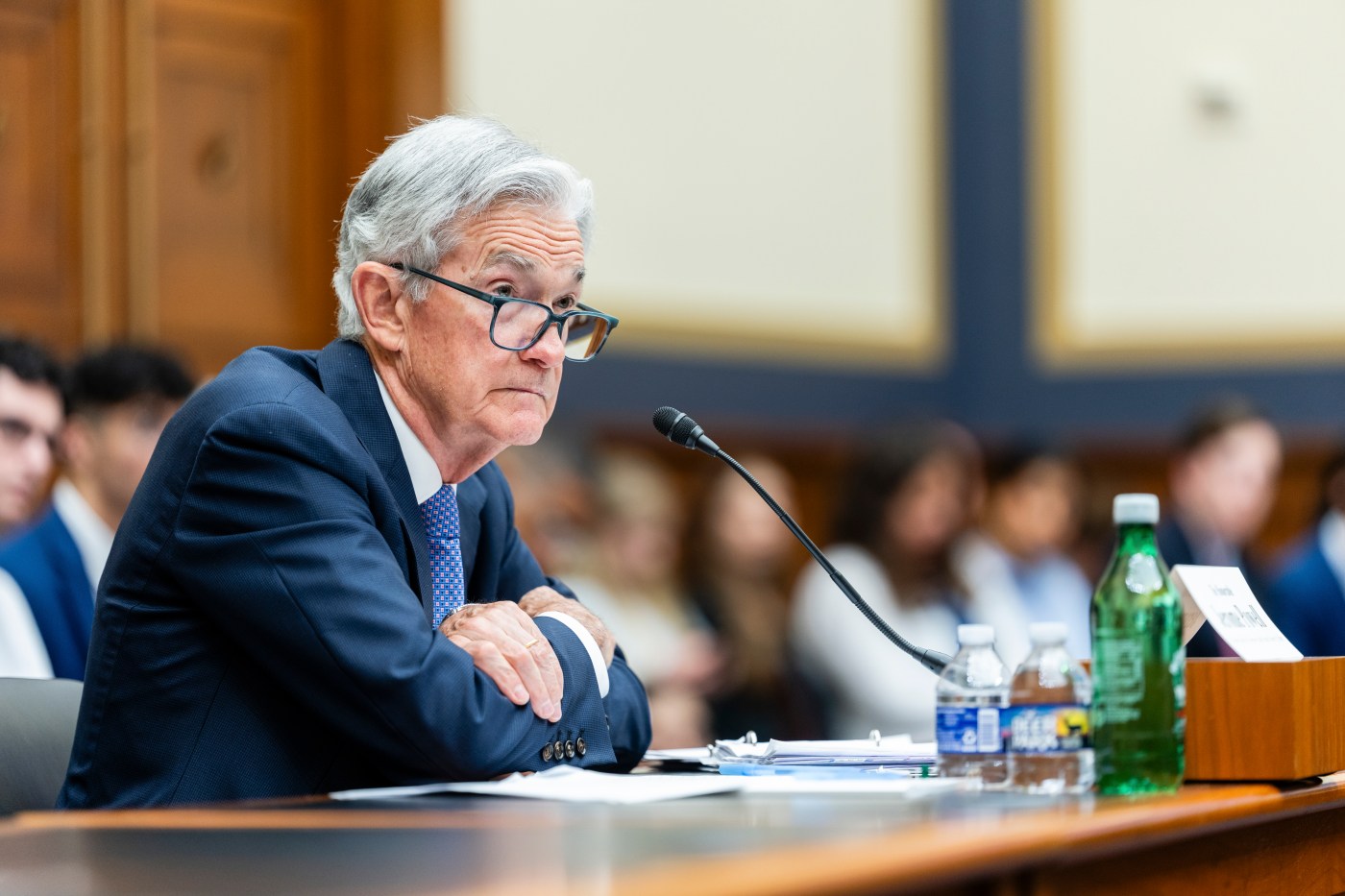
Analysts said yields may be feeling downward pressure because of a report from The Wall Street Journal saying Trump could name his nominee to replace Fed Chair Jerome Powell unusually early, in an attempt to undermine him.

Powell has been repeating recently that the Federal Reserve is waiting to see how tariffs will affect the economy before deciding when to resume cutting interest rates. It has been on pause this year because lower rates can help give inflation more fuel, along with giving the economy a boost.

Trump, though, has been adamant about wanting cuts to rates sooner and has insulted Powell repeatedly. Two of his appointees to the Fed have also said recently that they would consider cutting rates as soon as the Fed’s next meeting in about a month.

“Yields fell, the dollar weakened, and break evens rose, all suggesting that a puppet of the White House in the seat of the Chair could be bad for inflation,” said Brian Jacobsen, chief economist at Annex Wealth Management. But Jacobsen said decisions on interest rates would still rest with a committee of Fed officials, not just the chair, and other officials could possibly keep the new leader “in check if needed.”

In stock markets abroad, indexes were mixed across much of Europe and Asia.

Japan’s Nikkei 225 rose 1.6%, and South Korea’s Kospi fell 0.9% for two of the bigger moves.

In the oil market, which has been the center of much of this week’s action, crude prices made up a bit more ground after plunging by roughly $10 per barrel earlier this week. A barrel of benchmark U.S. crude oil rose 1% to $65.55, though it still remains below where it was when Israel’s war with Iran began.

AP Business Writer Elaine Kurtenbach contributed.