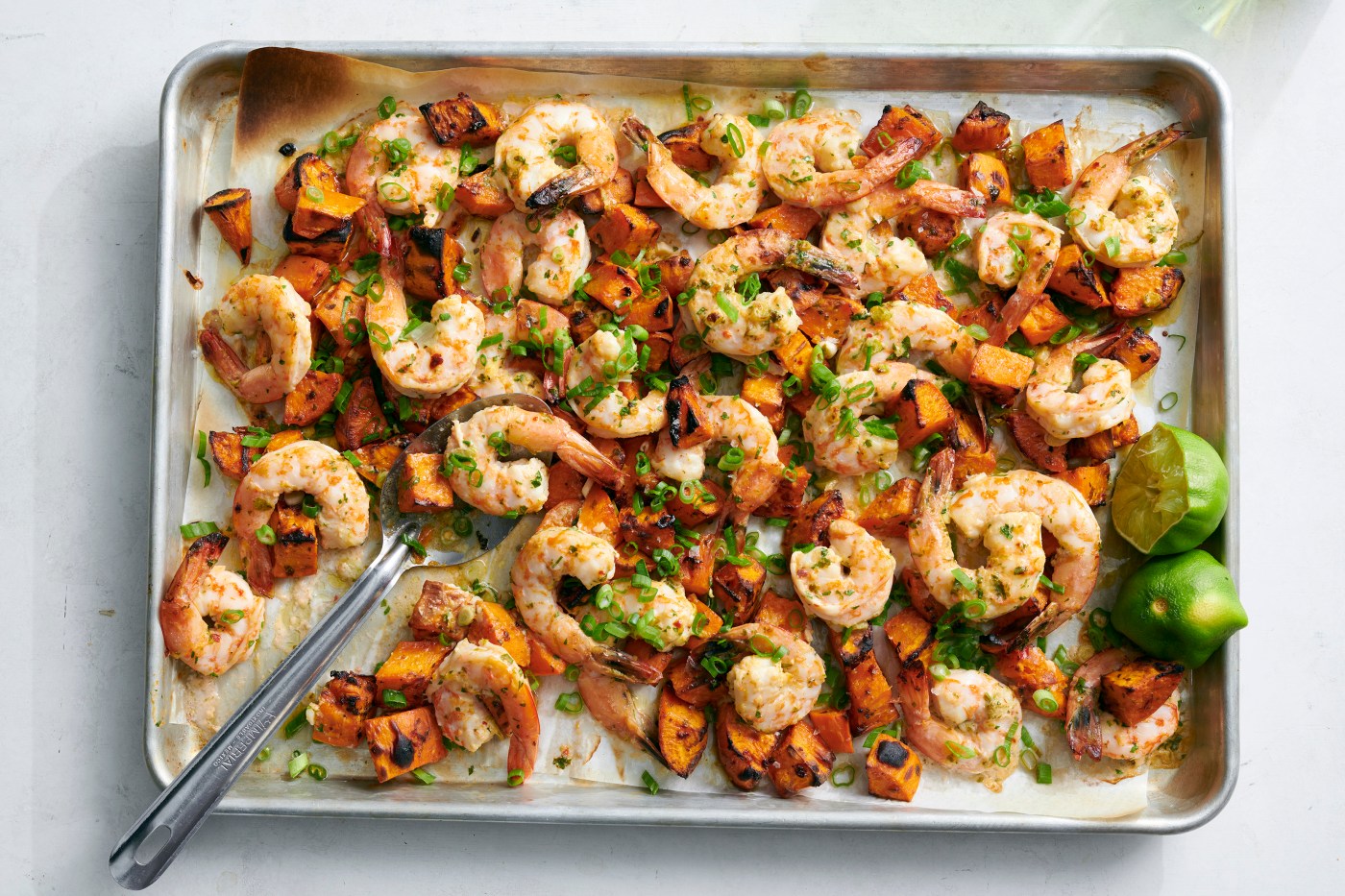
I did a Reddit AMA on Friday, inviting people to ask me anything about the Weeknight 100 and New York Times Cooking, and someone asked me about my meal planning and grocery shopping processes. This, naturally, led me to think about shrimp. (Stay with me here.)
A key element of my planning is choosing meals that don’t generate waste if I don’t get a chance to make them, whatever the reason may be (tiredness, laziness, schedule craziness). I loathe tossing ingredients.
That’s why frozen shrimp is one of my staples. It’s versatile, it can be high quality, it defrosts quickly and it cooks even faster — four traits that make it an especially good anchor for meal planning. If you decide not to make that spiced ginger shrimp with tomatoes tonight after all, you certainly haven’t wasted any shrimp. It’s still there, unbothered, in the freezer. (The tomatoes you can throw into a salad.)
One fast (and even a little fancy) recipe highlighting shrimp is below, along with four other great options for the week.
1. Sheet-Pan Coconut Shrimp and Sweet Potatoes
Cubes of sweet potatoes and plump pink shrimp — both coated in spicy ginger-spiked coconut milk — share a sheet pan in this easy, deeply flavored one-pan meal. The sweet potato is added to the pan first, and roasted until just tender. Then, shrimp is scattered on top, and the whole pan is run under the broiler. The brief, intense heat allows the shrimp to cook through but stay succulent and the coconut milk-bathed sweet potatoes to caramelize at their edges. Scallions, cilantro and lime juice add a jolt of brightness right at the end.
By Melissa Clark
Yield: 4 servings
Total time: 55 minutes
INGREDIENTS
1 cup unsweetened coconut milk, preferably full-fat
1 teaspoon Sriracha, plus more for serving
2 garlic cloves, finely grated
1 (1-inch) piece fresh ginger, finely grated
1 bunch scallions, green and white parts thinly sliced and separated
1/2 teaspoon red-pepper flakes
1 1/4 teaspoons kosher salt (Diamond Crystal, or use 1/2 teaspoon Morton), plus more for sprinkling
1/4 cup chopped cilantro
2 limes
1 1/2 pounds shelled large shrimp
2 pounds sweet potato, cut into 1-inch cubes (peeled or not, as you like)
Extra-virgin olive oil, for drizzling
DIRECTIONS
1. Heat oven to 400 degrees. Line a sheet tray with parchment paper or a nonstick liner.
2. In a medium bowl, whisk together coconut milk, Sriracha, garlic, ginger, sliced scallion whites, red-pepper flakes, salt and cilantro.
3. Finely grate the zest of 1 lime directly into coconut milk mixture, then squeeze in the lime juice (reserve the second lime for later).
4. Put shrimp in another medium bowl. Pour half of the coconut mixture over shrimp and stir to combine. Let marinate in the fridge while the sweet potatoes roast.
5. Meanwhile, add the sweet potato cubes to the bowl with the remaining coconut mixture and toss to combine. Evenly spread potatoes on the prepared sheet tray, pouring all of the liquid from the bowl over them. Drizzle with olive oil and sprinkle with salt. Roast for 30 to 40 minutes, tossing a couple of times while roasting, until the sweet potatoes are tender.
6. Remove pan from oven and heat broiler to high. Spread shrimp evenly on top of the sweet potatoes and pour in any liquid from the bowl. Drizzle shrimp with olive oil and sprinkle with salt. Broil on high for 5 to 7 minutes, or until the shrimp are pink and just beginning to curl, and the sweet potatoes are charred in spots, rotating the pan after 3 minutes.
7. To serve, squeeze the juice of the reserved lime on top and sprinkle with sliced scallion greens. Drizzle with more Sriracha sauce.
2. Pepper Steak
Pepper steak. Food styled by Maggie Ruggiero. (Ryan Liebe/The New York Times)
The Chinese American stir-fry dish, pepper steak, celebrates the oft-maligned green bell pepper in all its savory, vegetal glory. In this version, thin slices of flank or skirt steak, marinated in a flavorful mix of soy sauce, honey and black pepper cook up beautifully tender yet burnished and caramelized at the edges. Be sure to chop all of your vegetables before you start cooking, since time at the stove is hot and fast with this easy recipe.
By Eric Kim
Yield: 4 servings
Total time: 40 minutes, plus marinating time
INGREDIENTS
1 pound beef flank or skirt steak (see Tip below)
1 tablespoon cornstarch
2 1/2 teaspoons freshly ground black pepper, plus more for serving
3 1/2 tablespoons soy sauce, plus more to taste
2 tablespoons neutral oil, plus more for stir-frying
2 medium fresh green bell peppers or Cubanelle peppers, cut into 1-inch pieces
1 medium yellow onion, cut into 1-inch pieces
3 garlic cloves, crushed and thinly sliced
1 (1 1/2-inch) piece ginger, peeled, crushed and thinly sliced
Salt
1/4 cup Shaoxing wine or dry sherry
2 tablespoons honey
Cooked white rice, for serving
DIRECTIONS
1. Marinate the beef: Cut the steak into 2- or 3-inch-wide pieces along the grain, then cut into thin slices against the grain. In a bowl, combine the steak, cornstarch, black pepper, 2 1/2 tablespoons soy sauce and 2 tablespoons oil. Toss to mix, cover and marinate at room temperature for up to 30 minutes (see Tip), or in the refrigerator for up to 12 hours.
2. Stir-fry the beef: Heat a large wok or skillet over medium-high until a splash of water dropped into the pan evaporates quickly. Add enough oil to generously coat the pan, then add the beef in a single layer. Cook without flipping until the meat is browned around the edges, 2 1/2 to 3 minutes, then stir constantly until browned all over, about 30 more seconds. Transfer to a plate.
3. Add the peppers, onion, garlic and ginger to the same wok, still over medium-high heat. Season with salt and pepper. Cook, stirring occasionally, until the vegetables start to soften, 1 to 1 1/2 minutes.
4. Add the meat back to the pan, along with the Shaoxing wine, honey and the remaining 1 tablespoon soy sauce. Cook, stirring constantly and scraping up any stuck-on bits, until the liquid reduces greatly and slicks the vegetables and beef, 30 seconds to 1 minute. Taste and adjust seasoning with salt, pepper or soy sauce as desired. Serve immediately with rice.
Tip: If using a tougher cut like bottom round steak, add 1/4 teaspoon baking soda to tenderize the meat, but don’t let it marinate for longer than 30 minutes or it’ll turn mushy.
3. White Chicken Chili
White chicken chili. So that you’re always ready for sheet-pan coconut shrimp and sweet potatoes, or spiced ginger shrimp with burst tomatoes. Food styled by Simon Andrews. (Christopher Testani/The New York Times)
This easy chili comes together quickly, thanks to rotisserie chicken or leftover roast chicken and an ingredient list that leans heavily on pantry staples. Made with canned chiles and seeded jalapeños, this chili has a mild heat that can be intensified with the addition of ground cayenne, or by leaving the seeds in the jalapeños. While some white chili recipes call for cream cheese or sour cream to thicken the broth, this one achieves a similar texture by mashing some of the white beans. If you prefer a creamy chili, feel free to stir in a large spoonful of sour cream just before serving. Or, include sour cream with a host of toppings — including crushed tortilla chips, shredded cheese, diced avocado and pickled jalapeños — to make this chili a customizable family favorite.
By Lidey Heuck
Yield: 4 to 6 servings
Total time: 50 minutes
INGREDIENTS
2 tablespoons olive oil
1 large yellow onion, chopped
1 large jalapeño pepper, seeds and ribs removed, finely chopped
2 tablespoons minced garlic (about 5 cloves)
1 teaspoon dried oregano
1 teaspoon ground cumin
1/2 teaspoon sweet paprika or chili powder
Pinch of cayenne pepper, to taste
1 teaspoon kosher salt, plus more to taste (such as Diamond Crystal)
Freshly cracked black pepper
4 cups low-sodium chicken broth
2 (15-ounce) cans cannellini beans, rinsed and drained
2 (4-ounce) cans diced green chiles
2 1/2 to 3 cups cooked shredded chicken (from 1 roast chicken or rotisserie chicken)
1 cup fresh or frozen corn kernels
Half a lime, plus lime wedges for serving
Shredded cheddar or Monterey Jack cheese, pickled jalapeño slices, diced avocado, sour cream, chopped fresh cilantro and crushed tortilla chips, for serving (optional)
DIRECTIONS
1. In a large Dutch oven or pot, heat the olive oil over medium heat. Add the onion and jalapeño and cook, stirring often, until the onions are tender, about 6 minutes. Add the garlic, oregano, cumin, paprika, cayenne, salt and a few grinds of black pepper, and cook for 1 minute, until fragrant.
2. Add the chicken broth, cannellini beans and diced green chiles with their liquid; bring to a boil over medium-high heat. Lower the heat and simmer, stirring occasionally, until the broth has reduced by about half, 18 to 20 minutes. Off the heat, use a wooden spoon to mash some of the beans against the side of the pot. Continue mashing the beans until the broth is noticeably thicker.
3. Return the pot to medium, stir in the chicken and corn, and cook until heated through, about 3 minutes. Juice the lime half over the pot, then taste for seasonings and add more salt, black pepper, and cayenne, if desired.
4. Serve the chili in bowls topped as you like with a lime wedge, shredded cheese, pickled jalapeños, diced avocado, sour cream, chopped fresh cilantro, and/or crushed tortilla chips.
4. Zucchini Butter Pasta
A recipe for Zucchini Butter Pasta. Food styled by Spencer Richards. (Christopher Testani/The New York Times)
Make a dent in your glut of summer zucchini with this weeknight-friendly pasta. Grating the zucchini, a technique embraced by Julia Child, allows it to become so tender that it melts into the buttery, cheesy sauce. Cooking the zucchini with vegetable stock over low heat highlights the fruit’s sweetness and prevents it from caramelizing, giving the sauce a creamy rather than charred finish. Once the butter and Parmesan are added, give the mixture a good stir to encourage the zucchini to melt into the liquid. As always with zucchini, its mellow earthy flavor lays dormant until it is seasoned, so be generous with salt, pepper and lemon juice.
By Hetty Lui McKinnon
Yield: 4 to 6 servings
Total time: 40 minutes
INGREDIENTS
1 tablespoon extra-virgin olive oil, plus more for serving
2 pounds zucchini (about 4 medium), coarsely grated
6 garlic cloves, finely chopped
Salt and pepper
1 cup vegetable stock
1/4 cup unsalted butter
1 pound fusilli or other short pasta
1 1/2 cups finely grated Parmesan, plus more for serving
3 tablespoons lemon juice (from 2 lemons)
Big handful of basil leaves, torn
1 cup toasted walnuts, roughly chopped
DIRECTIONS
1. Heat a large 12-inch skillet on medium-high. When hot, drizzle with the olive oil and add the zucchini and garlic. Season generously with salt and pepper and stir to combine.
2. Add the stock, reduce heat to medium and cook, stirring occasionally, until the stock has reduced and the zucchini is very tender but not dry, 15 to 20 minutes. (There should still be a small amount of liquid.) Add the butter and stir until it is melted and zucchini has mostly broken down to form a thick, chunky sauce, about 2 minutes. Taste and season with salt and pepper.
3. Meanwhile, bring a large pot of salted water to the boil. Add the pasta and cook until al dente. Reserve 1 1/2 cups of pasta cooking water, then drain.
4. Add the drained pasta, Parmesan and lemon juice to the zucchini and stir to combine, adding some pasta cooking water to loosen it up. Taste and season again with salt and pepper.
5. To serve, drizzle with olive oil, and top with more grated Parmesan, the basil leaves and walnuts.
5. Masala Chickpeas With Tofu and Blistered Tomatoes
Masala chickpeas with tofu and blistered tomatoes. So that you’re always ready for sheet-pan coconut shrimp and sweet potatoes, or spiced ginger shrimp with burst tomatoes. Food Styled by Monica Pierini. (Linda Xiao/The New York Times)
Like a warm and gentle nudge, masala spice gives onions and chickpeas a distinctively comforting heartiness. Glimmering with droplets of ghee, they become rich in this any-season dish. Tearing the tofu allows for ample crooks and crannies that cradle and accentuate the aromatic goodness of the spice. Cherry tomatoes, slightly and delicately blistered, are welcome as juicy bursts of acidity in every bite. Serve this over rice, or with a gently poached egg, along with a few slices of lime for squeezing.
By Yewande Komolafe
Yield: 2 to 4 servings
Total time: 35 minutes
INGREDIENTS
1 (14-ounce) block firm or extra-firm tofu, drained
3 1/2 tablespoons ghee or vegetable oil
Salt and black pepper
1 large red onion, finely chopped, some saved for garnish
1 (2-inch) piece fresh ginger, finely grated
2 garlic cloves, finely grated
1 teaspoon ground tandoori or garam masala (homemade or store-bought)
1 (15-ounce) can chickpeas, rinsed
1 pint cherry tomatoes
1/4 cup fresh mint or dill leaves, chopped, plus more leaves for garnish
Lime wedges, for serving
DIRECTIONS
1. Slice the tofu in half horizontally and place on a clean kitchen or paper towel to dry.
2. Set a 10-inch skillet over medium heat and add 1 tablespoon ghee. Once the ghee begins to shimmer, season both sides of the tofu with salt and pepper, place in the pan and sear without moving until the tofu is browned, about 4 minutes. Turn the pieces over and brown the other side, 4 to 5 minutes more. Transfer the tofu to a plate.
3. Add 2 tablespoons ghee to the same skillet and heat over medium until shimmering. Add the onion (saving some for garnish) and cook, stirring often, for 4 minutes, or until translucent. Add the ginger, garlic and masala spice and season generously with salt and pepper. Stir for 1 to 2 minutes, or until fragrant.
4. Stir in the chickpeas and cook for 3 minutes, or until the chickpeas begin to sizzle.
5. Turn the heat up to medium-high, add the remaining 1/2 tablespoon ghee, then add the tomatoes and 1 teaspoon salt. Cook without stirring until the tomatoes are just beginning to pop open and the chickpeas are warmed through, 4 to 5 minutes. Stir in the mint.
6. Break the tofu into 1-inch pieces and toss in the skillet to coat with chickpea-tomato mix. Cook for another 2 to 3 minutes, or until warmed through. Remove from heat, taste and adjust seasonings, if necessary. Garnish with remaining chopped raw onions and a few leaves of fresh mint. Serve with lime wedges for squeezing.
Recipe: Cottage cheese pancakes are packed with protein
5 tips for choosing healthy beverages during pumpkin spice season
Community backs Borchert’s Meat Market in Maplewood as it struggles with tax payments
Music and food events abound this weekend in the Twin Cities
3 winning tailgate recipes that won’t overrun your salary cap