Other voices: Buttigieg to Dems: Identity politics aren’t the way

posted in: All news | 0

Former Secretary of Transportation Pete Buttigieg dropped a bombshell on Democrats last week, one lost in the chaotic news cycle following Charlie Kirk’s assassination.

He was responding to a passage in former Vice President Kamala Harris’ book, “107 Days,” in which she said Buttigieg was her first choice for a running mate and “would have been an ideal partner — if I were a straight white man.”

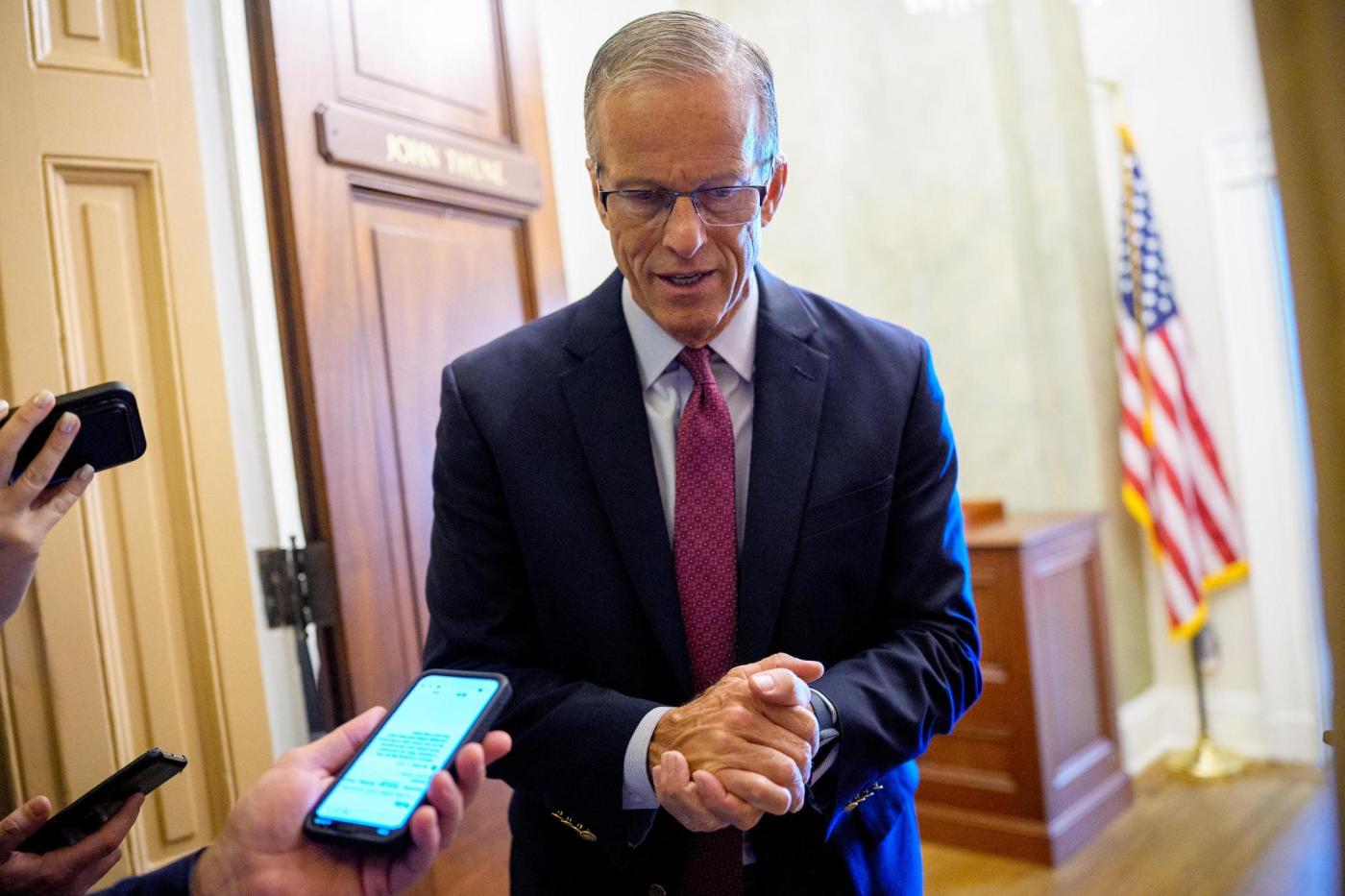
“My experience in politics has been that the way that you earn trust with voters is based mostly on what they think you’re going to do for their lives, not on categories,” Buttigieg said before a ribbon cutting ceremony at the Monroe County Democratic Party headquarters in Indiana, according to Politico.

Conservatives have been decrying identity politics for years, and liberals have been just as vigorously espousing them as key to winning races.

Buttigieg cited former President Barack Obama winning the state in 2008 and his own two terms as mayor of South Bend, Indiana, as evidence of his approach.

“You just have to go to voters with what you think you can do for them,” he said. “Politics is about the results we can get for people and not about these other things.”

That’s radical thinking in Democratic circles, many of whom blamed Harris’ loss to Donald Trump on anything but her policies.

Obama said he was speaking to Black men in particular when he suggested some “aren’t feeling the idea of having a woman as president.” Others pointed the misogyny finger at Latino men.

Pundits went all in on sexism and racism tipping the scale in Trump’s favor after last November’s election.

The problem is, identity politics don’t matter as much to voters as they do to campaigns.

A Pew Research Center poll released last year asked Americans how important it is that a woman be elected president in their lifetime, and found that only 18% of U.S. adults said this is extremely or very important to them. Some 64% said it is not too important or not at all so, or that the president’s gender doesn’t matter.

Democrats missed the memo.

“But we were already asking a lot of America: to accept a woman, a Black woman, a Black woman married to a Jewish man. Part of me wanted to say, Screw it, let’s just do it. But knowing what was at stake, it was too big of a risk,” Harris wrote of rejecting Buttigieg.

The real risk was believing voters would check the box for Harris because of who she was, not what she was promoting, which was essentially four more years of the very Biden policies the electorate was rejecting.

All this is more than just a thorough look in the rear-view. Both Harris and Buttigieg are scoping out presidential bids in 2028. Buttigieg has proven an effective communicator, a big plus for the party.

Communication has never been Harris’ strong suit.

This is more than just a cautionary tale for Democrats who want to win races. It should be a wake-up call for candidates to listen to what Americans want, what they’re worried about, and what they hope their futures will look like.

We want solutions to America’s problems, and a clear path forward for a prosperous, safe country for all citizens. And we’ll vote for whoever makes the best case for delivering on those promises, no matter who they are.

— The Boston Herald

Related Articles


Trump holds talks with Pakistan’s prime minister in the latest sign of warming relations


Trump to put import taxes on pharmaceutical drugs, kitchen cabinets, furniture and heavy trucks


Ex-FBI Director James Comey indicted after Trump pushes for prosecution of longtime foe


Trump says he will not allow Israel to annex the West Bank


Trump signs executive order supporting proposed deal to put TikTok under US ownership

St. Paul Regional Water Services opens $250M new McCarrons treatment plant

posted in: All news | 0

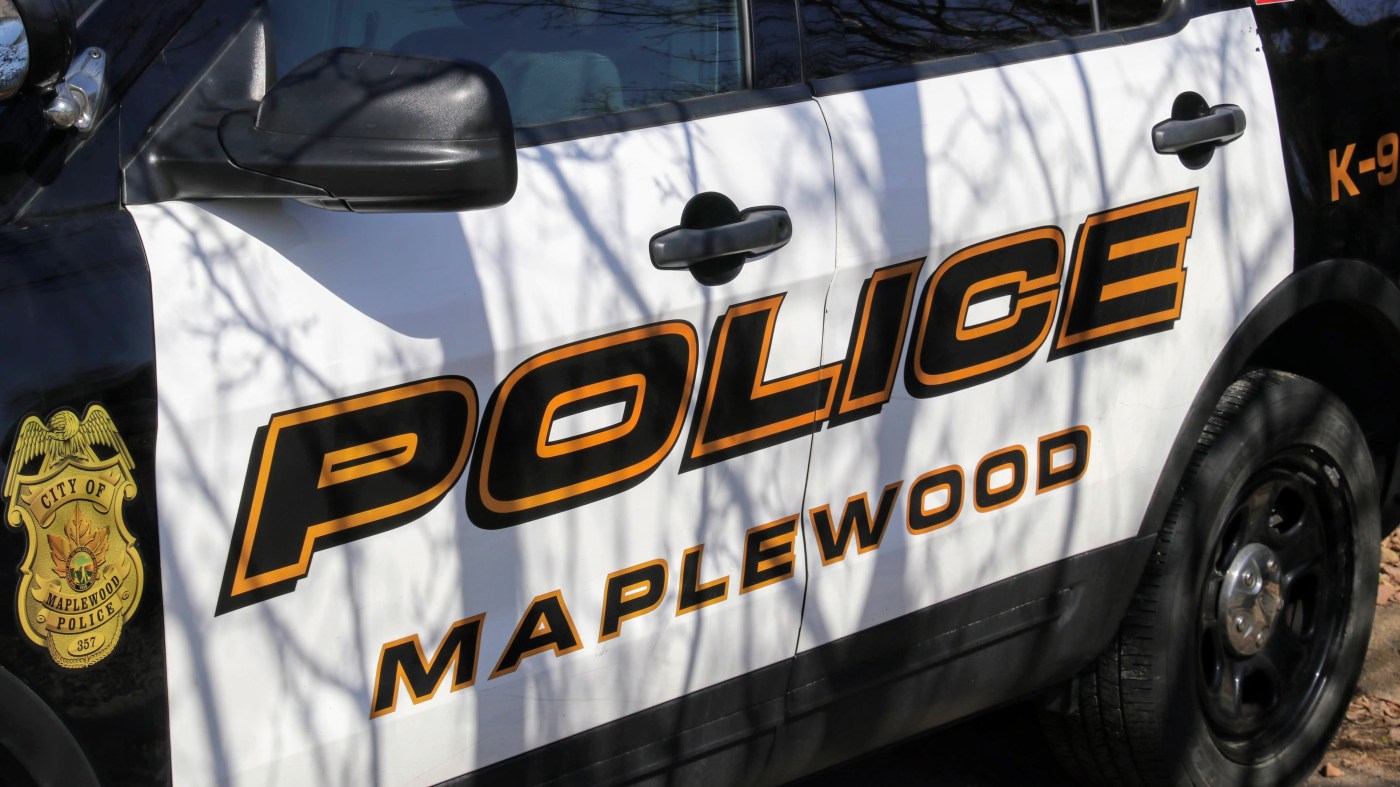
When St. Paul Regional Water Services set about designing a replacement for its century-old McCarrons water treatment plant in Maplewood, it didn’t so much look to its current 450,000 customers as beyond them.

What kind of capacity will its decarbonization and disinfectant basins need as its 14 client cities grow in population and new cities sign on? How might the utility combat threats to the east metro’s water supply that might not be known for years or even decades to come?

For designers, one key answer to the latter question was “ozonation” — the process of bubbling ozone gas through water as an added disinfectant in a long line of water purifiers, clarifiers, softeners and enhancers, ranging from lime and fluoride to chlorine and ammonia. For the first time since launching as a public utility in 1882, St. Paul Regional Water is purifying its water with ozone, a tool it’s added to a growing toolbox of approaches toward drawing water from the Mississippi River and its watershed and purifying it until every drop is safe to drink.

“We don’t need ozone to operate this plant,” said civil engineer Eric Noe, who is taking over as project manager for the new McCarrons water treatment plant as remnants of the old operation are demolished or repurposed. “It’s kind of like icing on the cake. But for the next contaminant bogeyman that we don’t yet know about, ozone is already part of our treatment.”

$250M investment in water quality

After three years of planning and four years of construction, St. Paul Regional Water officials threw open the doors on Thursday to what’s being billed as the treatment plant of the future — a $250 million investment in water quality infrastructure for St. Paul and more than a dozen neighboring cities and townships. To pay for the treatment plant, St. Paul Regional Water has gradually increased rates by 25% or more since 2021.

Constructed next to the century-old McCarrons plant on Rice Street, the new water treatment plant represents the largest capital undertaking in the 143-history of St. Paul Regional Water as a public utility.

The project was led by the design-build team of Jacobs, which is based in Dallas working alongside PCL Construction and Magney Construction. Brown and Caldwell, as well as Stantec, served as the utility’s advisors.

“We’re on schedule. We’re a little bit under budget. We’re making great water,” said project manager Will Menkhaus, who is being promoted to assistant general manager for St. Paul Regional Water Services. “And at the end of the day, there were no change orders. … The key thing that jumps out has been a virtue that our society has largely forgotten or even at times labeled a vice, and that’s compromise.”

The old McCarrons water treatment plant has been the sole producer of water for the utility’s clients since 1920, producing an average of 40 million gallons per day — enough to cover a football field in 93 feet of water. The number of gallons drops to about 30 million in winter and can rise as high as 60 million in summer. The new plant will maintain many of the same established practices with additional capacity to serve future client cities and treat as many as 84 million gallons of water daily, even if one of its major basins is out of commission.

Among the new amenities: new lime-softening solids contact clarifiers, new recarbonation basins and a new ozonation treatment process for enhanced taste, odor control and disinfection.

Quality testing lab to come

St. Paul Mayor Melvin Carter, center, is joined by St. Paul Regional Water Services general manager Racquel Vaske, to his left, and Board of Water Commissioners President Mara Humphrey, to his right, and other project leaders in a toast celebrating the newly-upgraded St. Paul Regional Water Services McCarron’s Water Treatment Plant in Maplewood on Thursday, Sept. 25, 2025. (John Autey / Pioneer Press)

The project opened with partial demolition of structures in 2022. Up next will be the construction of new water quality testing lab space in a building previously dedicated to flocculation, or getting particles to clump together for easier removal. Final site restoration and landscaping are expected to wrap in coming months.

St. Paul Mayor Melvin Carter, who shared remarks at the ribbon-cutting on Thursday, reminded the audience that 70% or more of their drinking water comes from the Mississippi River and virtually all of it comes from its watershed. The human body, he said he tells students, is upwards of 60% water, meaning that much of each young person’s body was, in fact, composed of the river itself.

“Our bodies are more than half Mississippi River,” Carter said, noting St. Paul Regional Water took “this water treatment plant that has provided water to our community for 100 years, and replace(d) here it with a brand new water treatment plant that will provide clean drinking water to our community for the next 100 years.”

Related Articles


St. Paul: I-94, I-35E closures this weekend, also John Ireland Blvd. bridge work in October


Judge finds Current DJ’s stalker violated restraining order but not guilty due to mental illness


Divided St. Paul council votes 4-3 against 28.5% rent hikes on Ashland Ave.


As St. Paul city council seeks to get handle on police overtime, costs down this year


Lawsuit filed over ICE detention of Omar Jamal, Somali advocate and Ramsey County sheriff civilian officer

Lisa Jarvis: Trump’s Tylenol briefing peddled junk science

posted in: All news | 0

President Donald Trump spent several days promising Americans that “an answer to autism” was imminent. Instead, his big reveal on Monday offered families distorted science, false hope, and unproven and at times dangerous medical advice.

Flanked by Health Secretary Robert F. Kennedy Jr. and other top federal health officials, Trump linked autism to the use of acetaminophen — the active ingredient in Tylenol — during pregnancy. This, despite decades of research showing that the medication is safe. He offered no evidence to the contrary.

He also repeated long-debunked claims that vaccines and the timing of the shots could be contributing to the increase in autism cases, also without presenting any evidence. And Trump and Kennedy announced that a form of folic acid called leucovorin might help treat symptoms of autism.

In promoting these unproven causes and treatments, Trump, Kennedy and other top health officials do a disservice not just to families and people with autism, but to pregnant women and children. The information provided at a rambling and often incoherent press briefing — during which Trump admonished pregnant women not to take Tylenol — could cause real harm. And it does nothing but create confusion and distract from genuine efforts to improve the lives of autistic people and their families.

The consensus among actual experts based on decades of research is that genetics — not just one gene, but hundreds — play a major role in autism. Scientists have also spent years trying to understand which environmental factors might magnify the inherited risk of autism.

And while early studies did suggest that acetaminophen might slightly raise the risk of autism, that research also failed to account for the reasons that pregnant women take the drug, explained David Mandell, associate director of the Center for Autism Research at Children’s Hospital of Philadelphia.

Fevers during pregnancy, for example, are known to increase the risk that a child will have a neurodevelopmental delay, and are also the reason someone would take Tylenol. More recent, robust studies out of Japan and Sweden that controlled for those variables found no link between Tylenol and autism.

Trump and his team dismissed those critiques. “Sure, you’ll be able to find a study to the contrary, that’s how science works,” said Marty Makary, commissioner of the Food and Drug Administration.

Trump, meanwhile, seemed to blame women and those who choose to take the drug.

“Don’t take Tylenol. Fight like hell not to take it,” he said, conceding that women who can’t “tough it out” might still choose to.

Acetaminophen is considered the only safe pain reliever a woman can take during pregnancy. But to those women Trump said, that’s something “you have to work out with yourself.”

That admonishment could easily dissuade American women from treating a symptom that could endanger their child. “Everybody knows a fever is really bad for the developing brain. That’s good science,” says Robert L. Hendren, a psychiatrist who works in the Center for Autism Spectrum Disorders and Neurodevelopmental Disorders Program at the University of California, San Francisco. For Trump to “tell mothers that they’re wimps if they take Tylenol — and if their kid gets autism and they’re the cause of it — that’s just a shame.”

Just as easy answers to explain complex conditions are scarce, so, too, are miracle cures. Yet Trump and his health leaders blithely overpromised on the potential of leucovorin, which they claimed could help with speech and behavioral problems in children with autism.

But that claim isn’t supported by the kind of “gold standard” science this administration has vowed to pursue. So far, the drug, which was approved in 2002 to address side effects of chemotherapy, has undergone limited testing for the treatment of autism. The largest study enrolled just 80 children, and the other, smaller trials had design flaws that cast doubt on any hints of efficacy.

Yet the FDA is already adding information to the leucovorin label to allow its use to treat cerebral folate deficiency, a neurodevelopmental disorder associated with autism.

“Suggesting that there’s something out there for families who are pretty desperate to do anything that they can to help their children is a waste of time, a waste of money, and honestly a waste of hope,” says Connie Kasari, a founding member of UCLA’s Center for Autism Research and Treatment. “Jumping to this kind of conclusion is really dangerous.”

That doesn’t mean leucovorin isn’t worth investigating. But families of children with autism deserve the kind of large, placebo-controlled studies that can definitively prove (or disprove) the drug’s efficacy and define who it might help. Parents have already suffered through too many fake treatments that have been, at best, expensive but benign, and at worst, horrifyingly harmful. That terrible history should be a reason for the administration to exercise caution when discussing any potential therapy — not contribute to the hype.

But Trump also went beyond the already troubling repositioning of autism priorities to riff on the childhood vaccine schedule, which he implied could be linked to the disorder. “Don’t let them pump your baby up with the largest pile of stuff you’ve ever seen in your life,” he said, suggesting the shots should be spread out over several years.

The president also opined that children shouldn’t receive the Hepatitis B shot until they are 12 (it is currently given at birth), and that the measles, mumps, rubella and chickenpox shots should be administered separately. Pediatricians note that shots for those individual infections do not exist in the US, where children get a combination vaccine.

That the nation’s president used his platform to promote theories that have been thoroughly debunked across hundreds of studies endangers all children. Confidence in vaccines is already declining, a situation that has real consequences for public health — as was made clear by this year’s measles outbreak.

All of this seemed designed to stoke fears rather than calm them — and suggests the administration is more interested in easy “wins” than real solutions. As they sift through the raft of misleading and false information from their president, parents would do well to remember that the person with the best medical advice is their doctor.

Lisa Jarvis is a Bloomberg Opinion columnist covering biotech, health care and the pharmaceutical industry. Previously, she was executive editor of Chemical & Engineering News.

Related Articles


Bret Stephens: Now the left cares about free speech again


Commentary: Why the government’s subversion of data is so dangerous


Noah Feldman: Blaming violence on free speech is a very old trick


Michael R Bloomberg: In dark times, Americans need leadership that unites


David M. Drucker: How Erika Kirk memorialized her late husband

Today in History: September 26, Biosphere 2 stay begins in Arizona

posted in: All news | 0

Today is Friday, Sept. 26, the 269th day of 2025. There are 96 days left in the year.

Today in history:

On Sept. 26, 1991, four men and four women began a two-year stay inside a sealed-off structure in Oracle, Arizona, called Biosphere 2; they emerged from Biosphere 2 on this date in 1993.

Also on this date:

In 1777, British troops occupied Philadelphia during the American Revolution.

Related Articles


Caught by Snapchat, Florida men arrested for illegal capture, killing of alligators


Grand Canyon National Park will reopen portions of North Rim after destructive wildfire subsides


Trump to put import taxes on pharmaceutical drugs, kitchen cabinets, furniture and heavy trucks


Remains found in Washington state are of Travis Decker, wanted in daughters’ killings, officials say


Instagram’s ‘deliberate design choices’ make it unsafe for teens despite Meta promises, report finds

In 1954, the Japanese commercial ferry Toya Maru sank during a typhoon in the Tsugaru Strait, claiming more than 1,150 lives.

In 1960, the first nationally televised debate between presidential candidates took place as Democrat John F. Kennedy and Republican Richard M. Nixon faced off in Chicago.

In 1986, William H. Rehnquist was sworn in as the 16th chief justice of the United States, while Antonin Scalia joined the Supreme Court as its 103rd member. Rehnquist died in 2005 and Scalia in 2016.

In 1990, the Motion Picture Association of America announced it had created a new rating, NC-17, to replace the X rating.

In 2000, thousands of anti-globalization protesters clashed with police in demonstrations during a summit of the International Monetary Fund and the World Bank in Prague.

In 2005, Army Pfc. Lynndie England was convicted by a military jury in Fort Hood, Texas, on six of seven counts stemming from the Abu Ghraib prison abuse scandal.

In 2020, President Donald Trump nominated Judge Amy Coney Barrett to the Supreme Court to fill the seat left vacant by the death of Ruth Bader Ginsburg. (Barrett would be confirmed the following month.)

In 2022, NASA’s Dart mission became the first spacecraft to ram an asteroid in a dress rehearsal for deflecting a space object’s trajectory.

In 2024, Helene, a major Category 4 hurricane, made landfall in Florida’s Big Bend region. It went on to cut a swath across Georgia and South Carolina before triggering historic flooding in North Carolina and Tennessee, causing an estimated $78 billion in damage and 219 deaths.

Today’s Birthdays:

Country singer David Frizzell is 84.
Television host Anne Robinson is 81.
Singer Bryan Ferry is 80.
Author Jane Smiley is 76.
Singer-guitarist Cesar Rosas (Los Lobos) is 71.
Actor Linda Hamilton is 69.
Actor Melissa Sue Anderson is 63.
Actor Jim Caviezel (kuh-VEE’-zuhl) is 57.
Singer Shawn Stockman (Boyz II Men) is 53.
Hockey Hall of Famers Daniel and Henrik Sedin are 45.
Tennis player Serena Williams is 44.
Singer-actor Christina Milian (MIHL’-ee-ahn) is 44.
Actor Zoe Perry is 42.