By Christopher Reynolds, Los Angeles Times
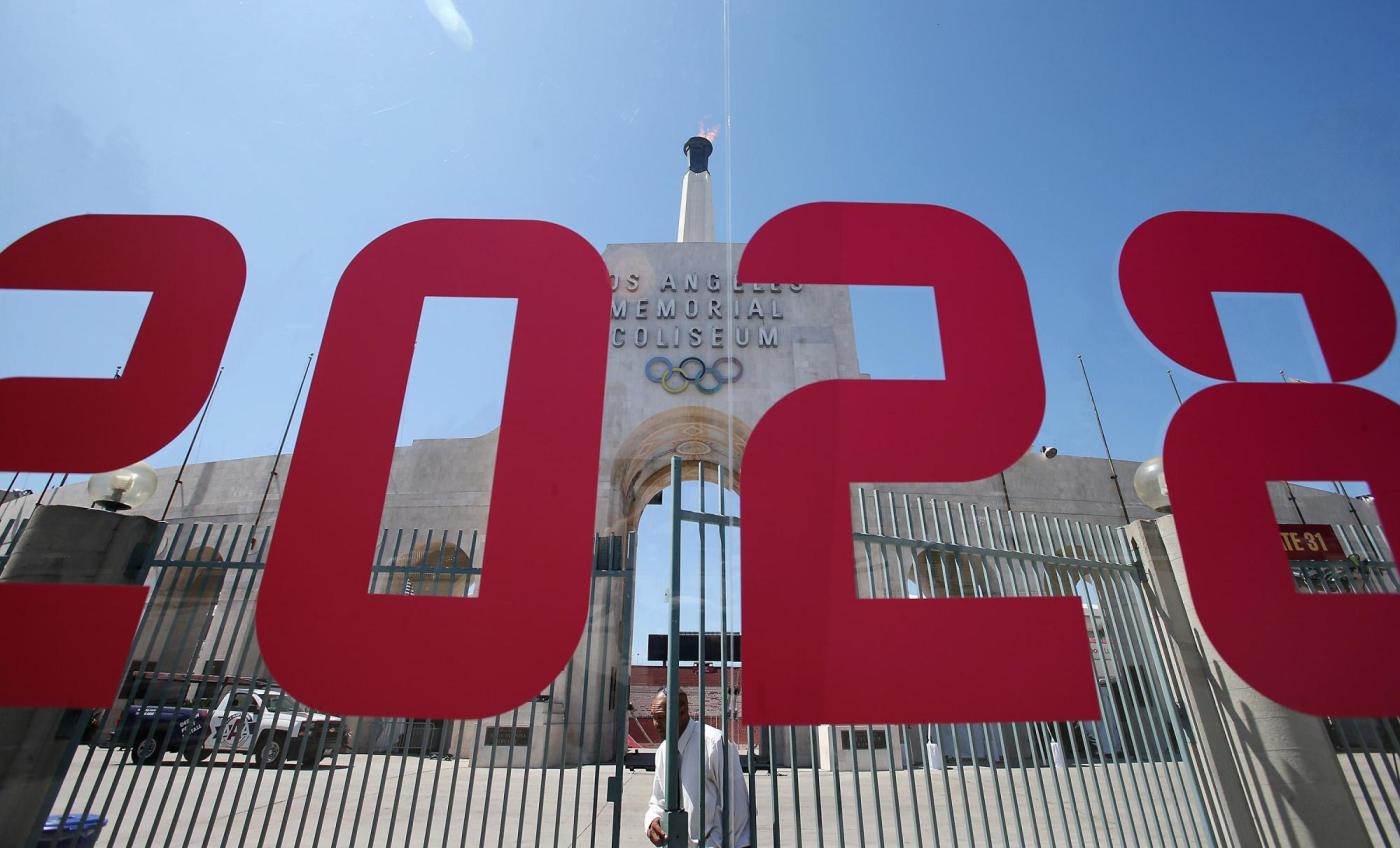
When it comes to making travel plans for the 2028 Los Angeles Summer Olympics, you may still be crouched at the starting blocks. But the race for flights, hotel reservations and event tickets will begin in 2026, long before the Games commence.
Related Articles
What to do if your flight is delayed or canceled during the US government shutdown
The Button King’s legacy lives on in quirky South Carolina museum
Travel: Saddle up! These guest ranches deliver the West without roughing it
Tired of America? Here are 10 great countries in which to retire in 2025
Oregon Coast: A place for high-key adventures or low-key outdoor fun
If you’re planning to visit Southern California for LA28, preparation will be crucial. And a little positive thinking wouldn’t hurt. As Winnipeg-based sports tour operator Dave Guenther of Roadtrips says, the Olympic cycle often feels like “two or three years of cynicism followed by two weeks of unbridled joy.”
As the days tick down to the L.A. Olympics (July 14-30, 2028) and Paralympics (Aug. 15-27, 2008), we’ll be answering the most important travel questions. We’ll be adding updates as new information comes in, so be sure to bookmark this guide.
Getting tickets to the Games
When will tickets for the Olympic Games go on sale?
Beginning in January, fans can register to enter the lottery for Olympic tickets at the organizing committee’s website, la28.org. If selected in the random draw, organizers say, fans will receive a purchase time and date for when ticket drops begin in spring 2026. Organizers say those in communities near Games venues will get early access. See a broader outline of LA28’s ticket schedule here.
Also in early 2026, LA28 will start offering hospitality packages that combine event tickets with overnight accommodations, transportation and/or special events. Tickets for the Paralympic Games will go on sale in 2027.
More details are expected later this year. Anyone interested can sign up to receive announcements through the LA28 newsletter.
What will tickets cost?
Organizers say Olympic and Paralympic competition tickets will start at $28, about $2 more than they did in Paris in 2024. We don’t know the high end yet. If Paris is a fair guide, most-coveted seats for the most popular events could be as high as $800 or more. The official vendors are also expected to manage a channel for resales of tickets, as they did in Paris.
The two most costly events are likely to be the opening and closing ceremonies. In Paris, per-ticket prices reached more than $2,900 for the opening, and more than $1,700 for the closing. In Los Angeles — for the first time — the opening ceremonies will be split between two venues, the L.A. Coliseum and SoFi Stadium in Inglewood.
Some of the toughest tickets, Guenther said, are gymnastics, swimming, track and field, and beach volleyball. “If you are super keen on seeing the women’s gymnastics finals, you might be on a path to disappointment,” Guenther said. “But if you’re flexible, there are a lot of things that are going to be options.”
Can I volunteer at the Games?
You can try. Recent Summer Olympics have relied upon tens of thousands of volunteers, who must meet language and training requirements. (Not every aspiring volunteer in Paris got assigned.) To stay in touch with volunteer opportunities, sign up for the LA28 newsletter.
Where will the Games happen?
The 2028 festivities will include 36 Olympic sports and 23 Paralympic sports, spread over about 40 venues. The lion’s share of Olympic events will take place in downtown L.A. and Exposition Park (which together have 10 venues); Long Beach (seven venues); Carson; Inglewood; the San Fernando and San Gabriel valleys.
But events are also scheduled in San Clemente, Venice, Anaheim, Pacific Palisades, Pomona and the City of Industry. The Paralympics will use many of the same venues. Indeed, this could be a learning experience for out-of-towners who don’t realize just how broadly Greater Los Angeles sprawls.
The softball and canoe slalom events will be held in Oklahoma City.
Flights, hotels and Airbnbs
How far ahead can I book flights?
Most airlines usually start accepting bookings 330 days (or 11 months) before the flight date. At Southwest Airlines, lead time can be eight to 10 months.
How far ahead can I book a hotel?
Ordinarily, hotels start accepting bookings 365 days ahead, so if you’re just looking for a room (and not a ticket-and-hotel package), set a reminder for around July 2027. Many hotels in Greater Los Angeles — especially those unaffiliated with global brands — are likely to follow their usual timetables. If you’re interested in a hotel-ticket combo deal, those will be offered in early 2026, as previously mentioned.
Industry veterans say most major hotels around Los Angeles have probably already made deals allotting blocks of 2028 rooms to organizers of the Games or independent tour operators like Roadtrips. For example, the Queen Mary in Long Beach already has 300 rooms and suites under contract with LA28, according to managing director Steve Caloca.
Another opportunity may arise even later: Typically, organizers and tour operators often return unsold room-nights to hotel control 60 or 90 days ahead of the event, which may give consumers a chance to book those “leftovers” directly, perhaps at a lower cost.
What will hotel rooms cost?
Nothing boosts hotel prices like the Olympics, and experts say the most luxurious hotels tend to hike their prices the most. Analyzing figures from Paris, hotel industry consultants CoStar found that average hotel rates — $342-$393 in the summer of 2023 — more than doubled to $731-$939 for the 2024 Games.
L.A.’s starting hotel rates are lower than those in Paris were. CoStar found that average daily hotel rates for greater L.A. from July 14-30, 2024, were $193-$231.
What about short-term rentals?
Again, expect prices to soar. Airbnb reported a 40% jump in accommodations inventory and a 400% jump in Paris-area bookings during the 2024 Games. On the eve of the Games, property management website Hostify.com reported that asking prices for short-term rentals in Paris had quintupled from $154 nightly to $772.
Do note that at every Games, it seems, there are reports of astronomical prices, followed by later reports of 11th-hour discounts because some people got too greedy earlier on.
Los Angeles seems to be starting out with higher short-term rental rates than those in Paris. The vacation rental website Airroi.com estimates the average Airbnb rate in greater Los Angeles for the year ended August 2025 was $283.
But of course, you can spend plenty more. One broker told The Times he has already rented out an L.A. mansion for $300,000 a month in 2028.
How far ahead can I book a short-term rental?
Airbnb allows bookings up to two years in advance, which is also VRBO’s default setting.
Will tensions between major L.A. hotels and union workers surface during the Olympics?
Hard to say. The L.A. City Council in May approved a measure requiring many hotels to raise their minimum wage to $30 hourly by July 2028. A business group started a petition drive seeking to undo the measure but fell short earlier this month.
Could President Trump’s immigration policies affect the Games?
That’s anybody’s guess. Heads of state in host countries usually play a ceremonial role, standing mostly in the background. Trump may have other ideas. In early August, he announced that he would chair a task force in charge of Olympic safety, border security and transportation.
Some foreign sports fans might stay away to signal opposition to the Trump Administration, as many Canadian travelers have been doing this year. But domestic travelers, not foreign visitors, fill most seats at the Olympics. Paris tourism statistics show U.S. visitors to that city during the 2024 “Olympic fortnight” were up a relatively modest 13% over the previous year.
Why do people go through so much trouble to see the Games?
“There is a tremendous magic,” Guenther said. “It really is quite something how people enjoy the time together with people from all over the world. … You find yourself welling up for an athlete in a sport you’ve never thought about.”
(Times staff writer Thuc Nhi Nguyen contributed to this report.)
©2025 Los Angeles Times. Visit latimes.com. Distributed by Tribune Content Agency, LLC.