Skywatch: The ribbon of wonder and two evening comets

posted in: All news | 0

Every one of us is unique and important, but at the same time, we’re a microscopic part of something that’s beyond comprehension.

Our Earth, solar system, sun and billions of other stars, along with who knows how many other planets, are all orbiting around our home Milky Way Galaxy. Miles are useless for trying to define how enormous our galaxy is. The numbers would be beyond mind-boggling. Instead, we use light-years, the distance a beam of light would travel in a year’s time. That works out to just short of 6 trillion miles.

Our Milky Way is believed to be a spiral disk of stars with a big bulge in the middle. It spans well over 100,000 light-years in diameter, but the thickness of most of the disk is very thin by comparison, around 1000 light-years. The central bulge of our home galaxy is about 12,000 light-years in diameter. In the center of that bulge is a super-sized black hole dubbed Sagittarius A, which is over 4 million times as massive as our lonely little sun. Our solar system is just under 30,000 light-years from the black hole. I’m glad we’re no closer!

Every time you look up on a clear night, even if you’re gazing in an area mired with light pollution, every one of the stars you see is a neighbor star in our home galaxy. In fact, most of the stars you see at a glance are very close Milky Way neighbors. To get a better idea of the vastness of the Milky Way, get out into the countryside where the sky is pitch dark. Take binoculars or a small telescope with you to really make the night special!

As twilight fades, you can tell right away how special the night sky can really be when you’re away from city lighting. Lie back on a blanket or lawn chair so you can really take it all in. It’s especially thrilling this time of year because when you look, you can see a long, ghostly, milky white ribbon that essentially cuts the sky in half. That ribbon is more formally known as the Milky Way band, stretching from the northeast horizon, through the overhead zenith, and on to the south-southwest horizon. That ribbon is made up of the combined light of billions and billions of stars. You are looking edgewise into the plane of our Milky Way Galaxy. There are so many stars in our line of sight that it’s impossible to see most of them individually.

The center bulge of the Milky Way is toward the southwestern horizon just above the spout of the teapot that makes up the constellation Sagittarius. It’s a little brighter than the rest of the band and would be a whole lot brighter if there weren’t gargantuan clouds of gas and dust in the way. Some astronomers think that if it weren’t for all of that blocking astronomical crud, that part of the sky would be as bright as the full moon all of the time! Get out there and galaxy gaze! It’s good for your soul!

Comets Swan and Lemmon

It’s possible to see two newly discovered comets in the evening. They’re known formally as C/2025 R2(SWAN) and C/2025 A6(LEMMON). They may be visible to the naked eye in the dark countryside, but more than likely you’ll need binoculars or a small telescope to spot them. Honestly, in urban areas, it could be a real challenge.

(Mike Lynch)
(Mike Lynch)

Attached are diagrams to help you find both comets, but your best bet will be to use a free stargazing app like my favorite, Sky Guide, Celestron Sky Portal, Star Walk, and others. Type in the comet’s formal names in the search engine, and it’ll point you in their direction with reasonably good accuracy. Comet Lemmon will be in the lower west-northwest skies, and Swan will be in the low southwest. Start looking for them as soon as possible, as evening twilight fades, because both will set below the horizon between 9 and 10 p.m., and even before then, they’ll be lost in the haze near the horizon.

Comets are often described as “dirty snowballs” that travel in highly elongated orbits that take them from the far outer solar system to near the sun where they at least partially melt. That releases gas and dust particles to form their iconic tails, driven by solar wind. Their tails always point in the opposite direction from the sun.

By the way, if you happen to have one of the low-cost digital photographic telescopes like ZWO SeeStar or Dwarf, these comets are great targets. In some cases, they are the only real way to see the comets, depending on your seeing conditions. You might even get a shot with just your smartphone camera. The accompanying photo of Comet Lemmon was taken by me in my backyard with ZWO SeeStar S50.

Comet Lemmon (Mike Lynch)

Mike Lynch is an amateur astronomer and retired broadcast meteorologist for WCCO Radio in Minneapolis/St. Paul. He is the author of “Stars: a Month by Month Tour of the Constellations,” published by Adventure Publications and available at bookstores and adventurepublications.net. Mike is available for private star parties. You can contact him at mikewlynch@comcast.net.

Starwatch programs

Tuesday, Oct. 14, 7-9 p.m., Prior Lake. For information and location, call 952-447-9820 or visit www.priorlakemn.gov/government/departments/recreation/programs.

Wednesday, Oct. 15, 7-9 p.m., North Oaks, at Chippewa Middle School. For more information, and reservations, call 651-621-0020 or visit www.moundsviewschools.org/communityeducation.

Thursday, Oct. 16, 7-9 p.m., Prairie Woods Environmental Center in New London-Spicer, Minn., through Willmar, New London-Spicer Community Education. Reservations required. Call 320 231-8490 or visit www.cewillmarmn.com

Friday, Oct. 17, 7-9 p.m., Grantsburg, Wis., at Crex Meadows Wildlife Area. For information and reservations, call 715-463-CREX or visit crexmeadows.org.

Saturday, Oct. 18, 7-9 p.m., Whitetail Park near Farmington. For Information and reservations, call 952-891-7000 or visit www.co.dakota.mn.us/parks/parksTrails.

Related Articles


Skywatch: A Harvet “Supermoon” this week and a new comet


Skywatch: Overlapping stellar seasons in October


Skywatch: Saturn: such a beauty


Skywatch: Shoot high for celestial treasures


Skywatch: The great celestial herdsman begins his long goodbye

Ana Mariella Rivera: When music heals: Bad Bunny and the power of art

posted in: All news | 0

Art and music have always been more than entertainment. They are ways of remembering who we are, of finding meaning in what we have lived, and of healing together. In times of loss, grief, or change, art opens a door to connection, a door that sometimes words alone cannot.

Recently, Bad Bunny’s concert residency in Puerto Rico reminded me of that. Beyond the fame and the lights, what stood out was how he centered his people and their everyday lives. At the center of the concert was “La Casita”, a small, familiar-looking house with a porch, like those you find across the Caribbean and in many southern parts of our own country. The performance unfolded from that porch, a space that felt instantly recognizable and close to home. It reminded me of what it was like to grow up in Latin America, to experience that collectiveness that is part of daily life, the laughter with neighbors, watching people walk by, the conversations, the celebrations, the music always in the background, and even the shared struggles that shape community life.

Its power was not in glamorous lighting or futuristic design but in how it centered the beauty of the everyday. The stage itself reflected something profoundly human: simplicity, connection and belonging. It reminded me that our ordinary lives, our neighborhoods and our joys in the midst of hardship are sacred and deserve to be celebrated.

What is also remarkable about this concert is that while it was created with Puerto Ricans in mind, it transcended that context. Many Latin Americans around the world have seen themselves reflected in it, in the grief of migration, in the complexities of the political and social histories of our countries, and in the immense beauty that we carry with us. The music and imagery reflected our colors, our nature, our resilience and our joy. It reminded us that even when we leave our homelands behind, our roots continue to speak through every song, every rhythm, and every story we share.

I know that not everyone connects with Bad Bunny’s lyrics or style, and that this is true both within Latino culture and beyond. For many native English speakers, his music may be unfamiliar or hard to relate to. But for me, as a Latina therapist living in Minneapolis, with a private practice in St. Paul where I also teach at St. Catherine University, I see something different. I work with many Latino clients who carry deep grief and exhaustion, grief from racial profiling, from being unseen, from the constant negative narratives about our community, and from the transgressions against our rights and dignity that we continue to witness.

In that context, seeing our stories centered so intentionally and so proudly feels healing. Bad Bunny’s concert residency in Puerto Rico achieved something extraordinary. It placed the everyday Puerto Rican experience, the real, beautiful, complicated, collective life of the people, at the center of a global stage. Many of us, including myself and the clients I work with, have felt seen and reflected in that act.

Representation, when done with authenticity and care, is powerful because it touches a human chord we all share: the need to be seen and known. It begins with seeing ourselves with honesty and compassion and then extends outward when others recognize our stories and affirm our place in the larger human experience. When a community’s truth is reflected with authenticity, it becomes a mirror for everyone, reminding us that to be seen is one of the most basic and healing human needs. That is the gentle yet transformative power of art and representation.

When Bad Bunny later announced an additional concert during his concert residency in Puerto Rico on the anniversary of Hurricane María, it became clear how intentional this work of representation was. That day holds deep pain for Puerto Ricans, marked by loss, anger, and the feeling of being forgotten. Yet instead of avoiding the date, he chose to honor it. He turned a day of collective grief into a day of music, pride and community. It did not erase the trauma, but it offered a new memory to hold beside it, a reminder of resilience and dignity.

That is how healing works. We do not erase what hurt us. We learn to hold both the pain and the hope. We integrate them. Art allows us to do that. It helps us create new meaning where pain once lived. It invites us to transform memory into something softer, something that breathes again.

At a time when so many negative narratives surround the Latino community, this kind of cultural affirmation matters deeply. It reminds us that we are more than stories of struggle. We are creativity, strength and joy.

Every time we celebrate what is ours, our music, our food, our language and our stories, we are practicing self and collective-care. We are saying to ourselves and to one another that we are still here, we belong, and we matter.

Ana Mariella Rivera is a seasoned bicultural psychotherapist, adjunct instructor, podcaster and current Humphrey Policy Fellow. A mental health advocate and Telemundo Minnesota collaborator, she uses storytelling and media to explore how culture, identity, representation and leadership shape well-being and belonging across communities.

Related Articles


Your Money: Cybersecurity and your money in the AI era


Working Strategies: Job search over 60: “purpose” vs. paycheck


Joe Soucheray: If you list St. Paul’s 100 most pressing needs, bikes come in at 101


Cole Hanson: Weak enforcement, scattered resources can put recourse out of reach for St. Paul renters


Dillon Donnelly: Why is St. Paul building rec centers while families can’t afford rent?

David M. Drucker: Politicians need to stop being so online

posted in: All news | 0

As it turns out, Twitter is not the town square. Someone might want to alert American political leaders.

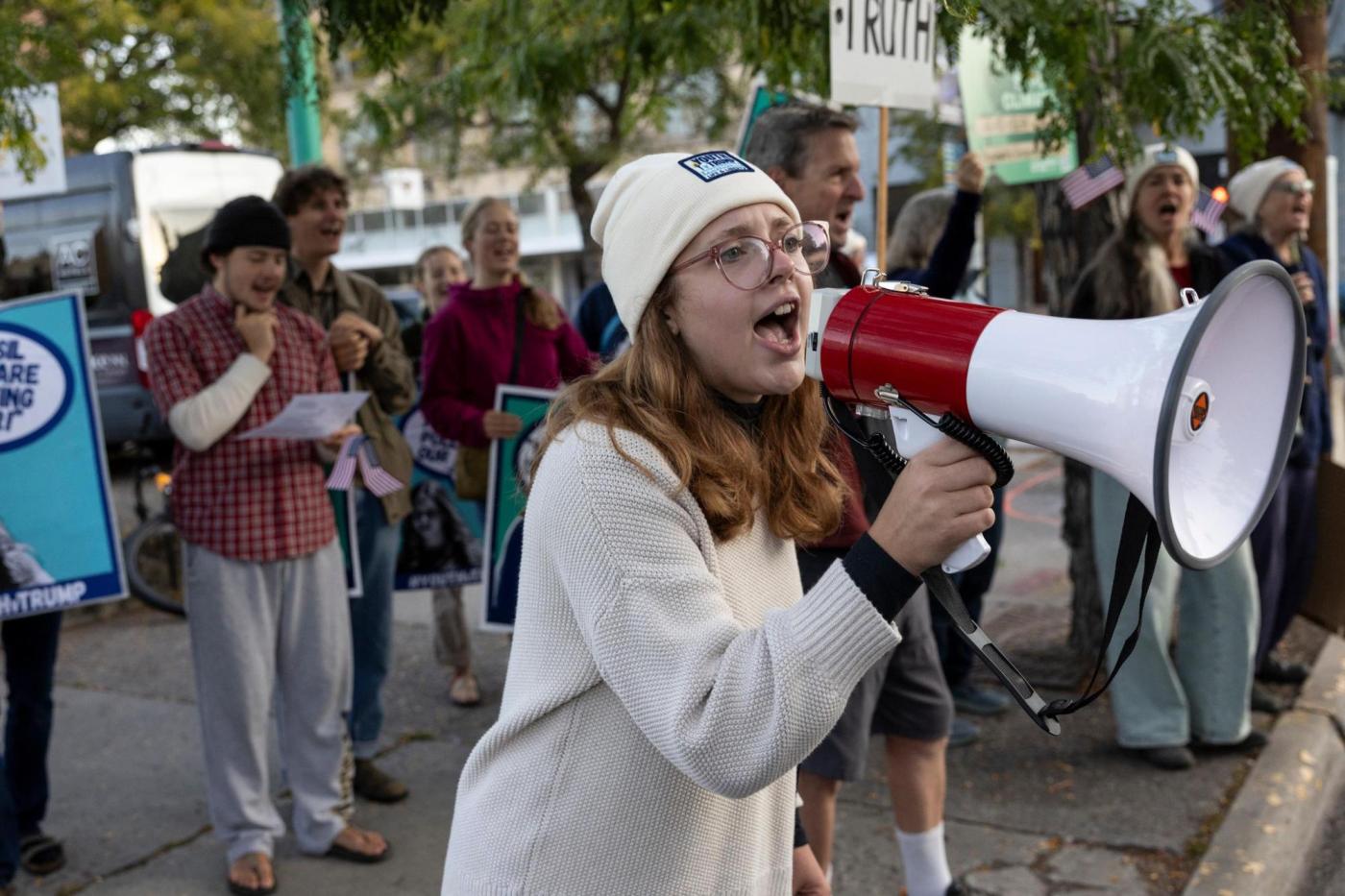
In the era of social media, Democratic and Republican politicians have grown hyper-sensitive, and responsive, to activists who seemingly live their lives online. Whether on X, formerly Twitter, where the right ruminates over every alleged infraction committed by the left and demands swift and often constitutionally questionable action; on Bluesky, where the echo-chamber boomerangs in the opposite direction; on Truth Social, where President Donald Trump ruminates over, well, everything; or on Facebook and TikTok, Democrats and Republicans appear only too eager to satisfy the digital mob, convinced that social media is simply a gathering place where constituents are communicating their priorities.

They’re wrong.

I’ve long argued as much, based on years of traveling the country and talking to voters, including those interested enough in politics to attend campaign rallies or knock on doors for candidates. But fresh polling from the Democratic firm Global Strategy Group adds some data to bolster my conclusion.

As pollster Angela Kuefler explained during a presentation for Third Way, the centrist Democratic think tank in Washington that commissioned the survey, just 37% of Democratic primary voters post on social media platforms weekly, with 33% posting less often and 31% never posting.

That’s nearly two-thirds of Democratic primary voters — even at a moment of major political discontent and anxiety over Trump, to say nothing of the future of their party.

“This is the most important slide,” Kuefler declared, as she introduced these findings to reporters recently, during an expansive PowerPoint presentation. How so? Because Kuefler’s (and Third Way’s) goal ahead of the 2028 presidential contest is to convince Democrats to stop choosing rhetoric and policy proposals based on what they’re hearing and reading from a minority of activist voters on social media.

“People who post the most often,” Kuefler added, “are fundamentally different than the vast majority of these Democratic primary voters,” leading many elected Democrats to embrace “far left policies” that even most Democratic voters oppose, never mind the broader electorate.

Kamala Harris, the former vice president and 2024 Democratic nominee, might wish she’d had this data, and heeded that advice, when seeking the White House in 2020. But as mentioned, Democrats are hardly the lone offenders.

Top GOP figures, too, often mistake the rantings of right-wing activists and influencers for political gospel. But only a minority of GOP voters and those who lean Republican “regularly” rely on social media for news.

At 40%, Facebook is the most frequented social platform for news by Republicans and GOP leaners. At 14%, Elon Musk’s X is among the least used for news, per a Pew Research Center poll conducted in late August. This survey data matches my experience with Republican voters.

But to check my priors, I consulted with Washington Examiner columnist Salena Zito, who lives just outside Pittsburgh and covers Republican voters in Rust Belt battlegrounds (and elsewhere) like a hawk, and keenly understands their connection to Trump. Zito’s verdict?

“It has been my experience as a reporter to take everything that I see online with a grain of salt. In other words, the audience tends to skew more toward people who are, what I call — and what other people call — ‘the very online,’” said Zito, author of “Butler; The Untold Story of the Near Assassination of Donald Trump and the Fight for America’s Heartland.” “What I see online rarely gives (an accurate view of) what I see with voters, in particular in the places that decide elections.”

“What happens on social media does not dictate how people are feeling. There’s so much nuance that’s missing,” she added. “You really have to get on the ground and be much more granular with people as opposed to letting social media dictate how you think the country is feeling.”

Related Articles


David Brooks: Why are the Democrats increasing inequality?


Jonathan Alpert: AI therapy isn’t getting better. Therapists are just failing


Mary Ellen Klas: Threats against judges have crossed the line


Stephen L. Carter: That ‘landmark’ free speech ruling misses the point


Bhargava, Sokol: Charging $100,000 for H-1B visas will cost the U.S. uncountable wealth

American politics appears to be drowning in combative commentary and internet memes. Republicans revel in “owning the libs.” Prominent Democrats, intent on proving to their activist base that they’re fighting to stop Trump, have dialed up profanity in their rhetoric. And yet, none of this is how most voters, left or right, are living their lives day-to-day. Worried about the economy; illegal immigration; Trump’s multifaceted executive overreach? Absolutely. Angry and rude to their neighbors while fearing the end of the republic? Hardly.

During the final weekend before Election Day last year, my colleagues at The Dispatch and I fanned out across the swing states. At both Harris and Trump rallies, we asked supporters of each candidate how they would react, and what they would do, if the opposing White House contender won. They told us they would be disappointed and yes, worried, about the future. But virtually all voters we interviewed told us they would go about their everyday lives and hope for the best while looking ahead to the next election — as they always have.

Our leaders, and those interested in joining them in elected office, would do their political ambitions and the country well to realize that.

David M. Drucker is columnist covering politics and policy. He is also a senior writer for The Dispatch and the author of “In Trump’s Shadow: The Battle for 2024 and the Future of the GOP.”

Today in History: October 12, First woman lights Olympic flame

posted in: All news | 0

Today is Sunday, Oct. 12, the 285th day of 2025. There are 80 days left in the year.

Today in history:

On Oct. 12,1968, Mexican track and field athlete Enriqueta Basilio became the first woman to light the Olympic flame at the opening ceremonies of the Mexico City Summer Games.

Also on this date:

In 1492, Christopher Columbus’s first expedition made landfall on what is now San Salvador Island in the Bahamas.

Related Articles


Hollywood writers were already struggling. Now they fear censorship.


America’s aging prison population is posing challenges for states


Nuclear missile workers are contracting cancer. They blame the bases


Today in History: October 11, Carter awarded Nobel Peace Prize


AstraZeneca agrees to lower drug prices for Medicaid under Trump administration deal

In 1870, General Robert E. Lee, former overall commander of the Confederate States Army in the Civil War, died in Lexington, Virginia, at age 63.

In 1960, Soviet Premier Nikita Khrushchev protested remarks at the United Nations by pounding his shoe on his desk.

In 1973, President Richard Nixon nominated House Minority Leader Gerald R. Ford of Michigan to succeed Spiro T. Agnew as vice president.

In 1984, British Prime Minister Margaret Thatcher escaped an attempt on her life when an Irish Republican Army bomb exploded at a hotel in Brighton, England, killing five people.

In 2000, the destroyer USS Cole was attacked by boat-borne al-Qaida suicide bombers during a refueling stop in Yemen’s port city of Aden, killing 17 on board.

In 2002, bombs blamed on al-Qaida-linked militants destroyed two nightclubs on the Indonesian island of Bali, killing 202 people, many of whom were foreign tourists.

In 2019, Eliud Kipchoge became the first person to run a marathon in less than two hours, crossing the finish line of the INEOS 1:59 Challenge in Vienna, Austria, with a time of 1:59:40.

Today’s Birthdays:

NASCAR Hall of Famer Ned Jarrett is 93.
Broadcast journalist Chris Wallace is 78.
Singer-songwriter Jane Siberry is 70.
Actor Hiroyuki Sanada is 65.
Jazz musician Chris Botti (BOH’-tee) is 63.
Actor Hugh Jackman is 57.
Country musician Martie Maguire (The Chicks) is 56.
Actor Kirk Cameron is 55.
Olympic gold medal skier Bode Miller is 48.
Actor Josh Hutcherson is 33.