New Medicaid work rules likely to hit middle-aged adults hard

posted in: All news | 0

By Samantha Liss, Sam Whitehead, KFF Health News

Lori Kelley’s deteriorating vision has made it hard for her to find steady work.

The 59-year-old, who lives in Harrisburg, North Carolina, closed her nonprofit circus arts school last year because she could no longer see well enough to complete paperwork. She then worked making dough at a pizza shop for a bit. Currently, she sorts recyclable materials, including cans and bottles, at a local concert venue. It is her main source of income ― but the work isn’t year-round.

“This place knows me, and this place loves me,” Kelley said of her employer. “I don’t have to explain to this place why I can’t read.”

Kelley, who lives in a camper, survives on less than $10,000 a year. She says that’s possible, in part, because of her Medicaid health coverage, which pays for arthritis and anxiety medications and has enabled doctor visits to manage high blood pressure.

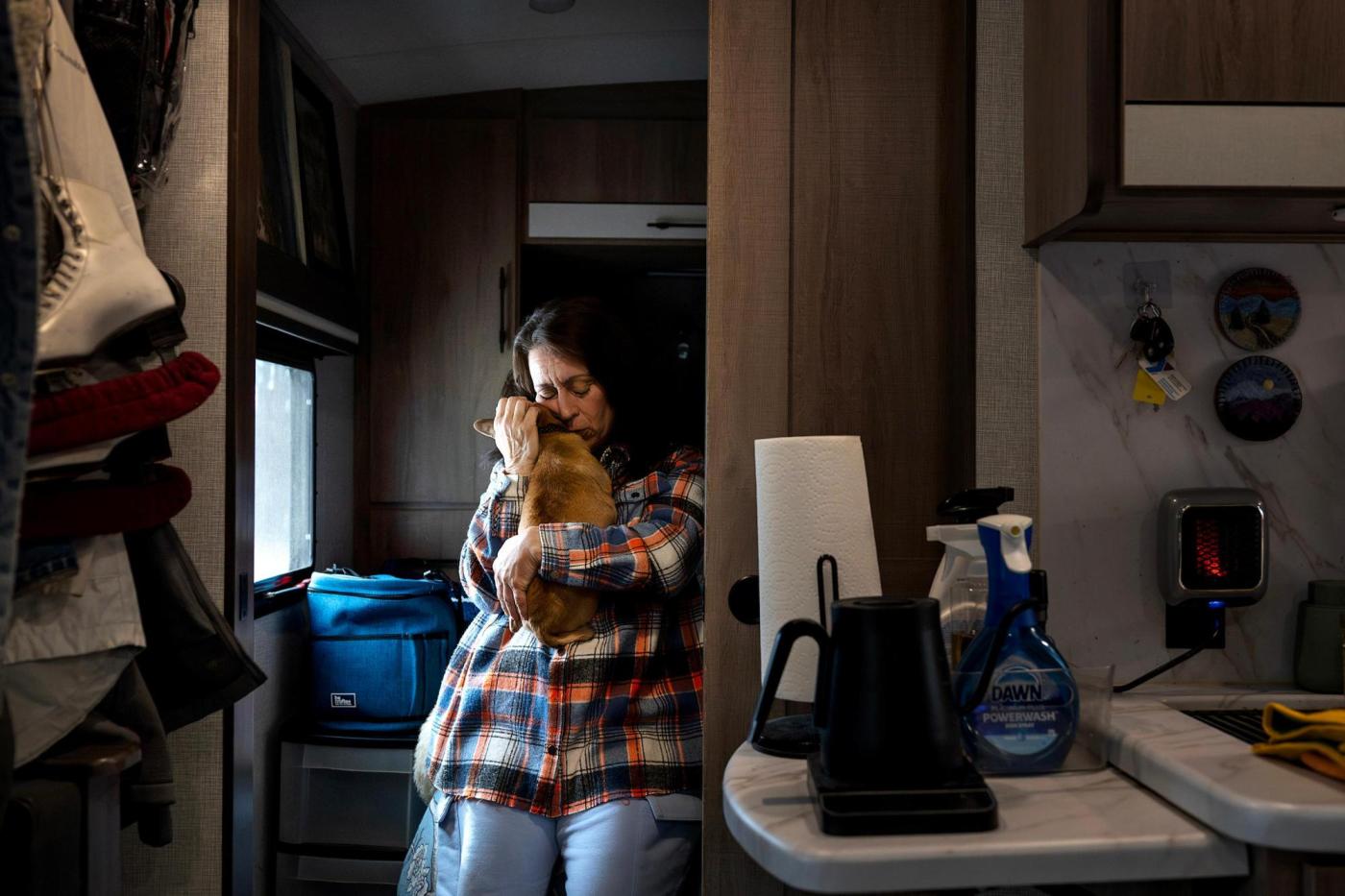
Lori Kelley of Harrisburg, North Carolina, has deteriorating vision that affects her livelihood. Last year, she had to shutter her nonprofit because she couldn’ t see well enough to do paperwork. Under Medicaid’ s new work requirements, Kelley is concerned about losing access to care for her high blood pressure and anxiety. (A.M. Stewart/KFF Health News/TNS)

But she worries about losing that coverage next year, when rules take effect requiring millions of people like Kelley to work, volunteer, attend school, or perform other qualifying activities for at least 80 hours a month.

“I’m scared right now,” she said.

Before the coverage changes were signed into law, Republican lawmakers suggested that young, unemployed men were taking advantage of the government health insurance program that provides coverage to millions of low-income or disabled people. Medicaid is not intended for “29-year-old males sitting on their couches playing video games,” House Speaker Mike Johnson told CNN.

But, in reality, adults ages 50 to 64, particularly women, are likely to be hit hard by the new rules, said Jennifer Tolbert, deputy director of the Program on Medicaid and the Uninsured at KFF, a health information nonprofit that includes KFF Health News. For Kelley and others, the work requirements will create barriers to keeping their coverage, Tolbert said. Many could lose Medicaid as a result, putting their physical and financial health at risk.

Starting next January, some 20 million low-income Americans in 42 states and Washington, D.C., will need to meet the activity requirements to gain or keep Medicaid health coverage.

Lori Kelley worries about Medicaid’ s new work requirements, which may disrupt her treatment for deteriorating eyesight, high blood pressure, and anxiety. (A.M. Stewart/KFF Health News/TNS)

Alabama, Florida, Kansas, Mississippi, South Carolina, Tennessee, Texas, and Wyoming didn’t expand their Medicaid programs to cover additional low-income adults under the Affordable Care Act, so they won’t have to implement the work rules.

The nonpartisan Congressional Budget Office predicts the work rules will result in at least 5 million fewer people with Medicaid coverage over the next decade. Work rules are the largest driver of coverage losses in the GOP budget law, which slashes nearly $1 trillion to offset the costs of tax breaks that mainly benefit the rich and increase border security, critics say.

“We’re talking about saving money at the expense of people’s lives,” said Jane Tavares, a gerontology researcher at the University of Massachusetts Boston. “The work requirement is just a tool to do that.”

Department of Health and Human Services spokesperson Andrew Nixon said requiring “able-bodied adults” to work ensures Medicaid’s “long-term sustainability” while safeguarding it for the vulnerable. Exempt are people with disabilities, caregivers, pregnant and postpartum individuals, veterans with total disabilities, and others facing medical or personal hardship, Nixon told KFF Health News.

Medicaid expansion has provided a lifeline for middle-aged adults who otherwise would lack insurance, according to Georgetown University researchers. Medicaid covers 1 in 5 Americans ages 50 to 64, giving them access to health coverage before they qualify for Medicare at age 65.

Among women on Medicaid, those ages 50 through 64 are more likely to face challenges keeping their coverage than their younger female peers and are likely to have a greater need for health care services, Tolbert said.

These middle-aged women are less likely to be working the required number of hours because many serve as family caregivers or have illnesses that limit their ability to work, Tolbert said.

Related Articles


FDA proposes new system for approving customized drugs and therapies for rare diseases


As the US population ages, more employees are seeking caregiver benefits at work


What is ALS, the disease that killed actor Eric Dane?


End of enhanced Obamacare subsidies puts tribal health lifeline at risk


Nurses and New York hospital system reach a tentative deal to end the city’s largest nursing strike

Tavares and other researchers found that just 8% of the total Medicaid population is considered “able-bodied” and not working. This group consists largely of women who are very poor and have left the workforce to become caretakers. Among this group, 1 in 4 are 50 or older.

“They are not healthy young adults just hanging out,” the researchers stated.

Plus, making it harder for people to maintain Medicaid coverage “may actually undermine their ability to work” because their health problems go untreated, Tolbert said. Regardless, if this group loses coverage, their chronic health conditions will still need to be managed, she said.

Adults often start wrestling with health issues before they’re eligible for Medicare.

If older adults don’t have the means to pay to address health issues before age 65, they’ll ultimately be sicker when they qualify for Medicare, costing the program more money, health policy researchers said.

Many adults in their 50s or early 60s are no longer working because they’re full-time caregivers for children or older family members, said caregiver advocates, who refer to people in the group as “the sandwich generation.”

The GOP budget law does allow some caregivers to be exempted from the Medicaid work rules, but the carve-outs are “very narrow,” said Nicole Jorwic, chief program officer for the group Caring Across Generations.

She worries that people who should qualify for an exemption will fall through the cracks.

“You’re going to see family caregivers getting sicker, continuing to forgo their own care, and then you’re going to see more and more families in crisis situations,” Jorwic said.

Paula Wallace, 63, of Chidester, Arkansas, said she worked most of her adult life and now spends her days helping her husband manage his advanced cirrhosis.

After years of being uninsured, she recently gained coverage through her state’s Medicaid expansion, which means she’ll have to comply with the new work requirements to keep it. But she’s having a hard time seeing how that will be possible.

“With me being his only caregiver, I can’t go out and work away from home,” she said.

Wallace’s husband receives Social Security Disability Insurance, she said, and the law says she should be exempt from the work rules as a full-time caregiver for someone with a disability.

But federal officials have yet to issue specific guidance on how to define that exemption. And experience from Arkansas and Georgia ― the only states to have run Medicaid work programs ― shows that many enrollees struggle to navigate complicated benefits systems.

“I’m very concerned,” Wallace said.

©2026 KFF Health News. Distributed by Tribune Content Agency, LLC.
Savannah Guthrie says her family is offering a $1 million reward for her mother’s recovery

posted in: All news | 0

By JOHN SEEWER

“Today” show host Savannah Guthrie said her family is now offering a $1 million reward for information leading to the recovery of her mother, Nancy Guthrie, who went missing from her Arizona home more than three weeks ago.

Related Articles


Robert Carradine, ‘Revenge of the Nerds’ and ‘Lizzie McGuire’ star, dies at 71


House will vote on requiring locator systems that would have prevented Washington midair collision


Utah judge is set to rule on disqualifying prosecutors in the Charlie Kirk case


US military boards third oil tanker in the Indian Ocean after tracking it from the Caribbean


World shares are mixed after heavy selling of potential AI losers hits Wall Street

Savannah Guthrie said Tuesday that her family is still holding out for a miracle and hopes her mother will be found alive, but she also acknowledged that they realize it might be too late. Authorities have expressed concern about Nancy Guthrie’s health because she needs vital daily medicine.

“She may already be gone,” Savannah Guthrie said in an Instagram post. “She may already have gone home to the Lord that she loves and is dancing in heaven.”

Nancy Guthrie, 84, was last seen at her home just outside Tucson, Arizona, on Jan. 31 and was reported missing the next day. Authorities believe she was kidnapped, and the FBI released surveillance videos of a masked man who was outside Guthrie’s front door on the night she vanished.

Drops of her blood were found on the front porch, but authorities haven’t publicly revealed much evidence.

Savannah Guthrie said her family needs to know where her mother is no matter what happened.

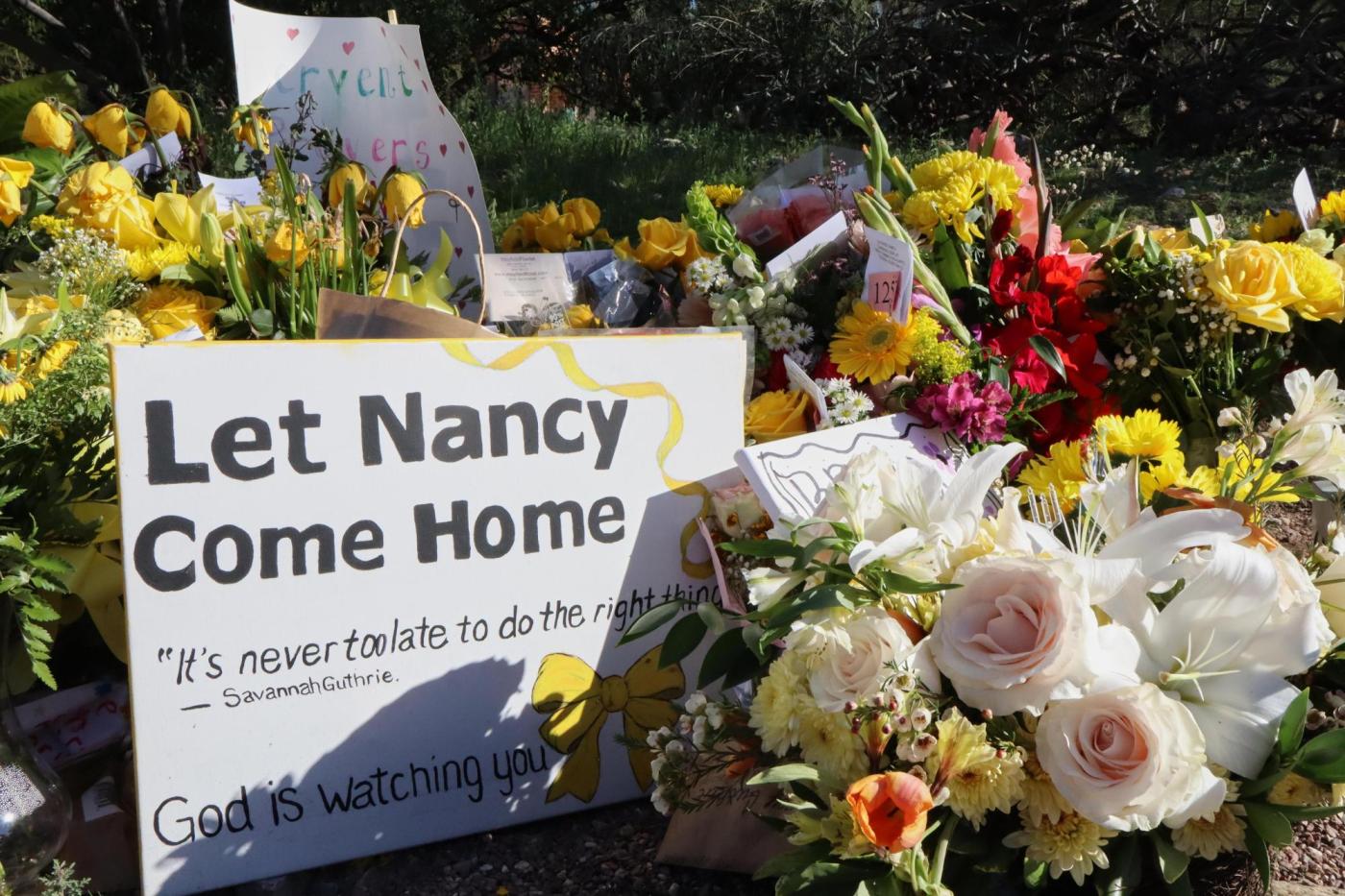
A memorial grows outside the home of Nancy Guthrie, the missing mother of “Today” show host Savannah Guthrie, Sunday, Feb. 22, 2026, in Tucson, Ariz. (AP Photo/Felicia Fonseca)

“Someone out there knows something that can bring her home,” she said.

Several hundred people are working the Guthrie investigation, and more than 20,000 tips have been received, the Pima County Sheriff’s Office has said. The FBI and other agencies are assisting.

5 smart ways to diversify your portfolio in 2026

posted in: All news | 0

Susan Dziubinski of Morningstar

Portfolio diversification might sound like a chore, but it’s worth the effort in 2026, given how dominant the artificial intelligence trade was last year. Without some smart diversification, your “just fine” investment portfolio from 2025 may be vulnerable in 2026.

Related Articles


FedEx joins other US companies in seeking a refund after Trump tariffs are ruled illegal


World shares are mixed after heavy selling of potential AI losers hits Wall Street


Home Depot tops expectations in the fourth quarter, but customers pull back on spending


In downtown St. Paul, Aldi seeks permits to move into former Lunds & Byerlys


Mr. Clean retires after 68 years as company mascot

“Investors don’t have to think there’s an AI bubble to be concerned about the concentration risk that AI has wrought,”  says  Morningstar Indexes strategist  Dan Lefkovitz. “Concentration … leaves investors holding a market portfolio less diversified than in the past—by stock, sector, and theme.”

Here are five smart ways to diversify your investment portfolio in 2026.

Diversify your portfolio by rebalancing

Rebalancing is a way of restoring the original level of diversification you established. If you haven’t rebalanced in recent years, your portfolio is likely overweight in US stocks relative to bonds.

“A portfolio that started with a 60% weighting in stocks and 40% in bonds 10 years ago would now contain more than 80% in stocks,” calculates Morningstar portfolio strategist Amy Arnott.

Take a look at your current exposure to international stocks, too: Is it lower than your original target? Probably. “Even though stocks from outside the United States pulled ahead in 2025, that followed on the heels of a long run of outperformance for the US,” says Arnott. “As a result, your portfolio might still be light on international exposure.”

Add bonds for portfolio diversification

Financial professionals often say that investors in accumulation mode with many years until retirement don’t need bonds.

“If you’re over 50, I think you want to be realistic about de-risking a portion of your portfolio,” says Morningstar director of personal finance and retirement planning  Christine Benz. “I like the idea of building a bulwark of safer assets, probably high-quality short- and intermediate-term bonds, plus a little bit of cash.”

In her  model portfolios for retirement savers, Benz suggests a 5% bond allocation for savers with 35-40 years until retirement. That ramps up to a 20% bond weighting once retirement is 20 years out.

And if an investor of any age is looking to diversify a US stock portfolio, bonds—specifically, high-quality bonds—are an excellent choice, says Benz. Even a small position in bonds provides diversification that can dampen volatility in a portfolio.

Allocate to international stocks for diversity

Despite their 2025 revival, the performance of international stocks has still lagged that of US stocks over the past decade. That suggests non-US stocks likely have more gas left in the tank even after their runup last year.

Moreover, non-US stock markets are less tied to technology and the AI trade and thereby provide diversification away from the trend that has driven so much of the US stock market’s return during the past several years.

“Spreading one’s bets across geography can be seen as prudent risk management,” says Lefkovitz. “The US represents just 25% of the global economy but 63% of its stock market value. Given that imbalance, an all-US equity portfolio reflects real home-market bias.”

Boost value and small-cap exposure to diversify

Investors who own a diversified US index fund, whether one tracking the S&P 500 or a total market index, have a decidedly large-cap emphasis in their portfolio. They also have a heady dose of exposure to the AI theme.

To offset some of the concentration risk posed by the US stock market today, investors might consider allocating some assets to smaller companies or value stocks—or diversifying into both via a small-value fund or exchange-traded fund.

“Small-cap value has kind of persistently underperformed the large-cap growth stocks, and I think that arguably there’s a pretty good value there, so investors might do a little bit of repositioning so they’re not so heavily tilted toward those mega-cap growth and technology stocks,” suggests Benz.

Incorporate dividend stocks for variety

Dividend stocks typically cluster in the utilities, consumer, healthcare, industrials, and financials sectors, which often perform well when tech doesn’t. Moreover, they tend to be less volatile than non-dividend-paying stocks, and they possess defensive characteristics, which is a benefit during times of market stress.

There are many strong dividend stock-focused ETFs and funds to choose from, including Schwab US Dividend Equity ETF ( SCHD ) and Vanguard Dividend Appreciation ETF ( VIG ).

This article was provided to The Associated Press by Morningstar. For more personal finance content, go to https://www.morningstar.com/personal-finance.

Susan Dziubinski is an investment specialist for Morningstar and co-host of “The Morning Filter” podcast.

Links:

Morningstar’s Guide to Portfolio Diversification

https://www.morningstar.com/portfolios/morningstars-guide-portfolio-diversification

The Best Funds to Rebalance Your Portfolio in 2026

https://www.morningstar.com/funds/best-funds-rebalance-your-portfolio-2026

5 Mistakes to Avoid With Your Investment Portfolio in 2026

https://www.morningstar.com/portfolios/5-mistakes-avoid-with-your-investment-portfolio-2026

More Money than Greg

posted in: All news | 0

As of January, the Texas governor had about $105,000,000 sitting in his campaign account. That’s an impressively gargantuan figure, especially so given that he was forced to deplete nearly his entire cash cache four years ago in a reelection fight against two hard-line primary challengers and, then, an equally well-funded Democratic opponent, Beto O’Rourke. 

As Greg Abbott nears the end of three terms, or a dozen years, and sits at the apex of political power in Texas, the one thing that’s known about him is he loves to solicit campaign funds. (Whether it’s a matter of skill or inertia is undetermined.) He has a long callsheet of hundred-millionaire and billionaire buddies. Since Abbott got into state politics in the mid-’90s as a state Supreme Court justice, and later as attorney general on his way to the governor’s mansion, he’s raised roughly half a billion dollars.

Abbott’s warchest, which formally operates as Texans for Greg Abbott, is at this point a political clearinghouse combined with an investment firm. His campaign regularly invests donors’ contributions into U.S. Treasury notes and CDs from banks. (Yes, this is, per the state’s campaign finance laws, legal, so long as the funds are not converted for personal use.) In 2026, Abbott raised about $42 million and purchased more than $30 million in investments—mostly in T-bills. He also earned a return of over $40 million, campaign finance records show. Not bad for a public servant. 

Abbott’s warchest eclipses all other political entities’ in Texas—Tim Dunn’s machine, Dan Patrick’s operation, the major PACs like Texans for Lawsuit Reform, and the measly Texas GOP itself. This fundraising prowess has been built on the burgeoning power of his own office—which just two men have held for practically the entire century. His imperial governorship demands tribute from the state’s capitalist class, which he converts into control over the political party that might put any challengers in power.

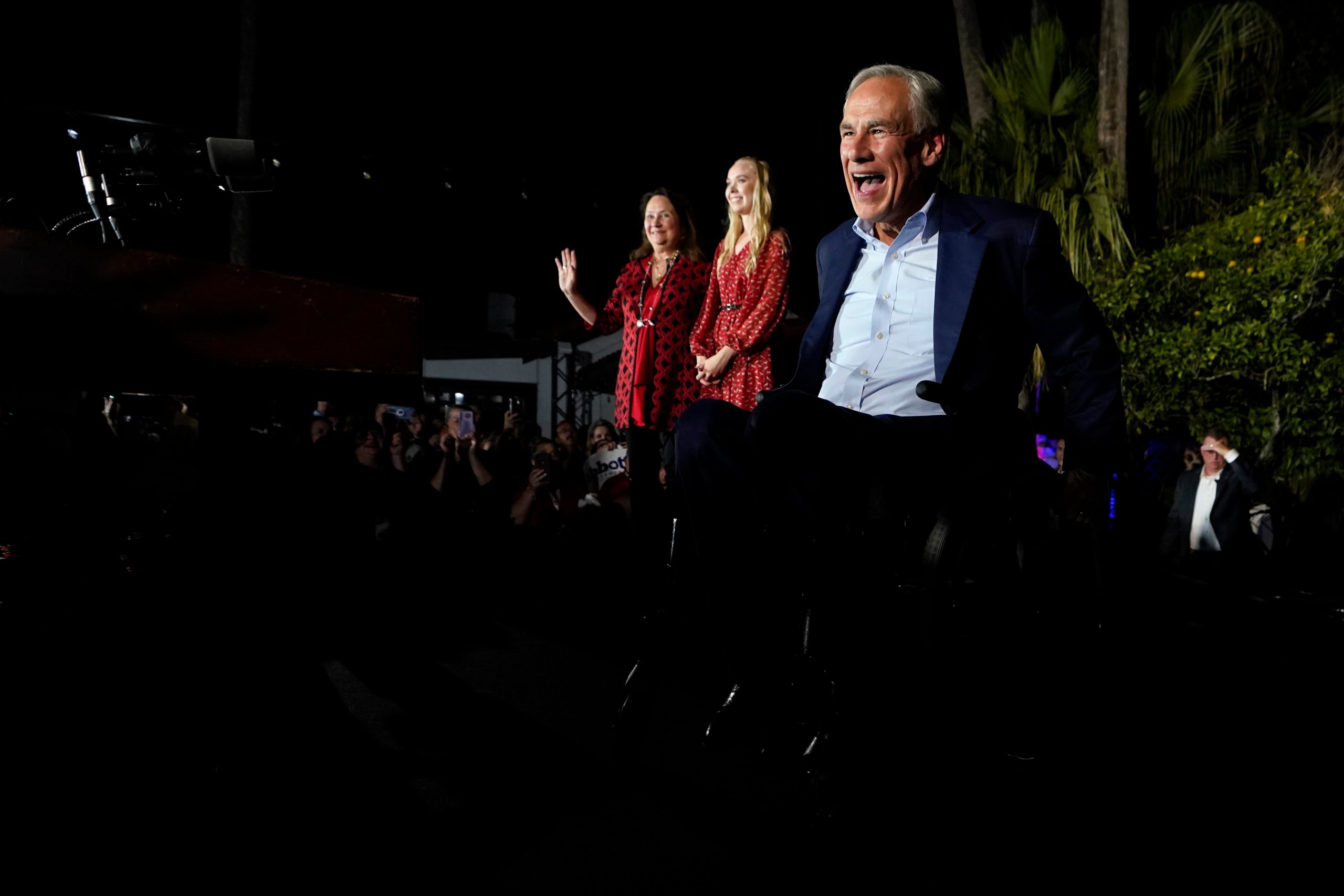
Abbott arrives to speak during a 2022 election night party in McAllen. (AP Photo/David J. Phillip)

The governor’s fortune has obviously protected his own reelections. But increasingly, he’s also wielded that money to expand the realm of his political influence: for instance, using it as a bludgeon to oust GOP legislators at odds with his school voucher agenda; to target any fellow Republican who stands in the way on his vision to “abolish” school property taxes; or to engage in sidequests that—while not a first-order electoral necessity—are more about asserting his dominance and exploiting Dems’ weaknesses. 

While Abbott’s campaign team is known for treating every campaign as a do-or-die race, no matter the strength of the opponent, his overflowing coffers also allow him to explore other avenues. Most notably this cycle in Harris County, the largest pillar of Democrats’ state power. 

In November, he began teasing his plan to make flipping Harris County his top priority, committing to spend at least $25 million of his campaign cash on the initiative. “I’m going to spend most of [my campaign funds] in Harris County, Texas, to make sure, precinct by precinct, we turn out voters who voted in the presidential election, turn out voters who never voted before,” Abbott said. “We got to win Harris County and make Harris County dark red.”

Abbott has repeatedly singled out Houston and Harris County, now even a greater bête noire than Austin it seems, in the broader legislative fight over state supremacy and local control, and he appears to be accelerating that battle with threats to take over local elections administration from county officials. 

Home to one of every six Texans, the county has trended blue in the past two decades and solidified as such in 2016. Abbott narrowly carried it in 2014, but he since lost the county decisively in the past two gubernatorial contests. However, Democrats have suffered declining margins there, to a limited extent in 2022 and to a panic-inducing degree in 2024, while Republicans have poured more and more money into downballot races. In ’24, GOP PACs spent millions to successfully flip key judicial seats, as Dems held on by a hair to the county judgeship and the DA’s office. Kamala Harris carried the county by a mere 5 points.

Abbott’s 2026 goals include ousting all of the seven Democratic state reps who hold office in Harris County. While he certainly won’t topple them all, this sort of grandiose goal has become a hallmark of his campaign strategy—one focused less on winning his own campaigns and more on expanding the Overton window of red Texas. As usual, his longtime political consigliere Dave Carney is the one stirring the cauldron: “We have more than enough voters in Harris County to win,” Carney has projected

This mirrors similar electoral objectives that Abbott set out for himself ahead of previous reelections. In 2022, he vowed to win more than half of the Hispanic vote in Texas. While he failed in that lofty goal, his machine helped to facilitate electoral shifts in South Texas that have sent Democrats reeling. Exit polling from 2024 showed Donald Trump handily winning the Texas Latino vote.

After Abbott easily swatted away O’Rourke’s ’22 governor bid, when the El Paso Democrat actually was able to compete dollar for dollar, there was a short line of Dem challengers, even in what’s expected to be a blue-wave year, this time around. His likely opponent, Austin state Representative Gina Hinojosa, reported $1.3 million in fundraising since she launched her campaign late last year ($300,000 of that being a loan from herself and her husband). 

By comparison, as the Texas Tribune noted, Abbott hauled in more than that from a single donor: Javaid Anwar, a Midland oilman who has quietly become the governor’s largest benefactor. Like many of Abbott’s largest contributors, Anwar is a gubernatorial appointee, in this case to the Texas Higher Education Coordinating Board. He has also, like other big donors, financed private jet travel for the governor and his entourage—in Anwar’s case, covering the travel costs to a UT football game at Ohio State in August. 

And Abbott has many more megadonors, who comprise the largest titans of industry in Texas (and, in some cases, other states). More than 40 individuals, couples, or entities have given Governor Abbott $1 million-plus, with several dozen more in the high six figures. For every Javaid Anwar, there are a few Kelcy Warrens, the pipeline mogul who first cut a $1 million check after the devastating winter storm of 2021. 

As for Texas Democrats, beyond George Soros and the fickle whims of the national Democratic apparatus, they can’t count on anywhere near that degree of big-money support. In recent cycles, more than enough money has funneled into O’Rourke and Colin Allred in the latter’s 2024 Senate bid—all to no avail. But there’s no warlord like Abbott, secure in his own position, to strategically divvy up the excess patronage. The cash essentially dried up after the ballot’s top slot. The Soros-backed Texas Majority PAC, which is attempting to play a role along these lines, has yet to bear fruit.

Money isn’t everything in politics. But an almost unlimited ability to collect it, paired with the discretion to dispatch it at will, is certainly something Democrats will continue to struggle against—for however many years, or decades, Abbott hangs on to power.

The post More Money than Greg appeared first on The Texas Observer.