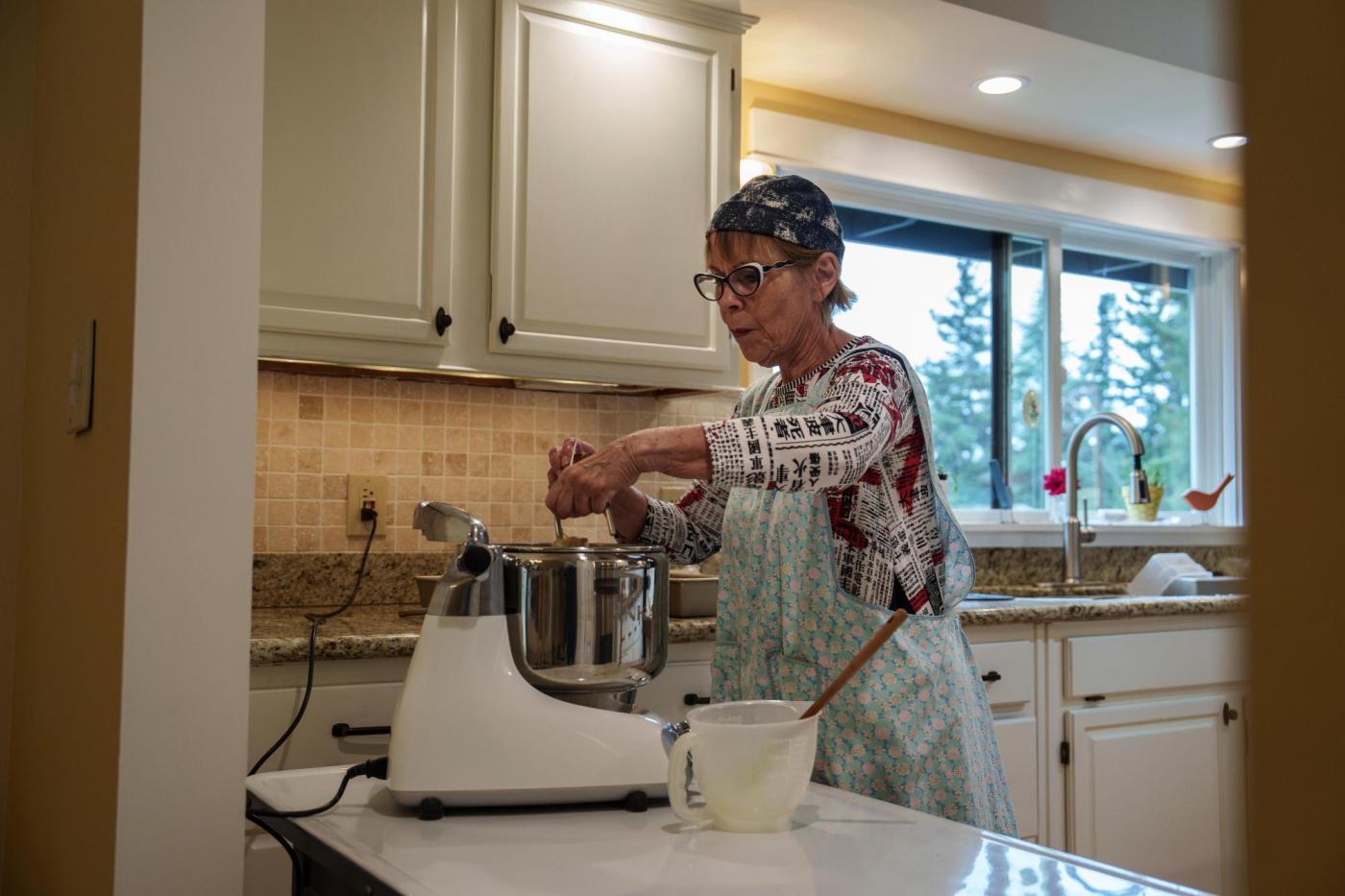
Recipe: Summer berry bars with lemon glaze are easier than pie

posted in: All news | 0

By Gretchen McKay, Pittsburgh Post-Gazette

Summer heat often makes baking less than desirable, so if you’re going to heat up the kitchen to make dessert, you gotta make it worth every bead of sweat that collects on your forehead.

These berry crumb bars are worth it and then some.

Built on a forgiving shortbread-like crust (it’s supposed to be crumbly) and topped with gooey seasonal fruit, they offer all the great taste of a summer pie but are so much easier to make since you don’t have to bother with mixing and rolling out dough.

How easy is this recipe? While a food processor or KitchenAid mixer will certainly speed things along, all you really need to cut in the butter that helps create the crumbly bottom layer is a fork or pastry cutter and some good old-fashioned elbow grease.

I used a mix of blueberries and strawberries because the two fruits have such complementary flavors and are always easy to find, often on sale. Also, two contrasting colors are always more visually appealing in a dessert than one.

If you’re worried about the butter and sugar content, at least know this: Both fruits are fairly low-cal and packed with vitamin C and other nutrients. Also, blueberries are famous for their high antioxidant content.

Be sure to allow the bars to cool completely on a wire rack before slicing into squares or they will crumble. The original recipe finished the bars with a simple lemon glaze, but I served them without.

Lemon Strawberry Crumb Bars

These crumbly summer berry bars are filled with a mix of strawberries and blueberries. (Gretchen McKay/The Pittsburgh Post-Gazette/TNS)

Serves 16; PG tested

INGREDIENTS

3 cups all-purpose flour, spooned and leveled

1 teaspoon baking powder

1/2 teaspoon salt

1 cup unsalted butter, very cold and cubed

1 large egg

1 large egg yolk

1 cup packed light or dark brown sugar

2 teaspoons pure vanilla extract

2 cups chopped strawberries

2 cups blueberries

1/3 cup granulated sugar

1 1/2 tablespoons cornstarch

1 teaspoon lemon zest

For optional glaze

1 cup confectioners’ sugar, sifted

2 tablespoons fresh lemon juice (about 1 lemon)

Related Articles


Delicious, home-cooked meals can still be on the menu even in a wonky vacation rental


Recipe: When peaches are in season, make this delectable dessert


Spicy-sweet gochujang elevates this simple chicken stir-fry


A look at Starbucks and its Pumpkin Spice Latte, which returns to US menus Aug. 26


Gretchen’s table: Singapore shrimp burgers offer a sweet and spicy take on a summer classic

DIRECTIONS

Preheat oven to 350 degrees. Line the bottom and sides of a 9-by-13-inch baking pan with parchment paper, leaving an overhang on the sides to lift the finished bars out. (This makes cutting easier!) Set aside.
Make the crumble mixture for the crust and topping: Whisk flour, baking powder and salt together in a large bowl.
Add cubed butter and using a pastry cutter or two forks, cut in the butter until all the flour is coated and resembles pea-sized crumbles. (I whisked the ingredients together in a food processor.)
Whisk egg, egg yolk, brown sugar and vanilla together in a small bowl. Pour over the flour/butter mixture and gently mix together until the mixture resembles moist, crumbly sand.
Use your hands if needed — the mixture comes together easier with your hands than a spoon.
You will have about 6 cups of the crust/crumble mixture. Set 2 cups aside.
Pour the remaining crumble mixture into the prepared pan and flatten down with your hands or a flat spatula to form an even crust. It will be a little crumbly — that’s OK. Set aside.
Make filling: In large bowl, mix strawberries, blueberries, granulated sugar, cornstarch and lemon zest together. Spoon evenly over crust.
Crumble the remaining butter/flour mixture on top and gently press down so it’s snug on the strawberry layer.
Bake for 45-50 minutes or until the top is lightly browned and the strawberry filling is bubbling on the sides. (My bars took about 55 minutes.)
Remove from the oven and place the pan on a wire rack. Allow to cool completely.
If adding a glaze, whisk the glaze ingredients together and drizzle on top of the bars (or you can drizzle on individual squares).
Lift the cooled bars out using the overhang on the sides. Cut into squares.
Cover and store leftover bars (with or without icing) at room temperature for up to 2 days, in the refrigerator for up to 1 week and in freezer for up to 3 months (arrange in even layers between sheets of parchment). To serve frozen bars, thaw overnight in the refrigerator, then bring to room temperature before serving.

Adapted from sallysbakingaddiction.com

©2025 PG Publishing Co. Visit at post-gazette.com. Distributed by Tribune Content Agency, LLC.

Cuts to food benefits stand in the way of RFK Jr.’s goals for a healthier national diet

posted in: All news | 0

By Renuka Rayasam, KFF Health News

ALBANY, Ga. — Belinda McLoyd has been thinking about peanut butter.

Related Articles


The US fertility rate reached a new low in 2024, CDC data shows


Smoky air from Canadian wildfires descends on Minnesota through Friday


Even grave errors at rehab hospitals go unpenalized and undisclosed


FDA panel on the use of antidepressants during pregnancy is alarming experts


What to know about soda sweeteners as sugar returns to American Coke

McLoyd, 64, receives a small monthly payment through the federal Supplemental Nutrition Assistance Program, previously known as food stamps.

“They don’t give you that much to work with,” she said. To fit her tight budget, she eats ramen noodles — high on sodium and low on nutrition — multiple times a week.

If she had more money, said McLoyd, who has been diagnosed with multiple sclerosis and heart problems, she’d buy more grapes, melons, chuck roast, ground turkey, cabbage, and turnip greens. That’s what she did when lawmakers nearly doubled her SNAP benefit during the pandemic.

But now that a GOP-led Congress has approved $186 billion in cuts to the food assistance program through 2034, McLoyd, who worked in retail until she retired in 2016, isn’t sure how she will be able to eat any healthy food if her benefits get reduced again.

McLoyd said her only hope for healthy eating might be to resort to peanut butter, which she heard “has everything” in it.

“I get whatever I can get,” said McLoyd, who uses a walker to get around her senior community in southwestern Georgia. “I try to eat healthy, but some things I can’t, because I don’t have enough money to take care of that.”

The second Trump administration has said that healthy eating is a priority. It released a “Make America Healthy Again” report citing poor diet as a cause of childhood illnesses and chronic diseases. And it’s allowing states — including Arkansas, Idaho, and Utah — to limit purchases of unhealthy food with federal SNAP benefits for the first time in the history of the century-old anti-hunger program.

President Donald Trump also signed a tax and spending law on July 4 that will shift costs to states and make it harder for people to qualify for SNAP by expanding existing work requirements. The bill cuts about 20% of SNAP’s budget, the deepest cut the program has faced. About 40 million people now receive SNAP payments, but 3 million of them will lose their nutrition assistance completely, and millions more will see their benefits reduced, according to an analysis of an earlier version of the bill by the nonpartisan Congressional Budget Office.

Researchers say SNAP cuts run counter to efforts to help people prevent chronic illness through healthy food.

“People are going to have to rely on cheaper food, which we know is more likely to be processed, less healthy,” said Kate Bauer, an associate professor of nutritional sciences at the University of Michigan School of Public Health.

“It’s, ‘Oh, we care about health — but for the rich people,’” she said.

About 47 million people lived in households with limited or uncertain access to food in 2023, according to the U.S. Department of Agriculture. The agency’s research shows that people living in food-insecure households are more likely to develop hypertension, arthritis, diabetes, asthma, and chronic obstructive pulmonary disease.

The Trump administration counters that the funding cuts would not harm people who receive benefits.

“This is total fearmongering,” said White House spokesperson Anna Kelly in an email. “The bill will ultimately strengthen SNAP for those who need it by implementing cost-sharing measures with states and commonsense work requirements.”

McLoyd and other residents in Georgia’s Dougherty County, where Albany is located, already face steep barriers to accessing healthy food, from tight budgets and high rates of poverty to a lack of grocery stores and transportation, said Tiffany Terrell, who founded A Better Way Grocers in 2017 to bring fresh food to people who can’t travel to a grocery store.

Belinda McLoyd and other residents in southwestern Georgia’ s Dougherty County face steep barriers to accessing healthy food, from tight budgets and high poverty rates to limited access to grocery stores and transportation. (Renuka Rayasam/KFF Health News/TNS)

More than a third of residents receive SNAP benefits in the rural, majority-Black county that W.E.B. Du Bois described as “the heart of the Black Belt” and a place “of curiously mingled hope and pain,” where people struggled to get ahead in a land of former cotton plantations, in his 1903 book, “The Souls of Black Folk.”

Terrell said that a healthier diet could mitigate many of the illnesses she sees in her community. In 2017, she replaced school bus seats with shelves stocked with fruits, vegetables, meats, and eggs and drove her mobile grocery store around to senior communities, public housing developments, and rural areas.

But cuts to food assistance will devastate the region, setting back efforts to help residents boost their diet with fruits, vegetables, and other nutritious food and tackle chronic disease, she said.

Terrell saw how SNAP recipients like McLoyd ate healthier when food assistance rose during the pandemic. They got eggs, instead of ramen noodles, and fresh meat and produce, instead of canned sausages.

Starting in 2020, SNAP recipients received extra pandemic assistance, which corresponded to a 9% decrease in people saying there was sometimes or often not enough food to eat, according to the Institute for Policy Research at Northwestern University. Once those payments ended in 2023, more families had trouble purchasing enough food, according to a study published in Health Affairs in October. Non-Hispanic Black families, in particular, saw an increase in anxiety, the study found.

“We know that even short periods of food insecurity for kids can really significantly harm their long-term health and cognitive development,” said Katie Bergh, a senior policy analyst on the food assistance team at the Center on Budget Policy and Priorities. Cuts to SNAP “will put a healthy diet even farther out of reach for these families.”

The Trump administration said it’s boosting healthy eating for low-income Americans through restrictions on what they can buy with SNAP benefits. It has begun approving state requests to limit the purchase of soda and candy with SNAP benefits.

Research shows that programs encouraging SNAP recipients to buy healthy food are more effective than regulating what they can buy. (Renuka Rayasam/KFF Health News/TNS)

“Thank you to the governors of Indiana, Arkansas, Idaho, Utah, Iowa, and Nebraska for their bold leadership and unwavering commitment to Make America Healthy Again,” said Health and Human Services Secretary Robert F. Kennedy Jr. in a press release about the requests. “I call on every governor in the nation to submit a SNAP waiver to eliminate sugary drinks — taxpayer dollars should never bankroll products that fuel the chronic disease epidemic.”

Although states have asked for such restrictions in the past, previous administrations, including the first Trump administration, never approved them.

Research shows that programs encouraging people to buy healthy food are more effective than regulating what they can buy. Such limits increase stigma on families that receive benefits, are burdensome to retailers, and often difficult to implement, researchers say.

“People make incredibly tough choices to survive,” said Gina Plata-Nino, the deputy director of SNAP at the Food Research & Action Center, a nonprofit advocacy group, and a former senior policy adviser in the Biden administration.

Tiffany Terrell said that a healthier diet could mitigate many of the illnesses she sees in her southwestern Georgia community. (Renuka Rayasam/KFF Health News/TNS)

“It’s not about soda and candy,” she said. “It’s about access.”

Terrell said she is unsure how people will survive if their food benefits are further trimmed.

“What are we thinking people are going to do?” said Terrell of A Better Way Grocers, who also opened a bustling community market last year that sells fresh juices, smoothies, and wellness shots in downtown Albany. “We’ll have people choosing between food and bills.”

That’s true for Stephen Harrison, 22, whose monthly SNAP benefit supports him, along with his parents and younger brother. During the pandemic, he used the extra assistance to buy strawberries and grapes, but now he comes into A Better Way Grocers to buy an orange when he can.

Stephen Harrison’ s monthly SNAP benefit supports him along with his mom, dad and brother. (Renuka Rayasam/KFF Health News/TNS)

Harrison, who is studying culinary arts at Albany Technical College, said his family budgets carefully to afford meals like pork chops with cornbread and collard greens, but he said that, if his benefits are cut, the family will have to resort to cheaper foods.

“I’d buy hot dogs,” he said with a shrug.

©2025 KFF Health News. Distributed by Tribune Content Agency, LLC.

1 dead, 1 wounded, suspect at large in University of New Mexico dorm shooting

posted in: All news | 0

ALBUQUERQUE, N.M. (AP) — One person was fatally shot and another was wounded early Friday at the University of New New Mexico in Albuquerque, where authorities said the suspect remains at large. They shut down the campus and told students to shelter in place.

Related Articles


Today in History: July 25, Tuskegee Syphilis Study exposed


Federal regulators approve Paramount’s $8 billion deal with Skydance, capping months of turmoil


Mexican national married to a Marine Corps veteran seeks release from immigration custody


Judge orders Wisconsin school shooter’s father to stand trial on charges he allowed access to guns


New sentencing dates set for 5 former Memphis, Tennessee, officers in Tyre Nichols case

Gunshots were fired at the Casas del Rio dormitory complex, the university said in a statement. The wounded person’s injuries were not life-threatening, it said.

“Out of an abundance of caution, UNM has closed its Albuquerque central campus,” the university said in the statement, posted online about 6:30 a.m.

“Multiple law enforcement agencies are on scene and actively investigating,” it said.

The university in central Albuquerque has about 23,000 students during the school year.

The foster care system has a suicide problem. Federal cuts threaten to slow fixes

posted in: All news | 0

By Cheryl Platzman Weinstock, KFF Health News

If you or someone you know may be experiencing a mental health crisis, contact the 988 Suicide & Crisis Lifeline by dialing or texting “988.”

Elliott Hinkle experienced depression and suicidal thoughts even before entering the foster care system in Casper, Wyoming, at age 15.

At the time, Hinkle, who is transgender, struggled with their sexual identity and gender issues, and their difficulties continued in foster care. They felt like they had no one to confide in — not their foster parents, not church leaders, not their caseworker.

“To my knowledge, I don’t remember ever taking a suicide screening,” Hinkle said. “No one ever said: ‘Are you having thoughts of taking your life? Do you feel hopeless?’”

With their psychological and behavioral health needs left unaddressed, Hinkle’s depression and suicidal thoughts worsened.

“Do I stay in the closet and feel terrible and want to end my life?” Hinkle said. “Or do I come out and lose all my supports, which also feels dangerous?”

Children in foster care are significantly more likely to have mental health issues, researchers say. They attempt or complete suicide at rates three to four times that of youths in the general population, according to several studies.

LGBTQ+ people in foster care, like Hinkle, are at an even higher risk of having suicidal thoughts.

Yet despite the concentration of young people at risk of serious mental illness and suicide, proactive efforts to screen foster children and get them the treatment they need have been widely absent from the system. And now, efforts underway to provide widespread screening, diagnosis, and treatment are threatened by sweeping funding cuts the Trump administration is using to reshape health care programs nationwide.

In June, federal officials announced they would shut down a suicide hotline serving LGBTQ+ youths as part of those cuts.

Children in foster care use a disproportionate amount of Medicaid-funded mental health services. Meanwhile, President Donald Trump’s massive budget package, passed this month by Congress, contains substantial shifts in Medicaid funding and policies that are projected to drastically reduce services in many states.

“I think anybody who cares about kids’ well-being and mental health is concerned about the possibility of reduced Medicaid funding,” said Cynthia Ewell Foster, a child psychologist and clinical associate professor in the University of Michigan psychiatry department. “The most vulnerable children, including those in foster care, are already having trouble getting the services they need.”

A lack of federal standards and other system-level issues create barriers to psychological and behavioral care in the child welfare system, said Colleen Katz, a professor at Hunter College’s Silberman School of Social Work in New York.

“When you’re talking about anyone getting screened for suicide ideation upon entrance into the system, it’s inconsistent at best,” she said.

Related Articles


The US fertility rate reached a new low in 2024, CDC data shows


Smoky air from Canadian wildfires descends on Minnesota through Friday


Even grave errors at rehab hospitals go unpenalized and undisclosed


FDA panel on the use of antidepressants during pregnancy is alarming experts


What to know about soda sweeteners as sugar returns to American Coke

Katz said all children entering foster care should have a brief, standardized suicide screening embedded into their initial medical assessment. And more screenings need to be conducted throughout a foster care stay, she said, because youths getting ready to transition out of the system are also vulnerable.

Hinkle, now 31, said the summer before they aged out of the system was “one of the darkest periods, because I was coming to terms with the church not wanting me to be gay and I was about to lose stable housing and whatever foster care support there was.”

Katz studied transition-age youths in foster care in California, which has the highest numbers of placements in foster care nationwide. According to her analysis, 42% of study participants had thoughts of taking their life and 24% had attempted suicide, and she expects findings would be similar in other states.

Katz also examined suicide screening tools and found many that already exist could work and be easily administered by trained child welfare workers or alternative frontline service providers, or embedded in existing mental health services.

Still, the quality of services varies by state and locality and can hinder attempts to curb suicides.

Julie Collins, vice president of practice excellence at the Child Welfare League of America, which advocates for improvements to the child welfare system, said the gap in suicide prevention in foster care mirrors the overall nationwide void of behavioral health services for children and adolescents. “The preparation of people coming into the field isn’t what it needs to be,” Collins said of the lack of training for caseworkers.

Ewell Foster is trying to change that.

She worked with the state of Michigan to redefine and update the competencies required to earn an undergraduate certificate in child welfare in the state. Eighteen colleges and universities that offer certificate programs in child welfare in Michigan now teach about suicide prevention.

“It’s something the workforce has asked for,” Ewell Foster said. “They need real clear guidance on what to do when they are worried about someone.”

So far, Ewell Foster’s effort to change the wider system has not run into any roadblocks. Her work with Michigan’s child welfare agency is still being funded under a grant administered by the Substance Abuse and Mental Health Services Administration.

Agency spokesperson Danielle Bennett said such grants will continue for up to three years.

However, the future of the federal agency has been in question for months. The Trump administration has laid off hundreds of its employees and has proposed folding its functions into another agency.

Some states have made changes to address the foster care gaps on their own, but often it has taken legal action to spark changes in suicide prevention efforts.

In Kansas, officials made several changes after the state settled the McIntyre v. Howard class action lawsuit in 2021 on behalf of foster children who the suit alleged were subjected to inadequate access to mental health resources and moved from home to home frequently.

The state increased salaries for social workers in the child welfare system and reduced their caseloads, among other things.

Other states, including Texas, have implemented similar changes after facing lawsuits.

Still, experts caution that the changes taking place in foster care systems are not enough to steer outcomes.

Lily Brown, an assistant professor of psychology and director of the Center for the Treatment and Study of Anxiety at the University of Pennsylvania Perelman School of Medicine, said moving the needle in suicide prevention will require implementing a universal risk assessment for children in state care.

Brown recently sought a grant to fund and implement free, universal suicide risk screening in foster care throughout Pennsylvania. She had several counties agree to the project, but not enough to support her application — the study wouldn’t have had enough participants to work statistically, she said.

Without such studies, foster care systems nationwide can’t meet the needs of children, she said.

April Miller, 27, entered the system in Minnesota at age 3. As a Native American, she is part of a group that is overrepresented in foster care.

“The child welfare system as a whole neglected me,” said Miller, who said she endured several traumatic events in her early life, including witnessing a murder.

“I did a lot of self-harm and had thoughts of suicide but didn’t have access to means, which is why I am still alive,” she said.

Today, Miller is a social worker and suicide prevention coordinator in Bemidji, Minnesota.

Similarly, Hinkle’s experience in the system made them driven to change the trajectory of other young people.

Hinkle provides training, consultation, and policy development services at Unicorn Solutions in Oregon in support of youths and young adults affected by systems such as child welfare, with a particular focus on the LGBTQ+ community.

They said they are committed to making sure that sexual identity and gender topics are not avoided in the system.

“I think every young person should feel loved and cared for,” Hinkle said.

©2025 KFF Health News. Distributed by Tribune Content Agency, LLC.