Following Venus Williams’ comment on health insurance, here’s what to know about athlete coverage

posted in: All news | 0

By ALYCE BROWN

Venus Williams’ recent singles win at the D.C. Open showcased her longevity and brought attention to health coverage for aging athletes following a joking comment she made in an on-court interview.

Related Articles


Vikings receiver Justin Jefferson has mild hamstring strain


Timberwolves guard Mike Conley talks Wolves, his health and golf


Venezuelan baseball team denied visas into US, Little League International says


Lynx’s Courtney Williams loves these sneakers, but she gets fined for wearing them


Loons at St. Louis: Storylines, how to watch, key stat and a prediction

“I had to come back for the insurance,” the five-time Wimbledon champion said after Tuesday’s match, her first in 16 months. “They informed me this year that I’m on COBRA, so it’s like, I got to get my benefits on.”

The 45-year-old Williams, who has won seven major singles titles, became the second-oldest woman to win a tour-level singles match in professional tennis with Tuesday’s victory. After losing on Thursday, she acknowledged that her comment on health insurance was a “fun and funny moment.”

The Consolidated Omnibus Budget Reconciliation Act, more commonly referred to as COBRA, allows Americans to stay on their employer’s insurance plan for a limited amount of time after leaving their job. It comes with high costs.

Williams’ comment led to questions about health insurance in the sports world.

For most active professional athletes, partially or fully subsidized health insurance is provided by their league or governing body and guaranteed in their collective bargaining agreement. A CBA is an agreement reached between a league and its players that guarantees certain levels of player compensation and benefits, and can be renegotiated every few years.

So when athletes are playing, they’re usually covered. But Williams, coming back to the sport after a 16-month hiatus, brought to light how long that insurance lasts — or doesn’t last — for athletes when they’re not playing.

Women’s tennis

In the WTA, the governing body of the women’s tour, players are eligible to enroll in the health insurance plan if they are ranked in the top 500 in singles or top 175 in doubles and have played a minimum of three WTA 250 level or above tournaments that year. If players are in the top 150 in singles or top 50 in doubles, the WTA will pay a portion of the premiums.

If a player is no longer eligible under those requirements, they can enroll in COBRA for up to 18 months, which is likely the situation that Williams was referencing. That is also the WTA’s only option for retiring players.

Venus Williams returns the ball against Magdalena Frech, of Poland, during a match at the Citi Open tennis tournament Thursday, July 24, 2025, in Washington. (AP Photo/Nick Wass)

“Nobody wants to be on COBRA, right?” Williams said after her second-round loss on Thursday night. “That remains an issue in my life. … Obviously (the interview was) a fun and funny moment, but it’s an issue that people are dealing with, so it is serious.”

Men’s tennis

The ATP provides health insurance to men’s tennis players who rank in the top 250 in singles or top 50 in doubles. All other players with a ranking point are given the opportunity to purchase health insurance through the ATP’s provider.

For retired players, the only option is COBRA for up to three years.

Golf

As an individual sport without a CBA, golf tours vary. They do have a group insurance plan that is available to active members of the PGA Tour, the PGA Tour Champions (the tour for golfers over 50) and the Korn Ferry Tour (the feeder circuit for the PGA Tour). For players who meet certain “performance criteria,” including how many tournaments they played and how often they won, the PGA Tour will partially subsidize the plan.

In retirement, players are responsible for their own insurance. Some players join the PGA Tour Champions after the PGA Tour and play into their mid-60s, during which they maintain coverage. Top players can receive a subsidy from the PGA Tour in retirement.

The LPGA Tour, the women’s professional golf tour, started offering its players fully funded health insurance for the first time this year. Before this year, players were given a $4,000 stipend.

NBA

NBA players have access to one of the most inclusive insurance plans in retirement. If they played at least three years in the league, retired NBA players are eligible for fully funded health insurance in retirement, and if they played at least 10 years, they will have health care covered for their entire family.

WNBA

WNBA players are fighting for retirement health care as part of their new CBA, which they are currently negotiating with the league. Those negotiations have been heated, and the most recent meeting between the two sides last weekend did not result in an agreement.

One unique facet of the WNBA’s healthcare is that athletes who have spent more than eight years in the league can be reimbursed up to $20,000 a year for costs related to adoption, surrogacy, egg freezing or additional fertility treatments.

NFL

The NFL has less long-term coverage for retirees than most other leagues — athletes who played in the league for at least three years can remain on the NFL health insurance plan, but only for five years into retirement.

NHL

NHL players who have played more than 160 games with the league, which is about two seasons, are eligible to buy NHL health insurance for their retirement. The retirement insurance plan is eligible for partial subsidization from the league.

MLB

Baseball players who spent at least four years in the majors have the option to pay premiums to stay on the MLB’s health care plan indefinitely.

Minor league baseball has its own separate CBA, which also guarantees health insurance for active players. In the minors, however, players who get cut or leave the league lose coverage at the end of that month.

AP sports: https://apnews.com/hub/sports

Minnesota lawmakers can draw additional state funds for security costs

posted in: All news | 0

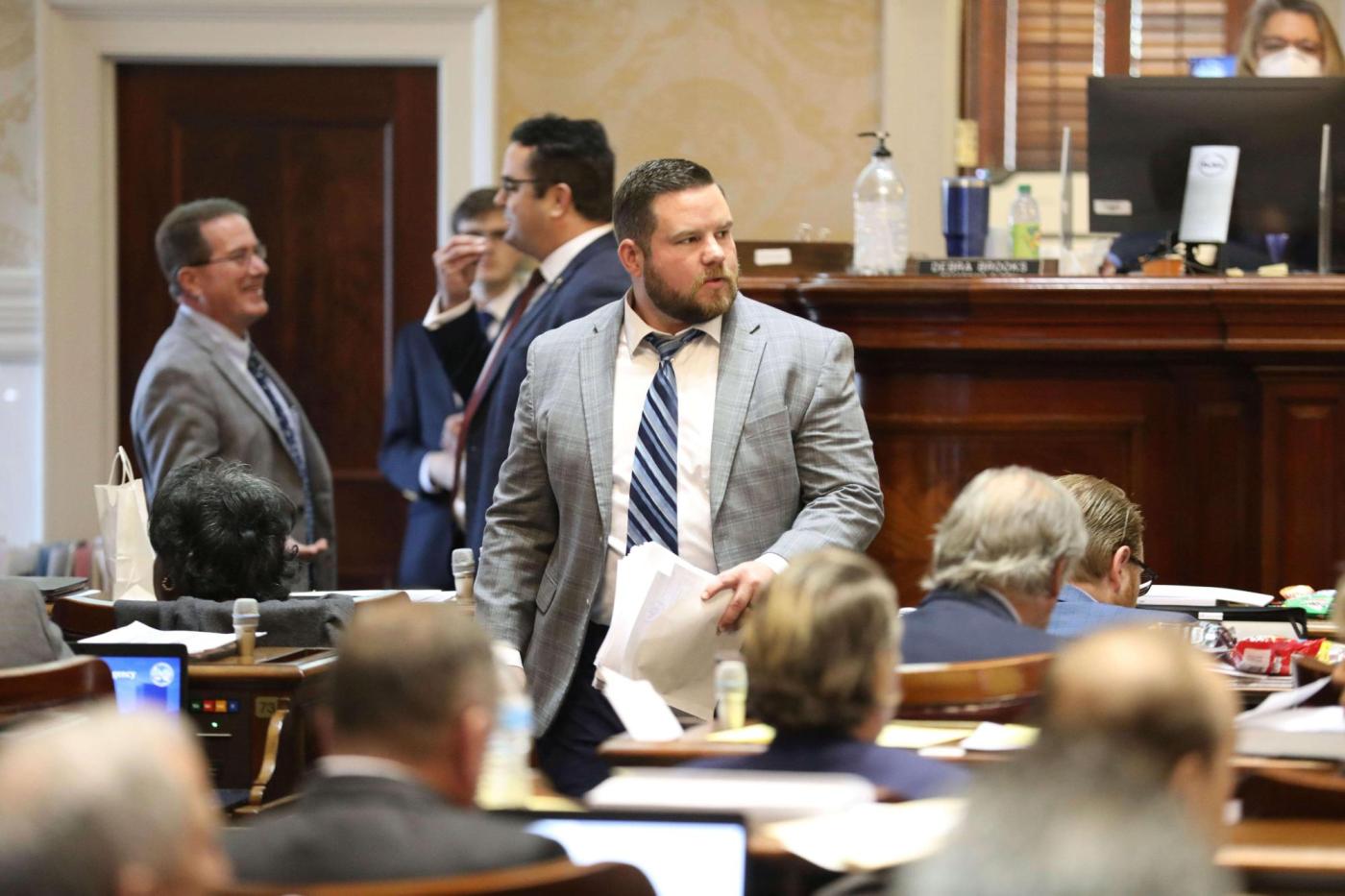
Minnesota lawmakers will have access to additional state funding to secure their homes following a pair of shootings targeting elected officials.

Members of the state Senate and House will be able to draw up to $4,500 to cover the cost of home security systems, deadbolts and other safety features. The money will come from each chamber’s operation fund, according to the Secretary of the Senate Tom Bottern and a House official who spoke without being identified by name.

The move was first reported by WCCO.

Lawmakers have increasingly spoken of the need to safeguard their houses in the wake of a June fatal attack on House DFL Caucus Leader Melissa Hortman and her husband, Mark. They were shot in their Brooklyn Park home by a man impersonating a police officer. Sen. John Hoffman and his wife, Yvette, were shot in their Champlin home as well in a similar attack that also put their daughter, Hope, at risk.

The suspect in both shootings faces state and federal charges. Authorities say he went to the homes of at least two other Democratic lawmakers and had a list of others in the car he abandoned when he fled the Hortman home.

State Sen. Aric Putnam, DFL-St. Cloud, said he installed additional security measures at his home a couple years ago after he was threatened.

“I was experiencing some threats, so I used some campaign resources to install a security system in our house,” he said Thursday to MPR News. “With me being out, down at the Capitol four months out of the year, we thought it was a prudent and important and necessary investment.”

Putnam used campaign funds for those security measures. State law permits candidates to use up to $3,000 from their campaign accounts toward security costs.

A Minnesota House official who spoke only on the condition of anonymity said there would be an effort to continue the funding automatically into the future. The goal is to ensure that lawmakers elected later could also access security enhancements.

Putnam said he thinks adding more allowances for security for public officials is a good idea.

“I think it’s important that legislators feel safe, and that people who get involved in public service have some degree of safety,” he said, adding that he thinks that should extend to Supreme Court justices and others.

Related Articles


State Sen. Nicole Mitchell resigns from office after felony convictions


Patrick Knight: What’s the plan if our expansive new family-leave law doesn’t work as imagined?


Letters: With allegations of more huge fraud in Minnesota, these questions come to mind


Minnesota State Sen. Bruce Anderson dies at age 75


State Sen. Nicole Mitchell to resign after burglary conviction

“There’s lots of folks who get involved in public service, and in becoming public, you kind of lose control over some of those boundaries,” Putnam continued. “So whatever we can do to kind of help maintain those boundaries so that people can maintain as normal life as they can, I think is a good thing.”

Congress has also taken similar action recently to increase funding for lawmakers’ safety when they’re away from the Capitol.

Additional conversations about Capitol-area security are ongoing, and a panel tasked with managing safety on the Capitol complex is scheduled to meet Aug. 20.

Tea, an app for women to safely talk about men they date, has been breached, user IDs exposed

posted in: All news | 0

Tea, an app designed to let women safely discuss men they date has been breached, with thousands of selfies and photo IDs of users exposed, the company confirmed on Friday.

Related Articles


Intel cuts back spending, workforce as struggling chip maker mounts comeback


Wall Street’s winning week ends with more records for US stocks


The 7 mistakes I made when refinancing my mortgage


MPR’s parent company announces layoffs, citing cuts in government support


Federal regulators approve Paramount’s $8 billion deal with Skydance, capping months of turmoil

Tea said that about 72,000 images were leaked online, including 13,000 images of selfies or selfies featuring a photo identification that users submitted during account verification. Another 59,000 images publicly viewable in the app from posts, comments and direct messages were also accessed without authorization, according to a Tea spokesperson.

No email addresses or phone numbers were accessed, the company said, and the breach only affects users who signed up before February 2024.

“Tea has engaged third-party cybersecurity experts and are working around the clock to secure its systems,” the company said. “At this time, there is no evidence to suggest that additional user data was affected. Protecting tea users’ privacy and data is their highest priority.”

Tea presents itself as a safe way for women to anonymously vet men they might connect with on dating apps such as Tinder or Bumble — ensuring that your date is “safe, not a catfish, and not in a relationship.”

“Tea is a must-have app, helping women avoid red flags before the first date with dating advice, and showing them who’s really behind the profile of the person they’re dating,” reads Tea’s app store description.

404 Media, which earlier reported the breach, said it was 4Chan users who discovered an exposed database that “allowed anyone to access the material” from Tea.

“While reporting this story, a URL the 4chan user posted included a voluminous list of specific attachments associated with the Tea app. 404 Media saw this list of files. In the last hour or so, that page was locked down, and now returns a “Permission denied” error,” 404 Media reported Friday.

Tea said in an Instagram post this week that it has reached 4 million users.

Democrats and advocates criticize Trump’s executive order on homelessness

posted in: All news | 0

By JANIE HAR and CHARLOTTE KRAMON

SAN FRANCISCO (AP) — Leading Democrats and advocates for homeless people are criticizing an executive order President Donald Trump signed this week aimed at removing people from the streets, possibly by committing them for mental health or drug treatment without their consent.

Related Articles


House ethics panel tells Rep. Alexandria Ocasio-Cortez to pay more for Met Gala attendance


Judge blocks Trump’s birthright citizenship restrictions in third ruling since high court decision


FACT FOCUS: Trump claims cashless bail increases crime, but data is inconclusive


Epstein ex-girlfriend Ghislaine Maxwell finishes interviews with Justice Department officials


Trump administration investigates Oregon’s transgender athlete policies

Trump directed some of his Cabinet heads to prioritize funding to cities that crack down on open drug use and street camping, with the goal of making people feel safer. It’s not compassionate to do nothing, the order states.

“Shifting these individuals into long-term institutional settings for humane treatment is the most proven way to restore public order,” the order reads.

Homelessness has become a bigger problem in recent years as the cost of housing increased, especially in states such as California where there aren’t enough homes to meet demand. At the same time, drug addiction and overdoses have soared with the availability of cheap and potent fentanyl.

The president’s order might be aimed at liberal cities such as San Francisco, Los Angeles and New York, which Trump views as too lax about conditions on their streets. But many of the concepts have already been proposed or tested in California, where Gov. Gavin Newsom and Democratic mayors have worked for years to get people off the streets and into treatment.

Last year, the U.S. Supreme Court made it easier for cities to clear encampments even if the people living in them have nowhere else to go.

Still, advocates say Trump’s new order is vague, punitive and won’t effectively end homelessness.

Newsom has directed cities to clean up homeless encampments and he’s funneled more money into programs to treat addiction and mental health disorders.

His office said Friday that Trump’s order relies on harmful stereotypes and focuses more on “creating distracting headlines and settling old scores.”

“But, his imitation (even poorly executed) is the highest form of flattery,” spokesperson Tara Gallegos said in a statement, referring to the president calling for strategies already in use in California.

San Francisco Mayor Daniel Lurie has also emphasized the importance of clean and orderly streets in banning homeless people from living in RVs and urging people to accept the city’s offers of shelter. In Silicon Valley, San Jose Mayor Matt Mahan recently pushed a policy change that makes a person eligible for jail if they reject three offers of shelter.

Trump’s executive order tasks Attorney General Pam Bondi and the secretaries for health, housing and transportation to prioritize grants to states and local governments that enforce bans on open drug use and street camping.

Devon Kurtz, the public safety policy director at the Cicero Institute, a conservative policy group that has advocated for several of the provisions of the executive order, said the organization is “delighted” by the order.

He acknowledged that California has already been moving to ban encampments since the Supreme Court’s decision. But he said Trump’s order adds teeth to that shift, Kurtz said.

“It’s a clear message to these communities that were still sort of uncomfortable because it was such a big change in policy,” Kurtz said.

But Steve Berg, chief policy officer at the National Alliance to End Homelessness, called parts of the order vague. He said the U.S. abandoned forced institutionalization decades ago because it was too expensive and raised moral and legal concerns.

“What is problematic about this executive order is not so much that law enforcement is involved — it’s what it calls on law enforcement to do, which is to forcibly lock people up,” Berg said. “That’s not the right approach to dealing with homelessness.”

The mayor of California’s most populous city, Los Angeles, is at odds with the Newsom and Trump administrations on homelessness. Mayor Karen Bass, a Democrat, opposes punishing sweeps and says the city has reduced street homelessness by working with homeless people to get them into shelter or housing.

“Moving people from one street to the next or from the street to jail and back again will not solve this problem,” she said in a statement.

Kramon reported from Atlanta. She is a corps member for The Associated Press/Report for America Statehouse News Initiative. Report for America is a nonprofit national service program that places journalists in local newsrooms to report on undercovered issues.