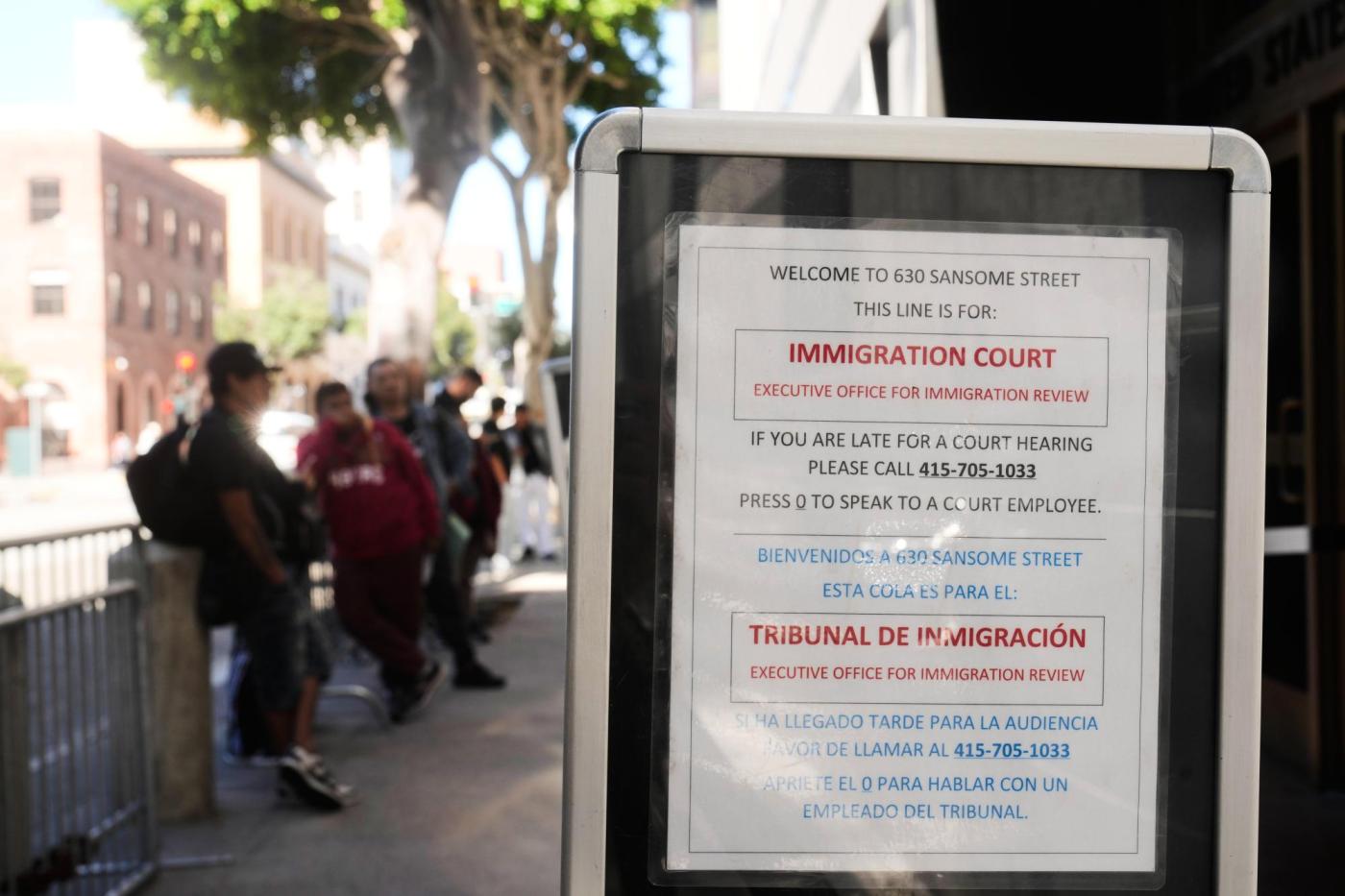
San Francisco leaders push back against Trump’s National Guard threat

posted in: All news | 0

By OLGA R. RODRIGUEZ and JANIE HAR

SAN FRANCISCO (AP) — President Donald Trump keeps threatening to send National Guard troops to San Francisco next, blasting the California city as crime-ridden and saying its residents are clamoring for federal help.

Related Articles


Lawsuit seeks to force swearing in of US Rep.-elect Adelita Grijalva of Arizona


Judge says DHS social media posts in Rep. McIver prosecution are ‘prejudicial’ and should be removed


‘Free trade sourcing cheap global goods’: Ranchers want Trump to reconsider Argentine beef import plan


Democrats look to long term as North Carolina GOP redistricting plan seeks another seat for Trump


Trump administration pledges to speed some student loan forgiveness after lawsuit

But local and state leaders say that couldn’t be farther from the truth, noting overall crime is down and the city has started to turn around its downtrodden pandemic image. Residents and workers out downtown this week said they’re puzzled and concerned by Trump’s threat.

“This is a safe American city,” Mayor Daniel Lurie told The Associated Press last week. “We got this in San Francisco.”

The Republican president has referenced crime as his justification for possibly sending troops to the city of roughly 830,000. He’s deployed the Guard over crime concerns to Washington, D.C., where he has direct control of the National Guard, and Memphis, where the Republican governor supports their presence. Los Angeles was the first city where Trump deployed the Guard, arguing it was necessary to protect federal buildings and agents as protesters fought back against mass immigration arrests. He’s since said they’re needed in Chicago and Portland, Oregon, as well.

Residents and leaders in Portland were surprised by Trump’s attention when he described the city as besieged by violent protests. In reality, nightly protests were small and limited to the area outside a federal immigration building. While there were some arrests for violence, the demonstrations were far less intense than those that roiled the downtown in 2020 following the death of George Floyd.

In San Francisco, too, Trump seems to be relying on an outdated picture of a city often targeted by conservatives.

“The difference is, I think they want us in San Francisco,” Trump said Sunday on Fox News. “San Francisco was truly one of the great cities of the world. And then, 15 years ago, it went wrong. It went woke.”

His comments angered and baffled Kate Freudenberger, who works in retail.

“You’ve been walking around the city, it’s peaceful, there is no insurrection,” she said Tuesday morning, adding that immigration authorities have not been as active in San Francisco as in other cities, “so there’s really been nothing for us to coalesce around.”

Marc Benioff, the chief executive of San Francisco-based software giant Salesforce, caused a stir when he told the New York Times earlier this month that he’d welcome Guard troops to help quell crime ahead of his major annual business conference. He has since apologized for his remarks, saying the conference was the “largest and safest” in its history and the Guard is not needed.

The city emerges from struggles

San Francisco is still recovering from the coronavirus pandemic, which emptied its downtown and brought renewed attention to street homelessness and open drug dealing. But signs indicate a city on the upswing. Artificial intelligence startups are snapping up office space, and home rental prices are rising. San Francisco saw a 21% increase from last year in office visits, according to location analytics platform Placer.ai, and public transit ridership is at its highest levels since the pandemic.

The Wall Street Journal this week declared the city was emerging from its “doom loop,” an article the mayor eagerly shared on social media.

Sidewalks are cleaner and tent encampments have largely disappeared from view. In the Tenderloin, one of the most troubled neighborhoods, teams of city and nonprofit workers on Monday helped school children cross the street, walked around picking up trash or counseled homeless people. It was a different image than during the pandemic, when hundreds of people camped on sidewalks.

Still, the Tenderloin is a problem spot for public drug use and dealing, as are the Mid-Market and Mission neighborhoods. But overall crime is down more than 26% this year compared to the same period last year, according to the San Francisco Police Department. Vehicle break-ins — which have vexed tourists and residents alike — are at a 22-year low, Lurie said.

Lurie, a centrist Democrat who has tried to avoid confrontations with Trump by ignoring many of the president’s comments, said Monday he’d welcome more federal help to arrest drug dealers and disrupt drug markets. But sending in the Guard wouldn’t achieve that, he said.

“The National Guard does not have the authority to arrest drug dealers—and sending them to San Francisco will do nothing to get fentanyl off the streets or make our city safer,” Lurie said in a statement.

San Francisco voters in 2024 gave police the authority to use drones, surveillance cameras and other technology to fight crime. They also ousted politically progressive District Attorney Chesa Boudin in a 2022 recall election and installed Brooke Jenkins, considered to be much tougher on crime than her predecessor. Lurie has pushed to hire and retain police officers, and entry-level police applications are up 40% over last year.

California leaders pledge to fight back

Meanwhile, Gov. Gavin Newsom’s administration has said it would push back forcefully on any deployment, as it did when Trump first ordered the California National Guard into Los Angeles against Newsom’s wishes. California Attorney General Rob Bonta vowed to “be in court within hours, if not minutes” if there is a federal deployment.

Lawsuits by Democratic officials in Chicago and Portland have so far blocked troops from going out on city streets.

Libby Baxter, a retired nurse, said Trump has sent the National Guard to Democratic cities to create “chaos and unrest” and she fears the same could happen in San Francisco.

“I believe that that may happen if they come to San Francisco because we are a very tolerant community, but we don’t do well with somebody coming in and trying to dictate or take over certain parts of our city,” she said.

Opinion: Funding The First Step to Community-Led Change 

posted in: All news | 0

“In philanthropy, scale is often talked about in millions of dollars. But the reality is that some of the most transformative projects in New York City start with much less.”

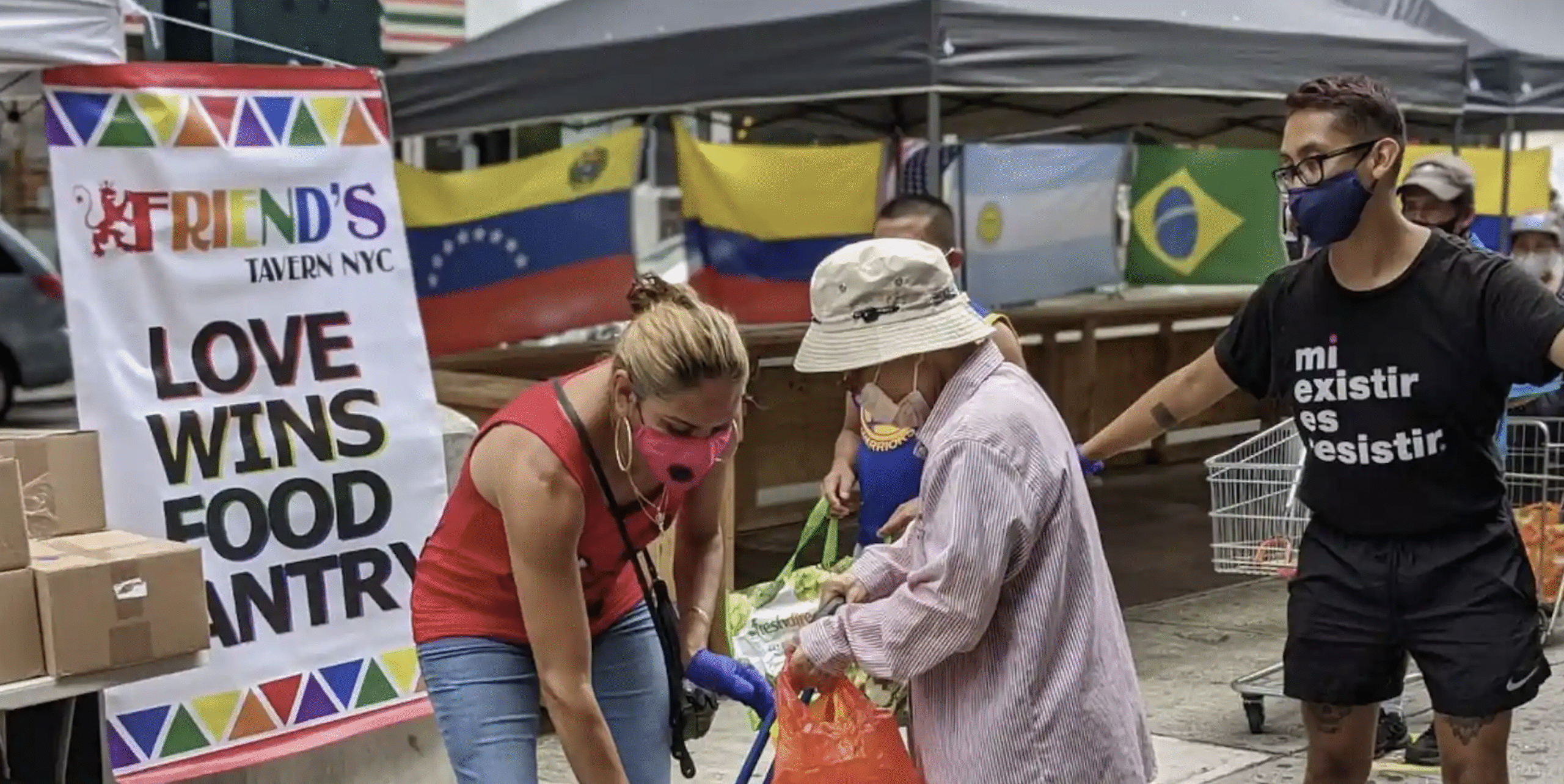
Love Wins NYC, a food pantry that feeds thousands of hungry New Yorkers every month, is among CitizensNYC’s grantees. (Citizens Committee for New York City)

How do you change your neighborhood? Sometimes, all it takes is a few thousand dollars and someone who believes in you. 

At CitizensNYC, we’ve spent 50 years investing in that kind of possibility. As one of the country’s first microgranting institutions, we’ve funded thousands of local leaders—New Yorkers who are deeply rooted in their communities and already working to solve the challenges right outside their front doors.

With grants of up to $5,000 and capacity-building support, we don’t just back ideas. We make long-term commitments to community leaders—investing in their success through coaching, skill-building workshops, affinity groups, larger convenings, collaborative projects, and connections to other private and public funding opportunities. This multi-pronged approach leads to something powerful: sustainable, community-led change. 

In philanthropy, scale is often talked about in millions of dollars. But the reality is that some of the most transformative projects in New York City start with much less. Our grantee partners begin with limited infrastructure, small budgets, and big ideas. What they lack in resources, they more than make up for in vision and understanding of local needs. And when they succeed, which they do, time and time again, it’s not just their communities that benefit. It’s the entire city. 

Two of our longtime partners, Flanbwayan Haitian Literacy Project and Think!Chinatown, offer a window into what this growth looks like. 

When Darnell Benoit founded Flanbwayan in 2004, she was a teacher trying to help newly arrived Haitian students navigate New York’s public school system. She had no formal nonprofit training—just a deep understanding of what her students needed and a desire to build something better.

With a $4,500 grant from CitizensNYC, Darnell got her start. “I was just a teacher with an idea,” she told us. “All of our firsts came from that first check. Our first space, hiring our first intern, buying our first computer.” 

Today, Flanbwayan is a cornerstone of Brooklyn’s Haitian community, offering culturally responsive programming, advocacy, and support to immigrant youth and families. “That seed funding made all the difference. It allowed me to dream bigger.”  Due to the size of her current operating budget, Darnell no longer qualifies for a CitizensNYC grant—and that’s a success story. 

In 2017, we awarded a grant to Yin Kong to support a small art installation in Manhattan’s Chinatown. That project became the seed for Think!Chinatown, an organization now recognized citywide for its work at the intersection of arts, culture, and community empowerment.

Like many of our grantee partners, Yin didn’t just use our funding to launch a project. She used our partnership to grow her capacity as a leader. We introduced her to experts in nonprofit finance. She recruited volunteers. The work grew. Today, Think!Chinatown is a community pillar. The organization has helped transform Manhattan’s Chinatown into a more connected, culturally vibrant, and civically engaged neighborhood.

From hosting community-wide events like the Chinatown Night Market and Storytelling Festival, to partnering on needs assessments that inform equitable planning, its work has built both visibility and power for longtime residents. What began as a small, art-centered initiative has grown into a trusted hub for civic engagement—mobilizing resources, preserving cultural heritage, and creating joyful public spaces that reflect the community’s voice and vision. 

Stories like these aren’t exceptions. Small organizations all over New York City are making a huge impact. 

And many of the partners we fund don’t stay small forever. They grow into anchor institutions, trusted neighborhood spaces where people find support, resources, and a sense of belonging. They win additional grants, build new coalitions, and shape policy. Other grantee partners have gone on to lead citywide climate resilience work and launch school-based health initiatives, for instance. And nearly all of them started with a single CitizensNYC microgrant. 

One of them is Brooklyn Level Up, founded by Allyson Martinez. Over the course of three consecutive years, Allyson received CitizensNYC microgrants to support youth-led environmental justice projects, entrepreneurship training, and racial equity initiatives. Each grant helped her grow her vision—scaling from one-time neighborhood events to a multi-service nonprofit advancing community-first development and local power. Today, Brooklyn Level Up is a model for what long-term, grassroots investment can achieve. 

And Allyson’s journey has come full circle. This year, she became one of our first CitizensNYC Elliott Fellows—a new initiative honoring leaders who’ve outgrown our grant eligibility but remain deeply tied to our mission. As a Fellow, Allyson now helps coach and advise emerging grantees, building a virtuous circle of community leadership: from seed funding, to sustained impact, to giving back. 

This kind of grassroots pipeline is an overlooked but vital part of our city’s nonprofit ecosystem. We invest early—when others won’t—and stay connected long after a group has outgrown our grants. It’s not just about impact, it’s about strategy: microgrants aren’t a stopgap, they’re a smart investment.

In a moment when public systems are strained, the highest return comes from funding proximate leaders who already know how to get things done. With a modest grant and the right support, our partners turn trust into action—and action into lasting change. 

There’s a phrase we hear often from grantee partners: “You were there at the beginning.” At CitizensNYC, we take that role seriously. We just want to see our partners win. 

And they do.

Julie L. Shapiro is the CEO of Citizens Committee for New York City. 

The post Opinion: Funding The First Step to Community-Led Change  appeared first on City Limits.

Trump nominates new Army vice chief with current general just two years into the role

posted in: All news | 0

By KONSTANTIN TOROPIN

WASHINGTON (AP) — President Donald Trump has nominated Lt. Gen. Christopher LaNeve to serve as the Army’s second-highest-ranking officer, according to congressional records.

Related Articles


Lawsuit seeks to force swearing in of US Rep.-elect Adelita Grijalva of Arizona


Judge says DHS social media posts in Rep. McIver prosecution are ‘prejudicial’ and should be removed


‘Free trade sourcing cheap global goods’: Ranchers want Trump to reconsider Argentine beef import plan


Democrats look to long term as North Carolina GOP redistricting plan seeks another seat for Trump


Trump administration pledges to speed some student loan forgiveness after lawsuit

Gen. James Mingus is currently vice chief of staff and has not publicly said he plans to step aside. He has been in the job less than two years, and it is typically a tenure that lasts at least three years.

The move, which was posted in congressional records Monday, is the latest in a series of surprise and unexplained firings, reassignments and promotions that have been transforming the senior ranks of the military under Trump and Defense Secretary Pete Hegseth.

Officials in the Army and Hegseth’s office would not offer any details on Mingus’ apparent ouster and the effort to promote LaNeve, who is now Hegseth’s top military aide.

Maj. Peter Sulzona, a spokesman for Mingus, told The Associated Press by email that he would not comment on pending nominations but that Mingus “will continue to execute the duties & responsibilities of his position, focusing on warfighting and the wellbeing of our Soldiers.”

Before taking up the vice chief post last year, Mingus was at the Joint Chiefs of Staff, starting in 2020 under then-Chairman Gen. Mark Milley. Milley, though appointed by Trump in his first term, would later anger the president and become a target for significant criticism in his second term.

The nomination and replacement come less than a week after Adm. Alvin Holsey, the Navy admiral who is overseeing military operations against alleged drug boats off Venezuela, announced a surprise, early retirement in December.

About a month ago, Gen. Thomas Bussiere, head of the Air Force’s Global Strike Command, also suddenly announced his retirement, citing “personal and family reasons.” That came a little over a month after the head of the Air Force, Gen. David Alvin, also announced a surprise early retirement.

Those retirements come after a spate of unexplained firings in August that included Lt. Gen. Jeffrey Kruse, then the head of the U.S. Defense Intelligence Agency; Vice Adm. Nancy Lacore, chief of the Navy Reserve; and Rear Adm. Milton Sands, a Navy SEAL officer who oversaw Naval Special Warfare Command.

Kruse’s agency produced an initial intelligence assessment of U.S. damage to Iranian nuclear sites that leaked to the press and contradicted claims from the Trump administration.

In April, Hegseth also abruptly fired Air Force Gen. Tim Haugh, who was leading the National Security Agency and an admiral who held a top NATO post.

Early in the administration’s time in power, Trump also fired Air Force Gen. CQ Brown Jr. as the chairman of the Joint Chiefs of Staff, as well as the Navy’s top officer, the Air Force’s second-highest-ranking officer, and the top lawyers for three military service branches.

All smiles, and reflection, for Danila Yurov after first NHL goal

posted in: All news | 0

NEW YORK — On Sunday night, Minnesota Wild rookie forward Danila Yurov dined with his agent, who also represents a few of the other Russians of note in the NHL. At some point, Yurov said he would get his first NHL goal versus fellow countryman Igor Shesterkin of the New York Rangers.

Roughly 24 hours later, Yurov made good on that promise, shoveling a loose puck over the goal line for the eventual game-winner as the Wild beat the Rangers 3-1 at Madison Square Garden.

Known among his teammates for having a perpetual smile, Yurov, 21, beamed in the postgame locker room, describing the play and the euphoria of scoring his first goal on one of the biggest stages in hockey.

Then the smile faded, and he got serious, his voice almost cracking at one point as he told reporters, in his still-improving English, that the feat made him think of his parents, his sister, his girlfriend and all of the support he has gotten on his journey to the NHL.

“It’s good for him. I know it’s a pretty good feeling when you score your first goal,” said Wild teammate Kirill Kaprizov, who sealed the win with a late empty-net goal. “We’re happy for him, and it was a big goal for us.”

Kaprizov was a plug-and-play star when he got to the NHL, and some Wild fans likely expected a similar immediate impact from Yurov, a first round pick in 2022. He signed with the Wild in May and had a good training camp, but also showed some growing pains as he adjusted to the style and pace of the NHL

He was a healthy scratch in the Wild’s season-opening win at St. Louis, but he has been a regular since then.

“He’s just a player that continues to get experience and continues to grow his game,” Wild coach John Hynes said. “He’s a smart player, he’s a good player. It’s just (about) getting more and more comfortable and more experience, and it was great to see him get his first goal tonight.”

Teammates said they are seeing Yurov emerge from his shell a little bit off the ice as he learns the language and the ways of life in North America. Wild goalie Filip Gustavsson, who came over from Sweden, noted that sharing what you’re feeling when you don’t speak English well can be a challenge for newcomers to NHL hockey.

“It’s very hard to get personal and express what you think, how you feel and everything around you,” Gustavsson said. “It feels like he’s trying a lot to speak English to us guys, and it gets easier to be around him and make him part of the group, too.”

Scoring goals, of course, is understood in any language.

Briefly

— Ahead of the Wild’s lone regular-season visit to New Jersey on Wednesday, they placed defenseman Zach Bogosian on injured reserve with a lower body ailment and recalled center Hunter Haight from Iowa. Haight has played in two NHL games this season. His call-up was likely intended to give the Wild some forward depth with center Marco Rossi missing time this week.

— Wild prospect Adam Benak was named player of the week in the Ontario Hockey League after an offensive outburst for the Brantford Bulldogs, six total points in a pair of wins. Benak, 18, was picked in the fourth round by the Wild in last summer’s NHL draft. He is the OHL’s leading scorer with 19 points in his first eight games.

Related Articles


Wild get back in New York groove, beat Rangers


Wild center Marco Rossi sidelined for first time in two years


Veteran forward Tyler Pitlick savors debut with hometown Wild


Cates’ OT goal lifts Flyers over Wild


Wild add David Jiricek, Tyler Pitlick after Zach Bogosian is injured