Fraud, immigration enforcement bills face early snags at MN Capitol

posted in: All news | 0

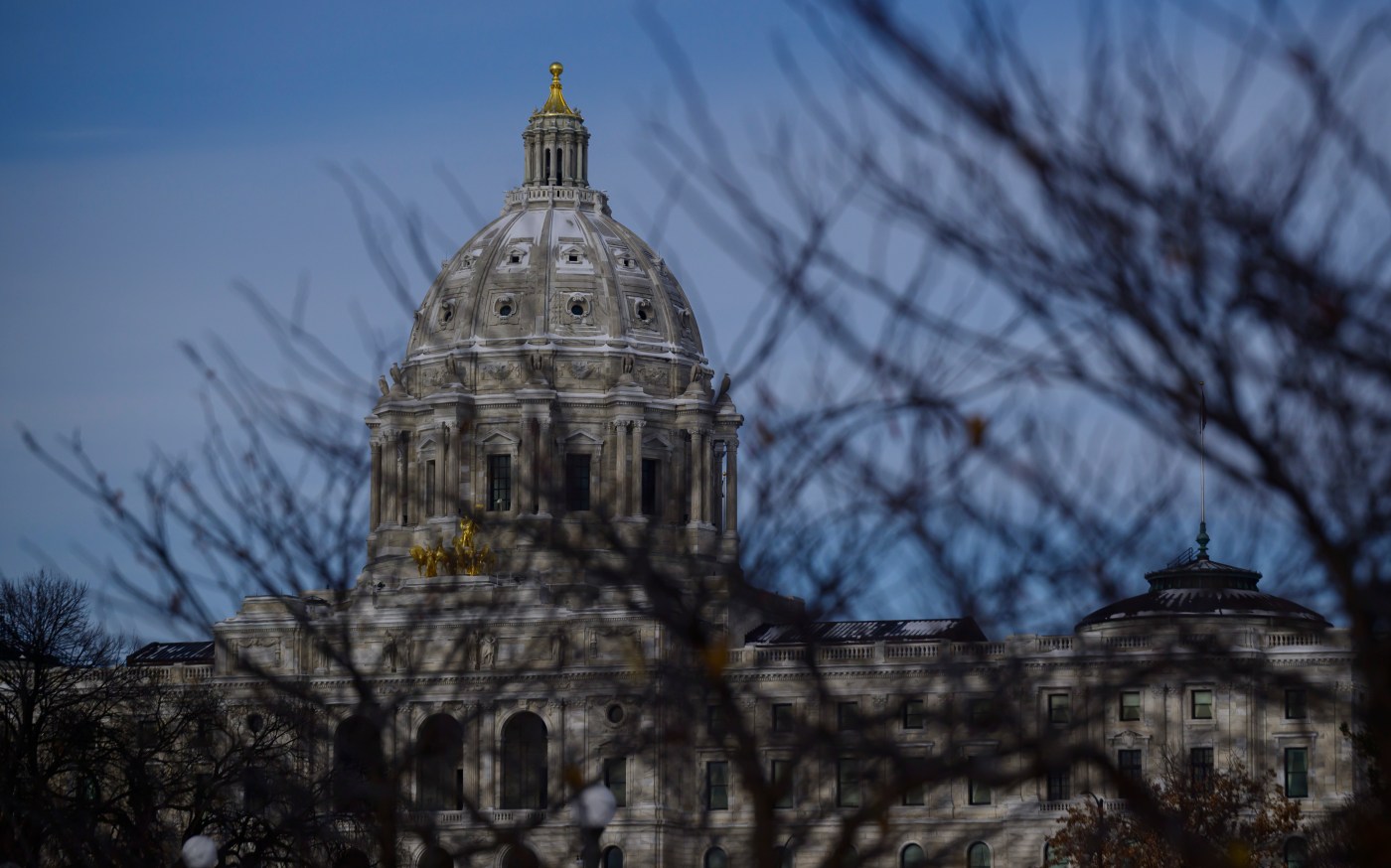
Days into Minnesota’s 2026 legislative session, there are already signs that action on top issues at the Capitol faces questionable prospects in a closely divided state government.

Republican proposals intended to combat fraud in state government and DFL-backed bills aimed at protecting residents from abuses by federal immigration officials already face headwinds in a year where lawmakers technically don’t have to pass any legislation.

On Thursday and Wednesday, bills relating to both issues stalled after party-line votes in House committees, where control is evenly split between DFL and Republican representatives.

Oversight office

A proposal to create a new oversight office for state government agencies — something that passed last year with bipartisan support in the Minnesota Senate — stalled in the House State Government Finance Committee.

Democrats had attempted to amend the bill to remove language that would have created an independent law enforcement division at the proposed Office of Inspector General. The effort failed on a party-line vote as Republicans objected to an overhaul of the bill.

While Republicans have a slate of proposals aimed at fighting fraud, including creating criminal penalties for state employees who falsify paperwork during audits, the inspector general bill has the strongest bipartisan backing.

It passed in the DFL-majority Senate last year, though it didn’t get a vote in the tied House, where bills need both parties’ support.

Senate version

But as of the first week of the 2026 session, the fraud measure with the strongest support is in no better shape to reach DFL Gov. Tim Walz’s desk than it was in May.

Still, Sen. Michael Kreun, R-Blaine, who is carrying the Senate version with DFL Sen. Heather Gustafson of Vadnais Heights, told reporters Thursday that he remained optimistic, despite what he called House DFL efforts to “gut” the bill.

“It’s stalled, but it’s not dead. We still have time in this legislative session, and as I’ve said before, I’m willing to roll up my sleeves and do work on this bill, and to do some common sense amendments to tweak it here, to tweak it there,” he said. “But we’re not going to move backwards.”

House inspector general bill author Rep. Matt Norris, DFL-Blaine, said eliminating the independent law enforcement division from the inspector general would “avoid duplication of work” with the Bureau of Criminal Apprehension’s financial crimes division.

Immigration enforcement

Just like fraud bills, any bills on federal immigration enforcement face dimmer prospects in the 67-67 House than they do in the Senate, where the DFL has 34 seats to the GOP’s 33.

Meanwhile, a DFL-backed bill to ban warrantless entry of publicly accessible areas of schools by immigration agents stalled on a tied vote in the Education Policy Committee on Wednesday.

That’s just one of the many proposals Democrats are advancing this session in the wake of the Trump administration’s immigration crackdown in Minnesota.

“Operation Metro Surge” brought more than 3,000 federal agents to Minnesota in what the White House claimed was an effort to arrest the “worst of the worst.” Critics said it led to the fatal shooting of two U.S. citizens, major civil rights violations and abuse of power by militarized immigration agencies.

To protect the state from similar abuses in the future, DFLers are introducing legislation, including a bill to give Minnesotans more power to sue federal agents for constitutional violations, a ban on face masks for law enforcement agents, and restrictions on immigration enforcement in spaces besides schools — such as hospitals.

Local law enforcement

Republicans have advocated for changing state law to compel local law enforcement to cooperate more closely with federal authorities, something they argue would eliminate the drive for immigration agents to operate near or in schools.

One such proposal received a hearing in the House last year. The GOP-backed bill would ban cities from restricting cooperation with ICE and other federal agencies and require local authorities to notify federal authorities when a person unlawfully in the U.S. is arrested for a violent crime.

Asked by reporters Thursday if he believed any of the DFL proposals on immigration had a chance of gaining Republican support in a closely divided Legislature, Senate Judiciary and Public Safety Committee Chair Ron Latz, DFL-St. Louis Park, said the session was “just getting started.”

“I personally haven’t had those conversations yet but I intend to, and I’ll tell you why: This isn’t a debate, in my mind, about immigration policy. This is a debate about enforcement tactics,” he said. “We should all be able to find common ground, that the Constitution needs to be followed, that there are certain boundaries across which we are not allowed to go.”

State lawmakers passed a $66 billion two-year budget last year, meaning they could technically adjourn in May without passing any major legislation. That happened in 2022, another session with divided government ahead of a November gubernatorial election. Then, the DFL controlled the governor’s office and the House, but Republicans controlled the Senate.

Related Articles


Minnesota Capitol rally calls for state aid following immigration crackdown


Data center foes bring swelling opposition to Minnesota Capitol


No ‘masked secret agents,’ St. Paul City Council says in passing ordinance


MN 2026 Legislature: How can you follow activity or even get involved?


MN lawmakers honor Melissa and Mark Hortman on first day of session

New Mexico’s promise of free child care comes with a fiscal escape hatch

posted in: All news | 0

By MORGAN LEE and SAVANNAH PETERS

SANTA FE, N.M. (AP) — An ambitious universal child care program aimed at fully footing the bill for working families across New Mexico is being enshrined into law, with state legislators making good on promises by Democratic Gov. Michelle Lujan Grisham to make the state the first in the nation to offer such a program to families of all income levels.

Related Articles


Kentucky Supreme Court rules that charter schools law is unconstitutional


Virginia judge temporarily blocks Democrats’ redistricting work on bid to flip 4 congressional seats


White House pressure leads universities to cut ties with nonprofit that helps racial minorities


Large banner featuring Trump’s face is displayed on Justice Department headquarters


Virginia Gov. Abigail Spanberger to give Democratic response to Trump’s State of the Union address

As parents across the nation grapple with crippling daycare bills that threaten to keep them at home and out of the workforce, political leaders from New York to San Francisco have been angling to expand access to free and subsidized care. The political stakes are high as the potential for budget uncertainties and fraud looms large.

California has opted to eliminate copayments for some families, while Washington and Oregon cap what families pay. In Vermont, a payroll tax on employers funds child care subsidies.

In New Mexico, the plan relies heavily on the financial windfall from oil and gas production — including earnings from a recently minted $10 billion trust fund for early childhood education. It’s a delicate balance for a progressive governor who initially set out to rein in the industry.

“I think you’re going to see more states look for ways to do it,” the governor said Thursday. “It’s really a workforce engine, while paying real respect to the affordability affordability crisis that families have.”

Lujan Grisham wraps up her tenure next year, and state lawmakers wary of unchecked spending opted during the legislative session that ended Thursday to take a cautious approach. They’re leaving the door open to copayments if public finances deteriorate. That’s a compromise Lujan Grisham had to make.

Putting up guardrails

As much as $700 million more will be funneled over the next five years to New Mexico’s child care assistance program, state officials said. Copayments are unlikely and would require 90-days notice to families.

Decisions on possible cost-sharing will be tied to new annual reporting requirements. The early education agency has new authority to monitor how much child care providers pay employees, manage debt and structure their businesses.

State Sen. George Muñoz, cosponsor of the bill, said the Legislature seized an opportunity to put guardrails in place.

“We didn’t want to end up like Minnesota, where all of the sudden there was rampant fraud,” he said, referring to allegations by U.S. prosecutors that billions in federal funds were stolen from Minnesota-run programs for children with autism, addiction services and more.

Little Corral Day School advertises free child care in Albuquerque, N.M., Thursday, Feb. 5, 2026. (AP Photo/Savannah Peters)

Taking the weight off families

Families stand to benefit enormously, Muñoz said, explaining free care will put money back in their pockets.

Marianna Eanone of Las Cruces said her income combined with her husband’s Army salary was just above the previous cutoff for child care assistance. They used to pay $1,000 a month to send their 3-year-old to a licensed home daycare provider, along with afterschool care for their kindergartener.

“It’s been a weight off to not have to worry about that,” said Eanone, who works for a program that connects families with child development services.

There’s now wiggle room to afford things like occasional takeout from local restaurants, martial arts classes for her 6-year-old, bigger payments toward student loan debt and savings for the future, she said.

And those benefits resonate with voters.

“They are sending a really strong signal about the importance of child care to the well-being of the families in the state, the well being of the economy, of businesses,” said Karen Schulman, senior director of child care policy for the National Women’s Law Center.

New Mexico gradually raised income limits on assistance for child care — until stepping into universal care on Nov. 1, making 25,000 more children eligible. It saves families on average $14,000 a year per child.

Children’s Promise Centers employee Ashley Toledo oversees afternoon playtime at the child care center in Albuquerque, N.M., April 5, 2024. (AP Photo/Susan Montoya Bryan)

Prioritizing vulnerable children

The New Mexico legislation allows the state to create a waitlist when demand for assistance outpaces available slots. It’s an effort to prioritize access for children in vulnerable circumstances — ranging from extreme poverty to disabilities and those at risk of developmental delays.

It’s also a response to concerns that the rapid expansion of child care subsidies to all income brackets may squeeze out slots for low-income families. Attendance from low-income families declined as assistance expanded to higher income brackets, according to a review by legislative analysts.

Elizabeth Groginsky, secretary of New Mexico’s early childhood education department, said lawmakers also left financial breathing room for recently adopted incentives to improve child care quality, raise base wages and expand operating hours through enhanced rates paid by the state.

Still, child care slots remain in short supply across wide swaths of New Mexico, even as the state extends assistance beyond working parents to grandparent guardians, foster parents and people experiencing homelessness.

Legislators have sent a separate bill to the governor to scale up more home-based daycare and child care centers in residential areas by overriding some local zoning and permitting requirements, including homeowner association restrictions on child care.

AP reporter Moriah Balingit contributed from Washington.

Afton man charged with threats after St. Thomas lockdown

posted in: All news | 0

A day after an Afton man caused a lockdown last week at the University of St. Thomas, he sent a threatening email to the college president despite an active restraining order prohibiting him from any contact, according to court records.

Ryan Harrison Schacht (Courtesy of the Ramsey County Sheriff’s Office)

Ryan Harrison Schacht, 46, has been charged in Ramsey County District Court with one count of felony threats of violence in connection with the Feb. 10 incident involving St. Thomas president Robert Vischer. In two separate cases, Schacht is charged with a total of five counts of violating a harassment restraining order.

On Feb. 9, Schacht called the university’s public safety department and said he was going to Vischer’s office to kill himself, according to the criminal complaint. Schacht also left Vischer a voicemail demanding that he meet with him.

According to the complaint, Schacht also called the college and asked a dispatcher to get Vischer on the line. Schacht said, “I’m gonna kill someone if you don’t get the (expletive) on the phone!”

The shelter-in-place alert, issued shortly before 12:30 p.m., was lifted about an hour later after St. Paul police determined Schacht was not on campus and not in the city of St. Paul.

The next day, police were called to the St. Paul campus after Schacht allegedly sent Vischer multiple emails. One email read: “You stole my life from me. I’m without a business. No Family. No Money. No House. Make me whole or suffer the wrath of god.”

Vischer, the college’s president since 2023, told police that he has spoken to Schacht and replied to Schacht’s emails, but he has never met him in person.

Schacht’s mother said her son is recently divorced and going through a mental health crisis, the complaint said.

Schacht was arrested on a probable cause warrant Feb. 11 after showing up at his ex-wife’s home in Oak Park Heights.

Schacht went before Ramsey County District Judge Sophia Vuelo on Tuesday. Vuelo found sufficient probable cause to proceed with the charges, while also ordering Schacht to undergo a mental health evaluation before the cases can move forward.

Court and jail records show Schacht posted a $40,000 bond and was released from the Ramsey County jail on Tuesday. As a condition of his release, he was ordered to stay away from the university.

Also Tuesday, a Washington County judge granted an emergency extreme risk protection order against Schacht, noting that he is a risk to himself and others and prohibiting him from possessing firearms. The emergency petition, filed by Oak Park Heights police, also notes that Schacht was trespassed from St. Ambrose Church in Woodbury on Feb. 11, when he “showed up unannounced and caused fear and alarm.”

An attorney for Schacht was not listed in the court files.

Concerns grew

Separate petitions for a harassment restraining order filed last month by Vischer and Brian Rich, the college emergency manager, allege Schacht made dozens of phone calls or sent text messages to both starting in May.

Related Articles


Federal judge orders release of man who crashed in St. Paul during ICE pursuit


Minneapolis man, later shot by St. Paul cops, gets 86½ years for ‘brazen’ triple murder at homeless camp


St. Paul police seek driver in third serious pedestrian crash in two weeks


How a defendant in Minnesota went free because of Justice Department turmoil


New Trump administration order could lead to the detention of thousands of legal refugees

Vischer wrote in his petition that he never met or heard of Schacht, a former St. Thomas student, before then and that he “consistently did not respond to (Schacht’s) communications or otherwise encourage continued communications by him.”

According to Vischer’s petition, the first communication with Schacht came on May 26, when he left a message on his administrative assistant’s voicemail asking to meet with the college president about a business venture.

The next day, the petition said, Schacht repeatedly emailed Vischer, asking him in one if he knew who hacked his phone. In another, he wrote: “I’m at the University ready to meet with you to close this deal. I’d like to make it happen ASAP.”

Vischer informed the college security team about the emails from Schacht and that he would be working with his office door locked, the petition read. Schacht then showed up at the office and asked to meet, but was turned away.

The university issued Schacht a trespass notice on May 28.

Schacht continued to contact Vischer, Rich and the university’s public safety office, the petitions said. In the fall, the president wrote in his petition, “(Schacht’s) communications and the tone of them escalated in terms of urgency and the subject matter. He appeared to me to be getting more agitated and that his mental health had gotten worse.”

Vischer wrote that his fear was that if Schacht did not receive mental health help, “that his condition would worsen and he would show up at the UST campus to hurt me or others in my office. Since January 2026, I remain deeply concerned about the worst-case scenario.”

Rich expressed similar concerns in his petition, writing that he worried about the well-being of himself, Vischer, college staff and students.

Social media posts

Schacht was served with the two harassment restraining orders on Jan. 28, prohibiting him from having any contact or communication with Vischer and Rich and being at St. Thomas’ campuses in St. Paul and Minneapolis.

The order remains active and in place until Jan. 26, 2028, according to the complaint.

Related Articles


Minneapolis man, later shot by St. Paul cops, gets 86½ years for ‘brazen’ triple murder at homeless camp


St. Paul police seek driver in third serious pedestrian crash in two weeks


How a defendant in Minnesota went free because of Justice Department turmoil


Minnesota house fires this week have claimed the lives of 3 people


St. Paul man gets probation for copper wire thefts that cost the city $200K in repairs

During its investigation, the complaint said, St. Paul police received several screenshots of social media posts Schacht made.

A Feb. 9 post mentioned how Vischer is trying to cover up the university’s involvement in the theft of Schacht’s business.

Two days later, Schacht posted how he is going to sue the university and the Catholic Church. Another one that day, the complaint continues, showed a picture of a rifle with the word “justice.”

In a Thursday statement to the Pioneer Press, the university said: “St. Thomas is continuously focused on safeguarding its university community. As part of that, our Public Safety department is working closely with local law enforcement related to last week’s incident. We are grateful for the work of local police and our Public Safety officers to keep our community safe.”

Kentucky Supreme Court rules that charter schools law is unconstitutional

posted in: All news | 0

By DYLAN LOVAN

LOUISVILLE, Ky. (AP) — The Kentucky Supreme Court ruled Thursday that a measure establishing public funding for charter schools is unconstitutional, affirming that state funds “are for common schools and for nothing else.”

Related Articles


White House pressure leads universities to cut ties with nonprofit that helps racial minorities


24-hour ‘hackathon’ at St. Thomas asks creators to use AI to fight hunger


Students Across the U.S. Are Protesting ICE. Texas Wants to Punish Their Schools.


Some US schools cancel class pictures after online claims surrounding Epstein


Justice Department sues Harvard for data as it investigates how race factors into admissions

The 2022 measure was enacted by the state’s Republican-dominated legislature over Democrat Gov. Andy Beshear’s veto. It was struck down the next year by a lower court.

The state’s high court ruled the “Constitution as it stands is clear that it does not permit funneling public education funds outside the common public school system,” Justice Michelle M. Keller wrote in a unanimous opinion.

In 2024, Kentucky voters rejected a ballot measure that would have allowed state lawmakers to allocate public tax dollars to support students attending private or charter schools.

It was another setback for supporters of charter schools, who have attempted for years to gain a foothold in the state. They argue the schools offer another choice for parents looking for the best educational fit for their children. But opponents say such schools would divert needed funds from existing public schools and could pick and choose which students to accept.

Charter schools have been legal in Kentucky since 2017, but none have opened because of the lack of a method to fund them.

Keller, in her opinion, wrote the court was not passing judgment on the efficacy of charter schools.

“We make no predictions about the potential success of charter schools or their ability to improve the education of the Commonwealth’s children, and we leave public policy evaluations to the Commonwealth’s designated policymakers — the General Assembly,” she wrote.

But Keller argued, Kentucky has for more than a century treated education as “a constitutional mandate, challenged again and again…”

“The mandate implicates state education funds are for common schools and for nothing else,” the justice wrote.