
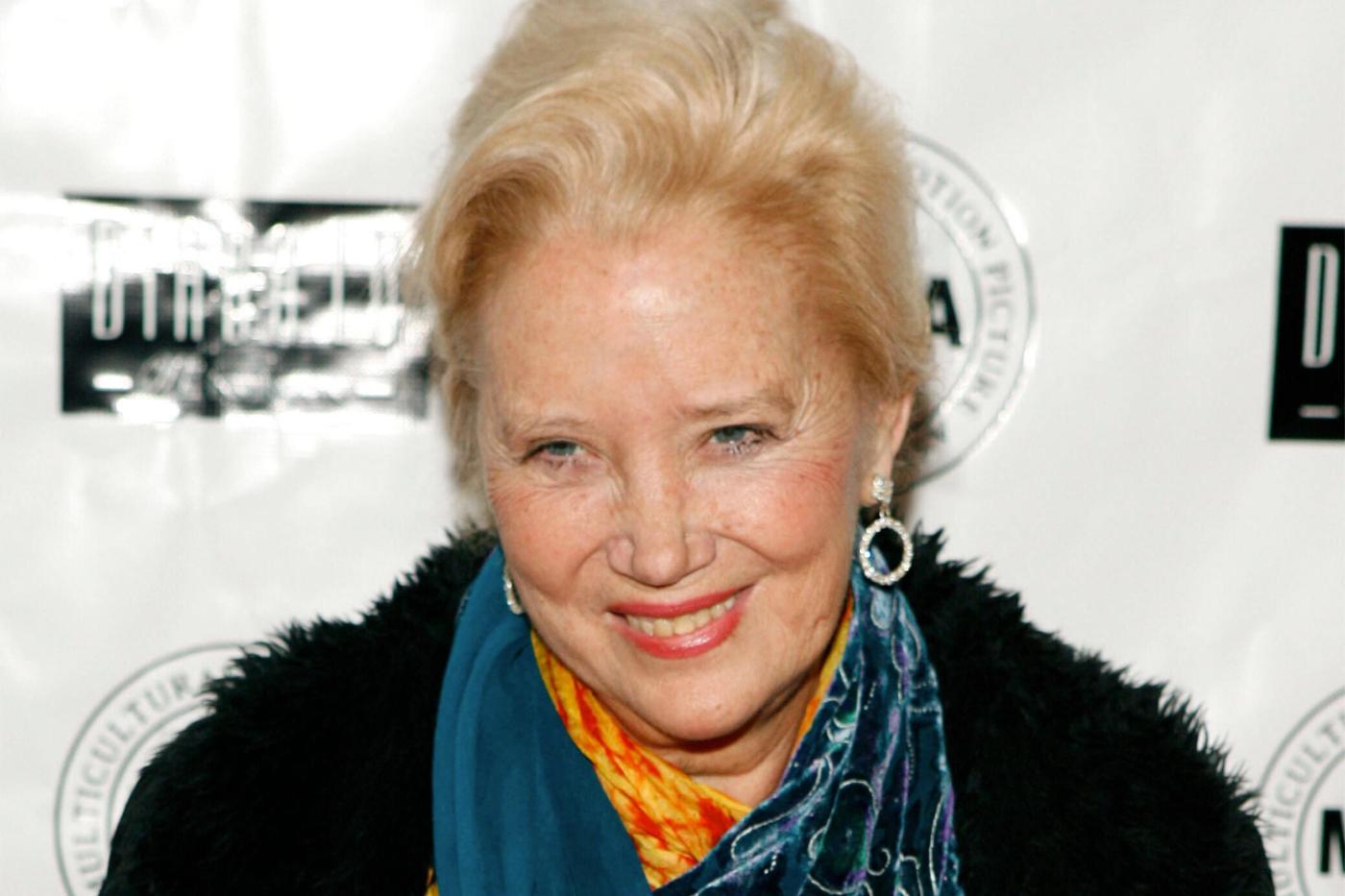
Sally Kirkland, stage and screen star who earned an Oscar nomination in ‘Anna,’ dies at age 84

posted in: All news | 0

By MARK KENNEDY, AP Entertainment Writer

NEW YORK (AP) — Sally Kirkland, a one-time model who became a regular on stage, film and TV, best known for sharing the screen with Paul Newman and Robert Redford in “The Sting” and her Oscar-nominated title role in the 1987 movie “Anna,” has died. She was 84.

Her representative, Michael Greene, said Kirkland died Tuesday morning at a Palm Springs hospice.

Friends established a GoFundMe account this fall for her medical care. They said she had fractured four bones in her neck, right wrist and left hip. While recovering, she also developed infections, requiring hospitalization and rehab.

Kirkland acted in such films as “The Way We Were” with Barbra Streisand, “Revenge” with Kevin Costner, “Cold Feet” with Keith Carradine and Tom Waits, Ron Howard’s “EDtv,” Oliver Stone’s “JFK,” “Heatwave” with Cicely Tyson, “High Stakes” with Kathy Bates, “Bruce Almighty” with Jim Carrey and the 1991 TV movie “The Haunted,” about a family dealing with paranormal activity. She had a cameo in Mel Brooks’ “Blazing Saddles.”

Her biggest role was in 1987’s “Anna” as a fading Czech movie star remaking her life in the United States and mentoring to a younger actor, Paulina Porizkova. Kirkland won a Golden Globe and earned an Oscar nomination along with Cher in “Moonstruck,” Glenn Close in “Fatal Attraction, Holly Hunter in “Broadcast News” and Meryl Streep in “Ironweed.”

“Kirkland is one of those performers whose talent has been an open secret to her fellow actors but something of a mystery to the general public,” The Los Angeles critic wrote in her review. “There should be no confusion about her identity after this blazing comet of a performance.”

Kirkland’s small-screen acting credits include stints on “Criminal Minds,” “Roseanne,” “Head Case” and she was a series regular on the TV shows “Valley of the Dolls” and “Charlie’s Angels.”

Born in New York City, Kirkland’s mother was a fashion editor at Vogue and Life magazine who encouraged her daughter to start modeling at age 5. Kirkland graduated from the American Academy of Dramatic Arts and studied with Philip Burton, Richard Burton’s mentor, and Lee Strasberg, the master of the Method school of acting. An early breakout was appearing in Andy Warhol’s “13 Most Beautiful Women” in 1964. She appeared naked as a kidnapped rape victim in Terrence McNally’s off-Broadway “Sweet Eros.”

Some of her early roles were Shakespeare, including the lovesick Helena in “A Midsummer Night’s Dream” for New York Shakespeare Festival producer Joseph Papp and Miranda in an off-Broadway production of “The Tempest.”

Related Articles


WWII nurses who dodged bullets and saved lives deserve Congressional honor, lawmakers say


Christian missionary father and daughter died when plane bound for Jamaica crashed in Florida


Wall Street is mixed as Nvidia gets back to falling


ByHeart recalls all baby formula sold nationwide as infant botulism outbreak grows


Everyday volunteers are providing stopgap services during the shutdown in a show of community power

“I don’t think any actor can really call him or herself an actor unless he or she puts in time with Shakespeare,” she told the Los Angeles Times in 1991. “It shows up, it always shows up in the work, at some point, whether it’s just not being able to have breath control, or not being able to appreciate language as poetry and music, or not having the power that Shakespeare automatically instills you with when you take on one of his characters.”

Kirkland was a member of several New Age groups, taught Insight Transformational Seminars and was a longtime member of the affiliated Church of the Movement of Spiritual Inner Awareness, whose followers believe in soul transcendence.

She reached a career nadir while riding nude on a pig in the 1969 film “Futz,” which a Guardian reviewer dubbed the worst film he had ever seen. “It was about a man who fell in love with a pig, and even by the dismal standards of the era, it was dismal,” he wrote.

Kirkland was also known for disrobing for so many other roles and social causes that Time magazine dubbed her “the latter-day Isadora Duncan of nudothespianism.”

Kirkland volunteered for people with AIDS, cancer and heart disease, fed homeless people via the American Red Cross, participated in telethons for hospices and was an advocate for prisoners, especially young people.
Iraqis vote in a parliamentary election marked by tight security and a major political boycott

posted in: All news | 0

By QASSIM ABDUL-ZAHRA and STELLA MARTANY, Associated Press

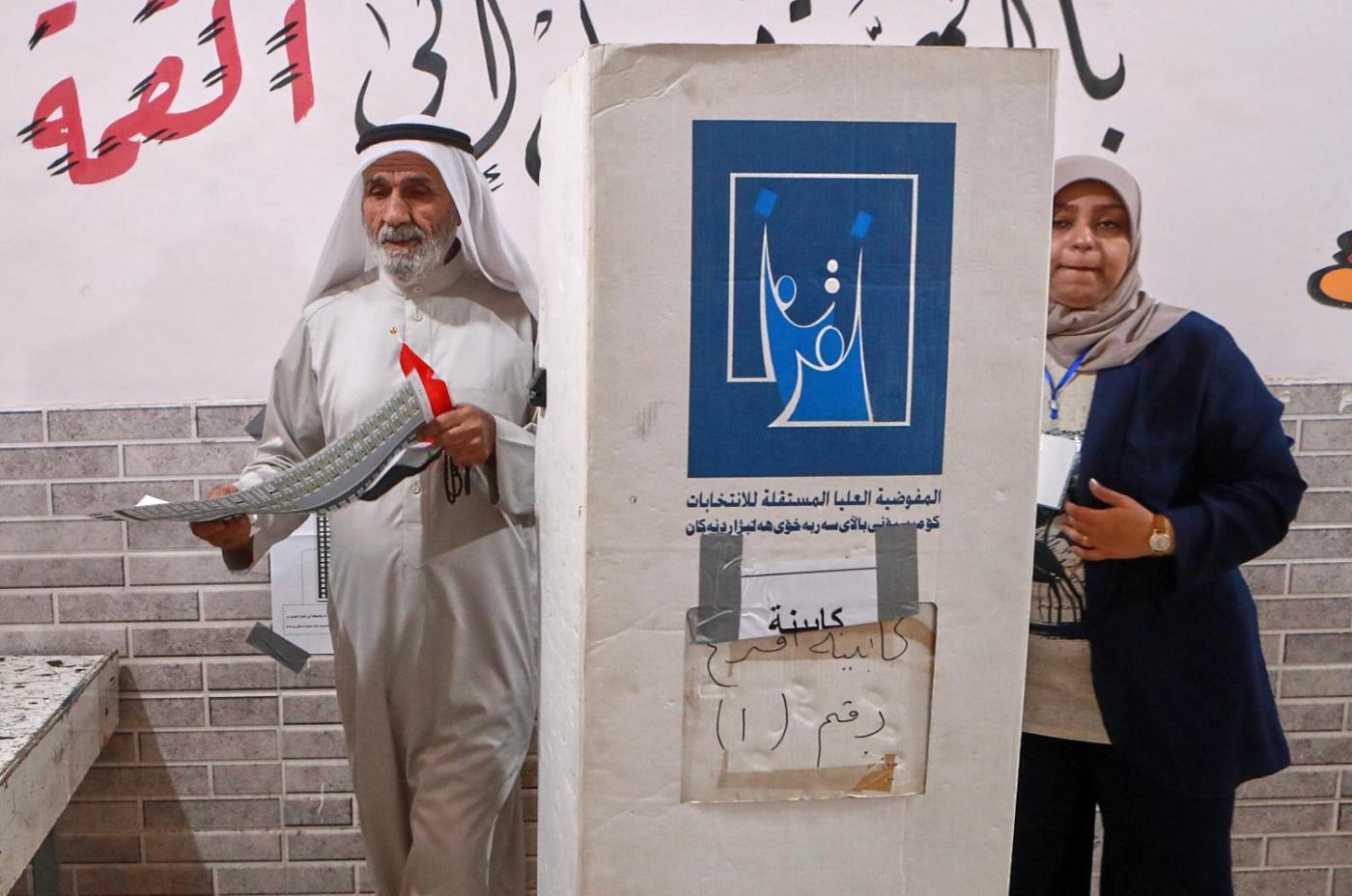
BAGHDAD (AP) — Iraqis headed to the polls on Tuesday to vote in a parliamentary election marked by tight security and a boycott by a major political bloc.

A total of 8,703 polling stations were open across the country for the general election. Members of the security forces and displaced people living in camps cast their ballots in early voting on Sunday.

Turnout was sparse in the early hours Tuesday at polling stations visited by Associated Press journalists. Initial results were expected on Wednesday.

Only 21.4 million out of a total of 32 million eligible voters updated their information and obtained voter cards ahead of the polling, a decrease from the last parliamentary election in 2021, when about 24 million voters registered.

The election is taking place against the backdrop of major shifts in the region over the past two years — including the wars in Gaza and Lebanon after the Oct. 7, 2023 Hamas-led attacks on southern Israel, the Israel-Iran war in June, and the fall of Syrian President Bashar Assad last December.

These developments come as U.S. pressure intensifies on the Iraqi government to curb the influence of Iran-aligned armed factions, some of which have candidates participating in Tuesday’s vote.

Prime Minister Mohammad Shia al-Sudani, who is running for a second term, arrived at a polling station in Baghdad to cast his vote, along with his mother.

The election “asserts the principle of peaceful transfer of power” and “the people’s commitment to this democratic practice,” Sudani said.

Boycott by a major bloc

The popular Sadrist Movement, led by influential Shiite cleric Muqtada al-Sadr, boycotted the polls. Al-Sadr’s bloc won the largest number of seats in the 2021 election but later withdrew after failed negotiations over forming a government, amid a standoff with rival Shiite parties. He has since boycotted the political system.

Related Articles


Tens of thousands attend funeral of Israeli soldier whose remains were held in Gaza for 11 years


Top diplomats from G7 countries meet in Canada as trade tensions rise with Trump


Today in History: November 11, ‘Typhoid Mary’ dies


Trump threatens to sue BBC over edited speech that sparked resignations by news bosses


Typhoon Fung-wong blows away from the Philippines, leaving 8 dead and 1.4 million displaced

At the entrance to Sadr City — a sprawling stronghold of the Sadrist movement on the outskirts of Baghdad — security was noticeably tighter than in other parts of the Iraqi capital. Iraqi special forces and federal police were deployed across the area, with armored vehicles and Humvees stationed along the main roads, manned by heavily armed soldiers.

A large banner showed al-Sadr wearing military fatigues and holding a weapon, with the words, “My people in Sadr City are boycotting.” On a main Sadr City street, all shops were shuttered, and posters of slain Sadr loyalists lined the walls.

Polling station were open but were almost completely empty. At one, which serves 3,300 voters, station director Ahmed al-Mousawi said a few hours into the balloting that fewer than 60 people had voted.

“The Sadrist boycott has had a major impact,” he said. “In previous elections, there used to be long lines from the early morning hours, but today the difference is dramatic.”

Sabih Dakhel, a 54-year-old voter who came with his wife, said they had decided to vote in hopes that new elected officials might improve living conditions for people like them.

“We were able to vote freely today, but the Sadrist boycott has deeply affected participation,” Dakhel said. “Sadr City feels almost like a lockdown because of Muqtada al-Sadr’s call for his followers to stay home.”

Tensions and apathy in Kirkuk

In the northern city of Kirkuk, violence broke out overnight ahead of the election, killing two police officers.

The city, with a mixed population of Sunnis, Shia, Kurds and Turkmen, has been the scene of a territorial dispute for years between the central government and regional authorities in the semiautonomous northern Kurdish region. It was the site of violent protests in 2023.

A statement from Iraq’s security forces said that at around 2 a.m. Tuesday, a brawl broke out between two groups, beginning as a fistfight but escalating into shooting. Two security personnel were killed and two civilians injured, it said. Fourteen people were arrested.

The statement did not say what caused the fight, but some local residents said Tuesday that it had been an altercation between supporters of rival candidates.

By the time the polls opened, calm had been restored and a steady stream of voters lined up at polling stations, although many expressed apathy about the process.

“We don’t really expect much to change other than the faces of our representatives at the parliament, but voting has become something we do out of habit, much like people who pray simply because it’s part of their routine,” said 60-year-old Nouraddin Salih, who cast his vote for the Patriotic Union of Kurdistan, one of Iraq’s two main Kurdish parties.

Ban Bahnam, 40, a member of the Assyrian minority, also said she expects little from the elections.

“Our people are still leaving the country hopelessly,” she said. “Even without hopes or expectations, we still come and vote.”

Legal challenges

Ahead of the election, there were widespread allegations of corruption and vote-buying.

Last week, security services arrested 46 people accused of illegally buying and selling voter cards in sting operations in several provinces, and some 1,841 cards in their possession were seized.

The election results could also face legal challenges. The head of Iraq’s Supreme Judicial Council wrote in a statement published on the council’s website that the election date set for Tuesday is unconstitutional, noting that the vote was originally scheduled for Nov. 24.

Martany reported from Kirkuk, Iraq.

Relaxed, reinvigorated after Smoky Mountains trip

posted in: All news | 0

By Patti Nickell, Tribune News Service

Mark Van Osdal is a tree whisperer. Owner of Carolina Bound Adventures, he is leading a small group of us on the Deep Creek hike on the North Carolina side of the Great Smoky Mountains National Park near Bryson City.

During the hike, we will see waterfalls, a picturesque bridge over Deep Creek, the last of the summer wildflowers, and one rather belligerent squirrel, angry that he dropped the black walnut he was munching on right in the middle of our group.

Oh yes, and trees … lots of them. Van Osdal says that the national park (America’s most visited) has some 100 native species of trees, more than the entire European continent. And he appears to be on a first-name basis with all of them.

Deep Creek fall shot. (Handout/Swain County Tourism Development Authority/TNS)

Van Osdal is just one of the people waiting to welcome visitors to Bryson City, known as “the quiet side of the Smokies.” Although just 45 miles from Gatlinburg, across the Tennessee line, it seems a world apart in its peaceful serenity.

And in its welcoming residents who can’t wait to make your stay as authentic as possible. People such as Rita Jones, director of the Swain County Visitor Center & Heritage Museum.

Make it your first stop — you can’t miss the imposing white-columned building on Everett Street, which doubles as both a resource for visitors seeking the area’s best hiking, rafting, canoeing and biking spots and a museum of western Carolina heritage.

Swain County Visitors Center & Heritage Museum. (Handout/Swain County Tourism Development Authority/TNS)

And then there’s Rita, pink-cheeked and smiling, looking just like the adorable elf she dresses up as during the town’s celebrated Christmas festivities.

Make a stop at Nantahala Outdoor Center, starting point for all of the adrenaline-boosting adventures people come here for. If you’re lucky, you will meet marketing manager Betsy Bevis and reservations manager Chris Aldridge, who joined me for lunch at the Riverside Restaurant overlooking the Nantahala River.

Munching on my catfish sandwich, I noted that the Nantahala is much more benign from a window table than from an overturned canoe, courtesy of my last experience on it.

The 500-acre NOC is a one-stop shop for all things outdoor — whether it be rafting, mountain biking, zip lining, etc.; eating at one of the two restaurants; buying outdoor gear, or overnighting in the new mountaintop Hemlocks bungalows.

The leaves were just starting to turn during my excursion, and I could only imagine what this would look like in peak season, the view a tapestry of gold, orange, scarlet and russet. (Handout/Swain County Tourism Development Authority/TNS)

Guests wanting to be closer to the river and trails can book private cabins, and for the truly adventurous, there are primitive campsites within the Nantahala National Forest.

Fun fact: NOC’s founder Payson Kennedy was a stunt double in the film “Deliverance,” and if you remember the scenes filmed on the nearby Chattooga River, you’ll understand why Burt Reynolds and the other actors were keen to leave the paddling to those stunt doubles.

Although the movie may suggest otherwise, Bevis and Aldridge say the 1971 film was responsible for a surge in the popularity of whitewater rafting.

Back on dry land, you would be fortunate indeed if you crossed paths with Scott Mastej and experienced a dose of his southern hospitality. Along with his partner Ron LaRoque, he is the owner of the Everett Hotel, a luxury 10-room boutique property repurposed from a 1908 bank building.

While I didn’t stay at the Everett, I did enjoy a dinner (lobster bisque and Carolina mountain trout) and a conversation with Scott in the chic Everett Bistro, the hotel’s in-house restaurant.

Downtown Bryson City, North Carolina. (Handout/Swain County Tourism Development Authority/TNS)

Dinner another night was at the historic Fryemont Inn, a Bryson City fixture and a nostalgic trip back to the 1920s, where there are no TVs in most of the rooms and no air conditioning as the mountain breezes provide natural cooling.

This is rustic luxury at its best, with the large fireplace in the lobby and even larger open porch off that lobby competing for favorite guest hangout.

Dinner included an entrée plus choice of soup or salad and two family-style sides of the day.

If you can, track down co-owner Monica Brown, and ask her about the lavish Halloween festivities she organizes where repeat guests return every year for the spooky fun.

Related Articles


In Orlando theme parks, animatronics increase in number — and in realism


Women-focused resorts are the next big thing in wellness


Here’s what happened when my son and I turned off our screens for a day


The shutdown has disrupted air travel. Will that drive a surge in car rentals and train bookings?


Nearly 22 million Americans forecast to cruise in 2026, AAA says

Should you opt for a stay in a bed-and-breakfast, you will find a charming one in the Folkestone Inn. Those charms include a serene garden for sipping your morning coffee, the 15-minute driving distance to the Smoky Mountains National Park and innkeeper Toni Rowe’s delectable breakfast Croque Madame.

Since I had my two sisters on this trip with me, we opted for one of Bryson City’s many cabin accommodations. Our cabin in the Bryson City Village lived up to its name, Creekside Delight.

The two-bedroom, two-bath cabin had a large kitchen/dining area and a large living room with a deck and hot tub overlooking a small creek.

While many visitors prefer a cabin nestled in the mountains, this one had definite advantages, being just a short walk into town and the train depot.

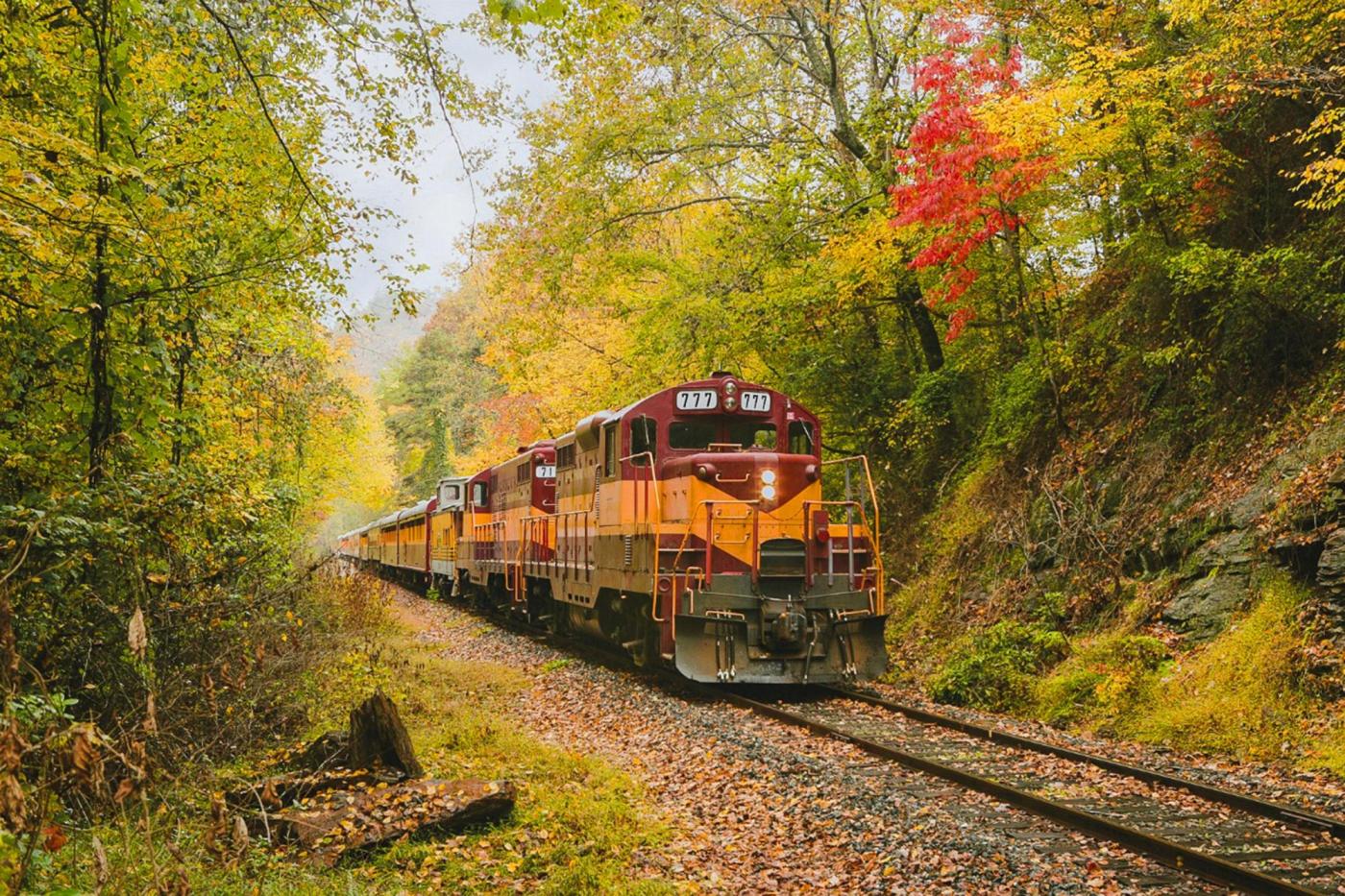
The latter is important as it makes it easy if you book the area’s top attraction, the Great Smoky Mountain Railroad Nantahala Gorge Excursion.

Fall overview of mountains and Fontana Lake. (Handout/Swain County Tourism Development Authority/TNS)

The 44-mile excursion is a four-and-a-half-hour trip (including a stopover at the Nantahala Outdoor Center). The scenery from your car’s window is breathtaking – the Nantahala River and along the shore of Fontana Lake before crossing the 426-foot Fontana Trestle into the Nantahala Gorge.

The leaves were just starting to turn during my excursion, and I could only imagine what this would look like in peak season, the view a tapestry of gold, orange, scarlet and russet.

If you book a first-class car like Harper, you’ll get lunch and a chance to engage with Steven, the personable host.

Finally, there’s no better trip-ender than toasting the sun setting behind the mountains with a not-to-be-forgotten experience at Long View Resort.

The Nordic-themed experience features a massage on the deck of the spa, where birdsong was the only music needed to lull me into a semi-slumber as every muscle in my body went along for the ride.

Soaking tubs. (Handout/Long View Resort & Spa/TNS)

Post-massage, I had only to cross the deck and ease into the hot tub facing the mountains in preparation for my 90-minute sunset soak. To say that this is a transcendental experience is not overstating the case.

The only interruption to my zen-like solitude was the attendant bringing me a glass of ice water and a small charcuterie board to nibble on.

After four days in this part of the Smokies, I left feeling relaxed, reinvigorated and wanting to return soon to this authentic mountain destination.

©2025 Tribune Content Agency, LLC.

How Gary Sinise is helping the nonprofit CreatiVets build ‘a place to go when the PTSD hits’

posted in: All news | 0

By GLENN GAMBOA, AP Business Writer

NASHVILLE (AP) — Richard Casper shakes his head as he touches one of the boarded-up windows in the once-abandoned church he plans to transform into a new 24-hour arts center for veterans.

Related Articles


Veterans Day 2025: Twin Cities events, free meals and more


Veterans Day: What’s open, what’s closed


The government shutdown prompts the cancellation of some Veterans Day events


Veterans, rural residents, older adults may lose food stamps due to Trump work requirements


South St. Paul native Mike Farrell — Capt. B.J. Hunnicutt on ‘M*A*S*H’ — honored for Marine Corps service

The U.S. Marine Corps veteran and Purple Heart recipient said he was an arm’s length away from military officials, including Defense Secretary Pete Hegseth, at Marine Barracks Washington when he learned the former church his nonprofit CreatiVets just purchased had been vandalized.

The physical damage to the building and its stained glass windows saddened Casper. But what worried him more was that the church had remained empty since 2017 without damage. That vandalism came just weeks after CreatiVets bought it, suggesting that maybe he and the veterans in his program were not welcome.

“I almost just left,” Casper said. “It put me in a weird headspace.”

However, Casper, 40, a CNN Heroes winner and Elevate Prize winner, needed more support for the center — “a place to go when the PTSD hits.” Like so many veterans, he said his PTSD, caused by seeing a close friend die on patrol in Iraq, would generally come in the middle of the night, when the only places open are bars and other spaces that can be ”destructive.”

He figured a 24-hour center where veterans could engage in music, painting, sculpture, theater and other arts could help. It could “turn all that pain into something beautiful.” The artistic element factored in when Casper, who suffered a traumatic brain injury while serving in Iraq, returned home and found it hard to be in public — unless he was listening to live music.

So he completed his mission that night in Washington, introducing new people to CreatiVets’ work. Then, Casper returned to Nashville to practice what he has preached to hundreds of veterans since his nonprofit opened in 2013. He asked for help.

And help came.

Within weeks, CreatiVets’ Art Director Tim Brown was teaching a roomful of volunteers how to create stained glass pieces to replace those that were vandalized. Brown said the volunteers wanted to give back to the organization, “but also because of the impact that these activities have had on them.”

Gary Sinise believes in art’s impact

Gary Sinise values that impact. The actor, musician and philanthropist had already signed on to donate $1 million through his foundation to help CreatiVets purchase the building. Sinise’s involvement encouraged two other donors to help finalize the purchase.

The “CSI: NY” star said he believed in CreatiVets’ work and had already seen a similar program in his hometown of Chicago help veterans process their wartime experiences.

“In the military, you’re trained to do serious work to protect our country, right?” Sinise said. “If you’re in the infantry, you’re being trained to kill. You’re being trained to contain any emotion and be strong.”

Those skills are important when fighting the enemy, but they also take a toll, especially when veterans aren’t taught how to discuss their feelings once the war is over.

“Quite often, our veterans don’t want any help,” Sinise said. “But through art – and with theater as well – acting out what they are going through can be very, very beneficial.”

David Booth says he is living proof of how CreatiVets can help. And the retired master sergeant, who served 20 years in the U.S. Army as a medic and a counterintelligence agent, wishes he participated in the program sooner.

“For me, this was more important than the last year and a half of counseling that I’ve gone through,” said Booth. “It has been so therapeutic.”

After years of being asked, Booth, 53, finally joined CreatiVets’ songwriting program in September. He traveled from his home in The Villages, Florida, to the historic Grand Ole Opry in Nashville, to meet with two successful songwriters – Brian White, who co-wrote Jason Aldean’s “Blame It on You,” and Craig Campbell, of “Outskirts of Heaven” fame – to help him write a song about his life.

Booth told them about his service, including his injury in Iraq in 2006 when the vehicle he was in struck an improvised explosive device and detonated it.

He suffered a traumatic brain injury in the explosion, and it took months of rehab before he could walk again. His entire cervical spine is fused. He still gets epidurals to relieve the nerve pain. And he still suffers from nightmares and PTSD.

In Iraq, Booth’s unit was once surrounded by kids because American soldiers used to give them Jolly Rancher candies. Snipers shot the children in hopes the soldiers would become easier targets when they tried to help.

“Things like that stick in my head,” Booth said. “How do you get them out?”

He also told them about his desire for a positive message and Combat Veterans to Careers, the veteran support nonprofit he founded. Those experiences became the song “What’s Next.”

Booth hopes “What’s Next” becomes available on music streaming services so others can hear his story. CreatiVets has released compilations of its veterans’ songs since 2020 in cooperation with Big Machine Label Group, Taylor Swift’s first record label. This year’s collection was released Friday.

“It’s almost like they could feel what I was feeling and put it into the lyrics,” said Booth, after hearing the finished version. “It was pretty surreal and pretty awesome.”

Why Lt. Dan from ‘Forrest Gump’ launched a nonprofit

Sinise has seen the unexpected impact of art throughout his career. His Oscar-nominated role as wounded Vietnam veteran Lt. Dan Taylor in “Forrest Gump” in 1994 deepened his connection to veterans. His music with the Lt. Dan Band expanded it. In 2011, he launched the Gary Sinise Foundation to broadly serve veterans, first responders and their families.

“I think citizens have a responsibility to take care of their defenders,” he said. “There are opportunities out there for all of us to do that and one of the ways to do it is through multiple nonprofits that are out there.”

Sinise immediately connected with CreatiVets’ mission. When the idea came to dedicate the performance space at the new center to his late son Mac, who died last year after a long battle with cancer, Sinise saw it as “a perfect synergy.”

“Mac was a great artist,” he said. “And he was a humble, kind of quiet, creative force… If Mac would have survived and not gone through what he went through, he’d be one of our young leaders here at the foundation. He would be composing music and he’d be helping veterans.”

Mac Sinise is still helping veterans, as proceeds of his album “Resurrection & Revival” and its sequel completed after his death, are going to the Gary Sinise Foundation. And Gary Sinise said he discovered more compositions from his son that he plans to record later this year for a third album.

After the new center was vandalized, Casper said he was heartbroken, but also inspired knowing part of the center was destined to become the Mac Sinise Auditorium. He decided to take pieces of the broken stained glass windows and transform them into new artwork inspired by Mac Sinise’s music.

“I told you we’re going to go above and beyond to make sure everyone knows Mac lived,” Casper told Sinise as he handed him stained glass panes inspired by Mac Sinise’s songs “Arctic Circles” and “Penguin Dance,” “not that he died, but that he lived.”

Sinise fought back tears as he said, “My gosh, that’s beautiful.”

As he examined the pieces more closely, Sinise added, “I’m honored that we’re going to have this place over there and that Mac is going to be supporting Richard and helping veterans.”

Associated Press coverage of philanthropy and nonprofits receives support through the AP’s collaboration with The Conversation US, with funding from Lilly Endowment Inc. The AP is solely responsible for this content. For all of AP’s philanthropy coverage, visit https://apnews.com/hub/philanthropy.