

Fairview Health Services, UMN Physicians partnership draws criticism from U administrators

posted in: All news | 0

Fairview Health Services have reached a 10-year partnership with University of Minnesota Physicians to fund the state’s medical school. State Attorney General Keith Ellison praised the deal — announced Wednesday — as a “strong step forward.”

The agreement appears to have frozen out university administration.

In a letter to Ellison’s office earlier this week, U administrators opposed the partnership, saying “The Minnesota Attorney General, Fairview and (University of Minnesota Physicians) have announced a proposed deal that would have a profoundly negative impact on the University of Minnesota Medical School and Minnesota.” They say the arrangement came without input from U administration or the Board of Regents.

“The University rejects this proposed agreement in its current form,” the letter reads.

In a statement Wednesday, university officials said the agreement “represents a hostile takeover of the University of Minnesota Medical School. It puts the interests of a single regional provider and a physician group above Minnesotans, and handcuffs the University’s ability to provide medical education and conduct life-saving research.”

According to Fairview’s announcement they and U Physicians “have executed a binding agreement which includes a detailed term sheet and expect to complete a definitive agreement by the end of 2025.”

U Physicians is a group practice for the faculty of the U’s medical school, including more than 1,200 doctors.

“This is about doing what’s right for our patients and for Minnesotans,” said James Hereford, president and CEO of Fairview Health Services, in a statement. “Our shared success depends on putting patients first, supporting physicians and advanced practice providers, and ensuring that Minnesota’s academic health system remains strong and sustainable. We’re grateful to M Physicians for their partnership and to our teams who — together — have proven the power of this collaboration for nearly three decades.”

Current agreement set to expire

The move comes as an agreement between the U and Fairview is set to expire in 2026. Fairview owns health care facilities on the university’s metropolitan campus, including the teaching hospital for the medical school.

Ellison, who has pushed the U and Fairview to reach an agreement, said in a statement Wednesday the new partnership will “ensure continuity of care and academic partnership” at the U’s medical center.

“I welcome the stability agreement framework that Fairview Health Services and University of Minnesota Physicians have announced today as a strong step forward in the process of securing the future of health care across Minnesota with the University of Minnesota,” Ellison said.

He added that Fairview and the U must still deal with issues dealing with provisions for graduate medical education and joint branding.

“They have important work to accomplish for the entire state of Minnesota, and I look forward to supporting this process,” Ellison said.

The new partnership

Dr. Greg Beilman, interim chief executive officer of M Physicians, said the agreement allows his group to focus on patients, education and health care while retaining Fairview as a partner.

“M Physicians is the preeminent faculty practice for the academic physicians at the University of Minnesota Medical School, and Fairview remains an essential partner in our statewide mission,” Beilman said in a statement. “Together, we opened one of the nation’s first COVID hospitals and we continue to advance our region’s complex primary and specialty care. This next chapter builds on that shared history and affirms what’s possible when we focus on what truly matters: patients, learners, and the future of health care.”

The partnership framework includes a $1 billion commitment from Fairview to continue investment in the medical center as well as the Masonic Children’s Hospital and other academic sites, according to the announcement.

It also will “support faculty physicians, researchers, and trainees through commitments to academic funding and opportunities to increase investment through shared goals for growth and efficiency.” And, it includes efforts to deal with rural health care challenges.

Related Articles


Essentia exits talks with UMN, Fairview on ‘All-Minnesota’ health solution


University of Minnesota, Essentia Health announce partnership, nonprofit


Fairview, Sanford end merger talks; Sanford cites lack of support from ‘certain MN stakeholders’


Fairview Health opposes merger with UMN, Essentia

Previous efforts at extending existing partnership

A deal to extend the partnership between the university and Fairview has proven elusive.

Since February 2024, the university and Fairview have been in conversations about a new model of care agreement. The U medical center, which educates some 70% of the doctors and nurses in Minnesota, was originally sold to Fairview in 1997.

In September, Duluth-based Essentia Health exited talks with the U and Fairview to form a nonprofit “All-Minnesota Health Systems Solution” alliance. The proposal for a new health entity, was made by the university and Essentia in January with the goal of aligning resources across the systems for education, training and delivery of clinical care. It was hailed at the time as “a new path forward” by U President Rebecca Cunningham.

Prior to that, Fairview failed to persuade U officials to back a proposed merger with Sanford Health, based out of state in Sioux Falls, S.D., and the largest rural health care system in the country.

Sanford had proposed combining their 58 hospitals, but announced in July 2023 that the deal withered under pushback from key stakeholders and regulators, including the state Attorney General’s Office.

TUNE IN 11/13: How The Next Administration Can Support Families Experiencing Housing Instability

posted in: All news | 0

Join Citizens Committee for Children and the Family Homelessness Coalition Wednesday for an online panel discussion, moderated by City Limits, on policy-based solutions to New York’s housing crisis.

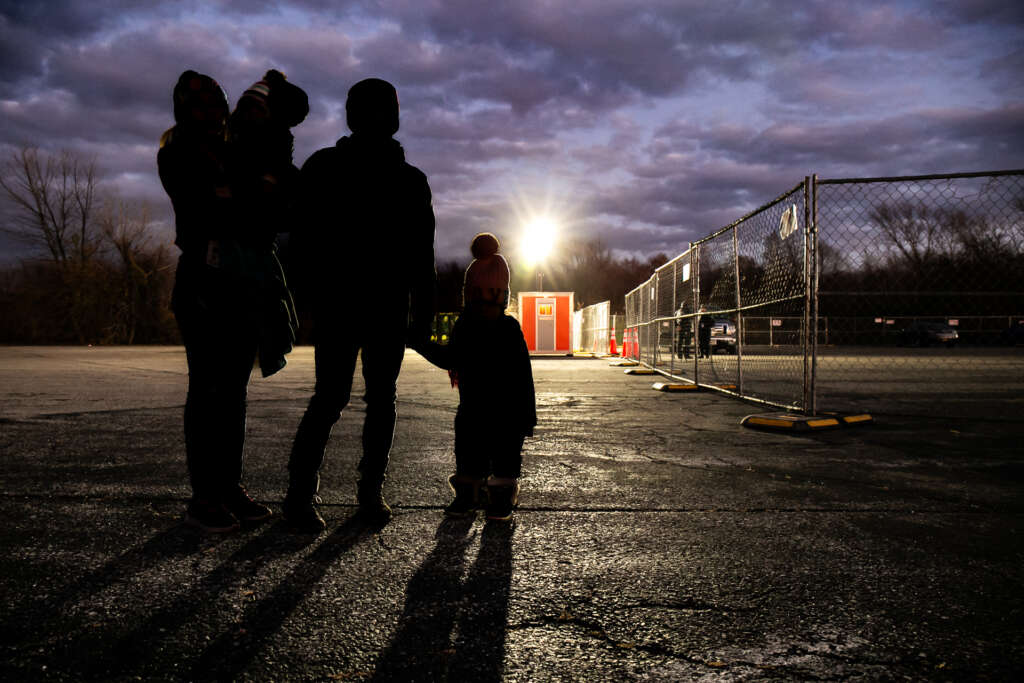
A family outside the city’s congregate shelter for immigrants at Floyd Bennett Field (now closed) at the end of November 2023. (Adi Talwar/City Limits)

On Jan. 1, Zohran Mamdani will be sworn in as the city’s next mayor, ushering in a new era of leadership at City Hall, and at the agencies that carry out the work of city government.

The incoming administration faces familiar—but pressing—challenges. More than 100,000 people sleep in the city’s shelter system each month, the majority of whom are families and children. Many more face housing insecurity: nearly half of all renter households are rent burdened, and evictions are rising again to approach pre-pandemic levels.

On Wednesday, Citizens Committee for Children* and the Family Homelessness Coalition will host a webinar on these issues and how the city’s next leaders can solve them. The event, “Safeguarding Well-Being: Supports for Families Experiencing Housing Instability” will include a panel discussion moderated by City Limits’ Executive Editor Jeanmarie Evelly.

Speakers will include:

Alice Bufkin, associate executive director for data and policy, Citizens’ Committee for Children

Gina Cappuccitti, senior director of housing access and stability services for New Destiny Housing

Kadisha Davis, narrative change lead at the Family Homelessness Coalition’s Family Action Board

Vangie Gonzales, policy lead at the Family Homelessness Coalition’s Family Action Board

Maya Jasinska, director of policy and research for Win NYC

Jennifer Pringle, director of Project LIT at Advocates for Children

Joscelyn Truitt, vice president of empowerment with Riseboro

The program will kick off Wednesday at noon. You can register for free here.

*CCC is among City Limits’ funders.

The post TUNE IN 11/13: How The Next Administration Can Support Families Experiencing Housing Instability appeared first on City Limits.

Sotheby’s says a diamond brooch lost by Napoleon as his forces fled Waterloo sells for $4.4 million

posted in: All news | 0

GENEVA (AP) — A diamond brooch that French emperor Napoleon lost while fleeing from the Battle of Waterloo in the early 19th century sold for more than 3.5 million Swiss francs (about $4.4 million) at a Geneva auction on Wednesday, Sotheby’s said.

The brooch, which can also be worn as a pendant, features an oval diamond weighing over 13 carats surrounded by smaller cut diamonds. The sale price vastly outstripped the high end of the pre-sale estimate of 200,000 francs.

The hammer price was 2.85 million francs, excluding fees and other charges that were included in the final aggregate price.

The circular jewel was found in a stash of Napoleon’s personal belongings in carriages that got held up on muddy roads as he and his troops fled the Duke of Wellington’s British forces and the Prussian army under Field Marshal von Blücher, Sotheby’s said.

For more than two centuries, the jewels featured as part of heirlooms of the Prussian Royal House of Hohenzollern. Sotheby’s did not disclose the identity of the seller, and said that the buyer was a “private collector.”

Among dozens of lots on the block was a green beryl weighing over 132 carats, which Napoleon was said to have worn at his 1804 coronation. The jewel sold for a hammer price of 838,000 francs, or more than 17 times the high-end pre-sale estimate.

One diamond expert said the sale took on added allure in the wake of the much-ballyhooed robbery of Napoleonic jewels from the Louvre museum in Paris last month.

Related Articles


Zelenskyy seeks dismissal of justice and energy ministers in Ukrainian corruption probe


UK’s Starmer refuses to say whether he will urge Trump to drop his $1 billion BBC threat


Russia makes gains in southern Ukraine as it expands front-line attacks


Climate change is in the news during COP30. We’ve got tips to tackle your climate anxiety


UN watchdog hasn’t been able to verify Iran’s stockpile of near-weapons grade uranium in months

“Given the recent Louvre heist and the provenance of arguably the most famous French figure in history, I’m not surprised the jewel achieved a majestic 3.5 million francs,” said Tobias Kormind, managing director of online jeweler 77 Diamonds. “The brooch arrives at a moment of renewed global fascination with Napoleonic jewels, and its story is irresistible.”

Later Wednesday, Sotheby’s was holding a “high jewelry” auction featuring a 10-carat pink diamond tentatively known as the “Glowing Rose,” which is expected to fetch about $20 million. The stone was unearthed in Angola’s Lulo mine.

‘A day without fear’: Chicagoans buy out street vendors amid immigration crackdown

posted in: All news | 0

By CHRISTINE FERNANDO, Associated Press

CHICAGO (AP) — The cyclists arrive at sunrise, rolling through Chicago’s Latino neighborhoods and stopping at tamale carts, elote stands and candy stalls. They buy out every last item — every tamale, every corn cob, every bundle of sweets. Then they load up the food and deliver it to shelters and families in need.

Since the start of a federal immigration crackdown that has led to more than 3,200 arrests in the Chicago metropolitan area, streets and storefronts in the city’s Latino neighborhoods have emptied out. Street vendors, fearing arrest, have been afraid to leave their homes to work. Local restaurants have struggled as customers stay home.

But as fear spread, so did something else — neighbors stepping up for one another and finding creative ways to show up for vendors and restaurant owners. This includes a grassroots effort to organize so-called “buy out” events meant to allow vendors who fear being detained by immigration agents to go home early. Some Chicagoans have pooled money in their neighborhoods or through local organizations while others have simply bought out taco stands while on their way to work or tamale vendors outside their local bars.

In Little Village, Rick Rosales, community organizer with Cycling x Solidarity, helps organize two of these “buy out” rides per week that typically support five street vendors each.

“The vendors are often speechless,” Rosales said. “They’ll say, ‘I have a lot of tamales. You want all of them?’”

Once, after the group bought out a tamale vendor’s cart, that man found them days later to say immigration agents were spotted on his block just hours after. “You saved my life,” Rosales said the man told them.

“This is about food and joy and bike rides,” Rosales said. “But it’s also so incredibly high stakes because of the fear in our communities right now.”

Street vendors targeted in immigration crackdown

It’s hard to say how many street vendors have been targeted by federal immigration agents, said Maria Orozco, outreach organizer for the Street Vendors Association of Chicago, adding she knows of at least 10 who have been detained.

In September, a tamale vendor was detained while selling outside a Home Depot, according to local advocates. Soon after, federal agents arrested a flower seller in the southwest neighborhood of Archer Heights. Then they came for a cotton candy vendor in the predominantly Mexican American Little Village. Immigration agents descended on the Swap-O-Rama flea market in October and detained more than a dozen people. And last week, over 100 residents in the Brighton Park neighborhood rallied to demand the release of their local tamalero.

U.S. Immigration and Customs Enforcement, the Department of Homeland Security and U.S. Customs and Border Protection did not respond to multiple requests for comment.

Orozco said losing these vendors is as much a cultural loss as an economic one, calling them part of the “fabric of our city.” She said they bring life, color and flavor to the city’s streets, preserving culinary traditions and building a sense of community — and they are beloved by neighbors.

Street vendors who are afraid to work or are seeing drops in sales can apply to get financial support through the Street Vendors Association of Chicago. The group launched a GoFundMe with the goal of raising $300,000 to support street vendors.

Orozco said local businesses have also hosted pop-up events where a certain percentage of proceeds go to street vendors. The organization has also helped connect vendors to people hoping to “buy them out,” Orozco said.

“It’s been emotional to see,” she said. “The vendors themselves didn’t realize how much Chicagoans love and support them. None of us expected this.”

Communities rally to support restaurants as customers dwindle

As Alonso Zaragoza, executive administrator of his neighborhood advocacy group, drove through his predominantly Latino community of Belmont Cragin, he noticed restaurants were mostly empty and dark. Restaurants in majority-Latino communities have reported significant drops in sales since federal agents descended on the city in September.

So Zaragoza began organizing restaurant crawls, drawing hundreds to struggling Latino-owned eateries. His previous event began at a taco and tamales restaurant and ended with a Mexican ice cream shop. Along the way, street cart vendors hawked elote, cotton candy and balloons as a local musical group played folk and bluegrass music.

“The financial support for our businesses is needed more than ever now,” Zaragoza said. “It goes such a long way.”

‘A day without fear’

Delilah Martinez, a community organizer and owner of the Vault Gallerie in Pilsen, couldn’t stand the silence on her street anymore. She was used to seeing familiar faces on 18th Street — a woman selling candy with her baby strapped to her back, a paletero who smiled at her each afternoon. Then one week, they were gone.

“It broke my heart,” Martinez said. “The streets felt empty. Our people were putting their freedom at risk just to work.”

She began raising money online and started “Operation Buyout,” approaching vendors one by one to purchase everything they had. The first woman was shocked when Martinez handed her $500.

“I just wanted her to have a day of rest, a day without fear,” Martinez said.

Related Articles


Alabama promised to improve psychiatric care for men charged with crimes. They still wait years


Track to open LA Olympics, with women’s 100-meter sprinters lining up three times in the same day


Epstein email says Trump ‘knew about the girls,’ but White House says release is a Democratic smear


US stocks are drifting around their records as AMD rallies


Why a Visa-Mastercard legal settlement could lead to your rewards credit card getting declined

Among those Martinez helped recently was a baker from Mexico City who arrived in Chicago 24 years ago.

Each night, he works late, hands dusted with flour, kneading dough until they’re sore and aching. For those few quiet hours, after his four children are asleep, the world feels simpler.

“There is a magic when I’m baking,” he said in Spanish. “I feel free. When I’m angry, I feel like the bread will absorb it. So I try to be happy and at peace, even when I know the reality is different.”

By 3 a.m., he’s up again for his grocery store shift, juggling work and school drop-offs. For years, he’s sold birthday cakes and pan dulce “by word of mouth” from his small kitchen, dreaming of one day opening his own shop.

But the baker has also heard the stories: street vendors arrested on residential streets and federal agents circling his historically Mexican American neighborhood of Pilsen. Two of his friends have been detained. When he hears sirens and helicopters, he feels “sick with fear.”

“I’m afraid for my youngest daughter,” he said. “It would be horrible to leave her. … I can’t see myself without my children.”

Martinez led the baker to a table and pulled off a black cloth. A silver, restaurant-grade mixer gleamed under the fluorescent light. Martinez also handed him an envelope with $1,500 gathered from neighbors hoping to help support him when he feels unsafe selling his baked goods on the street.

The man’s hand flew up to cover his mouth. He kicked his legs and began to cry.

“Thank you so much,” he said, clutching a mixer attachment to his chest. “It’s beautiful.”