2 new malaria treatments announced as drug resistance grows

posted in: All news | 0

By MIKE STOBBE

NEW YORK (AP) — Researchers on Wednesday reported two promising new approaches to counteract malaria’s growing resistance to medication — one involving a new class of drugs.

Related Articles


Chinese scientist pleads guilty in US smuggling case and will be quickly deported


Mentally ill people are stuck in jail because they can’t get treatment. Here’s what’s to know


What to know as the US Mint in Philadelphia presses its final penny


By the numbers: The government shutdown’s toll on air travel in the US


Chicagoans buy out street vendors amid a federal immigration crackdown

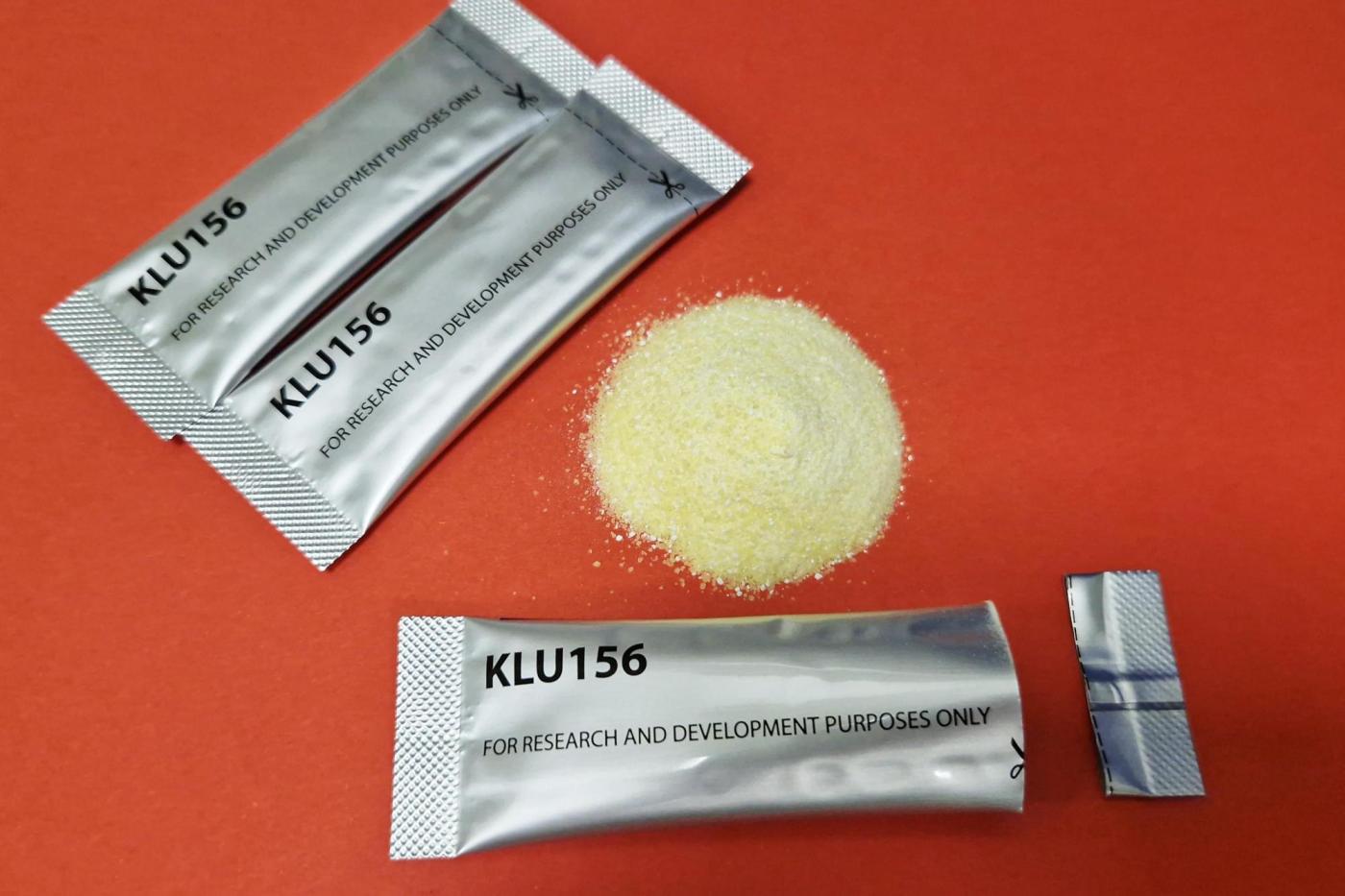
Switzerland-based Novartis released results of what it called a next-generation treatment. A study of its experimental drug in 12 African countries found it works well against the mosquito-borne parasite that causes malaria and seems to block spread.

The drug, called GanLum, is not yet licensed and more than a year away from being available.

It’s needed, said Dr. David Sullivan, a malaria expert at Johns Hopkins University.

The parasite that causes the disease is developing resistance to existing drugs, meaning “the ice is thinning,” Sullivan said. “It hasn’t given way, but we’re concerned.”

GanLum has been given as a packet of tiny powder-like granules, once daily for three days. But getting people to take malaria drugs over several days has been challenging — some stop after one or two doses makes them feel better. Experts say a third or more of malaria patients fail to complete the current standard three-day treatment course, a problem that can encourage drug resistance and allow curable cases to intensify.

In an effort to offer a one-time treatment, another team of researchers said an experiment in West Africa found a single dose of four widely available malaria drugs proved to be an effective cure.

The two studies were presented Wednesday at the American Society of Tropical Medicine and Hygiene conference in Toronto.

Parasite has repeatedly developed drug resistance

Malaria is caused by a parasite that spreads through mosquito bites. Infected people can suffer fever, chills and flu-like illness that, if left untreated, can lead to severe complications and death. It’s mainly found in tropical and subtropical climates. The largest death toll in recent years has been seen in children in sub-Saharan Africa.

The medical battle against malaria has ebbed and flowed, as new drugs come along, but the parasite gradually develops the ability to resist them.

At the beginning of this century, for example, resistance to the drug chloroquine was widespread and malaria killed more than 1.8 million people per year. But then came a class of drugs known as artemisinins, which worked well and helped drive a dramatic decline in global malaria death rates.

Artemisinin-based compounds remain the first-line treatment in most cases. But signs of partial resistance have been reported, and — for several reasons — malaria death rates have plateaued or even started to rise in some parts of the world.

Study tested 4-drug combo

Dr. Ghyslain Mombo-Ngoma led a study in Gabon in which researchers gave a single-dose treatment combining an artemisinin with three other antimalarial medications — pyronaridine, sulfadoxine, and pyrimethamine.

From May 2024 to October 2025, he and his colleagues treated more than 1,000 patients, half of them younger than 10, who were sick with malaria but not suffering life-threatening symptoms. A little over half got the four-drug, one-time treatment. The rest got a standard, artemisinin-based treatment.

Blood tests 28 days later showed 93% of patients who received the one-time treatment were free of parasites compared with 90% who received the standard three-day course.

Mombo-Ngoma said there are discussions underway with a drug manufacturer to produce a single capsule or packet of pills to help create an inexpensive, easy-to-take cure.

Sullivan, however, noted that resistance is already established to some components of the treatment, meaning it likely will prove to be “a short-term fix.”

Experimental treatment shows promise

Novartis’ GanLum is a combination of a new drug, ganaplacide, and an existing long-acting medication, lumefantrine.

In a study involving about 1,700 adults and children in 12 African countries, GanLum was found to have a cure rate of better than 97%, which was a little higher than a common artemisinin-based treatment. It was also highly effective against mutant malaria parasites with partial drug resistance, Novartis officials said.

Side effects included fever and anemia — similar to what’s seen in patients who take some of the current antimalarials, Novartis officials said. There was a higher level of vomiting right after the drug was given, which company officials say may stem from its taste. The company is exploring flavoring or sweetening, a spokesman said.

Novartis officials said they are working toward regulatory approvals. George Jagoe of the Medicines for Malaria Venture, which collaborated with Novartis, said he hopes to see GanLum begin rolling out to patients within 18 months.

The new treatment approaches can complement other efforts against malaria, including treated mosquito bed nets and new vaccines, said Dr. Andrea Bosman, a malaria expert with the World Health Organization.

But the promising news comes at a time when funding from the United States and some other sources is being cut, which could impact the ability of scientists to monitor drug resistance or make prevention and treatments available to people who need them, Bosman noted.

“The eyes on the problem are going to be blinded” as aid to malaria-stricken countries declines, he said.

The Associated Press receives financial support from the Howard Hughes Medical Institute’s Department of Science Education, the Robert Wood Johnson Foundation and the Gates Foundation, among others. The AP is solely responsible for all content. Find AP’s standards for working with philanthropies, a list of supporters and funded coverage areas at AP.org.


Lawsuit filed after St. Paul City Council unanimously approves firearms regulation ordinance

posted in: All news | 0

The St. Paul City Council unanimously approved an ordinance regulating firearms Wednesday, saying they want to be ready to put it in place if state law changes.

Minutes after, the Minnesota Gun Owners Caucus filed a lawsuit against the city, as the group had said it would if the ordinance was enacted.

Last month, St. Paul Mayor Melvin Carter, Minneapolis Mayor Jacob Frey and suburban mayors called again on the state to repeal a preemption law that bars cities and counties from regulating firearms, ammunition or their components.

St. Paul City Council members and other officials said they want to put in place local firearm-related ordinances to reduce violence since the Minnesota legislature and federal lawmakers haven’t taken action, particularly since the Aug. 27 shooting at Annunciation Catholic Church in Minneapolis that killed two children and injured dozens more.

The St. Paul ordinance says it “is designed to take effect only upon the repeal, amendment, or judicial invalidation of state preemption laws that currently prohibit local regulation of firearms, ensuring legal enforceability while signaling the city’s readiness to act when empowered.”

At Wednesday’s City Council meeting, Vice President HwaJeong Kim said, “These measures are the least of what we can do to stop gun violence.”

Passing the ordinance “is not symbolic,” said Council President Rebecca Noecker. “… But it is us showing that we are ready to go.”

Bryan Strawser, chair pf the Minnesota Gun Owners Caucus, said in a Wednesday statement after the lawsuit was filed: “This illegal ordinance will immediately have a chilling effect on peaceable gun owners in our capital city.

“It’s unfortunate that the City Council and Mayor have chosen to waste taxpayer dollars defending a performative ordinance that clearly violates state law,” he continued.

City Attorney Lyndsey Olson said the city “is ready to defend our authority to prepare for swift public-safety action –while respecting the rights of responsible gun owners — if state preemption is ever lifted.

“Contingent ordinances are a common legal tool used in many areas of law, and despite the MN Gun Caucus’s strong rhetoric, they have not been found to violate state firearm preemption law,” she said.

City Council members on why they passed ordinance

City Council members spoke Wednesday of how they’d been personally affected by violence and threats.

Kim, who was elected in 2023, said she was stalked to her house that year.

“I opened the door to a stranger that was very demanding and accosting and the way that he was standing, I thought that I would be shot in my home on my own doorstep,” she said.

Over the summer, colleagues and friends were told to “shelter in place” when they were told that Rep. Melissa Hortman and her husband had been fatally shot, and Sen. John Hoffman and his wife had been shot and wounded at their homes, Kim recounted.

City Council Member Saura Jost said, like many parents, she takes her child to school each morning.

“I give my son a hug and a kiss, and I tell him I love him and I say goodbye to him, knowing that there is a non-zero chance that I will not see him again,” she said. “Our children should not be tasked with protecting each other from gunfire, our healthcare professionals should not have to deal with the trauma of treating children who have been shot with these weapons of destruction.”

The City Council introduced the ordinance on Oct. 22 and, after a public hearing last week, passed it at Wednesday’s meeting.

More than 700 people from around the state emailed the city council, through an email template set up by the Minnesota Gun Owners Caucus, urging them to vote “no.”

Ten of the 14 people who addressed the City Council at last week’s public hearing spoke in favor of the ordinance.

The ordinance would:

• Ban the public possession of assault weapons, “large-capacity magazines, and binary triggers within city limits.” Binary triggers allow a semiautomatic weapon to fire both when the trigger is pulled and released, increasing its rate of fire.

• “Require all firearms to have serial numbers and prohibit untraceable ‘ghost guns.’”

• “Restrict firearms in sensitive public spaces including parks, libraries, recreation centers and city buildings.”

• “Mandate clear signage at public facilities to inform residents and encourage compliance.”

• “Establish penalties for violations and authorize enforcement by local public safety officials.”

Mayor Carter will sign the ordinance, his press secretary said.

Related Articles


Process over $250,000 reparations study splits St. Paul’s Black leaders


St. Paul mayor’s race: What voters say about Kaohly Her’s victory


St. Paul: Why do some streetlights remain out on Shepard Road, elsewhere?


St. Paul gun ordinance: From ‘100% against’ to strong support, City Council hears from residents


St. Paul City Council orders demolition of former CVS at Snelling-University

Chinese scientist pleads guilty in US smuggling case and will be quickly deported

posted in: All news | 0

By ED WHITE

DETROIT (AP) — A Chinese scientist charged in Michigan with smuggling biological materials pleaded guilty Wednesday but was given no additional time in jail beyond the five months she already spent in custody.

Related Articles


2 new malaria treatments announced as drug resistance grows


Mentally ill people are stuck in jail because they can’t get treatment. Here’s what’s to know


What to know as the US Mint in Philadelphia presses its final penny


By the numbers: The government shutdown’s toll on air travel in the US


Chicagoans buy out street vendors amid a federal immigration crackdown

Yunqing Jian, who was a temporary researcher at a University of Michigan lab, will be released and quickly deported. A judge called it a “very strange” case involving an “incredibly accomplished researcher.”

Jian, 33, was arrested in June and accused of conspiring with a boyfriend to study and nurse a toxic fungus at a campus lab. A pathogen known as Fusarium graminearum can attack wheat, barley, maize and rice. Zunyong Liu was caught carrying small samples while arriving at a Detroit airport in 2024.

In China, Jian and Liu specialized in studying Fusarium graminearum, which is widely found in U.S. fields, depending on weather and growing conditions. But it is illegal to bring it into the U.S. without a government permit, which carries strict conditions. The university had no permits.

Assistant U.S. Attorney Michael Martin said there was potential for “devastating harm,” though he didn’t elaborate.

“I don’t have evidence that she had evil intent,” Martin told a judge, referring to Jian. “But I don’t have evidence that she was doing this for the betterment of mankind either.”

Roger Innes, a University of Indiana expert who looked at the evidence for Jian’s attorneys, said there was “no risk to U.S. farmers, or anyone else” or any intent to create a more virulent strain. He noted that Liu likely wanted to work with a unique microscope at the lab.

Martin asked for a two-year prison sentence for Jian — four times higher than a maximum six-month term scored under sentencing guidelines. U.S. District Judge Susan DeClercq settled on five months in jail, time already served by Jian.

Jian, wearing chains around her ankles and waist, apologized but said little, relying instead on a letter filed with the court.

“I did not follow the rules because I was under pressure to proceed with research and produce results,” Jian wrote. “The research was not to harm anyone, but instead to find ways to protect crops from disease.”

The conspiracy charge against Jian was dropped in exchange for a guilty plea to smuggling and making false statements to investigators. She acknowledged that in 2024 that she had asked a colleague in China to send biological material hidden in a book. The book was intercepted by U.S. agents.

Liu was also charged in the investigation, but he’s in China and is unlikely to return to the U.S.

Jian was a postdoctoral scholar at Zhejiang University in Hangzhou, China, before being granted a visa to conduct research at a Texas university. She has been working in Michigan since summer 2023.

High School Football: How Lakeville South’s deep connections spurred a deep playoff run

posted in: All news | 0

Lakeville South’s football team had state championship aspirations heading into the 2024 season that never came to fruition.

The Cougars lost four games, the last of which came to Anoka in the second round of the Class 6A playoffs. The disappointment led to reflection for players, particularly those from the current senior class.

What went wrong, and how could they fix it for their final season?

“We realized last year’s team was not as connected,” senior offensive lineman Oscar Anaya. “It felt kind of forced at times.”

That showed itself throughout the season, as fingers were occasionally pointed between the offense and defense.

“We learned that we can’t do that. We have to be together,” senior defensive lineman Carter Mayer said. “We can’t be making fun of each other, pushing each other down. We’ve got to lift each other up.”

April marked the first time Lakeville South coach Ben Burk sat down individually with every senior on the roster. The Cougars coaching staff aims to create a player-led program. Those, Anaya recited, “elevate to championship-level teams.”

So the coaches ask questions in pursuit of player-driven answers. In April, Burk asked his seniors what was important to them.

“The brotherhood” was the most frequent answer.

The why was the recollection of how much it meant to these seniors to be intentionally included as true, valued members of the program back when they were sophomores.

The how is what’s separated this group of Cougars, who will meet Moorhead in the Class 6A state semifinals at 7:30 p.m. Friday at U.S. Bank Stadium.

Make it fun

The Cougars watch film with coaches early in the week, and without them on Wednesday nights, when the offensive players meet at one house to consume tape, and the defensive players gather at another to do the same.

Burk and Co. weren’t aware of that weekly staple until a few weeks into the season. But Mayer noted they existed last year, as well. The 2021 team watched film together on weeknights en route to winning a state championship. The 2024 group brought it back in pursuit of the same result.

“It didn’t work,” Mayer said.

Why not?

“We just watched film,” he said. “We didn’t have any fun.”

Revisions were made this fall. Sessions still feature roughly an hour of film, followed, for the defense, by more film – the cinematic version. It’s movie night. The offense has engaged in poker nights and other activities.

“It’s more of a fun time to hang out,” Anaya said.

This group has done plenty of that. Burk recalled nights during the squad’s offseason team camp at St. Olaf in which the coaches couldn’t get the players to go to bed. They wanted to all be together in common spaces.

Summer activities scheduled and organized by players included a voyage to Marion Lake, where the guys hosted a volleyball tournament and cooked out and a trip to a teammate’s house for pool time and a basketball tournament.

“Those were all about being together and building this group we have now,” Mayer said.

One where every single player is valued. Freshmen and sophomores participate on the scout team during the postseason, once their campaigns have concluded.

One day after practice, senior lineman Mitchell Kelvie had to speak up:

“I just want to shout out the scout team,” he said.

They mattered, too. And he made sure they knew it.

“Things that you wished kids did, and (these guys are) doing it. I don’t think anybody told him to do it, it was just on his heart that day,” Burk said. “It’s all the freshmen and sophomores getting a shoutout from this guy who’s normally gruff and whatever. It’s like, ‘Dang, dude. OK.’ Some of those things have been really powerful indications of team.”

A quote from former Cougars offensive coordinator Jon Bakken has always stuck with Anaya: “My most talented team never won a state championship, but the most connected team has.”

“It made me realize talent truly isn’t everything,” Anaya said, “when you have guys who will literally die on the field for you.”

Bonds weather storms

Burk briefly left the program this fall to take the same job at Cretin-Derham Hall, before reversing course to stay with the Cougars.

It was during those uncertain times that the football players formed a book club. They read “Chop Wood, Carry Water,’ a novel by Joshua Medcalf that highlights the idea of enjoying the process required to reach greatness.

The team met in a classroom and small groups of players took turns presenting about portions of the book.

“We made it so we were together,” Mayer said. “All we cared about was that we were together, and it didn’t matter what was going on outside of us that we couldn’t control.”

This was their program, and they were going to take it by the horns. It’s exactly what Burk wants. It’s why he never shoots down player ideas related to team building or bonding. It’s also up to the team to determine uniform combinations ahead of every game.

“It’s their team, right?” Burk said. “When you find chances to give them a say, they take it and run with it. … (Our coaches) would rather enable the kids, because it ultimately reflects their performance in a positive way.”

As well as their response.

Culture isn’t necessarily critical when things are going well. It’s mandatory when they aren’t.

Lakeville South dropped its regular season finale to Rosemount, 20-15 last month. Gone was the subdistrict title, along with No. 1 seed in the Class 6A playoffs.

In different seasons, you may find others to direct your finger toward. But when it’s truly your program, you point it at yourself.

An offensive player came to Burk after the defeat and noted they “need to pay for our mistakes.” Cougars coaches don’t penalize players with sprints. But the defensive players had been penalizing themselves all season.

The offense joined the party in the postseason. Guys tracked their own blunders – from mental mistakes such as missed assignments or false starts to effort-based errors like not carrying out a fake.

At the conclusion of practice, they run for their sins.

The Cougars are averaging 40 points per game in three playoff contests, including 49 points dropped in last week’s state quarterfinal to bounce reigning champ Maple Grove, the state’s top-ranked team.

“If you have an ego that you can’t learn something from (a loss), then you won’t,” Burk said. “But if your mindset is of ownership – we talk about extreme ownership all the time – if you can do that and look for what’s the lesson, then you’ll learn it.”

They have to – they’re teammates are depending on it.

“We’ve got to lift each other up,” Mayer said, “and believe in each other that, when it gets tough, you’re going to believe in the other person to do their job.”

A life lesson

Creating ideas, coordinating and communicating for additional activities is a lot for kids who already have school and sports on their plates.

Yet Anaya has enjoyed every bit of it.

“I don’t see it as like homework or a chore,” he said. “I see it as a bonding experience and an experience where I can not only grow as a player, but I can also grow as a leader and a person.”

This has been Anaya’s favorite season to date. Mayer concurs, noting the pure enjoyment has relieved much of the pressure that comes with each Friday night. There’s a calm that comes with the genuine belief in and care for the guy next to you.

This fall has taught Mayer a life lesson he plans to carry forward into the future.

“You have to enjoy who you’re with. How you do that is you set up things to make it fun. You don’t want to have it be where every day is long, it’s grueling, you don’t want to be here, the people next to me aren’t very fun to be with,” he said. “You’ve got to work hard and have determination, but it’s really what you make of it. You have to have it be fun to be with each other.”

That may be the 2025 Cougars crowning achievement, regardless of whether this campaign ends in a championship.

“When you’ve got such a loving group of guys you’re around, it makes it really easy to commit to them every day,” Anaya said. “I have a deep love for all of them. When you become connected with this many guys, it’s like you have another family to go to.”

Lakeville South head coach Ben Burk watches their game against Maple Grove during the first half of a football quarterfinal in the State Football Tournament at Eastview High School in Apple Valley, Friday, Nov. 07, 2025. (Craig Lassig / Special to the Pioneer Press)
Maple Grove running back James Engle (24) runs past Lakeville South defensive back Aiden Connelly (41) during the first half of a football quarterfinal in the State Football Tournament at Eastview High School in Apple Valley, Friday, Nov. 07, 2025. (Craig Lassig / Special to the Pioneer Press)

Related Articles


Park quarterback heading to Super Bowl as NFL award finalist


A football town: River Falls Wildcats and Falcons reaching new heights


Football: Mistakes doom Cretin-Derham Hall in state quarterfinal loss to Chanhassen


Football: St. Thomas Academy defense makes late stand to win Class 5A quarterfinal


State football: Dean runs for 6 TDs as Lakeville South dethrones Maple Grove