10 Alaskans born in American Samoa face voting charges in a case highlighting citizenship issues

posted in: All news | 0

By MARK THIESSEN

ANCHORAGE, Alaska (AP) — Ten Alaska residents faced arraignment Thursday on voter misconduct or other charges in cases that have renewed attention on the complex citizenship status of people born in the U.S. territory of American Samoa.

Related Articles


Takeaways from RFK Jr.’s contentious hearing before Senate lawmakers


Trump administration asks Supreme Court to let him fire member of Federal Trade Commission


Appeals court panel stops order to wind down operations at immigration center in Florida Everglades


The US will buy 2 million doses of an HIV prevention drug for low-income countries


States and developer sue the Trump administration for halting work on New England offshore wind farm

Those facing charges — most of them related to one another — were born in American Samoa but live in the isolated Alaska community of Whittier, about 60 miles south of Anchorage. The state contends they falsely claimed U.S. citizenship when registering or attempting to vote.

American Samoa is the only U.S. territory where residents are not automatically granted citizenship by being born on American soil, as the 14th Amendment to the Constitution dictates. Instead, they are considered U.S. nationals. American Samoans can serve in the military, obtain U.S. passports and vote in elections in American Samoa. But they cannot hold public office in the U.S. or participate in most U.S. elections.

A grand jury on Tuesday returned indictments with felony and misdemeanor counts, almost a year after Alaska State Troopers descended on Whittier to deliver court summonses. Some of the defendants were expected in court Thursday afternoon while others planned to attend virtually.

The case is related to that of Tupe Smith, who was arrested shortly after winning election to a regional school board in 2023 and who has been charged separately. Smith, born in American Samoa, has asserted she marked a box claiming to be a U.S. citizen at the instruction of election workers because there was no way to identify herself as a U.S. national, according to court records.

The state has said she falsely and deliberately claimed citizenship. Prosecutors pointed to the language on the voter application forms she filled out in 2020 and 2022, which explicitly said that if the applicant was not at least 18 years old and a U.S. citizen, “do not complete this form, as you are not eligible to vote.”

Smith’s case is before the state Court of Appeals. Attorneys for the state have argued that the question of citizenship for American Samoans “is not before this court and the voter misconduct statute at issue here is not and cannot be the solution to this difficult problem.”

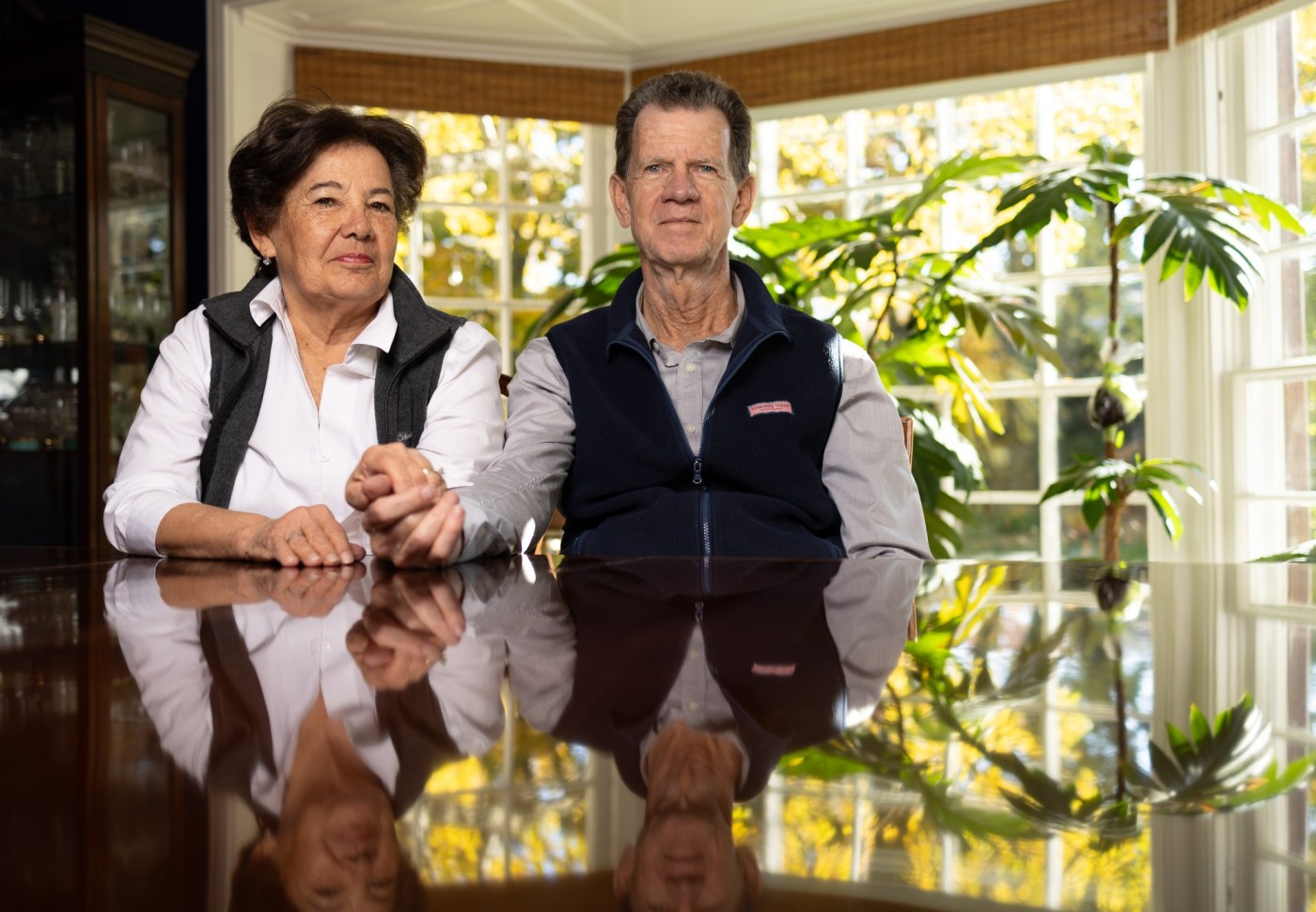
FILE – Michael Pese and his wife Tupe Smith pose for a photo with their son Maximus and daughter Cataleya in Whittier, Alaska, May 13, 2025. (AP Photo/Mark Thiessen, File)

The 10 defendants in the separate case include Smith’s husband, Michael Pese; his mother, who has cancer; seven other relatives; and one man who grew up in the same village in American Samoa as Michael Pese.

Matt DiTullio, an assistant public defender, said more than half the defendants are in fact U.S. citizens.

Neil Weare, an attorney for Smith, noted her appeal is pending as the other cases proceed. Weare is the co-founder of the Right to Democracy Project, an advocacy group for people from U.S. territories.

The Pacific Community of Alaska has urged Alaska’s attorney general not to pursue the matter, saying even officials in Whittier and at the state level have been confused about whether American Samoans are eligible to vote and have provided people with at times incorrect information.

The group also said the state did not perform its due diligence in determining citizenship status before pursuing charges.

Associated Press writer Becky Bohrer contributed from Juneau.

Takeaways from RFK Jr.’s contentious hearing before Senate lawmakers

posted in: All news | 0

By MATTHEW PERRONE and ALI SWENSON, Associated Press

WASHINGTON (AP) — A contentious three-hour hearing between U.S. senators and Robert Kennedy Jr. devolved into multiple screaming matches on Thursday as the nation’s health secretary fended off accusations about sweeping changes he’s made to vaccines, health care policy and leadership.

The oversight hearing in the Senate Finance Committee was a chance for senators to seek answers from Kennedy on recent high-profile departures at the Centers for Disease Control and Prevention, the appointment of vaccine critics to an influential federal advisory committee and changes to COVID-19 vaccine recommendations that will make it harder for many Americans to get the shots.

Both Democrats and Republicans came out swinging. They questioned whether he would keep his earlier promise that he wouldn’t block vaccines for Americans who wanted them. A frustrated Kennedy dismissed those arguments but also sowed doubt on vaccine safety and effectiveness from the prominent perch on Capitol Hill.

Here are some key takeaways from the hearing:

Kennedy tried to discredit ousted CDC director

Kennedy repeatedly disputed the account of fired CDC director Susan Monarez, who was abruptly removed from her post last week after less than a month on the job. Monarez was nominated by President Donald Trump, endorsed for the job by Kennedy and confirmed by a Senate vote in July.

In a Wall Street Journal op-ed published Thursday, Monarez reiterated that she was told to “preapprove” recommendations by Kennedy’s handpicked vaccine advisers, many of whom have records of questioning basic vaccine science.

“I asked her: ‘Are you a trustworthy person?’ and she said ‘No,’” Kennedy stated, explaining his change of opinion on Monarez. “If you had an employee who told you they weren’t trustworthy, would you ask them to resign?”

An attorney representing Monarez called Kennedy’s statements “false” and “patently ridiculous,” in a written statement.

Later in the hearing, Kennedy acknowledged that he’d told Monarez to fire several senior CDC officials. Throughout the hearing, Kennedy accused the agency’s scientists of failing to combat chronic disease and making unsound recommendations during the pandemic.

“The people who at CDC who oversaw that process, who put masks on our children, who closed our schools, are the people who will be leaving,” Kennedy said.

Related Articles


Trump administration asks Supreme Court to let him fire member of Federal Trade Commission


Appeals court panel stops order to wind down operations at immigration center in Florida Everglades


The US will buy 2 million doses of an HIV prevention drug for low-income countries


States and developer sue the Trump administration for halting work on New England offshore wind farm


Judge orders Trump administration to release billions in foreign aid approved by Congress

‘You’re just making stuff up:’ A combative Kennedy lobbed attacks

For Kennedy, tough questions from angry senators were an opportunity to fight back.

Throughout the hearing, a resolute Kennedy accused senators of lying, misrepresenting his agency and making little sense. As a result, questioning from Democratic senators repeatedly turned into yelling matches.

“You’re just making stuff up,” Kennedy told Sen. Tina Smith, a Democrat from Minnesota, after she accused him of “blaming school shootings on antidepressants.” The health secretary said on Fox News after the recent Minnesota shooting that antidepressants could potentially contribute to violence, and said his agency was investigating. While critics of antidepressants have long alleged they may increase homicidal behavior, the link is not supported by multiple, large clinical trials of the drugs.

When Democratic Sen. Raphael Warnock of Georgia questioned Kennedy about his disparaging rhetoric about CDC employees before a recent deadly shooting at the agency, Kennedy retorted: “Are you complicit in the assassination attempts on President Trump?”

Kennedy said Sen. Ben Ray Luján of New Mexico was “talking gibberish” when the Democrat asked him about the details of his agency’s autism research.

“Mr. Secretary, let me speak slowly and clearly so that you can understand me through my New Mexico accent,” Luján responded.

Senators challenged claim that ‘anybody can get the booster’ for COVID

Democratic senators pressed Kennedy on recent changes narrowing the approval of annual COVID-19 shots. He repeatedly disputed or denied their accusations.

Last month, the Food and Drug Administration approved updated shots but only for seniors or younger people with underlying health risks. That’s sparked confusion and frustration from many Americans, including parents interested in vaccinating healthy children against the virus.

“Why have you acted behind closed doors to overrule scientists and limit the freedom of parents to choose the COVID vaccine for their children?” Democratic Sen. Maggie Hassan of New Hampshire asked.

“This is crazy talk,” Kennedy responded. Later, he acknowledged that access to vaccines at pharmacies “depends on the state.”

In many states, pharmacists are legally barred from administering vaccines outside the uses endorsed by the CDC’s advisory panel, prompting CVS and other pharmacy chains to turn away people seeking shots in certain states.

“You promised that you would not take away vaccines from anyone who wanted them,” said Democratic Sen. Elizabeth Warren of Massachusetts.

“I’m not taking them away from people,” Kennedy said, noting that healthy Americans who want a shot should still be able to get one if a doctor prescribes one. Typically, Americans do not need to see a doctor for annual vaccine updates.

Until this year, the FDA and CDC had recommended yearly COVID vaccinations for everyone ages 6 months and up.

COVID statistics remain a flashpoint

Kennedy could not be pinned down on basic facts and statistics, particularly when it came to vaccines and COVID-19.

In an exchange with Sen. Mark Warner, Kennedy claimed nobody knows how many Americans have died from COVID-19 because of a lack of government data.

Both the CDC and the World Health Organization have concluded that approximately 1.2 million Americans have died from the virus.

“The secretary of Health and Human Services doesn’t know how many Americans died from COVID,” said Warner, a Virginia Democrat. “How can you be that ignorant?”

Republicans also pressed Kennedy on his assessment of Operation Warp Speed, the Trump-led initiative that rapidly developed COVID vaccines in the first year of the pandemic. Trump has long claimed success for the effort, while acknowledging unsubstantiated theories that mass vaccinations may have caused more harm than good.

Kennedy has said it’s unclear how many lives were saved by the vaccines because of imperfect data collected by the CDC and vaccine makers.

Nevertheless, when questioned by Republican Sen. Bill Cassidy of Louisiana — a physician whose vote was key in Kennedy’s nomination — about Operation Warp Speed, Kennedy agreed that Trump “absolutely” deserved a Nobel Prize.

Vaccine concerns were bipartisan

Senate Republicans were more aggressive with Kennedy than they have been with most of Trump’s top officials, with several asking pointed questions about his efforts to limit access to vaccines.

Wyoming Sen. John Barrasso, also a doctor and the No. 2 Senate Republican, said he had grown “deeply concerned” that some vaccines could be in jeopardy after Kennedy had cut research funding and fired the CDC director.

“Americans don’t know who to rely on,” Barrasso said.

North Carolina Sen. Thom Tillis read off a list of questions for Kennedy that he said he wanted answered after the hearing, including where the health secretary stands on the COVID-19 vaccine.

AP writer Mary Clare Jalonick contributed to this story. Swenson reported from New York.

The Associated Press Health and Science Department receives support from the Howard Hughes Medical Institute’s Department of Science Education and the Robert Wood Johnson Foundation. The AP is solely responsible for all content.

Trump administration asks Supreme Court to let him fire member of Federal Trade Commission

posted in: All news | 0

WASHINGTON (AP) — The Trump administration on Thursday asked the Supreme Court to let the president fire a member of the Federal Trade Commission, the latest in a string of emergency appeals over the president’s removal power.

President Donald Trump moved to fire Rebecca Slaughter in the spring, but lower courts ordered her reinstated because the law only allows commissioners to be removed for problems like misconduct or neglect of duty.

The Justice Department, though, argues that the FTC and other executive branch agencies are under Trump’s control and the president is free to remove commissioners without cause.

Related Articles


Takeaways from RFK Jr.’s contentious hearing before Senate lawmakers


Appeals court panel stops order to wind down operations at immigration center in Florida Everglades


The US will buy 2 million doses of an HIV prevention drug for low-income countries


States and developer sue the Trump administration for halting work on New England offshore wind farm


Judge orders Trump administration to release billions in foreign aid approved by Congress

The justices already have allowed the firings of several other board members of independent agencies. It has suggested that his power to fire has limitations at the Federal Reserve, a prospect that could soon be tested with the case of governor Lisa Cook.

The fight over the president’s power to fire could prompt the court to consider overturning a 90-year-old Supreme Court decision known as Humphrey’s Executor. In that case from 1935, the court unanimously held that presidents cannot fire independent board members without cause.

The decision ushered in an era of powerful independent federal agencies charged with regulating labor relations, employment discrimination, the airwaves and much else. But it has long rankled conservative legal theorists who argue the modern administrative state gets the Constitution all wrong because such agencies should answer to the president.

The agency at the center of the case was also the FTC, a point cited by lower-court judges in the lawsuit filed by Slaughter. She has ping-ponged in and out of the job as the case worked its way through the courts.

The FTC is a regulator created by Congress that enforces consumer protection measures and antitrust legislation. Its seats are typically comprised of three members of the president’s party and two from the opposing party.

Appeals court panel stops order to wind down operations at immigration center in Florida Everglades

posted in: All news | 0

ORLANDO, Fla. (AP) — A federal appeals court panel on Thursday put on hold a lower court judge’s order to wind down operations of the immigration detention center in the Florida Everglades.

The three-judge panel in Atlanta decided by a 2-1 vote to stay the federal judge’s order pending the outcome of an appeal, saying it was in the public interest.

Related Articles


Takeaways from RFK Jr.’s contentious hearing before Senate lawmakers


Trump administration asks Supreme Court to let him fire member of Federal Trade Commission


The US will buy 2 million doses of an HIV prevention drug for low-income countries


States and developer sue the Trump administration for halting work on New England offshore wind farm


Judge orders Trump administration to release billions in foreign aid approved by Congress

U.S. District Judge Kathleen Williams in Miami issued a preliminary injunction last month ordering operations at the facility to be wound down by the end of October, with detainees transferred to other facilities and equipment and fencing removed.

Williams’ decision was issued in response to a lawsuit brought by Friends of the Everglades, the Center for Biological Diversity and the Miccosukee Tribe, who accused the state and federal defendants of not following federal law requiring an environmental review for the detention center in the middle of sensitive wetlands.

Republican Gov. Ron DeSantis’ administration in late June raced to build the facility on an isolated airstrip surrounded by wetlands to aid President Donald Trump’s efforts to deport people in the U.S. illegally. The governor said the location in the rugged and remote Everglades was meant as a deterrent against escape, much like the island prison in California that Republicans named it after.

The state and federal government defendants have appealed Williams’ ruling, asking that it be put on hold. The state of Florida said in court papers this week that it planned to resume accepting detainees at the facility if the stay was granted.

The federal government claims that it isn’t responsible for the detention center since it hasn’t spent a cent to build or operate the facility, even though Florida is seeking some federal grant money to fund a portion of it. Florida claims that the environmental impact statement required by federal law doesn’t apply to states.

Follow Mike Schneider on the social platform Bluesky: @mikeysid.bsky.social