Russian drones force Europe to defend itself, perhaps alone, after Putin ‘put down a marker’ to NATO

posted in: All news | 0

By LORNE COOK

BRUSSELS (AP) — Since Russian President Vladimir Putin ordered the invasion of Ukraine in 2022, NATO has focused on trying to deter an attack on its own territory and avoid all-out war with nuclear armed Russia. Now the time has come for NATO to defend itself, and European allies might have to do it alone, experts and leaders say.

As it has attacked Ukraine, Russia has incessantly harassed Kyiv’s European backers. Warplanes and ships have breached NATO airspace and waters. Transport and communications networks have been sabotaged in attacks blamed on Russia. Disinformation campaigns have sought to undermine support and weaken unity. Putin opponents have been poisoned in Europe in the past too.

But the flight of multiple Russian drones over Poland this week marks a clear escalation, experts say. NATO responded with overwhelming force. Cheap drones were shot down with high-tech military kit and top-line F-35 jets were deployed. A costly exercise.

Russia’s armed forces said they weren’t targeting Poland. Belarus suggested the drones veered off course, perhaps due to jamming.

Territorial defense officers clean up debris from the destroyed roof of a house, after multiple Russian drones struck, in Wyryki near Lublin, Poland, Thursday, Sept. 11, 2025. (AP Photo/Czarek Sokolowski)

France, the Netherlands and the U.K. are sending more equipment to help Poland defend its borders, notably near Belarus where Russia launched military exercises on Friday. NATO’s eastern flank in Europe will be bolstered with more air defenses stationed there.

Europe is alone, for now

It’s “unclear what more – if anything – the U.S. is willing to do to strengthen NATO air defenses. So far, we’ve seen Europeans operating U.S. platforms without a direct American military role,” NATO’s longest-serving spokesperson Oana Lungescu, now an expert at the RUSI think tank, said on social media.

NATO relies on U.S. leadership, but the Trump administration insists that Europe must now take care of its own security, and that of Ukraine.

Europe’s leaders have condemned the drone incident and promised action. President Donald Trump has said that it “could have been a mistake.”

President Donald Trump holds a photo of himself with Russian President Vladimir Putin during an announcement in the Oval Office of the White House, Friday, Aug. 22, 2025, in Washington. (AP Photo/Jacquelyn Martin)

Trump’s ambiguity about defending Europe has undermined trust at NATO, despite the alliance’s attempts to project unity at a summit in July.

“We would also wish that the drone attack on Poland was a mistake. But it wasn’t. And we know it,” Polish Prime Minister Donald Tusk posted on X on Friday.

After a meeting of the Polish National Security Council on Thursday, Tusk said: “We would all prefer that the biggest ally spoke openly and publicly about this incident, but let’s not be picky, we must also get accustomed to the new situation.”

Russia takes advantage

For Putin, it’s as good a time as any to test NATO’s resolve. To the dismay of Ukraine and European allies, Trump dropped his demands for an immediate ceasefire at his summit with Russia’s leader in Alaska last month, preferring a broader deal to end the war.

Long-threatened U.S. sanctions against Russia have remained just threats and Putin has bought more time to try to seize Ukrainian territory. Winter is approaching and the fighting is likely to grind to a halt within a few months anyway.

Related Articles


How AI is helping some small-scale farmers weather a changing climate


UAE summons Israeli diplomat to condemn the attack on Qatar targeting Hamas leaders


France sends jets to Poland, the UK ramps up sanctions in a signal to Russia not to escalate


A United Airlines passenger plane makes emergency landing in Osaka as cargo fire is suspected


Today in History: September 12, LA commuter train crash kills 25 people

“Putin is really out now to put down a marker to NATO,” Jamie Shea, an expert on international security at the Chatham House think tank in London and a former top NATO official, told The Associated Press.

By provoking the allies to send air defenses to Poland, some of which might otherwise be bound for Ukraine, Putin wants to force the allies to “make the choice between defending NATO and defend Ukraine, which should be the same thing,” Shea said.

Should they be unable to do so, he said, “from Putin’s point of view, this would be a very happy development because then he would be able to take apart Ukraine’s energy infrastructure, cause misery for the Ukrainian population.”

How best to respond

It would not be easy for European allies to defend everyone at once without integrating their air defense systems with Ukraine. One possibility might be for Poland to accept Kyiv’s request to shoot down Russian missiles over western Ukraine should their trajectory take them toward Polish territory. Tusk’s government has never ruled out doing so.

Either way, time is on Russia’s side. While Trump has agreed to sell American weapons to the Europeans to help them arm themselves and Ukraine, many must be manufactured first. Putin understands that these systems take months, if not years, to make.

The drone incident came just before Russia’s joint military exercise with Belarus — dubbed “Zapad 2025,” or “West 2025,” — got underway and could be linked. NATO accused Russia of using the “Zapad” exercises in 2021 to pre-position equipment for its invasion of Ukraine the following year.

FILE – Russian President Vladimir Putin, left, and Belarusian President Alexander Lukashenko shake hands during a meeting in St. Petersburg, Russia, Jan. 29, 2024. (Dmitry Astakhov, Sputnik, Government Pool Photo via AP, File)

That the exercises are taking place, even with a smaller Russian presence than usual, is “to demonstrate that (Putin) can invade Ukraine and put pressure on NATO at the same time,” Shea said.

Few experts think NATO will resort to activating Article 5 of its founding treaty over the incident — the three musketeers-like pledge that an attack on one ally will be treated as an attack on them all — and the military alliance has not suggested that it would.

For now, bolstering defenses on NATO’s eastern flank is the order of the day.

Associated Press writers Danica Kirka in London, Jamey Keaten in Geneva and Claudia Ciobanu in Warsaw, Poland, contributed to this report.

2 people are stabbed by Palestinian employee at a hotel outside Jerusalem

posted in: All news | 0

By JULIA FRANKEL

JERUSALEM (AP) — An employee stabbed two guests at a hotel outside of Jerusalem on Friday, the second attack by a Palestinian in the area this week.

Related Articles


How AI is helping some small-scale farmers weather a changing climate


UAE summons Israeli diplomat to condemn the attack on Qatar targeting Hamas leaders


France sends jets to Poland, the UK ramps up sanctions in a signal to Russia not to escalate


A United Airlines passenger plane makes emergency landing in Osaka as cargo fire is suspected


Today in History: September 12, LA commuter train crash kills 25 people

According to police, the employee came out of the kitchen at a hotel in the bucolic Kibbutz Tzuba and stabbed two guests in the dining room.

An off-duty police officer and the hotel’s dining manager tackled the attacker until more officers arrived and arrested him.

Israeli paramedics said they evacuated two men, aged approximately 50 and 25, to a nearby hospital. They said both had been stabbed in their torsos, the older man left in critical condition.

Israeli police, who described the stabbing as a militant attack, said the suspect was from the Shuafat area in east Jerusalem, and that three other suspects were also arrested on suspicion they were involved in the attack. Hamas praised the attack but did not claim responsibility for it.

Two Palestinians from the occupied West Bank opened fire at a bus stop at Jerusalem earlier this week, killing six people. Hamas claimed that attack.

The war in the Gaza Strip, triggered by Hamas’ Oct. 7, 2023, attack into Israel, has killed tens of thousands of Palestinians and sparked a surge of violence in Israel and the occupied West Bank.

Trump approves federal disaster aid for storms and flooding in 6 states

posted in: All news | 0

By DAVID A. LIEB and M.K. WILDEMAN, Associated Press

President Donald Trump has approved federal disaster aid for six states and tribes following storms and floods that occurred this spring and summer.

The disaster declarations, announced Thursday, will allow federal funding to flow to Kansas, North Carolina, North Dakota and Wisconsin, and for tribes in Montana and South Dakota. In each case except Wisconsin, it took Trump more than a month to approve the aid requests from local officials, continuing a trend of longer waits for disaster relief noted by a recent Associated Press analysis.

Trump has now approved more than 30 major natural disaster declarations since taking office in January. Before the latest batch, his approvals had averaged a 34-day wait from the time the relief was requested. For his most recent declarations, that wait ranged from just 15 days following an aid request for Wisconsin flooding in August to 56 days following a tribal request for Montana flooding that occurred in May.

The AP’s analysis showed that delays in approving federal disaster aid have grown over time, regardless of the party in power. On average, it took less than two weeks for requests for a presidential disaster declaration to be granted in the 1990s and early 2000s. That rose to about three weeks during the past decade under presidents from both major parties. During Trump’s first term in office, it took him an average of 24 days to approve requests.

White House spokeswoman Abigail Jackson told the AP that Trump is providing “a more thorough review of disaster declaration requests than any Administration has before him” to make sure that federal tax dollars are spent wisely.

But delays mean individuals must wait to receive federal aid for daily living expenses, temporary lodging and home repairs. Delays in disaster declarations also can hamper recovery efforts by local officials uncertain whether they will receive federal reimbursement for cleaning up debris and rebuilding infrastructure.

Trump’s latest declarations approved public assistance for local governments and nonprofits in all cases except Wisconsin, where assistance for individuals was approved. But that doesn’t preclude the federal government from later also approving public assistance for Wisconsin.

Preliminary estimates from Democratic Wisconsin Gov. Tony Evers’ administration said more than 1,500 residential structures were destroyed or suffered major damage in August flooding at a cost of more than $33 million. There was also more than $43 million in public sector damage over six counties, according to the Evers administration.

Evers requested aid for residents in six counties, but Trump approved it only for three.

Related Articles


Utah’s governor, in impassioned remarks, urges Americans to find ‘off-ramp’ from political violence


With Hyundai raid, Trump’s immigration crackdown runs into his push for foreign investment


Schumer warns of a shutdown if Republicans don’t accept Democrats’ health care demands


Kavanaugh says no one has too much power in US system. Critics see Supreme Court bowing to Trump


Trump says he’ll send National Guard to Memphis to address crime concerns

“I will continue to urge the Trump Administration to approve the remainder of my request, and I will keep fighting to make sure Wisconsin receives every resource that is needed and available,” Evers said in a statement in which he thanked Democratic officeholders for their efforts, but not Trump or any Republicans.

Trump had announced several of the disaster declarations — including Wisconsin’s — on his social media site while noting his victories in those states and highlighting their Republican officials. He received thanks from Democratic North Carolina Gov. Josh Stein and Republican officials elsewhere.

Trump’s approval of six major disaster declarations in one day would have been unusual for some presidents but not for him. Trump approved seven disaster requests on July 22 and nine on May 21.

But Trump has not approved requests for hazard mitigation assistance — a once-typical add-on that helps recipients build back with resilience — since February.

Associated Press writers Gabriela Aoun Angueira, Scott Bauer, Jack Dura and Gary D. Robertson contributed to this report.

How AI is helping some small-scale farmers weather a changing climate

posted in: All news | 0

By GREGORY GONDWE

MULANJE, Malawi (AP) — Alex Maere survived the destruction of Cyclone Freddy when it tore through southern Malawi in 2023. His farm didn’t.

Related Articles


Well-preserved Amazon rainforest on Indigenous lands can protect people from diseases, study finds


The US keeps breaking renewable energy records


Study links more frequent and severe heat waves to pollution from major fossil fuel producers


Are EVs really better for the environment? Study checks role of coal, battery and range


Trump administration wants to cancel Biden-era rule that made conservation a ‘use’ of public land

The 59-year-old saw decades of work disappear with the precious soil that the floods stripped from his small-scale farm in the foothills of Mount Mulanje.

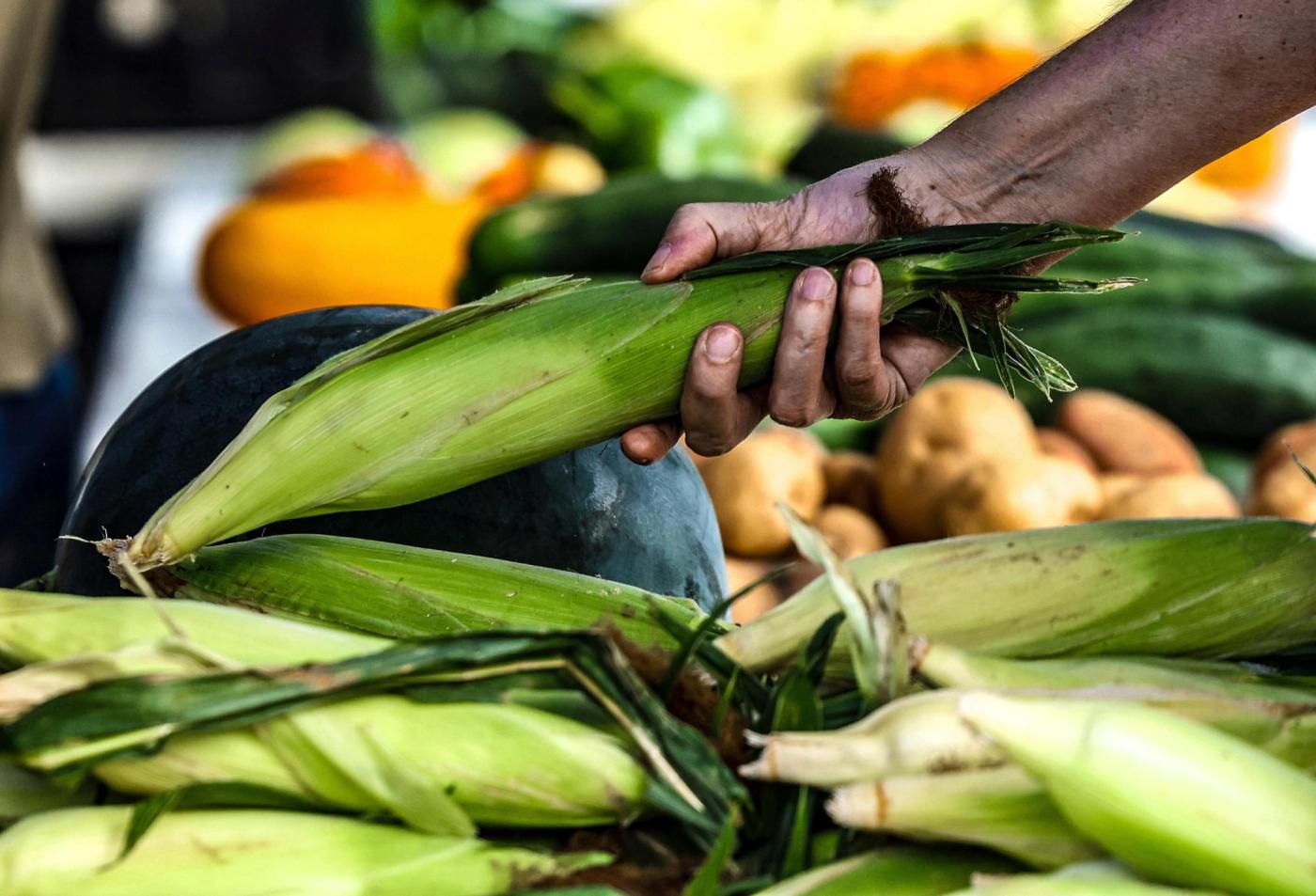
He was used to producing a healthy 1,870 pounds of corn each season to support his three daughters and two sons. He salvaged just 8 kilograms (17 pounds) from the wreckage of Freddy.

“This is not a joke,” he said, remembering how his farm in the village of Sazola became a wasteland of sand and rocks.

Freddy jolted Maere into action. He decided he needed to change his age-old tactics if he was to survive.

He is now one of thousands of small-scale farmers in the southern African country using a generative AI chatbot designed by the non-profit Opportunity International for farming advice.

AI suggests potatoes

The Malawi government is backing the project, having seen the agriculture-dependent nation hit recently by a series of cyclones and an El Niño-induced drought. Malawi’s food crisis, which is largely down to the struggles of small-scale farmers, is a central issue for its national elections next week.

More than 80% of Malawi’s population of 21 million rely on agriculture for their livelihoods and the country has one of the highest poverty rates in the world, according to the World Bank.

Filesi Topola is seen on her farm in Mulanje, southern Malawi, Tuesday, July 29, 2025. (AP Photo/Thoko Chikondi)

The AI chatbot suggested Maere grow potatoes last year alongside his staple corn and cassava to adjust to his changed soil. He followed the instructions to the letter, he said, and cultivated half a soccer field’s worth of potatoes and made more than $800 in sales, turning around his and his children’s fortunes.

“I managed to pay for their school fees without worries,” he beamed.

AI, agriculture and Africa

Artificial intelligence has the potential to uplift agriculture in sub-Saharan Africa, where an estimated 33-50 million smallholder farms like Maere’s produce up to 70-80% of the food supply, according to the U.N.’s International Fund for Agricultural Development.

Yet productivity in Africa — with the world’s fast-growing population to feed — is lagging behind despite vast tracts of arable land.

As AI’s use surges across the globe, it is helping African farmers access new information to identify crop diseases, forecast drought, design fertilizers to boost yields, and even locate an affordable tractor. Private investment in agriculture-related tech in sub-Saharan Africa went from $10 million in 2014 to $600 million in 2022, according to the World Bank.

But not without challenges.

Farmers use the Ulangizi AI chatbot in Mulanje, southern Malawi, Tuesday, July 29, 2025. (AP Photo/Thoko Chikondi)

Africa has hundreds of languages for AI tools to learn. Even then, few farmers have smartphones and many can’t read. Electricity and internet service are patchy at best in rural areas, and often non-existent.

“One of the biggest challenges to sustainable AI use in African agriculture is accessibility,” said Daniel Mvalo, a Malawian technology specialist. “Many tools fail to account for language diversity, low literacy and poor digital infrastructure.”

The man with the smartphone

The AI tool in Malawi tries to do that. The app is called Ulangizi, which means advisor in the country’s Chichewa language. It is WhatsApp-based and works in Chichewa and English. You can type or speak your question, and it replies with an audio or text response, said Richard Chongo, Opportunity International’s country director for Malawi.

“If you can’t read or write, you can take a picture of your crop disease and ask, ‘What is this?’ And the app will respond,” he said.

But to work in Malawi, AI still needs a human touch. For Maere’s area, that is the job of 33-year-old Patrick Napanja, a farmer support agent who brings a smartphone with the app for those who have no devices. Chongo calls him the “human in the loop.”

“I used to struggle to provide answers to some farming challenges, now I use the app,” said Napanja.

Smallholder farmers hold a meeting in Mulanje, southern Malawi, Tuesday, July 29, 2025. (AP Photo/Thoko Chikondi)

Farmer support agents like Napanja generally have around 150-200 farmers to help and try to visit them in village groups once a week. But sometimes, most of an hour-long meeting is taken up waiting for responses to load because of the area’s poor connectivity, he said. Other times, they have to trudge up nearby hills to get a signal.

They are the simple but stubborn obstacles millions face taking advantage of technology that others have at their fingertips.

Trust is critical, scaling up is difficult

For African farmers living on the edge of poverty, the impact of bad advice or AI “hallucinations” can be far more devastating than for those using it to organize their emails or put together a work presentation.

Mvalo, the tech specialist, warned that inaccurate AI advice like a chatbot misidentifying crop diseases could lead to action that ruins the crop as well as a struggling farmer’s livelihood.

“Trust in AI is fragile,” he said. “If it fails even once, many farmers may never try it again.”

The Malawian government has invested in Ulangizi and it is programmed to align with the agriculture ministry’s own official farming advice, making it more relevant for Malawians, said Webster Jassi, the agriculture extension methodologies officer at the ministry.

Feluzi Makono holds soil at his grandmother’s farm in Mulanje, southern Malawi, Tuesday, July 29, 2025. (AP Photo/Thoko Chikondi)

But he said Malawi faces challenges in getting the tool to enough communities to make an extensive difference. Those communities don’t just need smartphones, but also to be able to afford internet access.

For Malawi, the potential may be in combining AI with traditional collaboration among communities.

“Farmers who have access to the app are helping fellow farmers,” Jassi said, and that is improving productivity.

For more on Africa and development: https://apnews.com/hub/africa-pulse

The Associated Press receives financial support for global health and development coverage in Africa from the Gates Foundation. The AP is solely responsible for all content. Find AP’s standards for working with philanthropies, a list of supporters and funded coverage areas at AP.org.