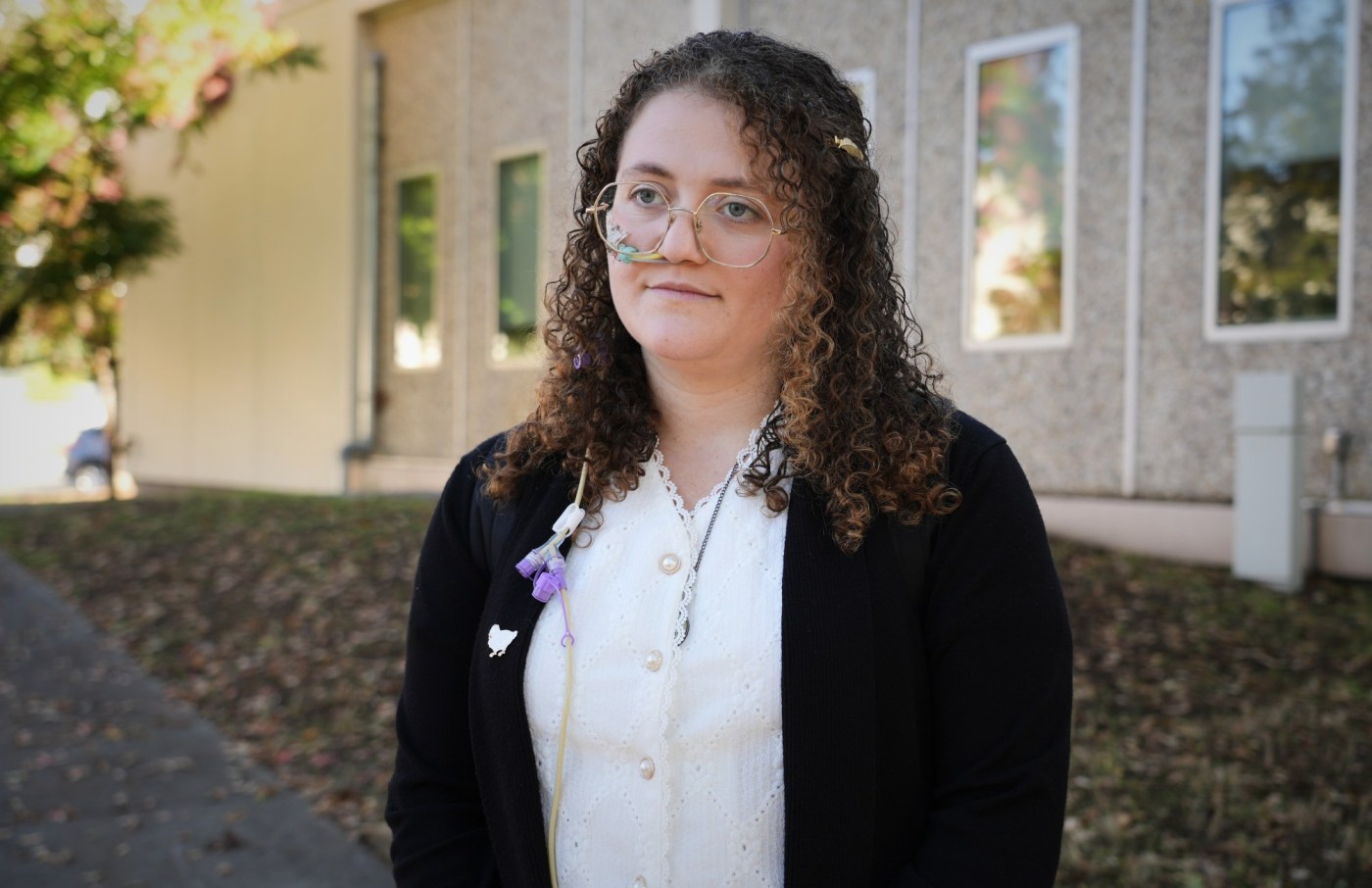
Alanna Smith lifted herself to defensive honor, Lynx to title contenders

posted in: All news | 0

Cheryl Reeve recalled a playoff game in 2024 in which the 6-foot-4 Alanna Smith walked off the floor at halftime shouting, “Can I get some help?”

Smith was tasked with guarding what Reeve described as a “6-foot-9” player — presumably referring to Brittney Griner of Phoenix in Round 1. Griner had 11 points at the half of Game 2. But no, help was not on the way.

“You’re doing great,” Reeve told Smith.

It was all part of the game plan. Smith had to hold up as best as she could against the significantly taller center to allow Minnesota to devote more of its defensive resources elsewhere. Sure enough, the Lynx won the game to close out the series.

Those are the things Reeve and Co. have been able to put on Smith’s plate since she arrived in Minneapolis last season. Their body types suggest both Smith and Napheesa Collier are power forwards. But it’s Smith who’s tasked with guarding centers. And she meets the task every time.

She was third this season in blocked shots per game (1.9) and tied for 13th in steals (1.3).

Smith anchored Minnesota’s league-leading defense, which held opponents to just 0.975 points per possession.

It all added up to Smith earning co-Defensive Player of the Year honors along with Aces’ star forward A’ja Wilson. Smith won the honor a year after Collier did so. Those two form the most fearsome defensive frontcourt in the WNBA and have established Minnesota’s identity.

“We collectively want to be hard to play against. Lan takes that on,’ said Reeve, the Lynx head coach and general manager. “She personifies every possession (what it means to) be difficult to play against. Her will is greater than their will to do whatever they’re trying to do. That’s what Lan personifies.”

That’s not easy. Being difficult to play against means you have the intelligence to know what the opponent wants to do and the will to do everything in your power to take it away. The difficulty of that battle for Smith is multiplied on a nightly basis, given she’s often guarding the other team’s best post player, and giving up size in doing so.

“She’s highly competitive. I told her this year after one of our games — she might be one of the most competitive people I’ve ever been around, one of the greatest competitors I’ve ever coached. So it starts there,” Reeve said. “She takes pride in her matchup. Her instincts, her positioning, her intelligence allow her to be in great spots to take advantage of either keeping someone from catching it … playing the schemes the way we need them to be played. We just have a tremendous amount of trust.”

Smith said her persistent approach to defense is to attempt to make an impact on every possession, and then live with the result. It usually equals more stops, and more wins, for the Lynx.

Persistence defines Smith’s story. She was cut by Indiana in 2022, at which point she stepped away from the league entirely. The 29-year-old’s ascension from that point to this one came from “not staying bitter but getting better.”

“I think not allowing setbacks to define who you are in your career,” Smith said. “That’s something that I think I’ve unconsciously been able to do. I haven’t really had to think about it, but I think being able to set that example to others, and be an inspiration and remind others that setbacks don’t define your own future.”

Your actions do. And Smith’s play had the Lynx both on the brink of a title a year ago, and firmly back in championship contention this fall.

“Phee and I had this discussion, once we get our defense up to being at the top, we will be a championship contender,” Reeve said. “I didn’t necessarily know that when we signed Lan it would catapult us so quickly into that space, but the chemistry  … it’s the reason why we’re sitting here talking about the possibility of a championship.”

Related Articles


WNBA playoffs: Lynx rally from 17-point deficit to sweep Golden State


Lynx pull away to easy Game 1 victory over Golden State


Cheryl Reeve’s methods change, results the same for title-contending Lynx


Lynx beat Golden State in finale, get Valkyries in playoff opener


Lynx control whether they play Golden State or Seattle in Round 1 of playoffs

Missouri judge strikes down ballot summary for anti-abortion measure backed by Republican lawmakers

posted in: All news | 0

By DAVID A. LIEB

JEFFERSON CITY, Mo. (AP) — A Missouri judge has struck down a ballot summary for an anti-abortion amendment backed by Republican state lawmakers while concluding that it presented an unfair and insufficient description to voters.

Related Articles


Judge blocks USDA from collecting data about SNAP applicants in 21 states


Trump to sign proclamation imposing $100K fee for H-1B visa applications, White House official says


Trump appointee George Cook takes interim lead at Census Bureau amid new census push


Trump administration asks Supreme Court to strip legal protections from Venezuelan migrants


Trump administration proposes selling nearly $6 billion in weapons to Israel

Cole County Circuit Judge Daniel Green ruled Friday that the ballot summary must be rewritten, but he rejected a request by abortion-rights advocates to block the proposed constitutional amendment from going to voters.

The judge said the summary prepared by Republican lawmakers failed to inform voters that the new measure would repeal an abortion-rights amendment adopted by voters last year. He directed the secretary of state’s office to write a new summary.

The ruling marks the latest in a series of twists and turns in Missouri’s abortion policies over the past three years.

When the U.S. Supreme Court ended a nationwide right to abortion by overturning Roe v. Wade in 2022, that triggered a Missouri law to take effect banning abortions “except in cases of medical emergency.” But abortion-rights activists then gathered initiative petition signatures to put their own measure on the ballot.

Last November, Missouri voters narrowly approved a constitutional amendment guaranteeing a right to abortion until fetal viability, generally considered sometime past 21 weeks of pregnancy. That measure, known as Amendment 3, also allows later abortions to protect the life or health of pregnant women and creates a “fundamental right to reproductive freedom” that includes birth control, prenatal and postpartum care and “respectful birthing conditions.”

In May, the Republican-led Legislature shut down Democratic opposition and approved a new referendum that would repeal Amendment 3 and instead allow abortions only for a medical emergency or fetal anomaly, or in cases of rape or incest up to 12 weeks of pregnancy. That proposed amendment also would prohibit gender transition surgeries, hormone treatments and puberty blockers for minors, which already are barred under state law.

Abortion-rights advocates had argued in a lawsuit that the entire measure should be stricken, alleging that the combination of abortion and transgender policies violated a constitutional requirement that amendments contain only one subject. But Green agreed with Republican lawmakers that both topics fit under the measure’s title of “reproductive health care.”

The proposed amendment will appear on the November 2026 ballot, unless Republican Gov. Mike Kehoe schedules the vote for sooner.

Suspect recorded killings of 2 Israeli Embassy staffers on a body camera, prosecutors say

posted in: All news | 0

By MICHAEL KUNZELMAN

WASHINGTON (AP) — A man accused of fatally shooting two staff members of the Israeli Embassy in Washington was wearing a body camera that captured video of the killings from his close-range perspective, prosecutors disclosed in a court filing on Friday.

Related Articles


Lawyers for Spanish-language journalist in ICE custody fear deportation after unfavorable ruling


Army says 4 soldiers died in a helicopter crash in Washington state this week


Trump administration asks Supreme Court to strip legal protections from Venezuelan migrants


More than 400 arrests made in Chicago area operation so far, top immigration official says


Texas A&M president steps down but doesn’t say if controversial classroom video was a factor

Elias Rodriguez purchased the body-worn camera online and arranged for it to be delivered to the hotel where he was staying in Washington before the May 21 shootings, according to the filing. Prosecutors said the transaction demonstrates the premeditated nature of the crime.

Rodriguez was indicted in August on federal hate crime and murder charges in the killings of Yaron Lischinsky and Sarah Milgrim as they left an event at the Capital Jewish Museum.

Elias Rodriguez shouted “Free Palestine” during the shooting and then went inside the museum and said, “I did it for Palestine, I did it for Gaza, I am unarmed,” according to court documents.

Prosecutors haven’t announced if they will seek the death penalty for Rodriguez if he is convicted. They have described the killings as calculated and planned, saying Rodriguez flew to the Washington region from Chicago ahead of the museum event with a handgun in his checked luggage.

Defense attorneys are asking for more time to gather and present U.S. Attorney Jeanine Pirro’s office with “mitigation evidence” that could weigh against seeking the death penalty in Rodriguez’s case. The department set an Oct. 20 deadline for that written submission, but Rodriguez’s lawyers want it extended to March 19.

“The investigation and presentation of mitigating evidence is of paramount importance in any capital-eligible case,” defense attorneys wrote. “After all, mitigating evidence can be the difference between a life sentence and a death sentence.”

The judge presiding over the case has scheduled a hearing next Wednesday on that defense request, which the government opposes.

“The decision whether and when to seek the death penalty is an executive prosecutorial function beyond the Court’s authority, and courts routinely decline requests to intrude into that exclusive executive prerogative,” prosecutors wrote,

A police officer’s body camera also recorded Rodriguez’s arrest inside the museum. Prosecutors have turned over copies of the video footage to his defense attorneys.

Milgrim was a U.S. citizen. Lischinsky was an Israeli citizen working in the U.S. The young couple were about to become engaged.

Trump DOJ argues Michigan effort to shut down underwater pipeline interferes with US foreign policy

posted in: All news | 0

By TODD RICHMOND

The Trump administration is stepping into the legal fight over whether Enbridge can continue to operate an aging pipeline beneath a Great Lakes channel, arguing that Michigan Gov. Gretchen Whitmer interfered with U.S. foreign policy when she revoked the line’s easement almost five years ago.

Related Articles


Missouri judge strikes down ballot summary for anti-abortion measure backed by Republican lawmakers


Judge blocks USDA from collecting data about SNAP applicants in 21 states


Trump to sign proclamation imposing $100K fee for H-1B visa applications, White House official says


Trump appointee George Cook takes interim lead at Census Bureau amid new census push


Trump administration asks Supreme Court to strip legal protections from Venezuelan migrants

The pipeline, known as Line 5, has moved crude oil between Superior, Wisconsin, and Sarnia, Ontario, since 1953. A 4.5-mile (6.4-kilometer) segment of the line runs under the Straits of Mackinac, a channel that links Lake Michigan and Lake Huron.

Concerns about the line rupturing and causing a catastrophic spill in the environmentally sensitive area have been growing since 2017, when Enbridge revealed its engineers had known about gaps in its protective coating since 2014. A boat anchor damaged the segment a year later, further stoking fears of a spill.

Whitmer, a Democrat and possible 2028 presidential contender, ordered her regulators in November 2020 to revoke the easement allowing the segment to operate beneath the straits. Enbridge filed a federal lawsuit that same year seeking to invalidate the order. The pipeline has continued to operate as the litigation drags on.

Trump attorneys say Michigan interfering with foreign policy, 1977 treaty

The Trump administration isn’t a party in the case. But U.S. Justice Department attorneys filed a brief on Sept. 12 arguing that Whitmer’s order amounted to an attempt to “globalize” Michigan’s regulatory authority and clash with the federal government’s goal of maintaining the flow of energy between the U.S. and Canada.

They also contend that the revocation clashes with executive orders President Donald Trump issued this year declaring that an abundant, reliable energy supply is key to protecting national security.

“Shutting down Line 5 could disrupt the energy supply chain, increase domestic prices, and enhance the economic and political power and leverage of malign foreign actors worldwide,” the attorneys wrote. “Such outcomes conflict with our nation’s foreign policy goals.”

They argue, too, that only the federal government can regulate pipeline safety and allowing states to enter that arena would lead to a untenable patchwork of regulations. A 1977 treaty between the U.S. and Canada prohibits authorities from impeding the flow of energy through pipelines running between the two counties, they add.

Whitmer’s attorneys say the state has authority to revoke the easement under the public trust doctrine, the legal principle that natural resources belong to the public and the state therefore has a duty to protect them.

Danny Wimmer, a spokesperson for Michigan Attorney General Dana Nessel, who is defending the revocation, said in an email Friday that Nessel plans to file a response in October. He pointed to earlier filings in which she argues that revoking the easement doesn’t impose or continue any safety regulations and is actually a pipeline routing decision within the state’s authority. The filings also contend that private parties such as Enbridge can’t bring a federal lawsuit to enforce the treaty with Canada.

The Trump administration’s arguments largely mirror those of Enbridge. Asked for comment on the administration’s filing, company spokesperson Michael Barnes in an email Friday pointed again to treaty provisions that he said prevent states and judges from unilaterally shutting down the pipeline.

U.S. District Judge Robert Jonker has scheduled a hearing on a Enbridge motion for summary judgment on Nov. 12.

Trump’s decision to take a stance in the case is a setback for Whitmer as she tries to protect her state’s interests without incurring the president’s wrath. She has stepped lightly around Trump, convincing him to meet with her three times since January. In April, Trump called her a “very good person.”

Enbridge says tunnel would protect Line 5

Enbridge has proposed encasing the straits segment in a protective concrete tunnel, at an estimated cost of at least $500 million. Construction would destroy wetlands and bat habitat but the tunnel would eliminate the chance of another anchor rupturing the line, according to the U.S. Army Corps of Engineers.

Michigan regulators approved permits for the tunnel in December 2023. Enbridge needs only Army Corps’ approval before construction can begin. The Corps fast-tracked the permit in April after the Trump administration identified the tunnel for expedited emergency permitting.

Environmental groups and Native American tribes have sued the Michigan Public Service Commission, arguing the panel didn’t consider the overall need for the pipeline when weighing whether to grant the tunnel permits. The Michigan Supreme Court announced Friday that it would hear the case.

More legal sparring

Nessel filed her own lawsuit seeking to void the straits easement in 2019. The U.S. Supreme Court is weighing whether the case belongs in federal or state court.

The pipeline is at the center of a yet another legal dispute, this time in Wisconsin. A federal judge in Madison last summer gave Enbridge three years to shut down part of Line 5 that runs across the Bad River Band of Lake Superior’s reservation. The company has proposed rerouting the pipeline around the reservation and has appealed the shutdown order to the 7th U.S. Circuit Court of Appeals.

On a separate legal track, environmental groups and the Bad River Band have asked a judge to void state permits for the reroute. Hearings in that matter are scheduled to stretch into October.