St. Paul declares snow emergency after Tuesday night storm

posted in: All news | 0

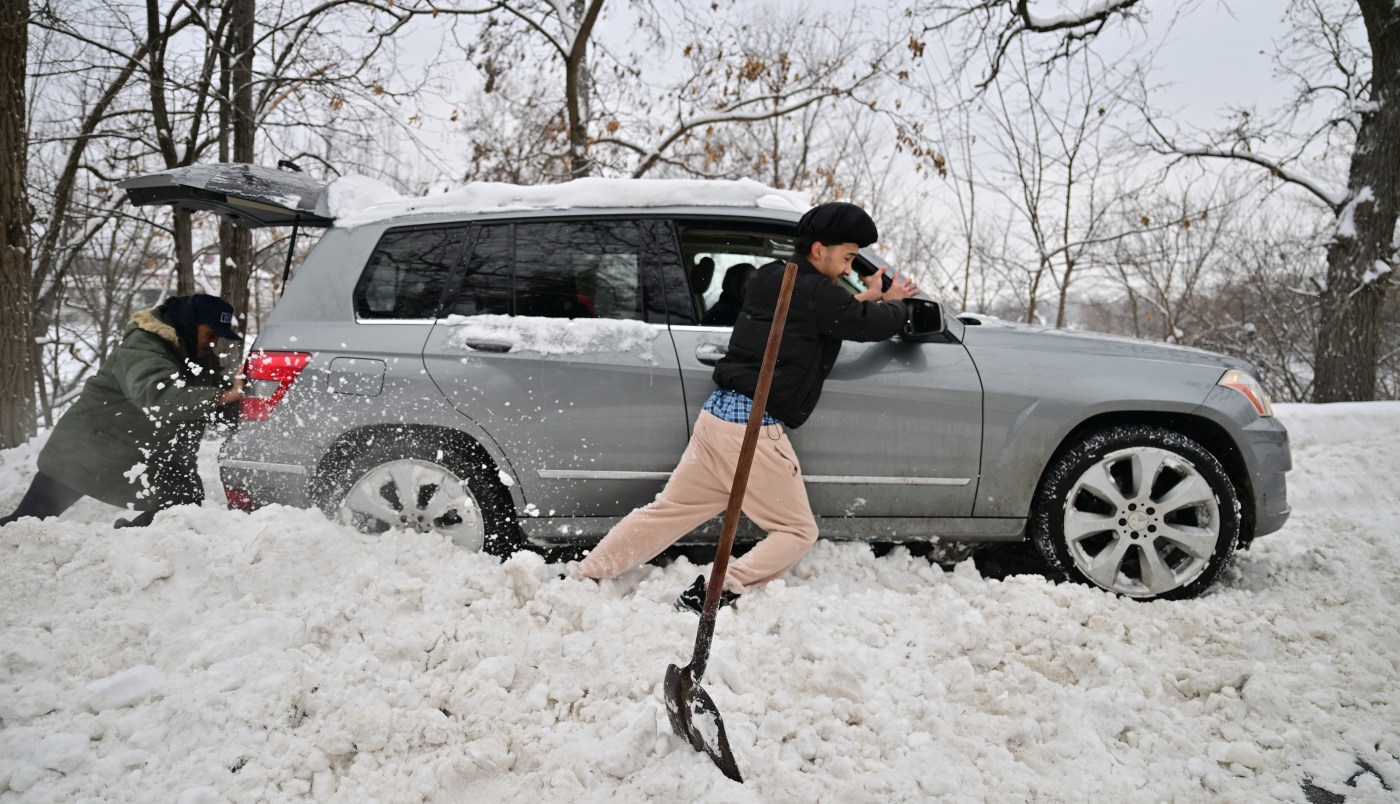
St. Paul has declared a snow emergency to take effect tonight after a winter storm dropped 3-5 inches of snow and tangled up the morning commute.

Beginning 9 p.m. Wednesday, night plow routes will be plowed. City officials are asking motorists to not park on those routes, which include downtown and all streets with the “Night Plow Route” and “Night Plow Route This Side of Street” signs.

Vehicles not moved from those routes by 9 p.m. will be ticketed and towed.

Beginning at 8 a.m. Thursday, all day routes will be plowed. Do not park on day plow routes — these routes are not marked by signs. If there are no “Night Plow” signs posted within the block, consider it a day plow route. Those vehicles not moved from day plow routes by 8 a.m. will be ticketed and towed.

Snow emergencies last 96 hours. In this case until 9 p.m. Sunday. To avoid a ticket or having your vehicle towed, do not park in areas where streets are not plowed to the curb. Always follow all posted street signs. And, do not park vehicles where signs indicate “No Parking.”

For more information go to stpaul.gov/snow.

Reminders about shoveling

City officials also offered these reminders about shoveling:

• Shovel your sidewalk. Under city ordinance homeowners are required to remove snow and ice from sidewalks within 24 hours.

• Corner property owners should shovel curbs, walkways and crosswalks to the street.

• Do not push snow out into the streets.

• Do not place recycling and garbage carts in the street. Carts should ONLY be kept in the boulevard or at the end of the driveway.

• And, shovel hydrants out and clear snow and ice off storm drains to prevent street flooding.

Free off-street parking

Related Articles


Newspaper delivery delayed on Wednesday due to weather conditions


Former St. Paul fire station, part of ‘community for generations,’ reopens on West 7th Street


Rebecca Noecker officially announces for Ramsey County Board


St. Paul library offers card for 50th anniversary of Southeast Asian resettlement


Winter storm brings 3-5 (plus) inches of snow and a rough morning commute

Meanwhile, free off-street parking is available during the first 24 hours of a declared Snow Emergency (Night and Day Plow Phases) from 5 p.m. to 5 p.m. at the Block 19 Ramp — at 145 E Seventh Street — located at Jackson and Seventh Street in downtown St. Paul.

Learn where and when people can park their vehicles using St. Paul’s Snow Emergency Parking Map at stpaul.gov/snowemergencyparkingmap.

For more information

Updates about current snow operations can be found at stpaul.gov/snow.

Go to stpaul.gov/snowFAQs for a list of snow-related frequently asked questions.

Aid flow into Gaza falls short of ceasefire terms, analysis of Israeli figures shows

posted in: All news | 0

By JULIA FRANKEL, Associated Press

JERUSALEM (AP) — Aid deliveries into Gaza are falling far short of the amount called for under the U.S.-brokered ceasefire, an Associated Press analysis of the Israeli military’s figures showed.

Under the October ceasefire deal between Israel and Hamas, Israel agreed to allow 600 trucks of aid into Gaza each day. But an average of around 459 trucks a day have entered Gaza between Oct. 12, when flow of the aid restarted, and Dec. 7, according to an AP analysis of latest figures by COGAT, the Israeli military body in charge of coordinating aid entry.

By all accounts, aid has fallen short in Gaza

COGAT said that roughly 18,000 trucks of food aid had entered Gaza between the ceasefire taking effect and Sunday. It said that figure amounted to 70% of all aid that had entered the territory since the truce.

That means COGAT estimates that a total of just over 25,700 trucks of aid have entered Gaza — well under the 33,600 trucks that should have entered by Sunday, under the terms of the ceasefire.

In response to the AP analysis, COGAT insisted Wednesday that the number of trucks entering Gaza each day was above the 600 mark. But when asked, it refused to elaborate why the figures it gave did not reach that amount or provide raw data on truck entry.

Related Articles


Sophie Kinsella, author of the millions-selling ‘Shopaholic’ novels, dies at 55


Louvre thieves escaped with just 30 seconds to spare, Senate inquiry finds


Nine Russian and Belarusian skiers get neutral status to compete in Olympics qualifying events


Ukraine to give revised peace plans to US as Kyiv readies for more talks with its coalition partners


European nations set to discuss a tightening of migration rules

Throughout most of the war, COGAT gave detailed figures of daily trucks entering Gaza but stopped doing so when the ceasefire began. Rights groups say that because it controls the crossings, it is the only entity with the access and visibility necessary to track how much aid and commercial goods are entering Gaza.

The U.N. and aid groups have often said the amount of aid entering Gaza is far lower than COGAT claims.

The U.N. says only 6,545 trucks have been offloaded at Gaza crossings between the ceasefire and Dec. 7, amounting to about 113 trucks a day. That’s according to its online database. The U.N. figures do not include aid trucks sent bilaterally by organizations not working through the U.N. network.

A Hamas document on Saturday provided to the AP put the amount of aid trucks that have entered at 7,333.

This week, United Nations Office for the Coordination of Humanitarian Affairs stressed a “dire” need for more aid to enter Gaza, saying Israeli restrictions on aid have bottlenecked recovery efforts.

Food remains scarce in Gaza, aid groups say

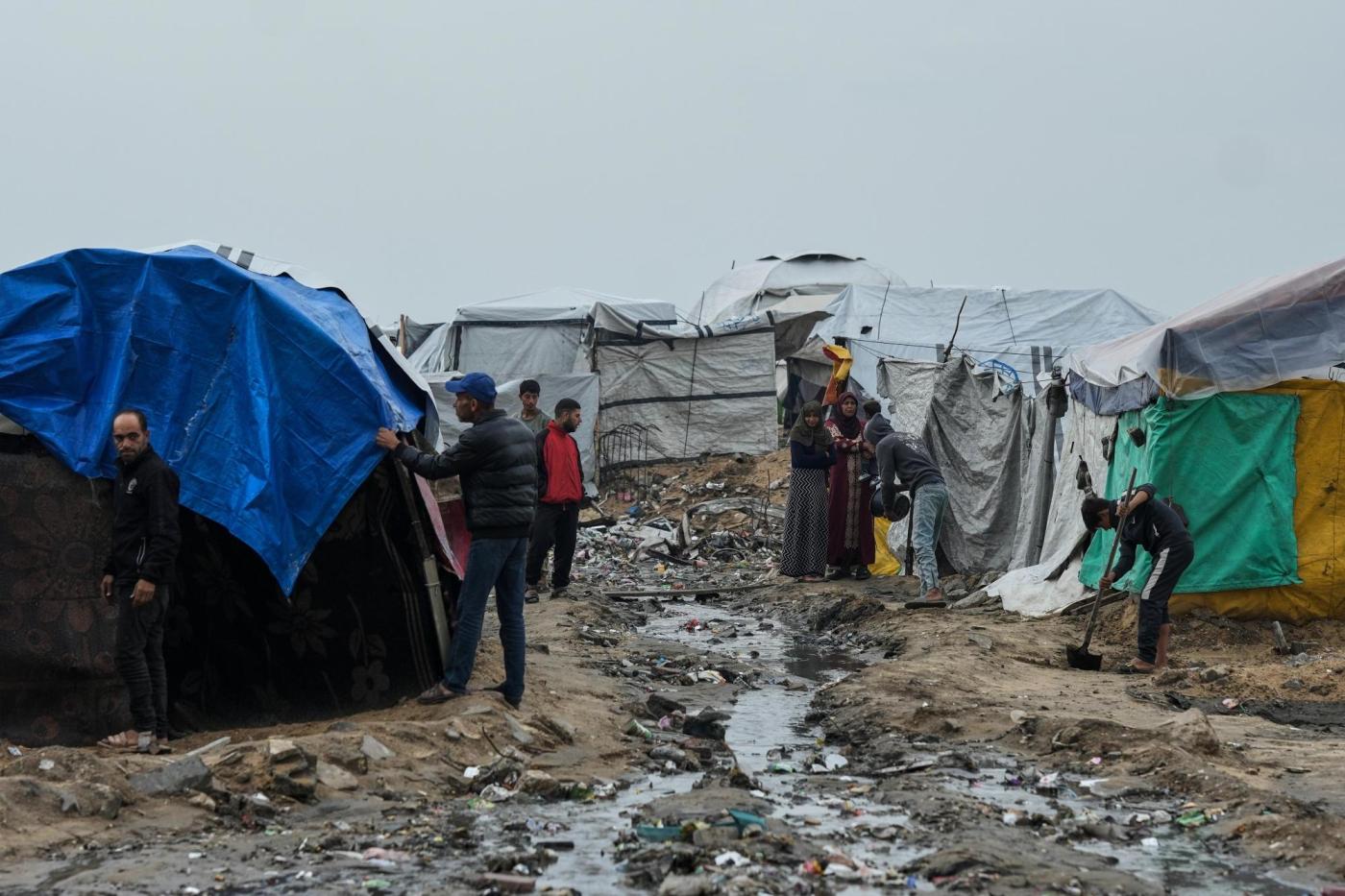
Humanitarian groups say lack of aid has had harsh effects on many of Gaza’s 2 million residents, most of whom were forcibly displaced by war. Food remains scarce as the Palestinian territory struggles to bounce back from famine, which hit parts of Gaza during the war. Starving mothers in Gaza are giving birth to malnourished babies, some of whom have died in hospital, according to a recent report by UNICEF. As winter rains pick up, displaced families living in tents have been left exposed to the elements and without supplies to cope with floods and the biting cold.

“Needs far outpace the humanitarian community’s ability to respond, given persistent impediments,” the agency wrote in a report on Monday. “These obstacles include insecurity, customs clearance challenges, delays and denials of cargo at the crossings, and limited routes available for transporting humanitarian supplies within Gaza.”

Israel temporarily stopped all aid entry at least once in response to alleged Hamas violations of the truce. Israel said that Hamas has failed to return the bodies of the hostages in the time period established by the ceasefire, while Hamas has said it struggled to find the bodies due to the destruction left by Israel in the Palestinian territory.

Hamas has also accused Israel of violating the ceasefire terms because of the slow flow of aid, continued closure of the Rafah crossing and ongoing deadly strikes on Gaza.

Dispute over remains of final hostage

Meanwhile, Israel says it is demanding the return of the final hostage, Ran Gvili.

The Office of Prime Minister Benjamin Netanyahu told the AP on Wednesday that Gvili’s remains must be returned, a condition of the first phase of the ceasefire.

“Once phase one is completed, phase two will begin,” the office said in a statement.

Hamas fighters and Red Cross crews continued to comb the ruins of Gaza City for the final body this week, while the militant group Islamic Jihad claimed it had handed over the last hostage body in its possession.

On Tuesday, Hamas called for more international pressure on Israel to open key border crossings, cease deadly strikes on the territory and allow more aid into the strip.

The accusations mark the latest road bump at what regional leaders have described as a critical time for the ceasefire agreement, as mediators seek to push the truce into its second, more complicated phase.

Associated Press reporter Megan Janetsky contributed to this report from Jerusalem and reporter Sam Mednick contributed from Tel Aviv.

Ex-Con Congressman Attempts a Texas Comeback

posted in: All news | 0

Former Congressman and felon Steve Stockman, a Friendswood-area conservative who was convicted of 23 federal corruption charges and sentenced to 10 years in prison back in 2018, has declared himself rehabilitated and fit to run again for the U.S. House of Representatives.

This week, Stockman, once dubbed Texas’ “weirdest lawmaker”, entered a crowded field of candidates running to fill the recently redrawn 9th Congressional District, FEC records show. The district, served for two decades by Congressman Al Green, a Black Houston Democrat, was gerrymandered and relocated from its diverse neighborhoods and suburbs to encompass conservative turf that extends from eastern Harris County out to Liberty County. 

Even before his convictions, Stockman was never politically popular or effective as a congressman who previously represented other swaths of southeast Texas. Texas Monthly once described him as “one of those kind of creepy politicians that other politicians try to keep at a distance just in case it might rub off on them.”

In his latest comeback attempt, Stockman joins a dubious though growing American political tradition of disgraced politicos who have attempted to recast themselves as martyrs after being tarnished or convicted of crimes, according to Brandon Rottinghaus, a University of Houston political science professor whose most recent book is Scandal: Why Politicians Survive Controversy in a Partisan Era. 

“We’re seeing that in politics a lot now because polarization is such an important force,” Rottinghaus told the Texas Observer. “It gives them an opportunity to use that scandal as evidence in an ideological war.”

Stockman left Congress in 2015 under a cloud of corruption allegations, including a House ethics probe into a congressional junket to Azerbaijan and questions about allegedly illegal campaign contributions. In 2018, Stockman was convicted with two former aides of carrying out a multi-year scheme to bilk conservative foundations and donors of about $1.2 million in funds that were then diverted for his personal and political use via a network of paper companies and fake charities, federal court records show. The two former staffers, Jason Posey and Thomas Dodd, went to prison for 18 months for their role in what the the U.S. Department of Justice at the time called an “Extensive Fraud and Money Laundering Scheme.”

With his new bid to return to Congress, Stockman has already issued a declaration recasting himself as the victim of a crusade by President Barack Obama and “his extremist henchmen,” who led what Stockman calls “historic and unprecedented political persecution” against him.

Public records contradict those claims. Stockman’s indictments came in March 2017– three months after President Donald Trump entered the White House. He was convicted and sentenced in 2018 under the tenure of a Trump-appointed U.S. Attorney for the Southern District of Texas: Ryan Patrick, an ex-Harris County prosecutor who’s the son of Texas Lieutenant Governor Dan Patrick. All 23 counts of Stockman’s felony convictions and his 10-year prison sentence were affirmed in 2020 by the conservative U.S. Fifth Circuit Court of Appeals.

President Donald Trump pardoned Stockman in December 2020 after he’d served two years. But Trump’s pardon didn’t relieve Stockman of the duty to complete probation or to repay conservative victims more than $1 million in restitution. A White House press release emphasized that Stockman, then 64, had “underlying pre-existing health conditions that place his health at greater risk during the COVID epidemic, and he has already contracted COVID while in prison.”

Federal law does not bar convicted felons from running for office—though some state and local jurisdictions do. Still, it’s rare for members of Congress who’ve been prosecuted for federal corruption charges to run for reelection. 

The list of Congress members who were prosecuted and later ran again this millennium includes James Traficant, Jr., an Ohio Democrat who was expelled from the House after being convicted on 10 charges, including bribery and racketeering as part of a much broader federal corruption investigation. He ran for reelection in 2002 while in prison but lost.

Ted Stevens, the longtime Republican senator from Alaska later failed to win reelection after being convicted of different corruption charges in 2008, even though the charges against Stevens were later overturned on appeal based on evidence of prosecutorial misconduct.

Corrine Brown, a Democratic congresswoman from Florida also left office in 2017 under a cloud of legal trouble. She sought another term in 2022 but lost, though her initial 18-count conviction was vacated on appeal. (She pled guilty to attempting to obstruct and impede federal tax laws and was sentenced to time served.)

Sitting Congressman Henry Cuellar, a moderate Laredo Democrat, was under indictment for money laundering and corruption charges related to his dealings with various Mexican and Azeri officials until he was pardoned by Trump last week. The president claimed that Cuellar had been the target of a witch hunt by the Biden administration because of his stance on border security. But Trump, who apparently expected Cuellar to switch parties as a show of gratitude, has bashed Cuellar for filing to run again as a Democrat.“Such a lack of LOYALTY, something that Texas Voters, and Henry’s daughters, will not like,” Trump said in a social media post.

Long before being convicted of crimes, Stockman was known for making outrageous statements—and for disregarding federal rules. During his two nonconsecutive congressional terms—from 1995 to 1997 and 2013 to 2015—he failed to disclose assets as federal law requires and his campaign accepted donations under false names.. Opponents and regulators alike have questioned his campaign tactics—including printing and distributing fake newspapers not labeled as campaign literature, failing to repay a “loan” owed to a corporation and reusing campaign signs that promoted him as “Congressman Steve Stockman” for an election in which he was neither a sitting congressman nor that district’s former incumbent. In 2014, Stockman failed in his longshot and oddly inactive primary bid to unseat U.S. Senator John Cornyn.

It remains to be seen how voters will view Stockman in 2025—as a disgraced former public servant or perhaps a persecuted politico with a vaguely familiar name. But in a race with more than nine candidates—including right-wing state legislator Briscoe Cain—Stockman could be a disruptor, Rottinghaus said. In that environment, Stockman might win enough votes to force a low-turnout runoff election that could allow him to make an improbable congressional comeback—just as he did in 2013.

“I suspect it will be a pretty tight race,” Rottinghaus said. With Stockman joining this now, I think it will make it more muddled. … If he gets 20 percent it could throw the election.”

The post Ex-Con Congressman Attempts a Texas Comeback appeared first on The Texas Observer.

Trump’s crackdown on immigration is taking a toll on child care workers

posted in: All news | 0

By MORIAH BALINGIT, Associated Press Education Writer

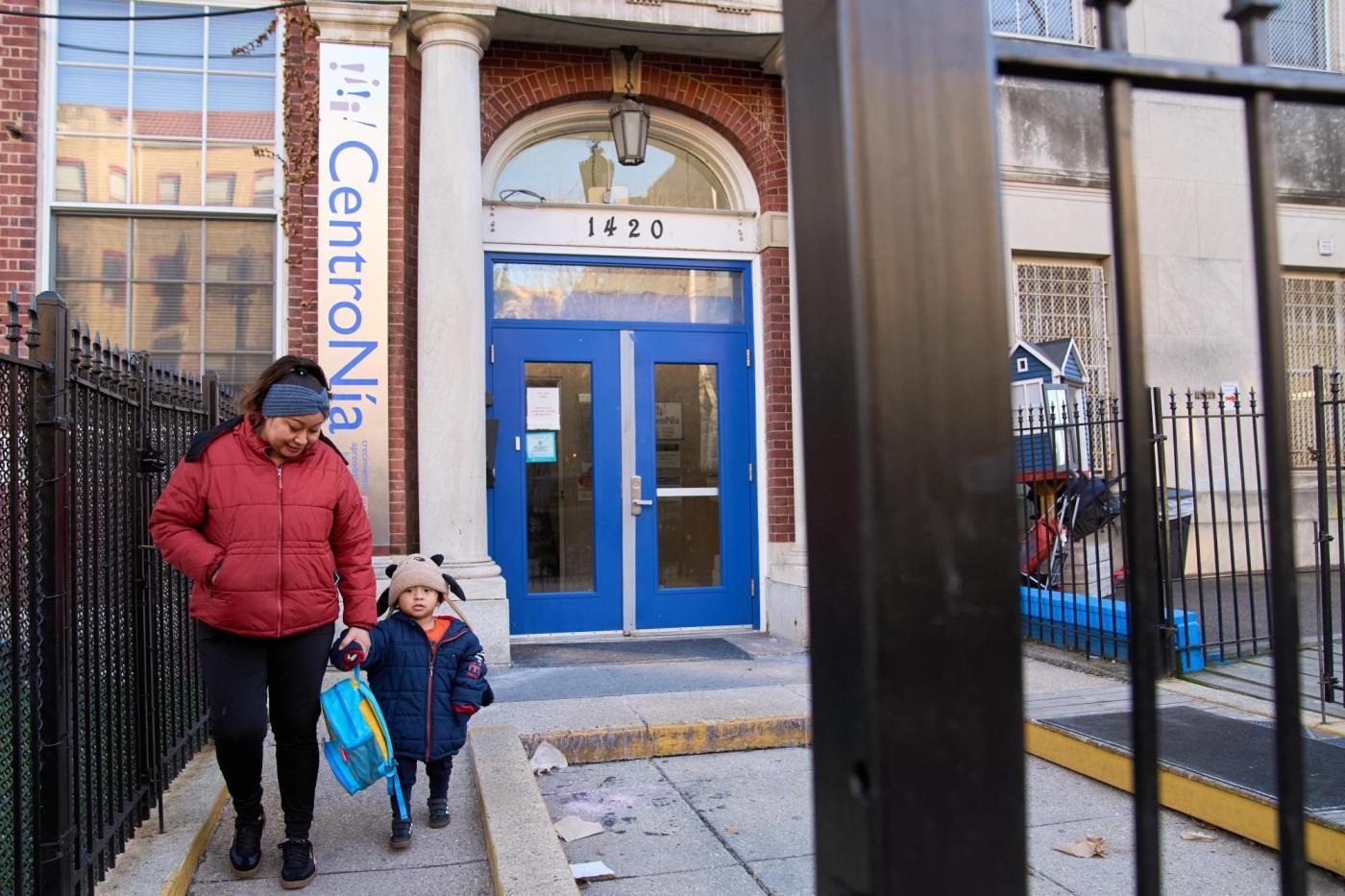
WASHINGTON (AP) — Not long after President Donald Trump took office in January, staff at CentroNía bilingual preschool began rehearsing what to do if Immigration and Customs Enforcement officials came to the door. As ICE became a regular presence in their historically Latino neighborhood this summer, teachers stopped taking children to nearby parks, libraries and playgrounds that had once been considered an extension of the classroom.

Related Articles


Judge orders Trump to end California National Guard troop deployment in Los Angeles


Wall Street is quiet as it waits for the Federal Reserve’s announcement in the afternoon


Justice Department can unseal records from Epstein’s 2019 sex trafficking case, judge says


Egypt and Iran complain about planned World Cup ‘Pride’ match in Seattle


Federal Reserve likely to cut rates, may signal just one more reduction next year

And in October, the school scrapped its beloved Hispanic Heritage Month parade, when immigrant parents typically dressed their children in costumes and soccer jerseys from their home countries. ICE had begun stopping staff members, all of whom have legal status, and school officials worried about drawing more unwelcome attention.

All of this transpired before ICE officials arrested a teacher inside a Spanish immersion preschool in Chicago in October. The event left immigrants who work in child care, along with the families who rely on them, feeling frightened and vulnerable.

Trump’s push for the largest mass deportation in history has had an outsized impact on the child care field, which is heavily reliant on immigrants and already strained by a worker shortage. Immigrant child care workers and preschool teachers, the majority of whom are working and living in the U.S. legally, say they are wracked by anxiety over possible encounters with ICE officials. Some have left the field, and others have been forced out by changes to immigration policy.

At CentroNía, CEO Myrna Peralta said all staff must have legal status and work authorization. But ICE’s presence and the fear it generates have changed how the school operates.

“That really dominates all of our decision making,” Peralta said.

Instead of taking children on walks through the neighborhood, staff members push children on strollers around the hallways. And staff converted a classroom into a miniature library when the school scrapped a partnership with a local library.

The child care industry depends on immigrants

Schools and child care centers were once off limits to ICE officials, in part to keep children out of harm’s way. But those rules were scrapped not long after Trump’s inauguration. Instead, ICE officials are urged to exercise “common sense.”

Tricia McLaughlin, spokesperson for the Department of Homeland Security, defended ICE officials’ decision to enter the Chicago preschool. She said the teacher, who had a work permit and was later released, was a passenger in a car that was being pursued by ICE officials. She got out of the car and ran into the preschool, McLaughlin said, emphasizing the teacher was “arrested in the vestibule, not in the school.” The man who had been driving went inside the preschool, where officials arrested him.

Flor Perez encourages her class of 2-year-olds in a walk around the school in lieu of outdoor walks around the neighborhood during school time at CentroNia in Washington, Tuesday, Dec. 9, 2025. (AP Photo/Jacquelyn Martin)

About one-fifth of America’s child care workers were born outside the United States and one-fifth are Latino. The proportion of immigrants in some places, particularly large cities, is much higher: In the District of Columbia, California and New York, around 40% of the child care workforce is foreign-born, according to UC Berkeley’s Center for the Study of Child Care Employment.

Immigrants in the field tend to be better educated than those born in the United States. Those from Latin America help satisfy the growing demand for Spanish-language preschools, such as CentroNía, where some parents enroll their kids to give them a head start learning another language.

The American Immigration Council estimated in 2021 that more than three-quarters of immigrants working in early care and education were living and working in the U.S. legally. Preschools like CentroNía conduct rigorous background checks, including verifying employees have work authorization.

Beyond the deportation efforts, the Trump administration in recent months has stripped legal status from hundreds of thousands of immigrants. Many of them had fled violence, poverty or natural disasters in their homes and received Temporary Protected Status, which allowed them to live and work legally in the U.S. But Trump ended those programs, forcing many out of their jobs — and the country. Just last month, 300,000 immigrants from Venezuela lost their protected status.

CentroNía lost two employees when they lost their TPS, Peralta said, and a Nicaraguan immigrant working as a teacher left on his own. Tierra Encantada, which runs Spanish immersion preschools in several states, had a dozen teachers leave when they lost their TPS.

Fear is affecting even those in the US legally

At CentroNía, one staff member was detained by ICE while walking down the street and held for several hours, all the while unable to contact colleagues to let them know where she was. She was released that evening, said the school’s site director, Joangelee Hernández-Figueroa.

Another staff member, teacher Edelmira Kitchen, said she was pulled over by ICE on her way to work in September. Officials demanded she get out of her car so they could question her. Kitchen, a U.S. citizen who immigrated from the Dominican Republic as a child, said she refused and they eventually let her go.

Edelmira Kitchen, a teaching artist at CentroNia, poses for a portrait in a classroom at CentroNia in Washington, Tuesday, Dec. 9, 2025. (AP Photo/Jacquelyn Martin)

“I felt violated of my rights,” Kitchen said.

Hernández-Figueroa said ICE’s heightened presence during the federal intervention in the city has taken a toll on employees’ mental health. Some have gone to the hospital with panic attacks in the middle of the school day.

When the city sent mental health consultants to the school earlier this year as part of a partnership with the Department of Behavioral Health, school leadership had them work with teachers rather than students, worried their anguish would spill over to the classroom.

“If the teachers aren’t good,” Hernández-Figueroa said, “the kids won’t be good either.”

Celenia Romero reads to her Prek-5 students as they play in the library at CentroNia in Washington, Tuesday, Dec. 9, 2025. (AP Photo/Jacquelyn Martin)

It’s not just adults who are feeling more anxious. At a Guidepost Montessori School in Portland, Oregon, teachers observed preschoolers change in the weeks after an ICE arrest near the school in July. After pulling over a father who was driving his child to the school, officials encountered him in the school parking lot and tried to arrest him. In the ensuing commotion, the school went into lockdown: Children were pulled off the playground, and teachers played loud music and had children sing along to drown out the yelling.

Amy Lomanto, who heads the school, said teachers noticed more outbursts among students, and more students retreating to what the school calls “the regulation station,” an area in the main office with fidget toys kids can use to calm themselves.

She said what unfolded at her school underscored that even wealthy communities, like the one the school serves, are not immune from exposure to these kinds of events.

“With the current situation, more and more of us are likely to experience this kind of trauma,” she said. “That level of fear now is permeating a lot more throughout our society.”

The Associated Press’ education coverage receives financial support from multiple private foundations. AP is solely responsible for all content. Find AP’s standards for working with philanthropies, a list of supporters and funded coverage areas at AP.org.