Vikings at Cowboys: What to know ahead of Week 15 matchup

posted in: All news | 0

What to know when the Vikings travel to play the Dallas Cowboys on Sunday night:

Vikings at Cowboys
When: 7:20 p.m. Sunday
Where: AT&T Stadium
TV: NBC
Radio: KFAN
Line: Cowboys -5.5
Over/Under: 48.5

Keys for the Vikings

— The main objective for the Vikings centers on making life easier for young quarterback J.J. McCarthy. He’s fresh off the best game of his career because the Vikings were able to run the ball effectively, which, in turn, made it so McCarthy didn’t feel as though the weight of the world was on his shoulders. The recipe for success for the Vikings is finding a way to repeat that recipe If the final box score shows McCarthy was asked to throw more than 30 passes, that more than likely means the Vikings ended up in a bad spot against the Cowboys. He shouldn’t be asked to do much heavy lifting if the Vikings want to have a chance to pull off the upset.

Keys for the Cowboys

— Though the conventional answer would point to the Cowboys needing to be able to move the ball on offense, they shouldn’t have much of a problem doing that with veteran quarterback Dak Prescott and all the weapons at his disposal. There’s little chance Prescott has trouble scoring while throwing to star receivers CeeDee Lamb and George Pickens. The game will be won for the Cowboys on defense. If they can stop the run with consistency, they will be able to force the Vikings into known passing situations. That will more than likely put too much pressure on McCarthy and he will probably turn the ball over a couple of times.

Related Articles


The Loop Fantasy Football Update Week 15: Last-minute moves


Paul Wiggin, longtime member of the Vikings, dies at 91


Exactly 15 years later, Vikings share memories of Metrodome collapse


Vikings navigate hateful rhetoric created by fantasy football


The Loop NFL Picks: Week 15

Vikings picks: Can Minnesota slow down Dak Prescott?

posted in: All news | 0

Pioneer Press staffers who cover the Vikings lend their best guesses at predicting Sunday’s game in Dallas against the Cowboys:

Dane Mizutani

Cowboys 34, Vikings 23: Dak Prescott is the exact type of quarterback that has had success against Brian Flores in the past. J.J. McCarthy won’t be able to hang with Prescott in the shootout.

Charley Walters

Cowboys 31, Vikings 21: Dallas QB Dak Prescott welcomes the Sunday Night national spotlight. The Vikings aren’t ready for it.

John Shipley

Cowboys 24, Vikings 23: Big picture, a Dallas team playing at home with Dak Prescott and playoff dreams seems like an easy pick, but the Vikings showed they still have a heart, if not much of a pulse, last week.

Jace Frederick

Cowboys 21, Vikings 14: If Brian Flores quiets the high-octane Cowboys on national television, does he become the next head coach of the Bengals this offseason?

Related Articles


The Loop Fantasy Football Update Week 15: Last-minute moves


Paul Wiggin, longtime member of the Vikings, dies at 91


Exactly 15 years later, Vikings share memories of Metrodome collapse


Vikings navigate hateful rhetoric created by fantasy football


The Loop NFL Picks: Week 15

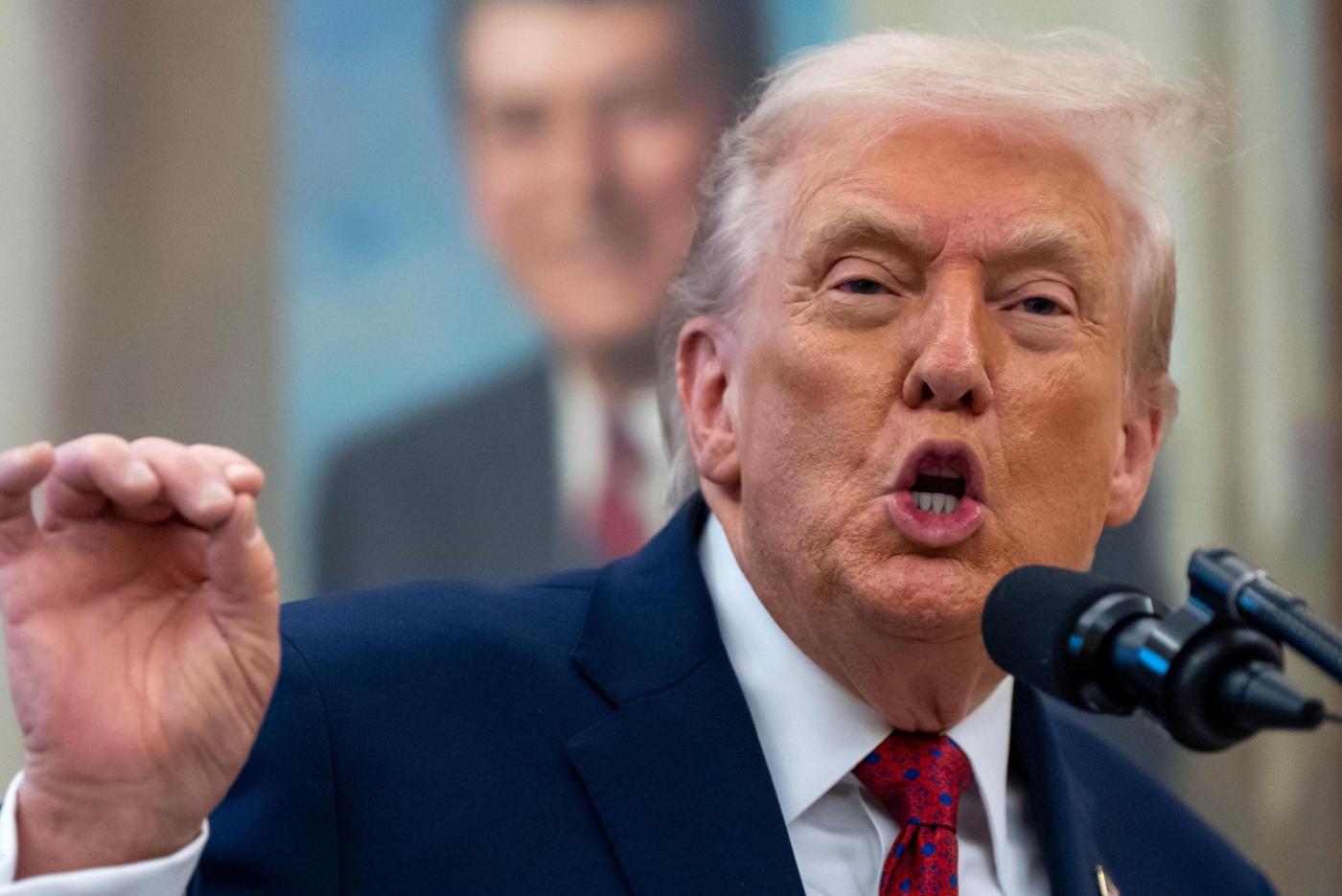
Thomas Friedman: Trump’s not interested in fighting a new Cold War. He wants a new civilizational war

posted in: All news | 0

Every few years, I am reminded of one of my cardinal rules of journalism: Whenever you see elephants flying, don’t laugh, take notes. Because if you see elephants flying, something very different is going on that you don’t understand but you and your readers need to.

I bring that up today in response to the Trump administration’s 33-page National Security Strategy, released last week. It has been widely noted that at a time when our geopolitical rivalry with Russia and China is more heated than at any other time since the Cold War — and Moscow and Beijing are more and more closely aligned against America — the Trump 2025 national security doctrine barely mentions these two geopolitical challengers.

While the report surveys U.S. interests across the globe, what intrigues me most about it is how it talks about our European allies and the European Union. It cites activities by our sister European democracies that “undermine political liberty and sovereignty, migration policies that are transforming the continent and creating strife, censorship of free speech and suppression of political opposition, cratering birthrates, and loss of national identities and self-confidence.”

“Should present trends continue,” it goes on, “the continent will be unrecognizable in 20 years or less.”

Indeed, the strategy paper warns, unless our European allies elect more “patriotic” nationalist parties, committed to stemming immigration, Europe will face “civilizational erasure.” Unstated but implied is that we will judge you not by the quality of your democracy but by the stringency by which you stem the migration flow from Muslim countries to Europe’s south.

That is a flying elephant no one should ignore. It is language unlike any previous U.S. national security survey, and to my mind it reveals a deep truth about this second Trump administration: how much it came to Washington to fight America’s third civil war, not to fight the West’s new Cold War.

Yes, in my view, we are in a new civil war over a place called home.

‘Home’

First, I need to make a quick detour to “home.” These days there is a tendency to reduce every crisis to the dry metrics of economics, to the chessboard machinations of political or military campaigns, or to ideological manifestoes. All, of course, have their relevance, but the longer I have worked as a journalist, the more I have found that the better starting place for unlocking a story is with the disciplines of psychology and anthropology. They are often much better at revealing the primal energies, anxieties and aspirations that animate our national politics — and global geopolitics — because they uncover and illuminate not just what people say they want, but also what they fear and what they privately pray for, and why.

I was not here for the Civil War of the 1860s, and I was still a boy during our second great civil struggle, the 1960s civil rights movement and the assassination of Martin Luther King Jr. But I am definitely on duty for America’s third civil war. This one, like the first two, is over the questions “Whose country is this anyway?” and “Who gets to feel at home in our national house?” This civil war has been less violent than the first two — but it is early.

Humans have an enduring, structural need for home, not only as a physical shelter, but as a psychological anchor and moral compass, too. That is why Dorothy in “The Wizard of Oz” (my favorite movie) got it exactly right: “There’s no place like home.” And when people lose that sense of home — whether by war, rapid economic change, cultural change, demographic change, climate change or technological change — they tend to lose their center of gravity. They may feel as if they are being hurtled around in a tornado, grabbing desperately for anything stable enough to hold onto — and that can include any leader who seems strong enough to reattach them to that place called home, however fraudulent that leader is or unrealistic the prospect.

On multiple fronts

With that as background, I cannot remember another time in the past 40 years when I have traveled around America, and the world, and found more people asking the same question: “Whose country is this anyway?” Or as Itamar Ben-Gvir, the far-right nationalist Israeli minister, put it, in Hebrew, in his political banner ads during Israel’s 2022 election: “Who is the landlord here?”

And that is not an accident. Today, more people are living outside their country of birth than at any point in recorded history. There are approximately 304 million global migrants — some seeking work, some seeking education, some seeking safety from internal conflicts, some fleeing droughts and floods and deforestation. In our own hemisphere, the U.S. Customs and Border Protection office reports that migrant encounters at our southern border hit historical highs in 2023, while estimates from the Pew Research Center suggest that the total unauthorized population in America grew to 14 million in the same year, breaking a decade-long period of relative stability.

But this is not just about immigrants. America’s third civil war is being fought on multiple fronts. On one front it is white, predominantly Christian Americans resisting the emergence of the minority-dominated America that is now baked into our future sometime in the 2040s, driven by lower birthrates among white Americans and growth in Hispanic, Asian and multiracial American populations.

On another front are Black Americans still struggling against those who would raise new walls to keep them from a place called home. Then there are Americans of every background trying to steady themselves amid cultural currents that seem to shift by the week: new expectations about issues like identity, bathrooms and even a typeface, as well as how we acknowledge one another in the public square.

On yet another front, the gale-force winds of technological change, propelled now by artificial intelligence, are sweeping through workplaces faster than people can plant their feet. And on a fifth front, young Americans of every race, creed and color are straining to afford even a modest home — the physical and psychological harbor that has long anchored the American dream.

My sense is that we now have millions of Americans waking up each morning unsure of the social script, the economic ladder or the cultural norms that are OK to practice in their home. They are psychologically homeless.

When Donald Trump made building a wall along the Mexican border the central motif of his first campaign, he instinctively chose a word that did double duty for millions of Americans. “Wall” meant a physical barrier against uncontrolled immigration that was accelerating our transition to a minority-majority-led America. But it also meant a wall against the pace and scope of change: the cultural, digital and generational whirlwinds reshaping daily life.

That, to me, is the deep backdrop to Trump’s National Security Strategy. He is not interested in refighting the Cold War to defend and expand the frontiers of democracy. He is, in my view, interested in fighting the civilizational war over what is the American “home” and what is the European “home,” with an emphasis on race and Christian-Judeo faith — and who is an ally in that war and who is not.

It’s not about democracy

That, to me, is the deep backdrop to Trump’s National Security Strategy. He is not interested in refighting the Cold War to defend and expand the frontiers of democracy. He is, in my view, interested in fighting the civilizational war over what is the American “home” and what is the European “home,” with an emphasis on race and Christian-Judeo faith — and who is an ally in that war and who is not.

The economics writer Noah Smith argued in his Substack this past week that this was the key reason the MAGA movement began to turn away from Western Europe and draw closer to Vladimir Putin’s Russia — because Trump’s devotees saw Putin as more of a defender of white Christian nationalism and traditional values than the nations of the European Union.

Historically, “in the American mind,” Smith wrote, “Europe stood across the sea as a place of timeless homogeneity, where the native white population had always been and would always remain.” However, “in the 2010s, it dawned on those Americans that this hallowed image of Europe was no longer accurate. With their working population dwindling, European countries took in millions of Muslim refugees and other immigrants from the Middle East and Central and South Asia — many of whom didn’t assimilate nearly as well as their peers in the U.S. You’d hear people say things like ‘Paris isn’t Paris anymore.’ ”

Today’s MAGA-led American right, Smith added, does “not care intrinsically about democracy, or about allyship, or about NATO, or about the European project. They care about ‘Western civilization.’ Unless Europe expels Muslim immigrants en masse and starts talking about its Christian heritage, the Republican Party is unlikely to lift a hand to help Europe with any of its problems.”

Related Articles


Clive Crook: An old-fashioned cure for fading trust in government


Marc Champion: Why Russia loves the new US national security strategy


Pierre Lemieux: The increase in polarization mirrors the growth of government


James Stavridis: Five reasons why the boat strike debate matters for the US


Matthew Mitchell: Fueled by federalism, America’s economically freest states come out on top

A focus on race and faith

In other words, when protecting “Western civilization” — with a focus on race and faith — becomes the centerpiece of U.S. national security, the biggest threat becomes uncontrolled immigration into America and Western Europe — not Russia or China. And “protecting American culture, ‘spiritual health’ and ‘traditional families’ are framed as core national security requirements,” as defense analyst Rick Landgraf pointed out on the defense website “War on the Rocks.”

And that’s why the Trump National Security Strategy paper is no accident or the work of a few low-level ideologues. It is, in fact, the Rosetta Stone explaining what really animates this administration at home and abroad.

Thomas Friedman writes a column for the New York Times.

Literary calendar for week of Dec. 14

posted in: All news | 0

Kao Kalia Yang (Courtesy of the author)

KAO KALIA YANG: Author of books for adults and children hosts An Evening of Children’s Literature with readings by her writer friends and music. Yang, who lives in St. Paul, draws on her Hmong heritage for her dozen children’s books, including “The Rock In My Throat” and “The Diamond Explorer.”  These stories, along with her memoir “Where Rivers Part,” won Minnesota Book Awards in three categories at one time, the first author to do so. On Feb. 10 her new children’s picture book, “The Blue House I Loved,” will be published. It’s the story of a Hmong girl’s first home in America with her beloved aunt and uncle. 7 pm. Friday, Ordway Concert Hall, 345 Washington St., St. Paul. Tickets: $14.50-$31. Go to ordway.org/events/childrens-literature-with-kao-kalia/.

READINGS BY WRITERS: Welcomes authors Laurie Hertzel, Sharon Chmielarz, Ted King and Michael Kleber-Diggs. 7:30 p.m. Tuesday, University Club, 420 Summit Ave., St. Paul.

MARCIE RENDON: Discusses her latest Cash Blackbear mystery “Broken Fields.” 6:30 p.m. Wednesday, Inkwell Booksellers, 426 Hennepin Ave., Mpls.

PATRICK HARRIS: Signs copies of “A Season on the Drink,” about an alcoholic softball team that won a tournament. 10 a.m.-2 p.m. Thursday, Open Book Bookstore, Main Mall, Terminal One, Minneapolis-St. Paul airport. Sales proceeds pledged to MSP Airport Foundation.

MINNESOTA MYSTERY NIGHT:  Chicago crime writer Tracy Clark discusses “Edge,” fourth in her series featuring Det. Harriet Foster (after “Hide,” “Fail” and “Echo”). In conversation with Tracy Brigden. 7 p.m. Monday, Lucky’s 13 Pub, 1352 Sibley Memorial Highway, Mendota. $13 cover charge. Reservations: mnmysterynight.com.

DREW ROSS: Signs copies of his book “Becoming the Twin Cities.” 1-2 p.m. Saturday, Next Chapter Booksellers, 38 S. Snelling Ave., St. Paul.

Related Articles


Readers and writers: Get lost in the past in these memoirs


The best mystery novels of 2025


The 10 best books of 2025: Censorship, crime and compassion


Readers and writers: A story of fighting real-life evil, plus holiday picks for kids


Seven takeaways from Mary Lucia’s revealing new memoir