Susie Wiles, White House chief of staff, criticizes Bondi and opines on Trump in Vanity Fair

posted in: All news | 0

By DARLENE SUPERVILLE and BILL BARROW

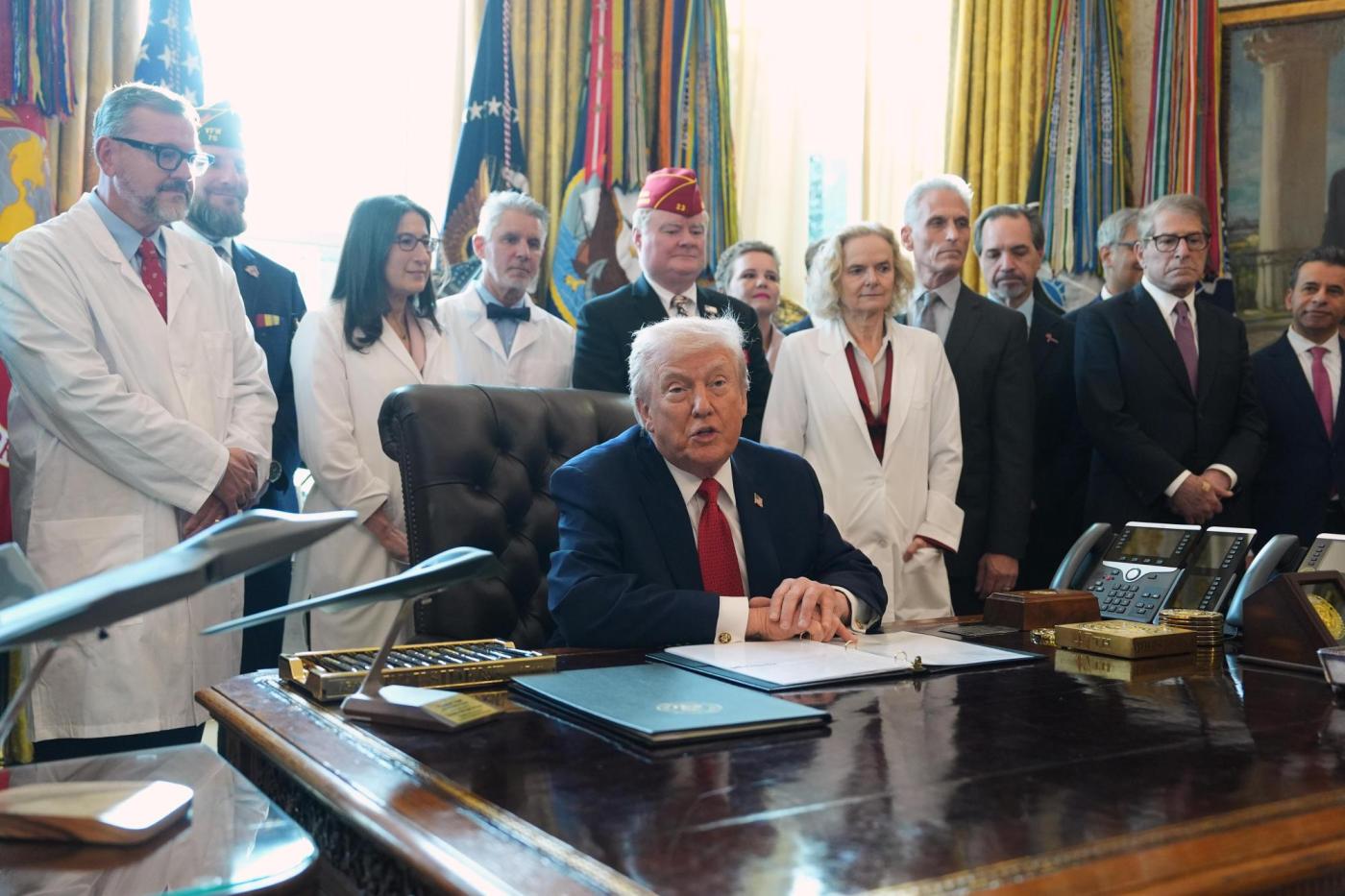
WASHINGTON (AP) — Susie Wiles, President Donald Trump’s understated but influential chief of staff, criticized Attorney General Pam Bondi’s handling of the Jeffrey Epstein case and offered an unvarnished take on her boss and those in his orbit in a series of observations that were published Tuesday in Vanity Fair and immediately sent shock waves through Washington while sending the West Wing into damage control.

The first woman to ever hold her current post, Wiles pushed back on what she described as a “hit piece” that lacked context. But neither she, nor other West Wing officials who came to her defense, disputed any details in the two-part profile — a wide-ranging narrative that included Wiles’ assessments of the teetotaling Trump as having “an alcoholic’s personality,” Vice President JD Vance as a calculating “conspiracy theorist” and Health Secretary Robert Kennedy Jr. as “quirky Bobby.”

On Epstein, Wiles told the magazine that she underestimated the scandal involving the disgraced financier, but she sharply criticized how Bondi managed the case and the public’s expectations. She said at one point that Trump’s tariffs had been more painful than expected. She conceded some mistakes in Trump’s mass deportation program and suggested that the president’s retribution campaign against his perceived political enemies has gone beyond what she initially wanted.

But Wiles, who managed Trump’s 2024 comeback campaign, broadly defended the president’s aggressive second term agenda, including affirming that Trump wants to keep bombing alleged drug boats in the waters off the coast of Venezuela until that country’s leader, Nicolas Maduro, “cries uncle.”

Wiles pushed back but without any denials

After the comments were published, Wiles disparaged it as a “disingenuously framed hit piece on me and the finest President, White House staff, and Cabinet in history.”

“Significant context was disregarded and much of what I, and others, said about the team and the President was left out of the story,” she wrote in a social media post. “I assume, after reading it, that this was done to paint an overwhelmingly chaotic and negative narrative about the President and our team.”

Wiles did not deny the comments that were attributed to her.

Press secretary Karoline Leavitt also rose to Wiles’ defense, writing on the X platform that, “President Trump has no greater or more loyal advisor than Susie. The entire Administration is grateful for her steady leadership and united fully behind her.”

White House budget chief Russell Vought added his praise as well, posting on social media that Trump’s West Wing through two presidencies has “never worked this well or been more oriented towards accomplishing what he wants to.”

In her interviews, Wiles praised Vought while describing him as “right-wing absolute zealot.”

The chief of staff criticizes the attorney general

Trump tapped Wiles after she managed his 2024 campaign. She is known for shunning the spotlight, so it is rare for her to speak as extensively and openly as she did about the president to the magazine, which published its lengthy interview with her — and other members of the White House staff and the Cabinet. Wiles has been speaking to Vanity Fair since just before Trump took office last January.

Asked about Epstein, Wiles said she hadn’t tracked the public focus on “whether all these rich, important men went to that nasty island and did unforgivable things to young girls.”

Related Articles


Hegseth says he won’t publicly release video of boat that killed survivors in the Caribbean


Under Kennedy, America’s health department is in the business of promoting Kennedy


Congressional panel accuses DC police chief of pressuring commanders to manipulate crime data


Wisconsin judge rules Trump aides must face trial in 2020 fake elector scheme


Trump administration says White House ballroom construction is a matter of national security

She said she has read the Epstein file and that Trump is “not in the file doing anything awful.” He and Epstein were friends before they had a falling out.

The Justice Department is facing a Friday deadline to release everything it has on Epstein after Trump, who had objected to the release, signed legislation requiring that the papers be made public.

Wiles criticized Bondi’s handling of the case, going back to earlier in the year when she distributed binders to a group of social media influencers that included no new information about Epstein. That led to even more calls from Trump’s base for the files to be released.

“I think she completely whiffed on appreciating that that was the very targeted group that cared about this,” Wiles said of Bondi. “First she gave them binders full of nothingness. And then she said that the witness list, or the client list, was on her desk. There is no client list, and it sure as hell wasn’t on her desk.”

An insider’s look at the president with ‘an alcoholic’s personality’

Wiles, over the series of interviews, described the president behind the scenes very much as he presents himself in public: an intense figure who thinks in broad strokes yet is often not concerned with the details of process and policy. She added, though, that he has not been as angry or temperamental as is often suggested, even as she affirmed his ruthlessness and determination to achieve retribution against those he considers his political enemies.

Trump, she said, has “an alcoholic’s personality,” even though the president does not drink. But the personality trait is something she recognizes from her father, the famous sports broadcaster Pat Summerall.

“High-functioning alcoholics or alcoholics in general, their personalities are exaggerated when they drink. And so I’m a little bit of an expert in big personalities,” she said, adding that Trump has “a view that there’s nothing he can’t do. Nothing, zero, nothing.”

On Venezuela, Wiles said Trump wants to keep the pressure on Maduro.

“He wants to keep on blowing boats up until Maduro cries uncle. And people way smarter than me on that say that he will.” Her comment, though, seemed to contradict the administration’s position that the strikes are about stopping drugs and saving American lives, not regime change.

She said the administration is “very sure we know who we’re blowing up.”

The continued strikes and mounting death toll have drawn scrutiny from Congress, which has pushed back and opened investigations.

Trump’s vengeance comes with a purpose, Wiles says

Wiles described much of her job as channeling Trump’s energy, whims and desired policy outcomes — including managing his desire for vengeance against his political opponents, anyone he blames for his 2020 electoral defeat and those who pursued criminal cases against him after his first term.

“We have a loose agreement that the score settling will end before the first 90 days are over,” Wiles said early in his administration, telling Vanity Fair that she does try to tamp down Trump’s penchant for retribution.

Later in 2025, she pushed back. “I don’t think he’s on a retribution tour,” she said, arguing he was operating on a different principle: ”‘I don’t want what happened to me to happen to somebody else.’ And so people that have done bad things need to get out of the government. In some cases, it may look like retribution. And there may be an element of that from time to time. Who would blame him? Not me.”

Asked about the prosecution of New York Attorney General Letitia James for mortgage fraud, Wiles allowed: “Well, that might be the one retribution.”

Barrow reported from Atlanta.

Retail sales unchanged in October hurt in part by a decline in auto sales

posted in: All news | 0

By ANNE D’INNOCENZIO, AP Retail Writer

NEW YORK (AP) — Sales at U.S. retailers and restaurants were unchanged in October from September as consumers moderated their spending amid worries about higher prices and other economic uncertainties after splurging over the summer.

But a big factor dragging down the figure was a 1.6% drop in sales at motor vehicles and auto parts dealerships, hurt by the expiration of federal government subsidies that sliced demand for battery-powered electric cars. Excluding that category, retail sales rose 0.4%, the Commerce Department said Tuesday in a report delayed more than a month because of the 43-day government shutdown.

The overall flat spending in October was less than economists expected and followed a revised 0.1% increase in September, the agency said. Retail sales jumped 0.6% in July and August and 1% in June.

The federal government is gradually catching up on economic reports that were postponed by the shutdown.

“The retail sales report for October was a dud, but the underlying details offer more encouraging signals for (fourth quarter) consumer spending and an elevated starting point for the critical two-month stretch for holiday sales,” Tim Quinlan, an economist at Wells Fargo, wrote Tuesday.

Still, Quinlan said other data suggest some slowdown through mid-December and leave the firm cautious on how the consumer crosses the finish line.

The government retail sales figures, which aren’t adjusted for inflation, show that Americans remained selective in October as many households struggled with high prices for groceries, rent, and many imported goods hit by tariffs.

The latest job report, released by the Labor Department Tuesday, also shows a souring employment picture.

The retail sales report covers about one-third of consumer spending, with the rest going to services such as travel, haircuts, and entertainment.

Sales at clothing and accessories stores rose 0.9%, while business at furniture and home furnishing stores increased 2.3%, likely due to rising prices because of tariff costs. Most furniture is made in China.

Related Articles


The US gained 64,000 jobs in November but lost 105,000 in October; unemployment rate at 4.6%


Don’t settle for a subpar health savings account


Ford scraps F150 Lightning as mounting losses and falling consumer interest hits EV plans


Downtown St. Paul: U.S. Bank Center auction delayed


Trump’s promised big tax cuts are expected to disappoint the average worker

Online retailers posted a 1.8% sales increase, while department stores saw business rise 4.9%.

But business at restaurants, the lone services component within the Census Bureau report and a barometer of discretionary spending, posted a 0.4% sales dip.

The report comes as retailers are preparing for the crowds of last-minute shoppers with expanded hours and stepped up deals for the last stretch of holiday shopping before Dec. 25.

Hiring has generally been weak, while the unemployment rate has ticked higher, which could hurt consumer spending and the broader economy. The latest job report showed that the U.S. gained a decent 64,000 jobs in November but lost 105,000 in October as federal workers departed after cutbacks by the Trump administration.

The unemployment rate rose to 4.6%, the highest since 2021.

Despite lots of uncertainty, holiday shopping season had a solid start, with shoppers focusing on deals, according to data over the Black Friday weekend. But spending hasn’t been even across the board.

Third-quarter results from retailers released last month have been mixed. Walmart, the nation’s largest retailer, posted strong sales as it pulls shoppers across a wide spectrum of incomes who are drawn to its low prices. TJX Cos., which operates stores under such names as T.J. Maxx and Marshalls, has seen an influx of shoppers looking for a treasure hunt experience.

But Home Depot has seen slower spending as shoppers focus on small home projects, while Target, grappling with weak sales, is trying to revive its reputation as a place for affordable but stylish fashion and home goods.

The National Retail Federation, the nation’s largest trade group, still expects sales over November and December to increase 3.7% to 4.2%, compared with last year.

Retailers rung up $976 billion in holiday sales last year, or a 4.3% increase from the prior year, the group said.

But spending trends by income continue to show a K-shaped pattern, with higher-income Americans thriving with their salaries and wealth rising, while the bottom part points to lower-income households struggling with weaker income gains and steep prices.

Based on spending from its credit card and bank customers, Bank of America Institute found that high-income shoppers increased spending by 2.6% in November compared with the year-ago period, while lower-income groups lagged behind with a gain of just 0.6% compared with a year ago.

“Near-full employment has continued to support broad-based consumer demand,” Moody’s Rating’s Claire Li, vice president of credit strategy, wrote in a report published earlier this month. “But slowing hiring, cooling wage gains, and mounting affordability pressures are eroding households’ consumption growth.”

The US gained 64,000 jobs in November but lost 105,000 in October; unemployment rate at 4.6%

posted in: All news | 0

By PAUL WISEMAN, AP Economics Writer

WASHINGTON (AP) — The United States gained a decent 64,000 jobs in November but lost 105,000 in October as federal workers departed after cutbacks by the Trump administration, the government said in delayed reports.

The unemployment rate rose to 4.6% last month, highest since 2021.

The November job gains were higher than the 40,000 economists had forecast. The October job losses were caused by a 162,000 drop in federal workers, many of whom resigned at the end of fiscal year 2025 on Sept. 30 under pressure from billionaire Elon Musk’s purge of U.S. government payrolls.

Labor Department revisions also knocked 33,000 jobs off August and September payrolls.

Hiring has clearly lost momentum, hobbled by uncertainty over President Donald Trump’s tariffs and the lingering effects of the high interest rates the Fed engineered in 2022 and 2023 to rein in an outburst of inflation. Since March, job creation has fallen to an average 35,000 a month, compared to 71,000 in the year ended in March.

Both the October and November job creation numbers, released Tuesday by the Labor Department, came in late because of the 43-day federal government shutdown. Those delays have made deliberations more difficult at the Federal Reserve, where policymakers are divided over whether the labor market needs more help from lower interest rates.

Worries about the job market were enough to nudge the Fed into cutting its benchmark interest rate by a quarter of a percentage point last week for the third time this year. But three Fed officials refused to go along with the move, the most dissents in six years. Two voted to keep the rate unchanged while inflation remains above the central bank’s 2% target. Stephen Miran, appointed by Trump to the Fed’s governing board in September, voted for a bigger cut – in line with what the president demands.

Tuesday’s report shows that “the labor market remains weak, but the pace of deterioration probably is too slow to spur the (Fed) to ease again in January,″ Samuel Tombs, chief U.S. economist at Pantheon Macroeconimics, wrote in a commentary. The Fed holds its next policy meeting Jan. 27-28.

The unemployment rate, though still modest by historical standards, has risen since bottoming out at a 54-year low of 3.4% in April 2023. It rose from 4.4% in September, and the number of people in the labor force – those working or looking for work – increased 323,000 from September. A rate for October was not available because of the shutdown.

Kevin Hassett, director of the White House National Economic Council, said that those pickups likely reflect former federal workers searching for new jobs. “Probably what’s going on is the 250,000 federal government workers who took the buyout are staying in the labor force and looking for work” and are therefore counted as unemployed until they find new jobs, Hassett told reporters.

The latest jobs figures could decline in the coming months. Last week, Fed Chair Jerome Powell said that the central bank thinks that hiring has been overcounted by about 60,000 jobs a month since spring. “You can say that the labor market has continued to cool gradually, maybe just a touch more gradually than we thought,” Powell said at a news conference.

Workers’ average hourly earnings rose just 0.1% from October, the smallest gain since August 2023. Compared to a year earlier, pay was up 3.5%, the lowest since May 2021.

Health care employers added more than 46,000 jobs in November, accounting for more than two-thirds of the 69,000 private sector jobs created last month. Construction companies added 28,000 jobs. Manufacturing shed jobs for the seventh straight month, losing 5,000 jobs in November.

“The takeaway is that the labor market remains on a relatively soft footing, with employers showing little appetite to hire, but are also reluctant to fire,” Thomas Feltmate, senior economist at TD Economics, wrote in a commentary. “That said, labor demand has cooled more than supply in recent months, which is what’s behind the steady upward drift in the unemployment rate.’’

Adding to the uncertainty is the growing use of artificial intelligence and other technologies that can reduce demand for workers.

“We’re in Lehigh Valley, which is a big transportation hub in eastern Pennsylvania,” said Matt Hobbie, vice president of the staffing firm HealthSkil in Allentown. “We’ve seen some cooling in the logistics and transportation markets, specifically because we’ve seen automation in those sectors, robotics.’’

Because of the government shutdown, many agencies are playing catch-up with economic data.

Related Articles


Don’t settle for a subpar health savings account


Ford scraps F150 Lightning as mounting losses and falling consumer interest hits EV plans


Downtown St. Paul: U.S. Bank Center auction delayed


Trump’s promised big tax cuts are expected to disappoint the average worker


Flour Chicks Bakery in Nevis, Minn., makes thousands of sweet snacks

The Labor Department finally put out the September jobs report on Nov. 20, seven weeks late. It published some of the October data – including a count of the jobs created that month by businesses, nonprofits and government agencies – along with the November report Tuesday.

American companies are mostly holding onto the employees they have. But they’re reluctant to hire new ones as they struggle to assess how to use artificial intelligence and how to adjust to Trump’s unpredictable policies, especially his double-digit taxes on imports from around the world.

The uncertainty leaves jobseekers struggling to find work.

In May, Amy Beckrich, 54, of Farmington, Minnesota, lost her human relations job at a consulting firm. She’s since applied for more than 100 positions. Even landing interviews is difficult. She finally got one, waited 20 minutes – and the recruiter never showed up

Her unemployment benefits ran out this month. “It’s tough going into the holidays without any prospects or income,’’ she said. Her husband is still employed, but they’ve had to cut back. They’ve put off replacing their car and rarely go out to eat anymore.

“I feel like the hiring system is broken,’’ she said. “The human factor has completely disappeared.’’

AP Economics Writer Christopher Rugaber and AP Writer Josh Boak contributed to this story.

Ancient lake from ice age comes back to life in Death Valley after record rainfall

posted in: All news | 0

By Summer Lin, Los Angeles Times

Between 128,000 and 186,000 years ago, when ice covered the Sierra Nevada, a lake 100 miles long and 600 feet deep sat in eastern California in what is now the Mojave Desert.

Related Articles


Whycations, sustainability and astrotourism: Are your 2026 travel plans on trend?


Holiday ornaments decorate life all year long in this Belgian shop


Travel: Vancouver packs steady stream of discovery into long weekend escape


Travel: 12 gifts to get for the trip enthusiast in your life


Foreigners allowed to travel to the US without a visa could soon face new social media screening

As the climate warmed and the ice retreated, the lake dried up, leaving a white salt pan in its place.

But a November of record rainfall has brought the ancient lake, known as Lake Manly, back to life. Now Death Valley, one of the hottest places on Earth and the lowest point in North America, has a desert lake framed by snow-capped mountains.

As far as lakes go, this one is pretty small and is likely to disappear soon.

But it’s a marvel to people who live in or visit Death Valley, and a reminder of the extreme weather that has been hitting the area more than 200 feet below sea level.

Climate change has been a growing concern. A few years ago, when temperatures approached the 130-degree mark, “heat tourists” flocked to the desert. Officials have expressed concern about how hotter conditions can affect the plants, birds and wildlife.

Then, there is the rain.

From September to November, the park received 2.41 inches of rain, with 1.76 inches of that total coming in November alone, the Park Service said. The previous wettest November on record was 1.70 inches, set in 1923.

The lake last made an appearance in 2023 after Hurricane Hilary, which degraded to a post-tropical low before reaching Southern California, dumped 2.2 inches of rain on the park and filled the basin.

Water levels receded until February 2024, when an atmospheric river dumped an additional 1.5 inches of rain onto the lake, making it deep enough that people could kayak on it. NASA researchers found that the temporary lake was about 3 feet to less than 1.5 feet deep over the course of about six weeks in February and March 2024.

The lake there today doesn’t really compare, locals say.

“It’s an attraction but it’s not really a lake,” said an employee at the Death Valley Inn, who asked to be identified only as Katt, when reached by phone Thursday. “It’s the size of a lake but it’s not deep. … It’s more like a very, very large riverbed without the flow — a wading pool maybe.”

Regardless of its size, the novelty of the lake is an attraction unto itself.

The inn has gotten more visitors since the rains, Katt said, because the hotel is only about seven miles from the park entrance and isn’t as expensive as the hotels inside its boundaries.

She said that business has increased 20% to 30% since the lake reappeared.

When the lake last emerged in 2023, the inn sold out for a few nights, she said. She has visited it herself recently and said the water went up to her knee in some spots.

The recent storms have also closed roads throughout the park, covering paved roads in debris and making them impassable, according to a National Park Service news release. Zabriskie Point, Dante’s View, Badwater Basin and Mesquite Sand Dunes remain accessible and open.

Visitors should proceed with caution if traveling on back-country roads and be prepared to self-rescue if necessary, officials said.

The lake is much smaller compared with previous years, and there’s no way to tell how long it will last, said Death Valley park ranger Nichole Andler.

She said that how long the lake is there depends on how much wind Death Valley gets, how warm it’ll be and if it rains again anytime soon. Visitors can expect to see the lake into the new year and maybe a little longer because temperatures have been cool.

“Some of the best views of the lake are from Dante’s View, and sunrise is a great time to see it,” Andler added.

Death Valley gets only about 2 inches of rain per year because of rain shadows from mountains. The towering Sierra Nevada range stops moisture from coming in from the Pacific, causing most rain to fall on the other side of the mountains.

Death Valley’s low elevation means that any rainfall that does arrive usually evaporates due to the heat.

©2025 Los Angeles Times. Visit at latimes.com. Distributed by Tribune Content Agency, LLC.