Diane Goldstein: When policing becomes political, public safety suffers

posted in: All news | 0

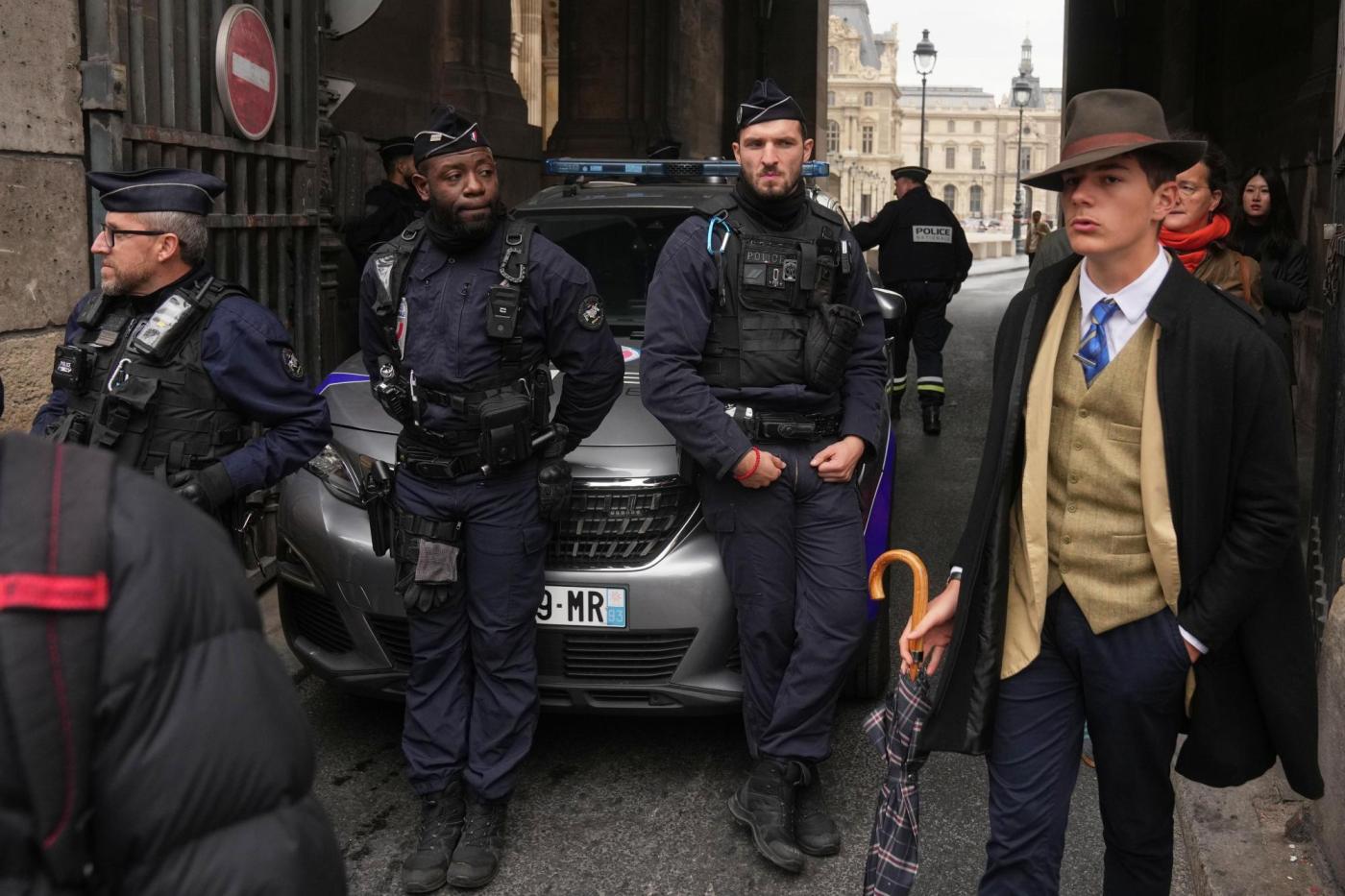
Over the past few months, a troubling pattern has emerged across America’s major cities. As President Donald Trump’s administration dispatches federal agents and National Guard troops to jurisdictions — often over the objections of local residents and leaders — police departments are being forced to navigate an increasingly precarious position. If they embrace federal intervention, they risk being seen as acting against the will of the communities they serve. If they fail to align with Washington’s agenda, they invite political backlash for not showing unquestioning loyalty to the “thin blue line” that unites law enforcement.

This no-win situation is yet another symptom of the growing politicization of law enforcement and public safety. And as a retired police lieutenant who spent more than two decades on the force, I see this trend as an existential threat to the legitimacy our profession relies on to be effective.

Anyone who has worked in this field knows that policing can only function through community trust and cooperation. Our ability to uphold safety depends on the public’s belief that police are there to protect them — not to serve as an occupying force or an arm of political power. Federal encroachment on local policing blurs that line, creating a tightrope act that’s proving difficult for departments to balance.

In the Chicago area, federal law enforcement’s heavy-handed tactics have put local police directly in the crossfire, both literally and figuratively. After federal agents repeatedly deployed tear gas in residential neighborhoods — exposing at least 40 Chicago police officers and countless bystanders — a federal judge issued a temporary restraining order blocking the use of certain types of force against protesters. In nearby Broadview, federal agents have also tear-gassed local police officers outside an Immigration and Customs Enforcement facility that has drawn regular protests. The village’s police chief has accused ICE agents of making false police reports, and his department has opened at least three criminal investigations into incidents involving ICE agents.

In Washington, D.C., local police are facing sharp criticism after failing to document a shooting by a federal agent during an October traffic stop. While the Metropolitan Police Department was not responsible for the shooting, its decision not to include the gunfire in a subsequent incident report has raised serious questions about transparency and accountability. One officer even testified that a superior instructed him not to document the incident in court records. Whether that decision stemmed from confusion, pressure or fear of political repercussions, the result is the same: a loss of public trust that hinders the department’s ability to do the job effectively.

Similar problems have emerged in Portland, where police leaders have testified that federal intervention has made their jobs harder, not easier. During a recent federal trial over the legality of sending National Guard troops to the city, a local police commander told the court that protests swelled in size and intensity following Trump’s deployment order. He also documented “startling” incidents of excessive force by federal officers, including the use of tear gas and pepper balls affecting both protesters and local police. His testimony reinforced concerns among local officials who have warned that federal involvement is creating unnecessary danger for officers and the public alike.

These episodes point to rising tensions between local and federal law enforcement, which are only complicating the broader public safety landscape. Each new confrontation creates additional risks for the community and forces local police to divert attention from their core work of preventing and solving crime. That strain appeared to surface again in Chicago in October, when Border Patrol agents clashed with protesters and local police were accused of not providing adequate backup to secure the scene — a claim the city’s police superintendent has denied.

Some departments have also sought to carve out some much-needed middle ground in the face of this emerging conflict. After millions of Americans took to the streets for October’s “No Kings” protests, several large agencies publicly thanked demonstrators for keeping the peace and reaffirmed their commitment to protecting First Amendment rights.

Rather than buy into an “us versus them” framing, police in cities such as Chicago, Seattle, San Diego and New York issued statements that remained community-focused and free of partisan posturing. These departments seemed to recognize that the protesters were people whose trust and support they need to be effective and whose freedoms they are sworn to uphold. At a time of rising polarization, this sort of engagement reminds the public that police ultimately serve the community, not any political entity. But the politicized nature of federal interference only makes that message harder to maintain.

At its core, policing depends on legitimacy — the belief that officers act fairly, lawfully and in service of the people. Once that belief falters, public trust falters with it. The more law enforcement is pulled into partisan battles, the harder it becomes for officers to foster cooperation. Instead of building partnerships, they’re left trying to police through division.

If leaders truly want to act in the interest of public safety, they should start by ensuring that police remain insulated from politics. That means respecting the boundaries between federal and local authority, holding law enforcement to high standards of transparency and accountability, and trusting communities to shape their own safety priorities. At the end of the day, policing works best when departments can focus on their core mission — keeping communities safe —without the added distraction of politics.

Retired Lt. Diane Goldstein is a 21-year police veteran and executive director of the Law Enforcement Action Partnership, known as LEAP, a nonprofit group of police, judges and other law enforcement professionals who support policies that improve public safety and police-community relations. She wrote this column for the Chicago Tribune.

Other voices: ICE tactics undermine law enforcement mission

posted in: All news | 0

BOSTON — ICE isn’t doing itself any favors.

Videos shared via social media in recent months showing ICE agents dragging people from cars, smashing car windows, and deploying tear gas in residential neighborhoods only serve to bolster the progressive narrative that immigration law is superfluous and upholding it an act of tyranny.

Lost in the mix are the arrests and deportations of criminals, such as Abdulkadir Sharif Abdi, a criminal illegal immigrant from Somalia, known current member of Vice Lord Nation. He has been convicted of fraud, receiving stolen property, receiving a stolen vehicle, vehicle theft, and multiple probation violations, according to the Department of Homeland Security.

Then there’s Sahal Osman Shidane, a criminal illegal immigrant from Somalia, convicted of criminal sexual conduct with a minor aged 13-15. And Rudy Arendondo Jarillo, a criminal illegal immigrant from Mexico, convicted of felony smuggling aliens. There were more caught in a recent sweep of Minneapolis, and others charged with similar crimes nabbed around the country, including Massachusetts.

It’s crucial to get pedophiles, gang members, human traffickers and other criminals off the street, and that part of the ICE equation benefits our communities. But the strong-arm scenarios played out in dozens of phone videos gone viral overshadow these laudable efforts.

People remember the woman dragged from her car by masked federal agents earlier this fall and detained after a traffic accident. The woman, Dayanne Figueroa, is a U.S. citizen.

U.S. Immigration has deported people in the country illegally for decades, but it never looked like this. Under Presidents George Bush and Barack Obama, immigration officials targeted worksites, whether in raids or auditing companies’ records for illegal workers.

President Joe Biden upended efforts to keep the border secure by rolling out the welcome mat, and we are paying the price today. But the guns-drawn, tear-gas-throwing, aggressive arrests are a shock to the system, no matter who you voted for.

Earlier this year, Democratic Whip Dick Durbin, D-IL, wrote to DHS Secretary Kristi Noem on recent changes to ICE’s hiring practices: “… Scores of masked and unidentified federal agents have already conducted unlawful arrests — including of U.S. citizens — and engaged in excessive force without clear cause.

Whether it is an officer mishandling a gun and pointing it at bystanders or federal agents arresting U.S. citizen children in the dead of night, these mishaps have terrible consequences on immigrants and U.S. citizens alike.”

Durbin added that ICE has made changes in age requirements for new recruits. Previously, one had to be at least 21 years old and no older than 37 or 40, depending on the position. DHS announced that applicants can now apply at the age of 18 and there is no age cap.

“ICE also removed its Spanish-language requirement — shortening the training program by five weeks — and is pursuing additional ways to expedite training.”

The agency is setting itself up to fail, each video fueling the “ICE is bad” mantra and ultimately making our streets less safe.

ICE needs to cool down the incendiary players and return to its law enforcement message.

— The Boston Herald

States sue Trump administration again over billions in withheld electric vehicle charging funds

posted in: All news | 0

By ALEXA ST. JOHN

DETROIT (AP) — Sixteen states and the District of Columbia are suing President Donald Trump’s administration for what they say is the unlawful withholding of over $2 billion dollars in funding for two electric vehicle charging programs, according to a federal lawsuit announced Tuesday.

Related Articles


The US labels another Latin American cartel a terrorist group as the anti-drug war escalates


Trump expands travel ban, adding 5 more countries and imposing new limits on others


Trump will go to Delaware for the dignified transfer of the 2 National Guard members killed in Syria


Sen. Mark Kelly calls Pentagon investigation into his remarks a move to chill military dissent


US Capitol statue of teen civil rights leader Barbara Rose Johns to fill Robert E. Lee’s place

The lawsuit filed Tuesday in the U.S. District Court for the Western District of Washington is the latest legal battle that several states are pursuing over funding for EV charging infrastructure that they say was obligated to them by Congress under former President Joe Biden, but that the Department of Transportation and Federal Highway Administration are “impounding.”

“The Trump Administration’s illegal attempt to stop funding for electric vehicle infrastructure must come to an end,” California Attorney General Rob Bonta said in a release. “This is just another reckless attempt that will stall the fight against air pollution and climate change, slow innovation, thwart green job creation, and leave communities without access to clean, affordable transportation.”

The Department of Transportation did not immediately respond to request for comment.

The Trump administration in February ordered states to halt spending money for EV charging that was allocated in the bipartisan infrastructure law passed under the previous administration.

Several states filed a lawsuit in May against the administration for withholding the funding from the $5 billion National Electric Vehicle Infrastructure program for a nationwide charging buildout. A federal judge later ordered the administration to release much of the funding for chargers in more than a dozen states.

Tuesday’s separate lawsuit addresses the withholding of funding obligations for two other programs: $1.8 billion for the Charging and Fueling Infrastructure Grant program, as well as about $350 million in Electric Vehicle Charger Reliability and Accessibility Accelerator money.

Tuesday’s lawsuit is led by attorneys general from California and Colorado, joined by the attorneys general of Arizona, Delaware, Illinois, Maryland, Massachusetts, Michigan, New Jersey, New York, Oregon, Rhode Island, Vermont, Washington, Wisconsin and the District of Columbia, and the governor of Pennsylvania.

The Trump administration has been hostile to EVs and has dismantled several policies friendly to cleaner cars and trucks that were put in place under Biden, in favor of policies that instead align with Trump’s oil and gas industry agenda.

Once in office a second time, President Trump immediately ordered an end to what he has called Biden’s “EV mandate.” While Biden targeted for half of new vehicle sales in the U.S. to be electric by 2030, policies did not force American consumers to buy or automakers to sell electric vehicles.

Biden did set stringent tailpipe emissions and fuel economy rules in an effort to encourage more widespread EV uptake, as the auto industry would have had to meet both sets of requirements with a greater number of EVs in their sales mix.

Under the Biden administration, consumers could also receive up to $7,500 in tax incentives off the price of an EV purchase.

The Trump administration has proposed rolling back both tailpipe rules and the gas mileage standards, cut the fines to automakers for not meeting those standards, and eliminated the EV credits.

Trump has also repeated incorrect information about the status of the federal charging programs; without all of the funds available, only a fraction of what was obligated has been spent so far.

“We had to have an electric car within a very short period of time, even though there was no way of charging them and lots of other things,” Trump said in a Dec. 3 press conference about the proposed weakened fuel economy rules. “In certain parts of the Midwest, they spent — to build nine chargers they spent $8 billion. So, that wasn’t working out too well.”

The lawsuit comes amid those regulatory changes and as the pace of EV sales have slowed in the U.S. as mainstream buyers remain concerned about both charging availability and the price of the vehicles.

New EVs transacted for an average of $58,638 last month, compared with $49,814 for a new vehicle overall, according to auto buying resource Kelley Blue Book.

Automakers, meanwhile, have responded to consumers accordingly.

Earlier this week, Ford Motor Co. announced it was pivoting away from its once-ambitious, multi-billion dollar electrification strategy in lieu of more hybrid-electric and more fuel-efficient gasoline-powered vehicles.

In the spring, Honda Motor Co. also said it would take a significant step back from its EV efforts.

Still, EVs are gaining traction in other areas around the world.

Alexa St. John is an Associated Press climate reporter. Follow her on X: @alexa_stjohn. Reach her at ast.john@ap.org.

Read more of AP’s climate coverage.

The Associated Press’ climate and environmental coverage receives financial support from multiple private foundations. AP is solely responsible for all content. Find AP’s standards for working with philanthropies, a list of supporters and funded coverage areas at AP.org.

St. Paul man wanted in fatal shooting arrested at Toronto airport

posted in: All news | 0

Police arrested a man in Canada on Tuesday who is accused of killing the mother of his children at her St. Paul apartment.

Shaniya D. Thompson (Courtesy of GoFundMe)

Wesley B. Koboi, of St. Paul, was charged with the murder of 29-year-old Shaniya D. Thompson and a warrant was issued for his arrest.

Toronto police took Koboi, 33, into custody without incident at a Toronto airport Tuesday morning, according to a St. Paul police spokesperson.

St. Paul officers responded to a 911 call Friday and found Thompson shot in her apartment in the 500 block of Broadway Street, near downtown and close to Interstates 94/35E and East Seventh Street. Preliminary evidence indicated she was shot Thursday.

Investigators learned through federal law enforcement officers that Koboi crossed the border into Canada on foot at the Sarnia Blue Water Bridge at Port Huron, Mich., just before midnight Friday, according to a criminal complaint. He had booked a flight to Mexico.

Thompson was a “devoted mother” of five children who “witnessed the unthinkable,” her sister wrote on a GoFundMe (gofund.me/213476308) for her funeral expenses and support her children.

Thompson’s father told an investigator he learned Koboi went to Thompson’s apartment for a child’s birthday. Koboi told the children to leave the living room and go into their bedroom. They then heard a scream and a loud “thud,” according to the criminal complaint.

Koboi told the children they were going to leave, and drove them to Grand Rapids, Mich., where his mother lives. Koboi’s mother reported that her son and the children arrived at her house Friday morning. He departed soon after, leaving the children with her.

Related Articles


Former Blaine child care worker pleads guilty in abuse case


Minneapolis man is third convicted in Coon Rapids triple murder


How a Trump Media deal with a crypto firm exposes potential conflicts of interest


Hegseth says he won’t publicly release video of boat that killed survivors in the Caribbean


All District 196 high schools closed Tuesday due to ‘potential online threats’