MEXICO CITY (AP) — A small plane crashed in central Mexico while trying to make an emergency landing Monday, killing at least seven people, Mexico State Civil Protection Coordinator Adrián Hernández said.
Related Articles
Trinidad and Tobago will open Caribbean nation’s airports to US military as Venezuela tensions grow
US officials say Washington has agreed to give Ukraine security guarantees in peace talks
What to know about the attack on the Hanukkah festival in Australia that killed 15 people
Today in History: December 15, Bridge collapses into Ohio River, killing 46 people
What to know about the US military’s role in Syria after deadly IS attack
The accident took place in San Mateo Atenco, an industrial area three miles from the Toluca airport, about 31 miles west of Mexico City. The plane had taken off from Acapulco, along Mexico’s Pacific coast.
Hernández said the private jet had registered eight passengers and two crew, but hours after the crash only seven bodies had been recovered.
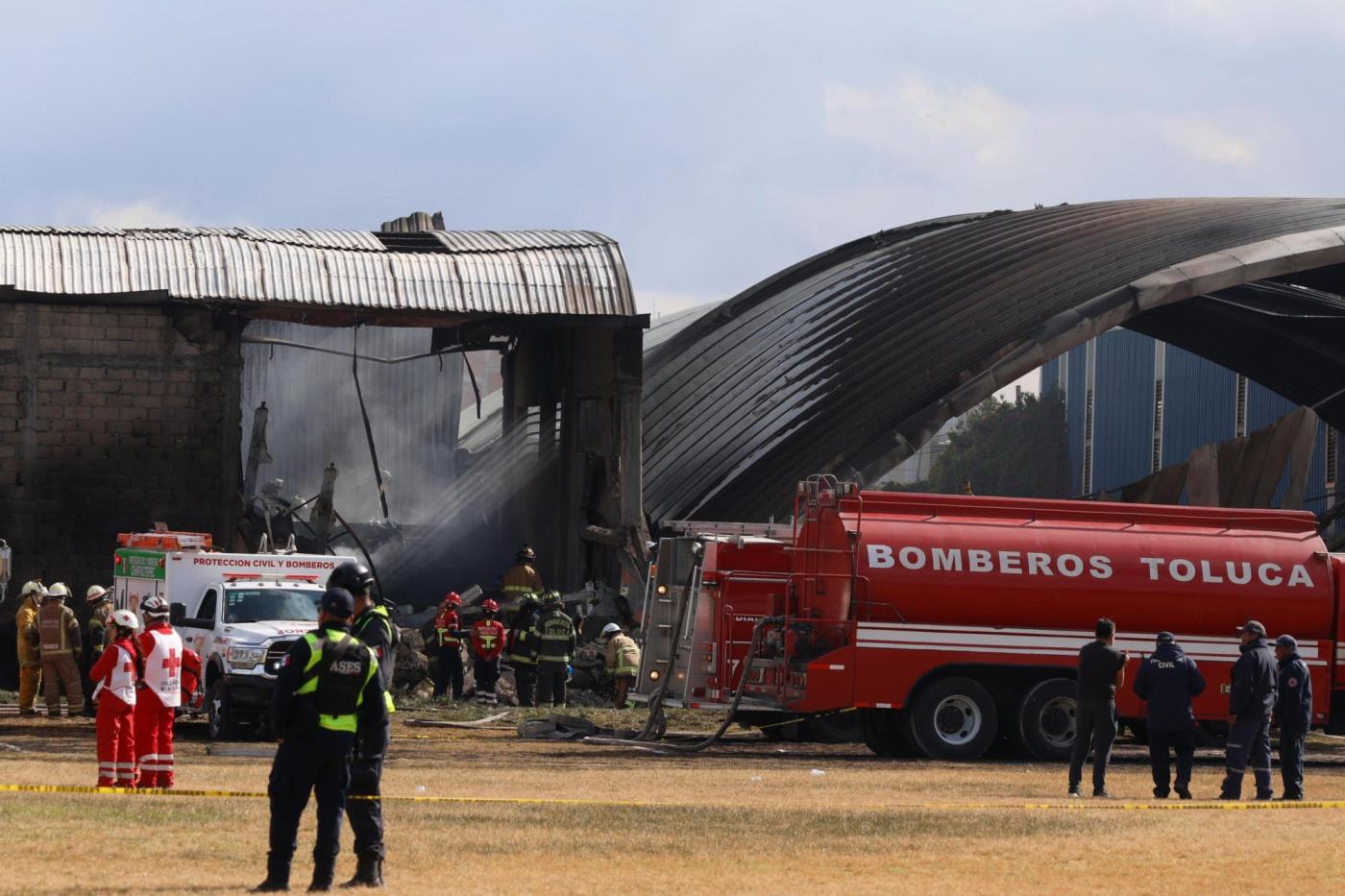
He said the plane had apparently tried to land on a soccer field but hit the metal roof of a nearby business, starting a large fire. The crash is under investigation.
Rescue workers inspect the site of a plane crash near Toluca airport in San Mateo Atenco, Monday, Dec. 15, 2025. (AP Photo/Ramses Mercado)
Firefighters and Red Cross workers tend to the site of a small plane crash near Toluca airport in San Mateo Atenco, Mexico, Monday, Dec. 15, 2025. (AP Photo/Ramses Mercado)
1 of 2
Rescue workers inspect the site of a plane crash near Toluca airport in San Mateo Atenco, Monday, Dec. 15, 2025. (AP Photo/Ramses Mercado)
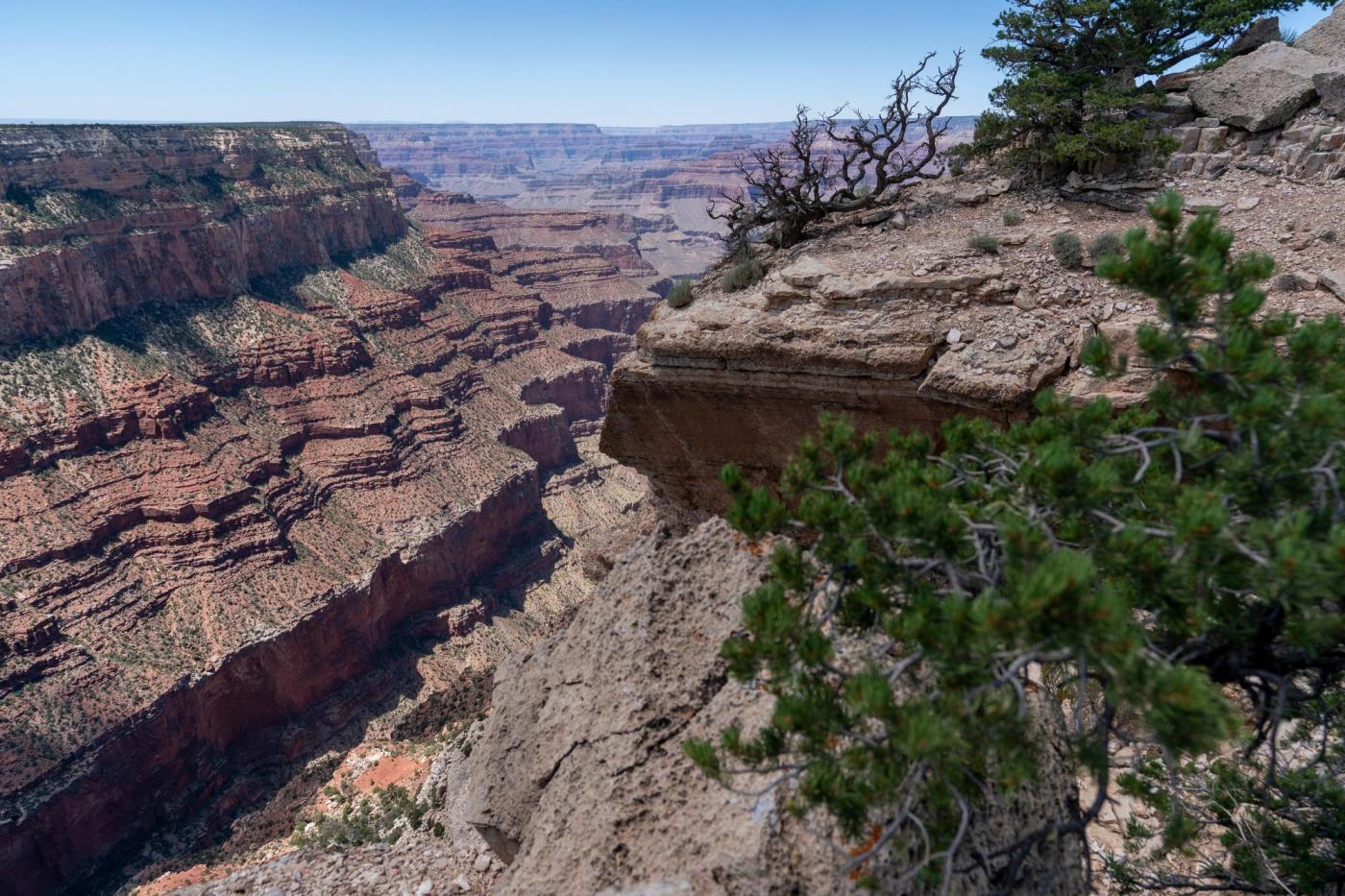
Hotels are reopening on the Grand Canyon National Park’s South Rim on Wednesday after the park halted overnight accommodations for over a week due to water-line breaks, the park said Monday.
Related Articles
‘General Hospital’ star Anthony Geary of Luke and Laura fame dies at 78
Ford scraps F150 Lightning as mounting losses and falling consumer interest hits EV plans
Crews use sandbags to shore up breach in levee near Seattle after failure prompts flood warning
US Jewish groups urge heightened security at public events after Hanukkah attack in Australia
Purse pirates: UPS ripped off seasonal workers with unfair pay practices, lawsuit alleges
The park will resume overnight stays at El Tovar, Bright Angel Lodge, Maswik Lodge, Delaware North’s Yavapai Lodge and Trailer Village. Some campground water hoses will remain off, and fire restrictions at the South Rim will continue.
The park first took steps to conserve water earlier this month by pausing overnight stays after the breaks. A vast majority of the Grand Canyon’s visitors spend their time at the South Rim, and more than 41,000 people used overnight lodging in the park last December, though the winter season is sleepier.
It’s the second time the park has taken such action though the pipeline has experienced frequent failures over the years. Last August, park officials took unprecedented action and imposed water restrictions that forced the sudden shutdown of overnight hotel stays during one of the busiest times of the year.
FILE – Guests exit Bright Angel Lodge on Thursday, Aug. 29, 2024, in Grand Canyon, Ariz. (AP Photo/Matt York, File)
Maintenance of the 12.5 mile-long Transcanyon Waterline, the primary water source for residents, staff and tourists, has long been a priority for the park. A $208 million rehabilitation of the pipeline and upgrades to the associated water delivery system began in 2023 is expected to wrap up in 2027.
Park officials are encouraging visitors and residents to still take conservation measures such as shortening showers, washing full loads of laundry and turning off the faucet when brushing teeth. Hikers should bring or treat water water if needed, said the park.
An aspiring neurosurgeon and a student leader of Brown University’s campus Republicans were in a study group preparing for an economics final, with the end of the semester in sight.
Related Articles
‘General Hospital’ star Anthony Geary of Luke and Laura fame dies at 78
Ford scraps F150 Lightning as mounting losses and falling consumer interest hits EV plans
Crews use sandbags to shore up breach in levee near Seattle after failure prompts flood warning
US Jewish groups urge heightened security at public events after Hanukkah attack in Australia
Purse pirates: UPS ripped off seasonal workers with unfair pay practices, lawsuit alleges
But the lives of MukhammadAziz Umurzokov and Ella Cook were cut short Saturday when a gunman opened fire inside a classroom in the engineering building. Nine others were wounded before the gunman fled. Investigators were still searching for him Monday.
As questions swirled about the gunman’s motives and how he managed to walk away after the attack, relatives and friends of Umurzokov, an 18-year-old freshman from Brandermill, Virginia, and Cook, a 19-year-old sophomore from a suburb of Birmingham, Alabama, tried to make sense of the loss.
MukhammadAziz Umurzokov
Umurzokov decided at a young age that he wanted to go into medicine.
He made up his mind after suffering a neurological condition that required him to undergo surgery as a child and having to wear a back brace due to scoliosis. With a double-major in biochemistry and neuroscience, he hoped to go to medical school.
“He had so many hardships in his life, and he got into this amazing school and tried so hard to follow through with the promise he made when was 7 years old,” his sister, Samira Umurzokova, told The Associated Press by phone Monday.
Umurzokov was helping a friend at an economics final review session when someone walked into the classroom and began shooting.
“It’s just crazy unfair that all of that was taken from him in a second because of someone,” Umurzokova said.
He took it upon himself to help students who just immigrated to the United States and weren’t fully acclimated to the culture and language, said Umurzokova, whose family came to the country from Uzbekistan when she, her brother and sister were very young.
She said he would be using his phone at the dinner table and when his parents told him to put it away, he would say, ”‘No, I’m helping my friend with calculus homework.’”
When he wasn’t busy with schoolwork, he would play video games with friends and hang out at a book store with family. He had plans to take his sisters to see the movie “Avatar: Fire and Ash,” which comes out Friday.
“He was a thoughtful person,” Umurzokova said. “He always tried to include everyone in everything. and just always thought of other people before he thought of himself.”
Ella Cook
Cook, of Mountain Brook, Alabama, was beloved in her Birmingham church and was vice president of the Brown College Republicans.
When announcing her death Sunday to the Cathedral Church of the Advent congregation, the Rev. R. Craig Smalley described her as “an incredible grounded, faithful, bright light” who encouraged and “lifted up those around her.”
“Light shines in the darkness,” he told the congregation, urging members to love and pray for her parents.
Members of the Brown College Republicans were “devastated,” the club’s president, Martin Bertao, said in a post on X.
“Ella was known for her bold, brave, and kind heart as she served her chapter and her fellow classmates,” Bertao said.
Joe Powers, the chairman of the Rhode Island Republican Party, said in a statement that Cook “embodied the very best of the next generation of conservative voices.”
Even the White House acknowledged the death, with press secretary Karoline Leavitt writing in a message posted on X, “There are no words. Thinking of her family and friends, especially her parents. God please bless them.”
Relatives of Cook didn’t immediately respond to emails and phone messages seeking comment.
The United States flag flies at half-staff as a sign of mourning for the victim’s of Saturday’s shooting, on the campus of Brown University, Monday, Dec. 15, 2025, in Providence, R.I. (AP Photo/Robert F. Bukaty)
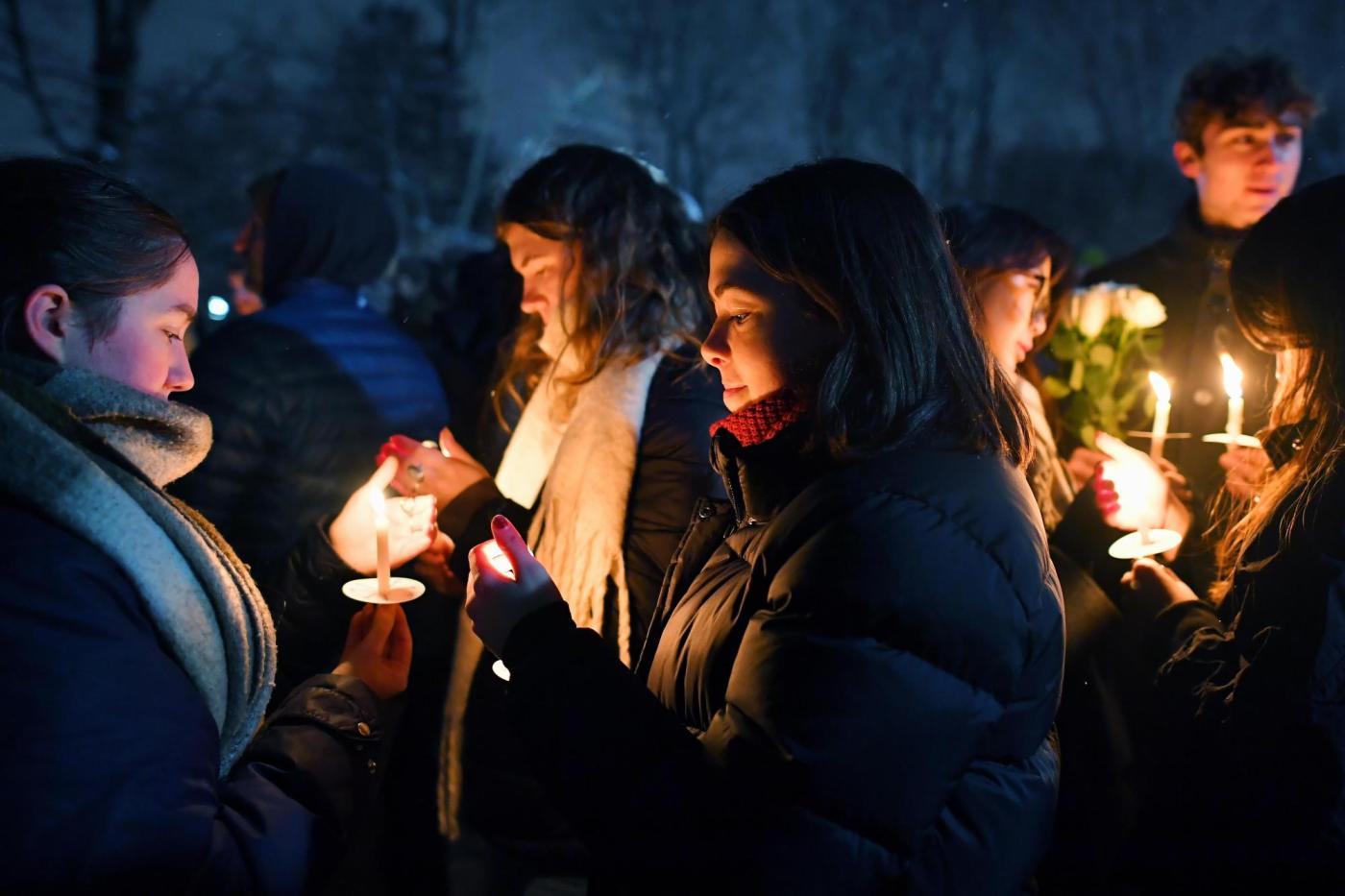
People light candles at the beginning of a vigil, Sunday, Dec. 14, 2025, in Providence, R.I., for those injured or killed during the Saturday shooting on the campus of Brown University. (AP Photo/Steven Senne)
Members of the FBI Evidence Response Team search for evidence near the campus of Brown University, Monday, Dec. 15, 2025, in Providence, R.I. (AP Photo/Robert F. Bukaty)
A member of the FBI Evidence Response Team searches for evidence near an ivy-covered wall following the shooting at Brown University, Monday, Dec. 15, 2025, in Providence, R.I. (AP Photo/Robert F. Bukaty)
1 of 4
The United States flag flies at half-staff as a sign of mourning for the victim’s of Saturday’s shooting, on the campus of Brown University, Monday, Dec. 15, 2025, in Providence, R.I. (AP Photo/Robert F. Bukaty)
Only one of the nine people wounded had been released as of Sunday, Brown President Christina Paxson said. One was in critical condition and the other seven were in critical but stable condition.
Durham Academy, a private K-12 school in Durham, North Carolina, confirmed that a recent graduate, Kendall Turner, was critically wounded. The school said her parents were with her.
“Our school community is rallying around Kendall, her classmates, and her loved ones, and we will continue to offer our full support in the days ahead,” the school said in a statement.
Another wounded student, 18-year-old freshman Spencer Yang of New York City, told the New York Times and the Brown Daily Herald from a hospital bed that there was a mad scramble after the gunman entered the room where he and the other students were studying for finals. Many students ran toward the front of the room, but Yang said he wound up on the ground between some seats and was shot in the leg.
Yang, who expects to be discharged in the coming days, said he tried to keep some of the more seriously wounded students conscious until police arrived.
WASHINGTON (AP) — The Trump administration said Monday in a court filing that the president’s White House ballroom construction project must continue for reasons of national security.
Related Articles
Sen. Cruz threatens another shutdown unless restrictions on military flights are approved
Trump’s promised big tax cuts are expected to disappoint the average worker
Voting by mail faces uncertain moment ahead of midterm elections
Supreme Court will hear appeal of Black death row inmate over racial bias in Mississippi jury makeup
Court battle begins over California’s new congressional map designed to favor Democrats
The filing came in response to a lawsuit filed last Friday by the National Trust for Historic Preservation asking a federal judge to halt the project until it goes through multiple independent reviews and wins approval from Congress.
In its filing, the administration included a declaration from the deputy director of the U.S. Secret Service saying more work on the site of the former White House East Wing is still needed to meet the agency’s “safety and security requirements.” The administration has offered to share classified details with the judge in an in-person setting without the plaintiffs present.
The government’s response to the lawsuit offers the most comprehensive look yet at the ballroom construction project, including a window into how it was so swiftly approved by the Trump administration bureaucracy and its expanding scope.
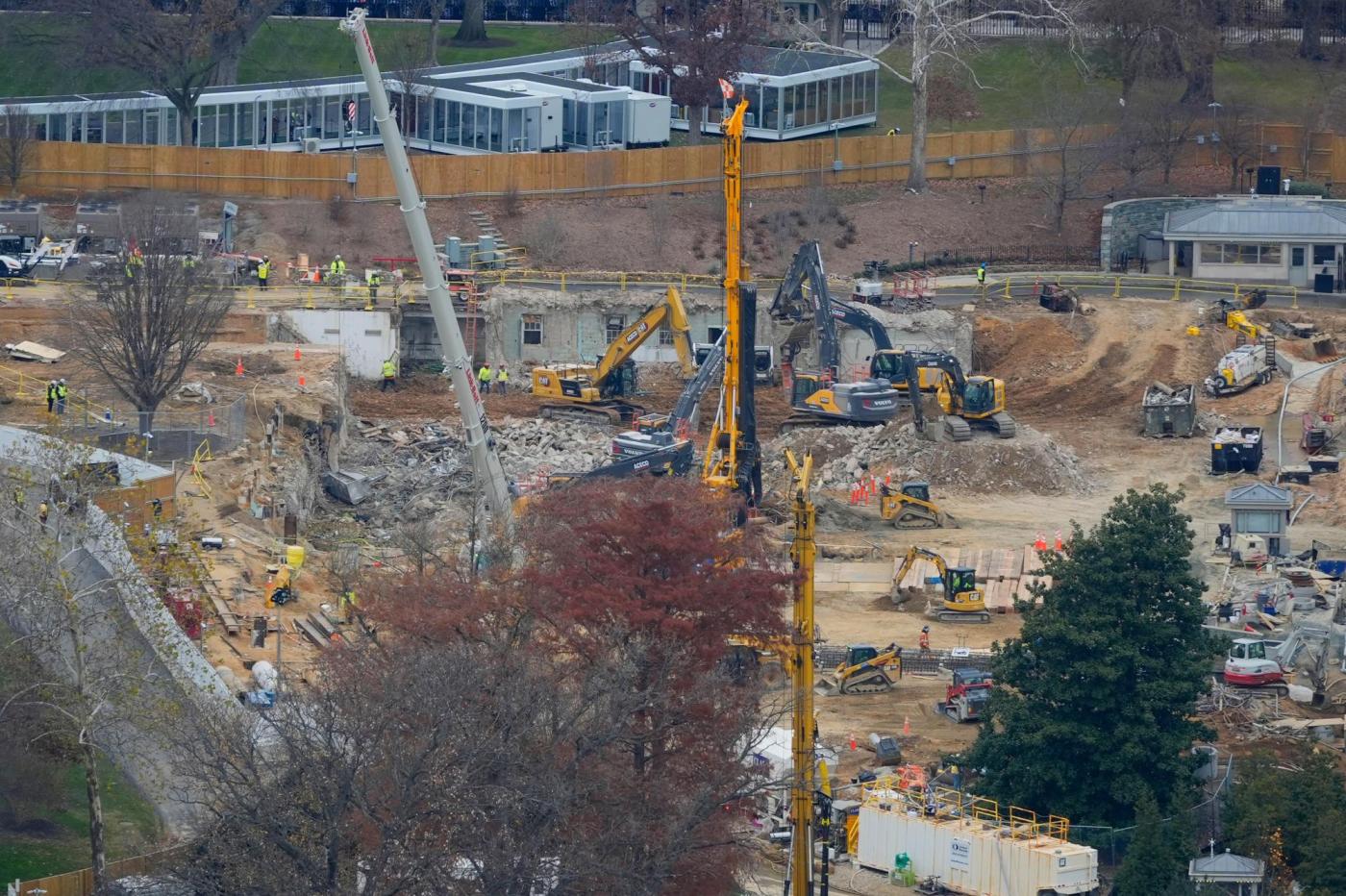
The filings assert that final plans for the ballroom have yet to be completed despite the ongoing demolition and construction work. Below-grade demolition of the site continues, wrote John Stanwich, the Park Service’s liaison to the White House, and work on the foundations is set to begin in January. Above-grade construction “is not anticipated to begin until April 2026, at the earliest,” he wrote.
The National Trust for Historic Preservation, a privately funded group, is asking the U.S. District Court to block Trump’s ballroom addition until it goes through comprehensive design reviews, environmental assessments, public comments and congressional debate and ratification.
Trump had the East Wing torn down in October as part of the project to build an estimated $300 million, 90,000-square-foot ballroom before his term ends in 2029.
The project has prompted criticism in the historic preservation and architectural communities, and among his political adversaries, but the lawsuit is the most tangible effort thus far to alter or stop the president’s plans for an addition that itself would be nearly twice the size of the White House before the East Wing’s demolition.
A hearing in the case was scheduled Tuesday in federal court in Washington.