With loss to Memphis, Timberwolves again show a lack of ball movement leads to defeats

posted in: All news | 0

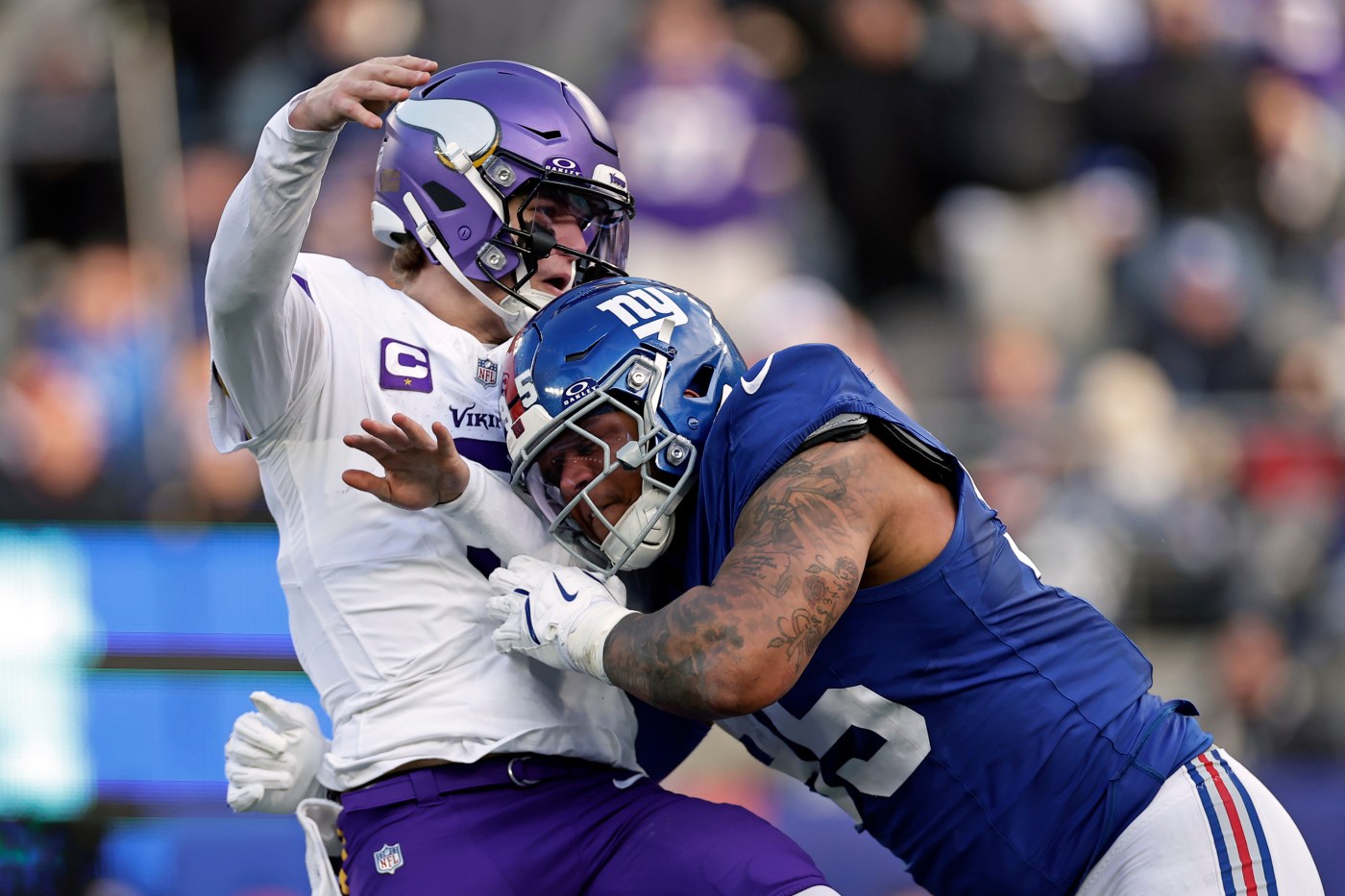
The Timberwolves were halfway to yet another strong offensive showing filled with ball movement and pace Wednesday at Target Center.

Then everything came to a screeching halt, as Minnesota played one of its uglier halves of offense of the season. The final 24 minutes of Minnesota’s 116-110 loss to Memphis featured just eight assists, which were matched by eight turnovers.

Minnesota shot 7 for 23 from the field in the third quarter, then 8 for 23 in the fourth.

“I thought it was a horrendous night offensively,” Wolves coach Chris Finch said. “Our offensive decision making was awful. From shot selection to turnovers to execution, it was just not very good.”

Which was the continuance of an ongoing issue for Minnesota. Memphis played physical defense Wednesday, and also had former Defensive Player of the Year Jaren Jackson Jr. to guard Julius Randle 1 on 1 in the middle of the floor.

Those two ingredients generally form the recipe for a concoction that ails Minnesota. Randle went just 9 for 21 in the loss with three assists to four turnovers. The forward has been consistently excellent for the Wolves this season, partially due to his simplicity of approach.

If Randle draws help defense, he kicks to an open teammate. If he is left in a 1 on 1 situation, he looks to score. But the latter wasn’t a successful venture against Jackson, yet Randle continued to hit his head against the wall that was the Memphis forward throughout the evening with little success.

Randle noted “next-action basketball,” where Minnesota continues to move the ball and drive the paint and kick and attack closeouts until a great look presents itself,  is a big driver of his success, and that wasn’t prevalent in the Wolves’ offense against Memphis.

“I felt like there wasn’t as much movement on my part, on everybody’s part,” Randle said.

That was part of the reason Minnesota’s offense stagnated, along with the general resistance the Grizzlies provided on all fronts. Memphis is long and physical. Your cuts and drives against it will face friction. Generally, that means everything you do needs to be quicker and more decisive.

“They don’t let you get by them quick, easily,” Finch said. “So to play off the catch, you got to play with thrust and stay with the dribble and play through the initial point of contact. I don’t think we did a very good job of that tonight.”

Instead, Minnesota started to hold. At that point, the Wolves are easy to guard, and only more so when their top isolation player, Anthony Edwards, is out with foot soreness. Shooting variance didn’t bail the Wolves out Wednesday, as Minnesota went just 13 for 44 from distance.

Everything the Wolves did in the second half Wednesday was slow and difficult. Such has been the case against scrappy defenses all season, including matchups against Portland and Oklahoma City, the latter of which Minnesota will play again Friday. The Wolves will need to be prepared to play fast and with intention if they hope to pull the upset of the Thunder.

“I think it takes five guys to be willing to do it, and I think we are when you look at the big picture. But, sometimes, when there’s frustration, we go back old ways individually. I wouldn’t put myself in that category, but some of us are more 1 on 1 scorers, and I think we’ve got to just give ourselves away to the team,” said Rudy Gobert, who finished 16 points and 16 rebounds. “We need the scorers to be aggressive, but within the flow of the game.

“Making quicker decisions. If you’re going to shoot, pass or drive is pretty much what it is. Having less of dribble, dribble, dribble, because the defense sets and it makes everything harder. The NBA in today’s game, the defense is going to shrink. And even for me, as a guy who’s going to rebound or be open, it’s much easier to rebound when we have an advantage. We have a lot of ways to grab advantages that are better than just playing 1 on 1.”

Related Articles


Frederick: Chris Finch making young Wolves earn minutes


Short-handed Timberwolves again strike brilliant offensive balance in win over Kings


Timberwolves player net ratings through 25 games: Donte DiVincenzo is still king


Without Anthony Edwards, Timberwolves still top Warriors


Rudy Gobert nears NBA suspension for flagrant fouls after Monday’s ejection

US military says strike on alleged drug boat kills 4 in eastern Pacific

posted in: All news | 0

WASHINGTON (AP) — The U.S. military said Wednesday that it attacked a boat accused of smuggling drugs in the eastern Pacific Ocean, killing four people on the same day the House rejected efforts to limit President Donald Trump’s power to use military force against drug cartels.

Related Articles


Trump demands Venezuela pay for seized US oil assets after calling for ‘blockade’


Watch: President Trump addresses the nation


The Lumbee Tribe’s federal recognition is assured with a final push by Trump


Sleepy. Divisive. A fan of young Trump: A look at the new plaques on the Presidential Walk of Fame


Trump’s push to make oil drilling cheap again squeezes some states more than others

U.S. Southern Command stated on social media that the vessel was operated by narco-terrorists along a known trafficking route. The military didn’t provide evidence behind the allegations but posted a video of a boat moving through water before there was an explosion.

The attack brought the total number of known boat strikes to 26 while at least 99 people have been killed, according to numbers announced by the Trump administration. Trump has justified the attacks as a necessary escalation to stem the flow of drugs into the United States and asserted the U.S. is engaged in an “armed conflict” with drug cartels.

The administration is facing increasing scrutiny from lawmakers over the boat strike campaign. The first attack in early September involved a follow-up strike that killed two survivors clinging to the wreckage of a boat after the first hit.

House Republicans rejected a pair of Democratic-backed resolutions Wednesday that would have forced the Trump administration to seek authorization from Congress before continuing attacks against cartels. They were the first votes in the House on Trump’s military campaign in Central and South America. A majority of Republicans in the Senate had previously voted against similar resolutions, and Trump would almost certainly veto them if they were to pass Congress.

Trump demands Venezuela pay for seized US oil assets after calling for ‘blockade’

posted in: All news | 0

By DAVID KLEPPER and AAMER MADHANI

WASHINGTON (AP) — President Donald Trump demanded Wednesday that Venezuela return assets that it seized from U.S. oil companies years ago, justifying anew his announcement of a “blockade” against oil tankers traveling to or from the South American country that face American sanctions.

Related Articles


Watch live: President Trump addresses the nation


The Lumbee Tribe’s federal recognition is assured with a final push by Trump


Sleepy. Divisive. A fan of young Trump: A look at the new plaques on the Presidential Walk of Fame


Trump’s push to make oil drilling cheap again squeezes some states more than others


FBI Deputy Director Dan Bongino says he plans to resign next month as bureau’s No. 2 official

Trump cited the lost U.S. investments in Venezuela when asked about his newest tactic in a monthslong pressure campaign against leader Nicolás Maduro, suggesting his administration’s moves to confront leaders in Caracas are at least somewhat motivated by disputes over oil investments, along with accusations of drug trafficking. Some sanctioned tankers already are diverting away from Venezuela.

“We’re not going to be letting anybody going through who shouldn’t be going through,” Trump told reporters of his call for a blockade. “You remember they took all of our energy rights. They took all of our oil not that long ago. And we want it back. They took it — they illegally took it.”

U.S. oil companies dominated Venezuela’s petroleum industry until the country’s leaders moved to nationalize the sector, first in the 1970s and again in the 21st century under Maduro and his predecessor, Hugo Chávez. Compensation offered by Venezuela was deemed insufficient, and in 2014 an international arbitration panel ordered the country’s socialist government to pay $1.6 billion to ExxonMobil.

While Venezuela’s oil has long dominated relations with the U.S., the Trump administration has focused on Maduro’s links to drug traffickers, accusing his administration of facilitating the shipment of dangerous drugs into the U.S. In his social media post Tuesday night, Trump said Venezuela was using using oil to fund drug trafficking and other crimes.

U.S. forces last week seized an oil tanker off Venezuela’s coast amid a massive military buildup that includes the Navy’s most advanced aircraft carrier.

The Trump administration also has carried out a series of strikes on suspected drug boats in the Caribbean Sea and eastern Pacific Ocean that have killed a combined total of at least 99 people, including four in a strike Wednesday. Those attacks have prompted questions from lawmakers and legal experts about their legal justification. Trump also has said he is considering strikes on land.

Trump’s talk of ‘stolen assets’

Stephen Miller, Trump’s deputy chief of staff, likened Venezuela’s move to nationalize its oil industry to a heist.

“American sweat, ingenuity and toil created the oil industry in Venezuela,” Miller wrote on social media Wednesday. “Its tyrannical expropriation was the largest recorded theft of American wealth and property. These pillaged assets were then used to fund terrorism and flood our streets with killers, mercenaries and drugs.”

Venezuela first moved to nationalize its oil industry in the 1970s, a process that expanded under Chávez, who nationalized hundreds of private businesses and foreign-owned assets, including oil projects run by ExxonMobil and ConocoPhillips. That led to the arbitration panel’s 2014 order.

“There is a case that can be made that Venezuela owes this money to Exxon. I don’t think it’s ever been paid,” economist Philip Verleger said.

Trump blamed his predecessors for not taking a harder line against Venezuela over the asset seizures.

“They took it away because we had a president that maybe wasn’t watching,” Trump said Wednesday. “But they’re not going to do that again. We want it back. They took our oil rights — we had a lot of oil there. As you know they threw our companies out, and we want it back.”

Chevron has a waiver from the U.S. government to continue oil production in Venezuela, and the Texas-based oil giant says its operations have not been disrupted.

Venezuela’s debt to Chevron “has decreased substantially” since the company’s license to resume exporting Venezuelan oil to the U.S. was first granted in 2022, said Francisco Monaldi, a Venezuelan oil expert at Rice University in Houston. He said the amount is not public.

A new designation for Maduro’s government?

There was no change Wednesday to the list of foreign terrorist organizations after Trump said in his post that the “Venezuelan Regime” has been designated as one.

Officials at several national security agencies were told not to take Trump’s remarks about the designation literally and they should be treated as a figure of speech, according to a U.S. official involved in the discussions.

That official, who spoke on condition of anonymity to describe internal interagency communications, also stressed that the “blockade” Trump announced applies only to previously sanctioned vessels against which certain actions are already authorized, such as the seizure last week.

The State Department, which oversees the foreign terror list, didn’t respond to requests for clarification.

Trump’s Justice Department in 2020 indicted Maduro on narcoterrorism charges and U.S. authorities have alleged that Venezuela’s leaders have looted the country and profited from the trafficking of drugs. Last month, the Trump administration designated a group linked to Maduro — the Cartel de los Soles — as a terrorist organization.

Venezuela decries American ‘piracy’

Nicolas Maduro speaks at a rally marking the anniversary of the Battle of Santa Ines, which took place during Venezuela’s 19th-century Federal War, in Caracas, Venezuela, Wednesday, Dec. 10, 2025. (AP Photo/Ariana Cubillos)

Maduro called United Nations Secretary-General Antonio Guterres on Wednesday for a conversation “regarding the current tensions in the region,” U.N. deputy spokesman Farhan Haq said.

“During the call, the secretary-general reaffirmed the United Nations’ position on the need for member states to respect international law, particularly the United Nations Charter, exert restraint and de-escalate tensions to preserve regional stability,” Haq said.

Venezuelan Foreign Minister Yván Gil demanded in a letter to the U.N. Security Council, which was obtained by The Associated Press, that the U.S. immediately release the “kidnapped crew” and return the oil illegally confiscated on the high seas.

In addition to urging the Security Council to condemn the taking of the tanker, Gil urged the U.N.’s most powerful body for a written statement stating that it hasn’t authorized actions against Venezuela “or against the international commercialization of its oil.”

While the strikes on alleged drug boats have raised questions about the use of military force, Trump’s seizure of the tanker and other actions against sanctioned entities are consistent with past American policy, said retired U.S. Vice Admiral Robert Murrett, now a professor at Syracuse University.

He also noted that from a military standpoint, seizing sanctioned oil tankers and imposing a blockade are far less risky than direct military confrontation.

“U.S. policy supports peaceful, democratic transition in Venezuela,” Murrett said. “If Maduro agrees tomorrow to step down and have a free and open election, I think we’d be delighted, Democrats and Republicans alike.”

Associated Press writers Matthew Lee in Washington, Regina Garcia Cano in Caracas, Venezuela, Cathy Bussewitz in New York and Edith M. Lederer at the United Nations contributed to this report.

Reiner family tragedy sheds light on pain of families grappling with addiction

posted in: All news | 0

By Corinne Purtill, Los Angeles Times

LOS ANGELES — When Greg heard about the deaths of Rob and Michele Reiner, and the alleged involvement of their son Nick, the news struck a painfully familiar chord.

Related Articles


US government admits negligence in helicopter-plane collision that killed 67 in Washington


FAA investigating after small plane crashes into New Hampshire condominiums


Watch live: President Trump to address the nation


Founder of bankrupt subprime auto lender Tricolor Holdings is charged with fraud


Shooting of MIT professor Nuno Loureiro has police searching for a suspect

It wasn’t the violence that resonated, but rather the heartache and desperation that comes with loving a family member who suffers from an illness that the best efforts and intentions alone can’t cure.

Greg has an adult child who, like Nick Reiner, has had a long and difficult struggle with addiction.

“It just rings close to home,” said Greg, chair of Families Anonymous, a national support program for friends and family members of people with addiction. (In keeping with the organization’s policy of anonymity for members, The Times is withholding Greg’s last name.)

“It’s just so horrible to be the parent or a loved one of somebody that struggles with [addiction], because you can’t make any sense of this,” he said. “You can’t find a way to help them.”

Every family’s experience is different, and the full picture is almost always more complicated than it appears from the outside. Public details about the Reiner family’s private struggles are relatively few.

But some parts of their story are likely recognizable to the millions of U.S. families affected by addiction.

“This is really bringing to light something that’s going on in homes across the country,” said Emily Feinstein, executive vice president of the nonprofit Partnership to End Addiction.

Over the years, Nick Reiner, 32, and his parents publicly discussed his years-long struggle with drug use, which included periods of homelessness and multiple rehab stints.

Most recently, he was living in a guesthouse on his parents’ Brentwood property. Family friends told The Times that Michele Singer Reiner had become increasingly concerned about Nick’s mental health in recent weeks.

The couple were found dead in their home Sunday afternoon. Los Angeles police officers arrested Nick hours later. On Tuesday, he was charged with their murder. He is currently being held without bail and has been placed under special supervision due to potential suicide risk, a law enforcement official told The Times.

Experts in substance use cautioned against drawing a direct line between addiction and violence.

“Addiction or mental health issues never excuse a horrific act of violence like this, and these sort of acts are not a direct result or a trait of addiction in general,” said Zac Jones, executive director of Beit T’Shuvah, a nonprofit Los Angeles-based addiction treatment center.

The circumstances around the Reiners’ highly publicized deaths are far from ordinary. The fact that addiction touched their family is not.

Nearly 1 in 5 people in the U.S. has personally experienced addiction, a 2023 poll from the Kaiser Family Foundation found.

Two-thirds of Americans have a family member with the disease, a proportion that is similar across rural, urban and suburban dwellers, and across Black, Latino and white respondents.

“Substance use disorders, addiction, do not discriminate,” Jones said. “It affects everyone from the highest of the high [socioeconomic status] to people that are experiencing homelessness on Skid Row. … There is no solution that can be bought.”

During interviews for the 2015 film “Becoming Charlie,” a semi-autobiographical film directed by Rob Reiner and co-written by Nick Reiner, the family told journalists that Nick, then in his early 20s, had been to rehab an estimated 18 times since his early teens. Nick Reiner has also spoken publicly about his use of heroin as a teenager.

Such cycles of rehab and relapse are common, experts said. One 2019 study found that it took an average of five recovery attempts to effectively stop using and maintain sobriety, though the authors noted that many respondents reported 10 or more attempts.

Many families empty their savings in search of a cure, Feinstein said. Even those with abundant resources often end up in a similarly despairing cycle.

“Unfortunately, the system that is set up to treat people is not addressing the complexity or the intensity of the illness, and in most cases, it’s very hard to find effective evidence-based treatment,” Feinstein said. “No matter how much money you have, it doesn’t guarantee a better outcome.”

Addiction is a complex disorder with intermingled roots in genetics, biology and environmental triggers.

Repeated drug use, particularly in adolescence and early adulthood when the brain is still developing, physically alters the circuitry that governs reward and motivation.

On top of that, co-occurring mental health conditions, traumas and other factors mean that no two cases of substance abuse disorders are exactly the same.

There are not enough quality rehabilitation programs to begin with, experts said, and even an effective program that one patient responds to successfully may not work at all for someone else.

“There is always the risk of relapse. That can be hard to process,” Greg said.

Families Anonymous counsels members to accept the “Three Cs” of a loved one’s addiction, Greg said: you didn’t cause it, you can’t cure it and you can’t control it.

“Good, loving families, people that care, deal with this problem just as much,” he said. “This is just so common out there, but people don’t really talk about it. Especially parents, for fear of being judged.”

After the killings, a family friend told The Times that they had “never known a family so dedicated to a child” as Rob and Michele Reiner, and that the couple “did everything for Nick. Every treatment program, therapy sessions and put aside their lives to save Nick’s repeatedly.”

But the painful fact is that devotion alone cannot cure a complex, chronic disease.

“If you could love someone into sobriety, into recovery, into remission from their psychiatric issues, then we’d have a lot fewer clients here,” Jones said. “Unfortunately, love isn’t enough. It’s certainly a part of the solution, but it isn’t enough.”

If you or someone you know is experiencing a mental health crisis, help is available. Call 988 to connect to trained mental health counselors or text “HOME” to 741741 in the U.S. and Canada to reach the Crisis Text Line.

©2025 Los Angeles Times. Visit at latimes.com. Distributed by Tribune Content Agency, LLC.