US job openings barely budged in August at 7.2 million

posted in: All news | 0

By PAUL WISEMAN, Associated Press Economics Writer

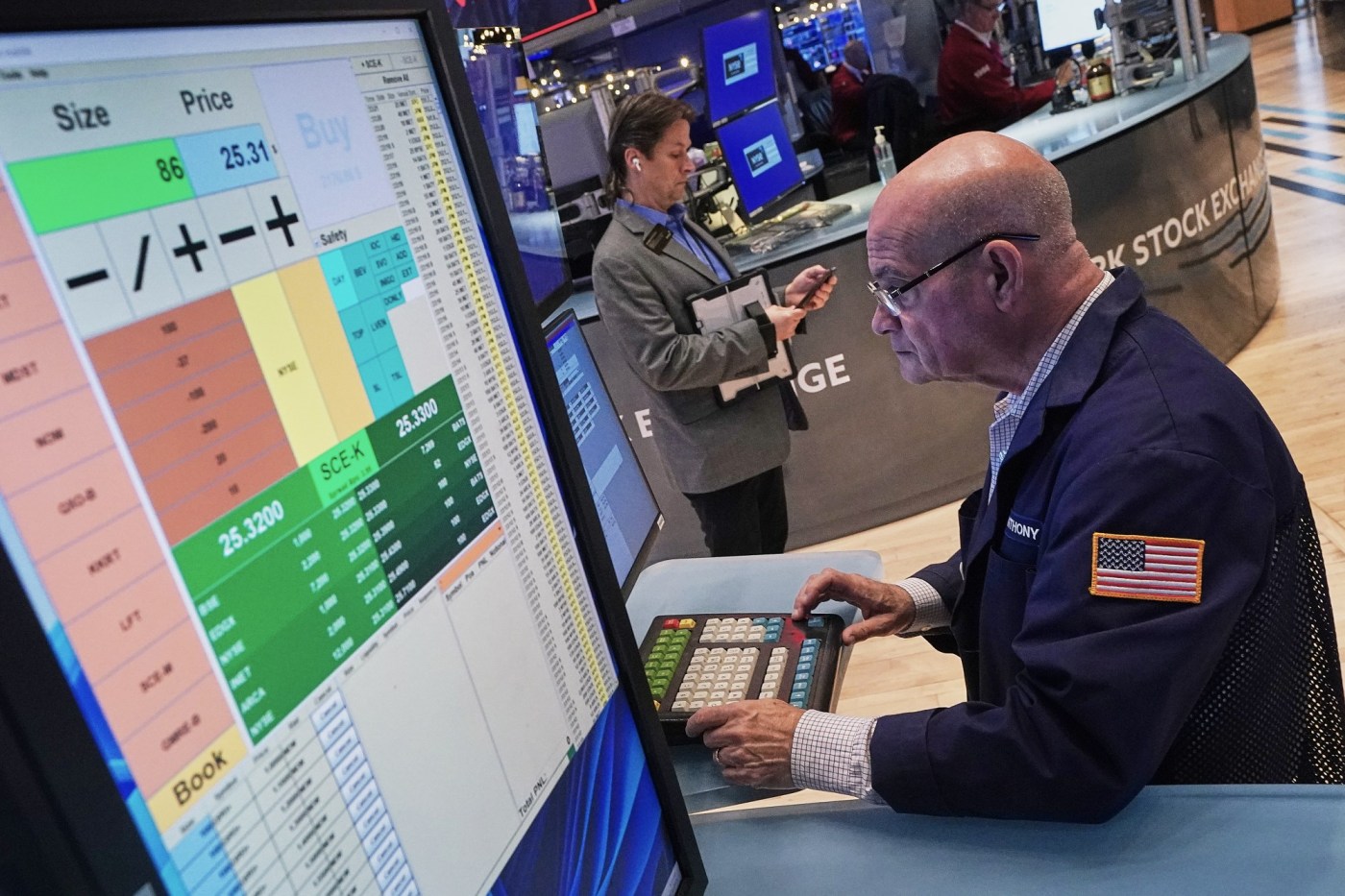
WASHINGTON (AP) — U.S. jobs openings were essentially unchanged million last month amid economic uncertainty arising from President Donald Trump’s trade policies and an impending government shutdown.

The Labor Department reported Tuesday that job openings blipped up to 7.23 million from 7.21 million in July. Economists had forecast a drop to 7.1 million.

Related Articles


120 Iranians detained in US for entering country illegally to be returned to Iran, state TV says


Today in History: September 30, Munich Agreement allows Nazi annexation of Sudetenland


Minnesota man pleads guilty to attempting to join Islamic State group


California Gov. Gavin Newsom signs landmark bill creating AI safety measures


Endangered whooping crane dies of avian flu at Wisconsin wildlife refuge

The Job Openings and Labor Turnover Survey (JOLTS) showed that layoffs fell month. But so did the number of people quitting their jobs — which is a sign of confidence in their prospects.

Job openings remain at healthy levels but have fallen steadily since peaking at a record 12.1 million in March 2022 as the U.S. economy roared back from COVID-19 lockdowns.

The U.S. job market has lost momentum this year, partly because of the lingering effects of 11 interest rate hikes by the inflation fighters at the Federal Reserve in 2022 and 2023 and partly because President Donald Trump’s trade wars have created uncertainty that is paralyzing managers trying to make hiring decisions.

Labor Department revisions earlier this month showed that the economy created 911,000 fewer jobs than originally reported in the year that ended in March. That meant that employers added an average of fewer than 71,000 new jobs a month over that period, not the 147,000 first reported. Since March, job creation has slowed even more — to an average 53,000 a month.

On Friday, the Labor Department is expected release numbers on September hiring and unemployment — though the report could be postponed if a budget impasse in Congress leads to a government shutdown Wednesday.

If the report comes out, it is expected to show that employers added 50,000 jobs in September, unimpressive but up from a meager 22,000 in August, according to a survey of economists by the data firm FactSet. The unemployment rate is expected to stay at a low 4.3%.

At their last meeting two weeks ago, Fed policymakers cut their benchmark interest rates for the first time this year to support the sputtering job market. They also signaled that expect two more rate cuts this year.

Starting school can be hard for young kids. Here’s how to help with separation anxiety

posted in: All news | 0

By MAKIYA SEMINERA

On her first full day of preschool, Alexander Lane’s 3-year-old daughter stayed in the car for an hour at drop-off because she didn’t want to go inside. On the second day, she entered class in tears.

Related Articles


A drug made from marijuana reduced back pain in a large study


Trump’s work visa fee may impact Rochester’s medical staff


Health care cuts threaten homegrown solutions to rural doctor shortages


One path to kick-starting a healthier lifestyle: Start small


St. Paul caregiver wins scholarship after extra effort with 92-year-old patient

But by the third day, she eagerly ran into the classroom.

Starting preschool or kindergarten is a milestone, but also a source of anxiety for some children, including many who are experiencing their first extended period of time away from a parent or guardian.

Lane already knew his daughter was nervous about being away from her parents. She had resisted going to a couple of classes several months ago, so Lane decided to give her a break before enrolling her in preschool.

“It’s not productive to tell someone, ‘You’ll just enjoy this if you push through and do it.’ Like, that’s not very persuasive,” said Lane, of Minneapolis.

Separation anxiety is not uncommon, especially for young children. In fact, experts say that it’s a natural part of growing up.

“As we’re starting a new school year, we’re going into a new classroom, our routine is changing … there’s going to be some of this anxiety and time that you would expect that a child would need to transition,” said Erica Lee, a psychologist at Boston Children’s Hospital.

But if a child demonstrates symptoms of separation anxiety for prolonged periods of time, it can hinder their daily activities and may need a clinical diagnosis. Here’s some steps to acclimate young kids to school and make drop-off easier.

Teaching kids — and parents — to be brave

In almost two decades of teaching preschool, Kimberly Skukalek, of Pinellas County, Florida, would have a handful of children every year who experienced separation anxiety. Her goal was to show that school was a safe space where they could make new friends.

And that message wasn’t just for anxious children — it was for the parents too, she said.

“Some parents … especially if it’s their first kiddo, they’re more scared than the kiddo is,” Skukalek said.

Parents who feel their children cannot handle a difficult situation can prevent them from building resilience, said Izabela Milaniak, a psychologist at the Children’s Hospital of Philadelphia. Giving into a child’s fears, such as letting them avoid school, often worsens separation anxiety because the avoidance breeds more distress, Milaniak said.

That’s why she reinforces with parents the importance of raising brave kids. Having children confront scary situations — being alone in this case — shows them they are capable of doing tough tasks, even if it’s uncomfortable.

“It’s giving them opportunities to learn how to self-soothe, to learn how to be alone, which is part of what we all as humans need to learn,” Milaniak said.

Milaniak suggests a two-pronged approach for a child already dealing with separation anxiety: Validate their feelings, but stay firm. Treating a child’s anxieties with respect is important, but “compassionate limit-setting” is essential to building their confidence.

When Patrick Edmondson’s child, Miles, started preschool in 2023, the 3-year-old would resist getting ready in the morning and become emotional when it came time to separate from his parents. While Edmondson and his wife had empathy for their son’s fears, he said they didn’t want to indulge his anxiety by allowing him to skip school.

“If he was really having a problem, that option exists, but we don’t really disclose that to him,” said Edmondson, of Washington, D.C., said. “If that was the case, he would just say ‘I don’t want to do it. It’s too scary, I don’t want to go today.’”

Miles’ parents implemented a few tactics to help their son, including offering reassurance that they would come back for him. Another tool was letting Miles choose a “bravery toy,” that made him feel safer at school, such as a Hot Wheels car or a stuffed animal, Edmondson said.

Now in kindergarten, Miles rides the bus to school, and he loves it, Edmondson said.

Gradual exposure and building routine

Gradually exposing a child to separation can help them become more comfortable with it, Lee said. Parents can start by doing short bursts of separation — such as going into another room for 5 minutes — to build their child’s tolerance. As a child gets used to it, parents can increase the length of time within reasonable limits.

Creating a brief goodbye ritual can also benefit a child dealing with separation anxiety, Lee said, because it creates a sense of routine without dragging out a parent’s departure.

Lane, the father from Minneapolis, eased his daughter’s transition into formal preschool by having her attend half-day classes over the summer.

They spend Sunday night talking about what activities she might do in class, as well as packing her lunch and picking out her outfit together, which makes her more comfortable, he said.

“That kind of gets her involved so it’s not just something happening to her,” he said.

Pay attention if anxiety persists for weeks

Many of the symptoms of separation anxiety revolve around delaying or preventing separation from a caregiver. That could mean a child throws tantrums at school drop-off, follows their parent around the house or resists sleeping in their own room.

“That fear of separation is really rooted in a child being scared that something bad will happen to their parents or something bad will happen to themselves if they are apart from their caregivers,” Lee said.

When separation anxiety persists for several weeks or months, Lee said it may be time to check in with a pediatrician. But it’s also something she said kids can overcome at any age because it is “highly treatable.”

The Associated Press’ education coverage receives financial support from multiple private foundations. AP is solely responsible for all content. Find AP’s standards for working with philanthropies, a list of supporters and funded coverage areas at AP.org.

How to avoid getting overcharged for live events

posted in: All news | 0

Live events are pricey to begin with, but face value is just the start. Add hidden fees, inflated resale prices and dynamic pricing, and your night out just got a whole lot more expensive.

Related Articles


California Gov. Gavin Newsom signs landmark bill creating AI safety measures


Trump takes his tariff war to the movies announcing 100% levies on foreign-made films


Regulators struggle to keep up with the fast-moving and complicated landscape of AI therapy apps


Dar Global to launch a $1 billion project in Saudi Arabia in a deal with Trump Organization


OpenAI adds parental controls to ChatGPT for teen safety

There are supposed to be guardrails to prevent surprises at checkout, and regulators have tried to address these issues.

On May 12, a new Federal Trade Commission rule went into effect barring bait-and-switch pricing and other tactics that obscure total prices for live-event ticket costs. It requires businesses to advertise all mandatory fees or charges in the total price.

But the rule is far from foolproof. On Sept. 18, the FTC sued Live Nation, accusing it and Ticketmaster of coordinating with brokers to allow them to use thousands of proxy bot accounts to purchase large ticket blocks, which were then resold at high markups. The suit also alleges that prices were advertised at lower amounts than what consumers actually paid.

It’s a big deal because Live Nation and Ticketmaster, under the joint ownership of Live Nation Entertainment, control roughly 80% of the event ticket sales market. That means if you’ve bought a ticket for a live event in the past, chances are you’ve handed money over to Live Nation Entertainment.

Last year, the Department of Justice sued Live Nation Entertainment on antitrust grounds for a range of allegations that impact what consumers pay, including its bevy of added fees and locking out competition through long-term, exclusive contracts with major venues.

While lawsuits play out in court, shows play on, so it helps to know what you can do to avoid overpaying.

There are still gaps that drive up costs

Tacked-on fees increase the total you’ll pay. Guidelines around fee transparency doesn’t mean there are no fees — it just means you’ll see them upfront. On top of the event ticket itself, you’ll still pay any mandatory fees like a service/convenience fee, order processing fee and venue fees. There also may be credit card processing fees, an electronic delivery fee, a promoter fee, premium seat fees and more.

Resale ticket markups. The resale market isn’t exempt from fees. On top of some of the fees listed above, resale platforms could tack on a broker/reseller fee or a transfer fee. Depending on the platform and the demand for an event, tickets could cost much more than the original advertised price if you had purchased them through the event’s official ticketing platform.

Dynamic pricing. Data-driven algorithms are used to monitor demand for tickets and adjust prices in real-time. It means you’ll pay more for high-demand events or during peak periods. But buying during off-peak periods means you could also pay less than you otherwise would have.

How to find fair-market tickets

The reality is, added fees aren’t going anywhere, but you can minimize paying outsized prices for shows and events.

Buy early

Buying early secures your seat and could also mean you score a discount. If an event you really want to go to is expected to sell out, getting a ticket early could also prevent you from having to pay high markup on the resale market.

“You can be cognizant of every single presale and avail yourself of it,” says Dean Budnick, writer, podcaster and co-author of “Ticket Masters: The Rise of the Concert Industry and How the Public Got Scalped.”

Artists and event promoters often host presales, advertised on email lists or social media. Ticketmaster also hosts a “Verified Fan” system to reduce ticket purchases by bots and resellers. Ahead of certain shows or tours, fans can register with Ticketmaster, which must approve your “verified” status. The company then provides, at random, some registered fans to receive presale access codes.

Credit card holders can also take advantage of presales for sports, concerts and other entertainment events.

All the major credit card companies offer their own branded presale and event access options, including Amex Experiences, Chase Experiences, Citi Entertainment, Mastercard Priceless and Capital One Entertainment. Check your card’s benefits page to find out what you might be eligible for.

“If a consumer were to make oneself aware of all of the possible presales, where a lot of that inventory is going to disappear before the ‘general sale,’ I think that’s helpful,” Budnick says.

Buy directly through venues

Going straight to the source — be it venue, theater, teams or performers — can help you avoid unnecessary markups through secondary resell platforms. It’s most likely that venues will have official partners (like Ticketmaster) to sell tickets, but going to the source means you’ll know the tickets you’re purchasing are legit.

Sign up for venue newsletters or follow performers on social media for on-sale dates and links to purchase tickets. Sports teams also sell tickets directly through their official websites.

Direct sales aren’t necessarily a deal, but they can help you avoid inflated secondary market prices or dicey private resellers.

Day-of-sale

Sometimes you can score last-minute deals if a fresh batch of seats is released the day of the event or if there are unsold tickets.

Even sold-out shows can sometimes drop new tickets for what are known as “production holds” — seats that are set aside so event organizers have room to adjust the performance setup, like lighting, sound, special effects and cameras. Sometimes, even hours prior to a show, production hold seats are released, says Budnick.

“I know that happened with Lady Gaga at Madison Square Garden,” says Budnick. “Those shows were sold out and then they released some production seats and not only that, they actually released some really good seats.”

Secondary market prices tend to be more expensive over time, that is, until it’s crunch time. “Sometimes when you get closer to the show, especially people who are not professional scalpers who just invested their own money, they lose their nerve a little bit and they’re happy to take whatever they can.”

Waiting until the last minute doesn’t always work in your favor, but if you’re willing to take the gamble, you could end up paying less.

Track prices across legitimate resale platforms

Stick to trusted resale platforms like SeatGeek, StubHub or Vivid Seats that offer buyer protection and guarantees that unofficial sellers don’t. Ticketmaster also has its own resale market to securely sell and buy verified tickets.

To save time and money, try aggregator sites like TicketIQ, which pull listings from multiple resale marketplaces so you can compare prices all at once. These tools show you how prices are trending and you can set up alerts when new inventory is available. No matter where you buy, review the full cost breakdown, including fees, before completing your purchase.

Private purchases through social media, Facebook Marketplace and sites like Craigslist are always at-your-own-risk. Unlike established resale platforms, you don’t have buyer protections. If a ticket is fake or unusable, you could be out of luck.

Is event ticket insurance worth it?

Before the checkout screen on most ticketing websites, you’ll be offered event insurance. Whether you take it is up to how risk-averse you are or your tolerance for added fees. For example, Ticketmaster offers “Event Ticket Protector” through Allianz Global Assistance; it charges 10% of ticket prices.

Event insurance can be useful under the right circumstances, but often it’s a cost that doesn’t pay off for standard shows.

If you’re traveling for an event or if the tickets are very expensive, then event insurance could be worth it. Allianz reimburses for things like certain illnesses or injuries, traffic accidents, mechanical breakdowns, plane delays, layoffs, jury duty, military duty or caregiving. But you will need to follow a process to make an insurance claim on a ticket for a missed event, one that may include documentation.

You also won’t be able to recoup your money if you decide you don’t want to go or if the weather is bad, for example. If the venue or entertainer cancels the event, you’ll usually get your money back or have the ticket honored for another date.

Anna Helhoski writes for NerdWallet. Email: anna@nerdwallet.com. Twitter: @AnnaHelhoski.

What will happen if there’s a government shutdown at day’s end

posted in: All news | 0

By KEVIN FREKING, Associated Press

WASHINGTON (AP) — Washington is just hours away from yet another federal government shutdown, with prospects looking rather bleak for a last-minute compromise in Congress to avoid federal closures beginning at 12:01 a.m. Wednesday.

Republicans have crafted a short-term measure to fund the government through Nov. 21, but Democrats have insisted that the measure address their concerns on health care. They want to reverse the Medicaid cuts in President Donald Trump’s mega-bill that passed this summer as well as extend tax credits that make health insurance premiums more affordable for millions who purchase through the marketplaces established by the Affordable Care Act. Republicans say the Democratic proposal is a non-starter.

Neither side is showing any signs of budging, with the House not even expected to have votes this week.

Here’s a look at how a shutdown would occur.

What happens in a shutdown?

When a lapse in funding occurs, the law requires agencies to cease activity and furlough their “non-excepted” employees. Excepted employees include those who perform work to protect life and property. They stay on the job but don’t get paid until after the shutdown has ended.

During the 35-day partial shutdown in Trump’s first term, roughly 340,000 of the 800,000 federal workers at affected agencies were furloughed. The remainder were “excepted” and required to work.

What government work continues during a shutdown?

A great deal, actually.

FBI investigators, CIA officers, air traffic controllers and agents manning airport checkpoints continue to work. So do members of the Armed Forces.

Those programs that rely on mandatory spending also generally continue during a shutdown. Social Security checks continue to go out. Seniors who rely on Medicare coverage can still go see their doctors and health care providers and submit claims for payment and be reimbursed.

Veteran health care also continues during a shutdown. Veterans Affairs medical centers and outpatient clinics will be open and VA benefits will continue to be processed and delivered. Burials will continue at VA national cemeteries.

Will furloughed federal workers get paid?

Yes. In 2019, Congress passed a bill enshrining into law the requirement that furloughed employees get retroactive pay once operations resume.

While they will eventually get paid, the furloughed workers as well as those who remain on the job may have to go without one or more of their regular paychecks, depending upon how long the shutdown lasts, which will create financial stress for many families.

Service members would also receive back pay for any missed paychecks once federal funding resumes.

Will I still get mail?

Yes. The U.S. Postal Service is not affected by a government shutdown. It is an independent entity that is funded through the sale of its products and services, not by tax dollars.

What closes during a shutdown?

All administrations get some leeway to choose which services to freeze and which to maintain in a shutdown.

Related Articles


Trump and Hegseth set to meet with hundreds of military leaders as speculation grows


US government on brink of first shutdown in almost 7 years amid partisan standoff in Congress


Trump’s shutdown blame game: Democrats pressured to yield, while administration makes plans for mass layoffs


Ex-Republican South Carolina House member admits to distributing hundreds of child sex abuse videos


YouTube to pay $24.5 million to settle lawsuit over Trump’s account suspension after Jan. 6 attack

The first Trump administration worked to blunt the impact of what became the country’s longest partial shutdown in 2018 and 2019. But in the selective reopening of offices, experts say they saw a willingness to cut corners, scrap prior plans and wade into legally dubious territory to mitigate the pain.

Each federal agency develops its own shutdown plan. The plans outline which agency workers would stay on the job during a government shutdown and which would be furloughed.

In a provocative move, the White House’s Office of Management and Budget has threatened the mass firing of federal workers in the event of a shutdown. An OMB memo said those programs that did not get funding through Trump’s mega-bill this summer would bear the brunt of a shutdown.

Agencies should consider issuing reduction-in-force notices for those programs whose funding expires Oct. 1, that don’t have alternative funding sources and are “not consistent with the President’s priorities,” the memo said.

That would be a much more aggressive step than in previous shutdowns, when furloughed federal workers returned to their jobs once Congress approved government spending. A reduction in force would not only lay off employees but eliminate their positions, which would trigger yet another massive upheaval in a federal workforce that has already faced major rounds of cuts this year due to efforts from the Department of Government Efficiency and elsewhere in the Trump administration.

Shutdown practices in the past

Some agencies have recently updated plans on their websites. Others still have plans that were last updated several months or years ago, providing an indication of past precedent that could guide the Trump administration.

Here are some excerpts from those plans:

Health and Human Services will furlough about 41% of its staff out of nearly 80,000 employees, according to a contingency plan posted on its website. The remaining employees will keep up activities needed to protect human life and property.

The Centers for Disease Control and Prevention will continue monitoring for disease outbreaks. Direct medical services through the Indian Health Service and the National Institutes of Health Clinical Center will remain available. However, the Centers for Disease Control and Prevention communications to the public will be hampered and NIH will not admit new patients to the Clinical Center, except for whom it is medically necessary.

At the Food and Drug Administration, its “ability to protect and promote public health and safety would be significantly impacted, with many activities delayed or paused.” For example, the agency would not accept new drug applications or medical device submissions that require payment of a user fee.

— The Education Department will furlough about 1,500 of 1,700 employees, excluding federal student aid workers. The department will continue to disburse student aid such as Pell Grants and Federal Direct Student Loans. Student loan borrowers will still be required to make payments on their outstanding debt. The department would cease new grantmaking activities, but most grant programs typically make awards over the summer so there would be limited impact.

National Park Service: As a general rule if a facility or area is inaccessible during non-business hours, it will be locked for the duration of the lapse in funding, said a March 2024 plan. At parks where it is impractical or impossible to restrict public access, staffing will vary by park. “Generally, where parks have accessible park areas, including park roads, lookouts, trails, campgrounds, and open-air memorials, these areas will remain physically accessible to the public.”

— Transportation: Air traffic controller hiring and field training would cease, as would routine personnel security background checks and air traffic performance analysis, according to a March 25 update.

Smithsonian Institution: “The Smithsonian’s National Zoo and Conservation Biology Institute, like all Smithsonian museums, receives federal funding. Thus, during a government shutdown, the Zoo — and the rest of the Smithsonian museums — must close to the public.”

Impact on the economy

Phillip Swagel, director of the Congressional Budget Office, said a short shutdown doesn’t have a huge impact on the economy, especially since federal workers, by law, are paid retroactively. But “if a shutdown continues, then that can give rise to uncertainties about what is the role of government in our society, and what’s the financial impact on all the programs that the government funds.”

“The impact is not immediate, but over time, there is a negative impact of a shutdown on the economy,” he added.

Markets have not reacted strongly to past shutdowns, according to Goldman Sachs Research. At the close of the three prolonged shutdowns since the early 1990s, equity markets finished flat or up even after dipping initially.

A government-wide shutdown would directly reduce growth by around 0.15 percentage point for each week it lasted, or about 0.2 percentage point per week once private-sector effects were included, and growth would rise by the same cumulative amount in the quarter following reopening, writes Alec Phillips, chief U.S. political economist at Goldman Sachs.

Associated Press writer Ali Swenson contributed to this report.