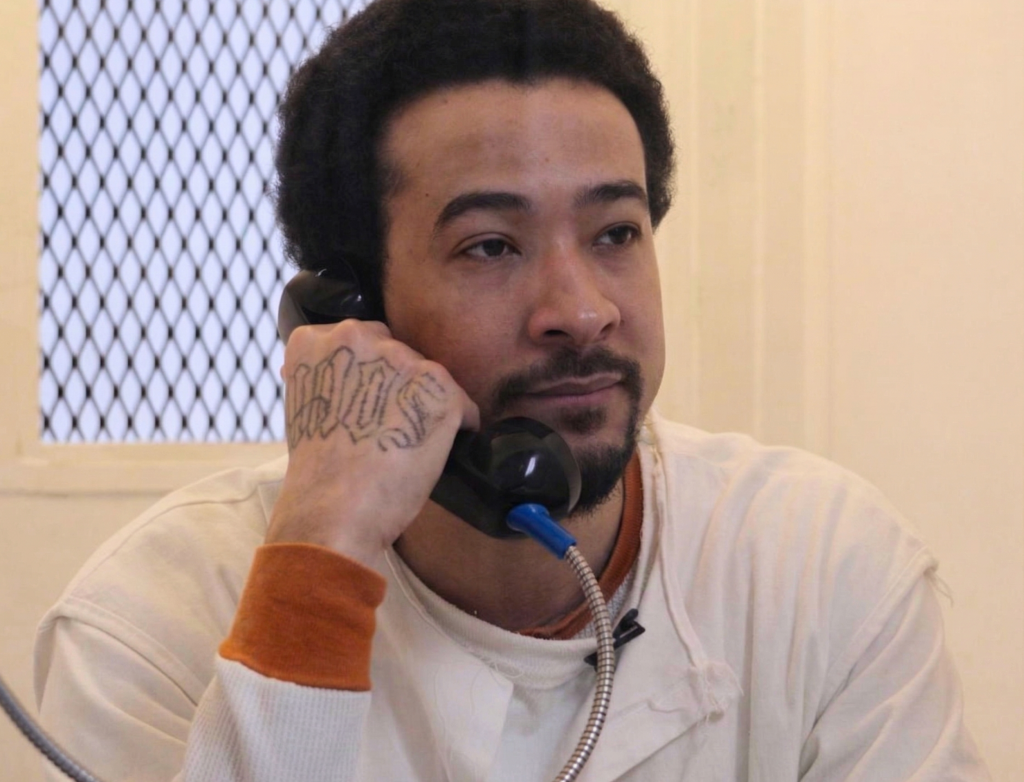
Curtis Riser had some concerns about the problem of wrongful convictions. He wasn’t the only potential juror to raise this point ahead of the 2009 capital murder trial of James Broadnax, in which the Dallas County District Attorney’s Office was seeking death, but attorneys for the state used one of their limited peremptory strikes to keep Riser off the jury.
Prosecutors for the state have said they struck him from the jury pool because of his stated concerns, but their notes tell a different story. “Only concern … age + race,” an attorney for the state wrote on his jury questionnaire.
Aqwana Long said her feelings about capital punishment were mixed, but she clarified she meant it should only be applied in some cases. Rating her approval of the death penalty on a scale of one to 10, she chose seven. Still, the state rejected her.
Dedric Morrison, who said he believed the death penalty was appropriate in “some murder cases,” seemed to prosecutors like he might be sympathetic to a defendant who was intoxicated at the time of the crime. This, according to the state, was enough to exclude him from the jury pool.
Riser, Long, and Morrison are all Black. They had similar answers and beliefs to potential jurors who were white, yet they were struck while their white counterparts were not. Attorneys built an all-white jury to try Broadnax, a Black teenager, until the trial judge defied protocol and reinstated one of the other previously struck Black jurors. The judge didn’t go so far as to imply that the prosecution was racially profiling, but stepped in after prosecutors had used almost half of their allowed challenges to cull all seven of the potential Black jurors from the pool.
James Broadnax (Broadnax legal team)
In front of what ended up as a nearly all-white jury, prosecutors would argue that Broadnax and his cousin had robbed two white men—26-year-old Stephen Swan and 28-year-old Matthew Butler, both producers of Christian music—and that Broadnax had shot and killed the pair outside of a recording studio in Garland on June 19, 2008.
Broadnax had confessed to shooting the men, and the jury returned a guilty verdict. One juror recently stated, “It seemed to be an open and shut case.”
During the punishment phase, where jurors in capital murder cases are asked to determine whether the defendant should get the death penalty or life in prison, prosecutors presented photos and spiral notebooks containing Broadnax’s handwritten rap lyrics. They included references to murder and robberies, and the prosecution held them up as yet another confession—and a sign that Broadnax was a dangerous man who would continue to pose a threat to society if allowed to live. The jury opted for death.
Broadnax, 37, is scheduled to be executed by the State of Texas on April 30. His lawyers are still fighting to save his life, arguing things like the racial imbalance of the jury and prosecutors’ presentation of the rap lyrics constitute major problems with the trial and conviction.
“The troubling aspects of the rap lyrics issue are magnified by the way that the jury selection was handled,” said Jim Marcus, a capital appeals expert with the University of Texas Capital Punishment Clinic, who has consulted on Broadnax’s case.
Then, last month, those longstanding issues were joined by another. Broadnax’s cousin, who is serving a life sentence without the possibility of parole for his role in the armed robbery, confessed that he was actually the shooter.
On June 19, 2008, a bicyclist on his way home from work at around 1 a.m. spotted two men lying on the ground outside of a recording studio. He reported what he saw to firefighters at a nearby station, who discovered the two men were dead from gunshot wounds.
Later that day, in Dallas, Broadnax and his cousin Demarius Cummings were telling people about a robbery they’d committed. When one of these people, a family friend, saw on the news that there had been a double murder, she made the connection and called the police, according to court documents. Officers pulled over Broadnax, who had driven a car belonging to one of the dead men to Texarkana.
Broadnax was arrested and taken to jail in Dallas County, as was Cummings. There, they both told reporters that Broadnax had shot and killed the men.
The state opted to try the men separately. They would both face capital murder charges: Broadnax as the shooter and Cummings under the state’s Law of Parties, which can hold responsible anyone involved in a felony if it leads to murder. The state was seeking death for Broadnax, and life without parole for Cummings. Broadnax faced trial first.
At trial, the jury saw recordings of Broadnax confessing his involvement to reporters on TV. His lawyers contend he was high on PCP when he made these statements. But they were enough for the jury.
There was some forensic evidence in the case, but it contradicted Broadnax’s story. On the gun and one of the victims’ bodies was Cummings’ DNA. But Broadnax’s wasn’t on the weapon or either of the victims, despite the fact that he allegedly pulled the trigger.
It would be nearly two decades before Cummings would explain the discrepancy: The reason the forensic evidence tied him to the gun and not Broadnax is because he was, in fact, the one who planned the robbery and shot the two men.
On March 11, 2026, Cummings signed a written confession. He said he’d convinced his cousin to take the blame for the shooting, since Cummings had a significant criminal history, while Broadnax didn’t. The one blemish on the latter’s record was for marijuana possession. Cummings said he decided to come clean after he found out his cousin had an execution date.
“The fact that James received a death sentence for these crimes, while I was the one who shot the victims, has been weighing on my conscience, particularly as I have become more spiritual during my years in prison,” he wrote in the statement, which was first reported by the Dallas Morning News in March.
Given the news, Broadnax’s lawyers once again asked the Court of Criminal Appeals (CCA) to consider the case.
The victims’ mothers have come out in support of Broadnax’s execution moving forward, despite the new confession. Theresa Butler posted on social media that the new evidence was a “Hail Mary Pass” and wasn’t true.
“Don’t believe that the latest fake confession, after 17 years, is going to change the cold blooded killer’s planned execution date,” she wrote.
The CCA, too, was unmoved. Earlier this month, the state’s top criminal court dismissed Broadnax’s application without reviewing the merits.
But an open question remains. Prosecutors explicitly did not try Broadnax under Texas’s Law of Parties. The jury convicted him of being the actual killer, and it didn’t deliberate on whether he bore responsibility as a party to the crime.
In situations like this, the U.S. Supreme Court has ruled that a jury must determine a non-killer showed reckless indifference to human life in order to impose a death sentence. On April 20,, Broadnax’s lawyers asked the Supreme Court to consider whether the jury’s lack of such a finding should halt Broadnax’s execution.
“Mr. Broadnax did not kill anyone, and no jury has determined whether he had the mental state this Court has determined is required to sentence a nontriggerman to death,” they wrote.
James Broadnax was not a famous rapper when police picked him up in 2008, but his case has now caught the attention of some major artists.
In March, major rappers including Travis Scott and Killer Mike filed briefs in support of Broadnax with the U.S. Supreme Court. They—along with more than three-dozen more artists, arts organizations, and scholars—took issue with the prosecution’s use of lyrics as evidence of a crime or a legally defined state of mind.
In one brief, supporters wrote that hip-hop is “one of the most important forms of cultural expression in American history,” but still rap lyrics get mischaracterized in trial as “literal rather than metaphoric expressions,” as in Broadnax’s case.
Broadnax’s own attorneys wrote to the Supreme Court that using rap lyrics in criminal trials amplifies racial bias and transforms “artistic expression into a death warrant.”
Genres of rap that feature aggressive lyrics, scholars say in one of the petitions, reflect young Black artists seeking a sense of control in an environment of economic hardship and police violence.
“The desire to project a sense of authority, even if fictional, helped explain the rise of gangsta and other subgenres of rap that featured violence and criminal behavior: they allowed young men of color to create a poetic world in which they were masters of their environments,” wrote the scholars. “Equally important, audiences understand rap music is—like gangster films, western movies, horror novels, or even pro wrestling—a type of entertainment.”
The Dallas prosecutors who brought forward Broadnax’s drafted lyrics were part of a larger trend. Rap lyrics have been used in hundreds of trials since the 1980s, according to research led by professors Erik Nielson and Andrea Dennis.
This has attracted a wave of dissenters: those who say rap lyrics should be prohibited from being used as evidence in court cases for various reasons, including risks of racial bias and threats to free expression.
Young Thug is among the rappers who have had their lyrics used against them in court. (Shutterstock)
Broadnax’s legal team also took this issue to the Supreme Court. They asked the justices to consider whether, by presenting rap lyrics as evidence that a Black defendant is dangerous and violent, prosecutors violated the due process and equal protection clauses of the U.S. Constitution.
This issue has come up in Texas before. In 2024, the CCA ruled on the case of Larry Hart. Judges determined that a trial court should not have let prosecutors show jurors rap videos or bring up the defendant’s lyrics, saying it was prejudicial.
At one point during Hart’s trial, while being questioned about his lyrics on the stand, he replied to the prosecutor, “It’s—it’s just a song, ma’am.”
Broadnax’s attorneys attempted to leverage this decision to get the Supreme Court to reconsider the use of rap lyrics in Broadnax’s case, but they were unsuccessful.
As of April 22, there are still some doors open for Broadnax. Three petitions are pending before the U.S. Supreme Court, related respectively to his cousin’s confession, to the race-based jury selection, and again to the use of his lyrics. The Texas Board of Pardons and Paroles is also considering a clemency petition, which asks for Broadnax’s sentence to be commuted or for a 180-day reprieve from the threat of execution.
Edith Clements, one of the jurors who sentenced Broadnax to death, wrote a letter to the parole board. In it, she said she wouldn’t have chosen the death penalty if she had known Cummings was the shooter. She writes that she has visited Broadnax on death row and apologized for her role in sealing his fate. Broadnax told her he wasn’t angry. “He is better not bitter,” she wrote.
The post A Looming Execution Raises Questions of Race, Responsibility, and Rap appeared first on The Texas Observer.
Leave a Reply