A rural hospital executive, a mom of a child on Medicaid and other advocates spoke Thursday at the Minnesota State Capitol in response to the federal government’s recent threat to withhold some Medicaid funding.
“Every dollar that doesn’t come in is going to have to be balanced on the budget, and that may mean cuts to services, cuts to access, individual lives being impacted,” said Josh Berg, director of services and strategic growth at Accessible Space Inc., a housing provider for people with disabilities.
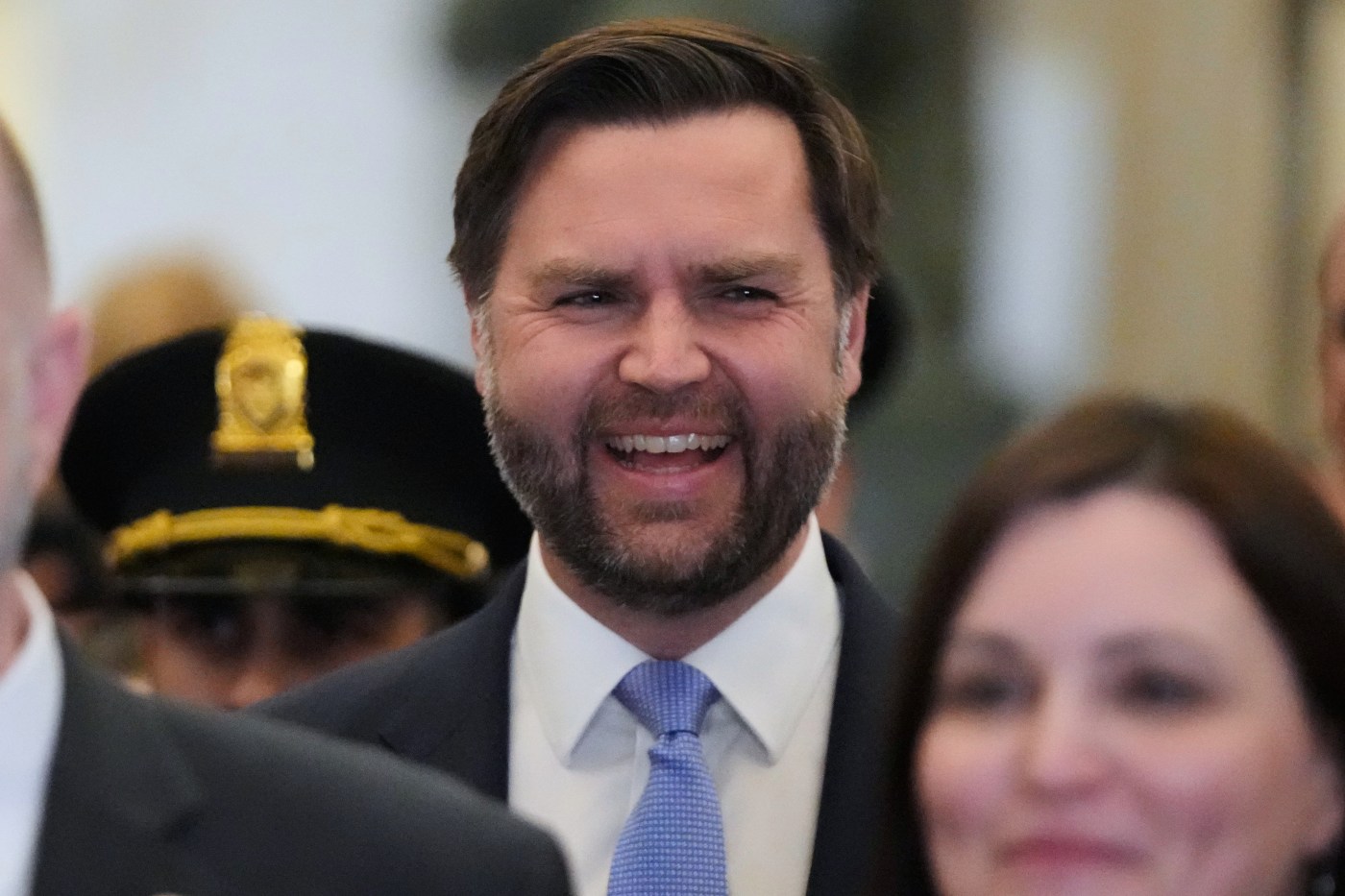
On Wednesday, Vice President JD Vance announced the federal government would withhold $259 million in Medicaid funding from Minnesota “until the state government takes its obligations seriously,” Reuters reports.
That amount is roughly 8% of the federal government’s quarterly share of Minnesota Medicaid funding, said Matthew Anderson, a Twin Cities health policy professor who spoke at the press conference in a personal capacity.
“That’s no small amount, especially for a state that’s already facing at least, in the next biennium, significant budget challenges,” he said.
The withholding is the Trump administration’s latest action in response to cases of alleged fraud within some of Minnesota’s social safety net programs, including Medicaid.
While speakers at Thursday’s press conference — organized by the This is Medicaid coalition — said it’s unclear what the short-term impact will be on Medicaid patients and their service providers, the withheld funding adds to ongoing concerns about changes imposed by the Trump administration’s “One Big Beautiful Bill,” which was signed into law in July.
“Whether it’s a loss of services, a loss of coverage or the ultimate loss of a hospital, the magnitude of change that’s coming under HR 1 puts my hospital, all rural hospitals and effectively all Minnesota hospitals into a precarious position,” said Rachelle Schultz, president and CEO of Winona Health, whose rural southeast Minnesota health system gets 20% of its revenues from Medicaid.
Medicaid, known in Minnesota as Medical Assistance, is the state-federal public health insurance program that covers roughly 1.2 million low-income and/or disabled Minnesotans.
In recent months, the Minnesota Department of Human Services has taken several actions to address fraud, including ending the state’s housing stabilization services program, auditing some Medicaid service claims for providers in the 13 categories deemed “high-risk” for fraud and, later this year, visiting and revalidating all of those providers.
In a written statement, Minnesota Human Services Commissioner Shireen Gandhi said that the withheld funding “is part of a broad and sustained attack by the federal government on Medicaid in Minnesota.”
“Deferring $259 million will significantly harm the state’s health care infrastructure and the 1.2 million Minnesotans who depend on Medicaid,” she continued. “The federal government chose to ignore more than a year of serious and intensive work to fight fraud in our state.”
The state’s efforts have put many service providers in tight financial positions, said Jen Diederich, chief compliance officer at MAC Midwest, as the pre-payment audits meant delayed reimbursements for her nonprofit’s 18 autism services centers. Further fraud-prevention steps also come with price tags.
“It’s a $700 per center revalidation fee,” Diederich said. “We need to apply for provisional licensing … which is about $1,200 per location, which means that between February and (the) May 31 deadline, we’ll have to pay almost $35,000 in fees alone.”
Financial strain, Diederich said, is likely why only six of the state’s 500 autism treatment centers, so far, have applied for the newly required licenses.
“Minnesota’s children with autism deserve access to their medically necessary treatment, delivered by accountable providers,” she said. “We ask that we continue to stay focused on making this about people and not politics.”
Some of Thursday’s speakers voiced concerns that, if the federal government reduces its share of Medicaid funding, state lawmakers will have to cut back on what — or who — the program covers.
“Medicaid funding is interconnected, and when cuts are made to one area, it potentially affects all of them,” said Sarah Lindbo, family and patient engagement specialist at Gillette Children’s Hospital. She spoke about her teenage daughter, Greta, who has quadriplegic cerebral palsy and epilepsy.
Lindbo said Greta’s supplemental Medicaid covers some services that private insurance itself does not, including her augmentative and alternative communication, or AAC, device.
“Private insurance does not deem communication medically necessary,” Lindbo said. “Without that device, Greta simply would not have her voice.”
Leave a Reply