A new report examining fraud risk in Minnesota government programs describes longstanding vulnerabilities dating back to the 1970s and repeated inaction by state leaders despite nearly a half-century of warnings.
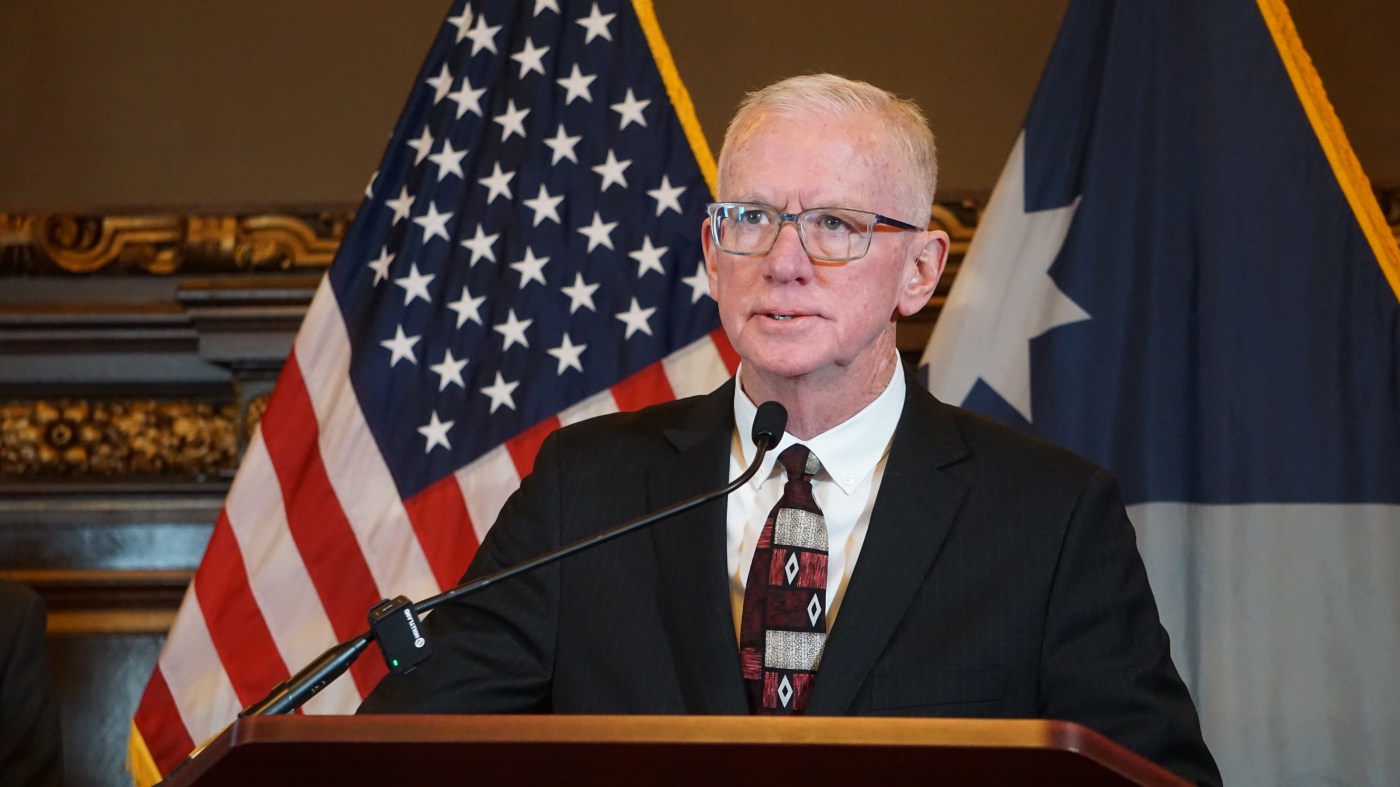
Gov. Tim Walz’s director of Program Integrity, Tim O’Malley, on Monday released what he described as a “roadmap” to address those vulnerabilities, which he said were driven in large part by a culture in state agencies “more based on compassion than compliance.”
“That’s misplaced. If state workers want to provide services, want to directly help people in need, then they should go work for a provider. They should deliver the wheelchairs. They should do the bed baths. They should take people to medical appointments,” he said at a news conference announcing the report’s findings. “The state has a responsibility to make sure those things happen by protecting state (taxpayer) money.”
Every governor and Legislature had been made aware of problems in programs for the last 50 years, according to the review, but plans to strengthen protections against fraud in state welfare programs were never executed effectively.
The review can be read at https://tinyurl.com/4z3ufffv.
‘Inadequate accountability’ in agencies
O’Malley’s report comes after allegations of hundreds of millions of dollars of fraud at the Department of Human Services and Department of Education, and speculation that the fraud could reach the billions. Overall, he found that “inadequate accountability” in agencies was largely to blame.
“Recent events have revealed longstanding vulnerabilities in multiple facets of state administration and leadership and priority setting to specific elements such as enrollment, oversight, data sharing and investigative capacity,” the report said. “These weaknesses have been exploited repeatedly over decades by organized networks of providers, intermediaries and recipients, resulting in significant financial losses, erosion of public trust and inadequate delivery of essential services to vulnerable Minnesotans.”
Questions remain about who exactly has been held responsible for fraud in state agencies — if anyone. Past reports from the nonpartisan Office of the Legislative Auditor have pointed to issues with “inadequate oversight” and “pervasive noncompliance” in how the state handles payments and grants.
In December, Walz said there were state employees who should have “done more” and that they were “no longer working in the state.”
Former Human Services Commissioner Jodi Harpstead resigned in January this year, before federal prosecutors brought charges in connection with significant fraud in children’s autism programs and housing stabilization services supported by the agency.
In late 2022, Education Commissioner Heather Mueller announced she would not seek reappointment in Walz’s second term, months after the first charges in the $250 million Feeding Our Future case.
And days before federal prosecutors announced charges tied to housing stabilization in September, it emerged that the assistant commissioner with the program was no longer working with the agency.
Neither DHS nor Walz has said whether Eric Grumdahl, assistant commissioner of Homelessness and Housing Supports, lost his job due to fraud in the program, which was expected to cost $2.6 million a year when it launched but ballooned to over $105 million in 2024.
Fraud czar
Walz, a Democrat, appointed O’Malley in December as scrutiny mounted on his administration’s handling of widespread fraud in state government programs. As program integrity director, O’Malley was tasked with creating fraud prevention measures across agencies and working with the outside financial audit firm WayPoint.
O’Malley was superintendent of the Minnesota Bureau of Criminal Apprehension under Republican Gov. Tim Pawlenty. He’s a former FBI agent and interim chief judge for the state Court of Administrative hearings, and for a decade handled allegations of sexual misconduct by clergy in the Archdiocese of St. Paul and Minneapolis.
When Walz announced his appointment of O’Malley as state fraud czar on Dec. 12, federal investigators estimated Minnesota had lost hundreds of millions of dollars to fraud in recent years, with former assistant U.S. Attorney Joe Thompson speculating total theft could top more than $1 billion.
That estimate ballooned to at least $9 billion just a week later when Thompson announced another round of criminal charges in Medicaid fraud cases. Thompson told reporters he believed more than half of the $18 billion in federal money the state distributed through “high-risk” Medicaid programs since 2018 could have been lost to fraud.
Officials with the Minnesota Department of Human Services have disputed that estimate. Walz, who suspended his campaign for a third term in office just weeks after Thompson’s remarks, described the $9 billion figure as speculative and defamatory.
The report recommends changing agency culture, boosting accountability measures, modernizing technology and oversight.
It also recommends that state lawmakers, who returned to the state Capitol last Tuesday for the 2026 legislative session, pass several bills to support a “modern fraud‑prevention infrastructure.”
They include ending direct appropriations — which present a high risk of fraud — as well as ending grants without dedicated fraud prevention funding and requiring bills that create or modify programs to have a fraud prevention component.
O’Malley told reporters Monday that he had “independence and autonomy” to go where the facts took him and that the governor had not tried to influence his work.
Senate GOP leader calls report ‘lip service’
Senate Minority Leader Mark Johnson, R-East Grand Forks, called the report an example of Walz “lip service” on fraud, saying it was little more than a compendium of existing public issues in state programs.
“They don’t have to wait for the Legislature. They have the tools to really get started if they need help,” he said. “We’re happy to figure out a bipartisan way forward. But the response has been so lackluster. We need to get going on this.”
O’Malley’s hiring was the latest in a series of moves Walz has made to address fraud allegations in state agencies.
In January 2025, the governor directed the creation of a fraud investigation unit at the BCA. The Department of Human Services moved to shut down a Medicaid-funded housing stabilization program beset by fraud after news emerged in July of a federal investigation into several providers.
Earlier this month, a Walz-ordered third-party audit assessing the 14 Minnesota Medicaid programs at high risk for fraud found the state could safeguard $1 billion in the next four years by changing its policies on payment reviews.
State officials described the report as the “first phase” of developing a payment review process for the high-risk programs.
Gandhi permanent appointment
Before O’Malley shared the findings of his report on Monday, Walz announced the permanent appointment of Shireen Gandhi as commissioner of the Minnesota Department of Human Services, which has been the subject of significant fraud allegations recently.
Shireen Gandhi. (Courtesy of the Minnesota Department of Human Services)
The post had been vacant for more than a year. Gandhi had served as interim commissioner since the resignation of former Human Services Commissioner Jodi Harpstead in January 2025, before federal prosecutors brought charges in connection with significant fraud in children’s autism programs and housing stabilization services supported by the agency.
Walz praised Gandhi for her leadership during troubled times at the agency.
“Over the past year, she has demonstrated steady, decisive leadership at the Minnesota Department of Human Services, strengthening program integrity, rooting out fraud, and ensuring taxpayer dollars reach the Minnesotans who rely on these services,” he said in a news release.
Gandhi will serve in the remaining months of the Walz administration. The governor, who is no longer seeking a third term, leaves office next January.
Republicans welcomed the appointment, calling it “long overdue,” though they expressed skepticism about the governor’s choice.
“Commissioner Gandhi has worked at DHS for years, including in compliance and oversight, while billions of taxpayer dollars were lost to fraud. For the past 13 months, she has served as interim commissioner as Minnesota’s fraud epidemic has made international news,” House Republican Floor Leader Harry Niska, R-Ramsey, said in a statement. “That’s not accountability. That’s failure rewarded.”
Related Articles
Fraud, immigration enforcement bills face early snags at MN Capitol
Minnesota Capitol rally calls for state aid following immigration crackdown
Data center foes bring swelling opposition to Minnesota Capitol
No ‘masked secret agents,’ St. Paul City Council says in passing ordinance
MN 2026 Legislature: How can you follow activity or even get involved?
Leave a Reply