
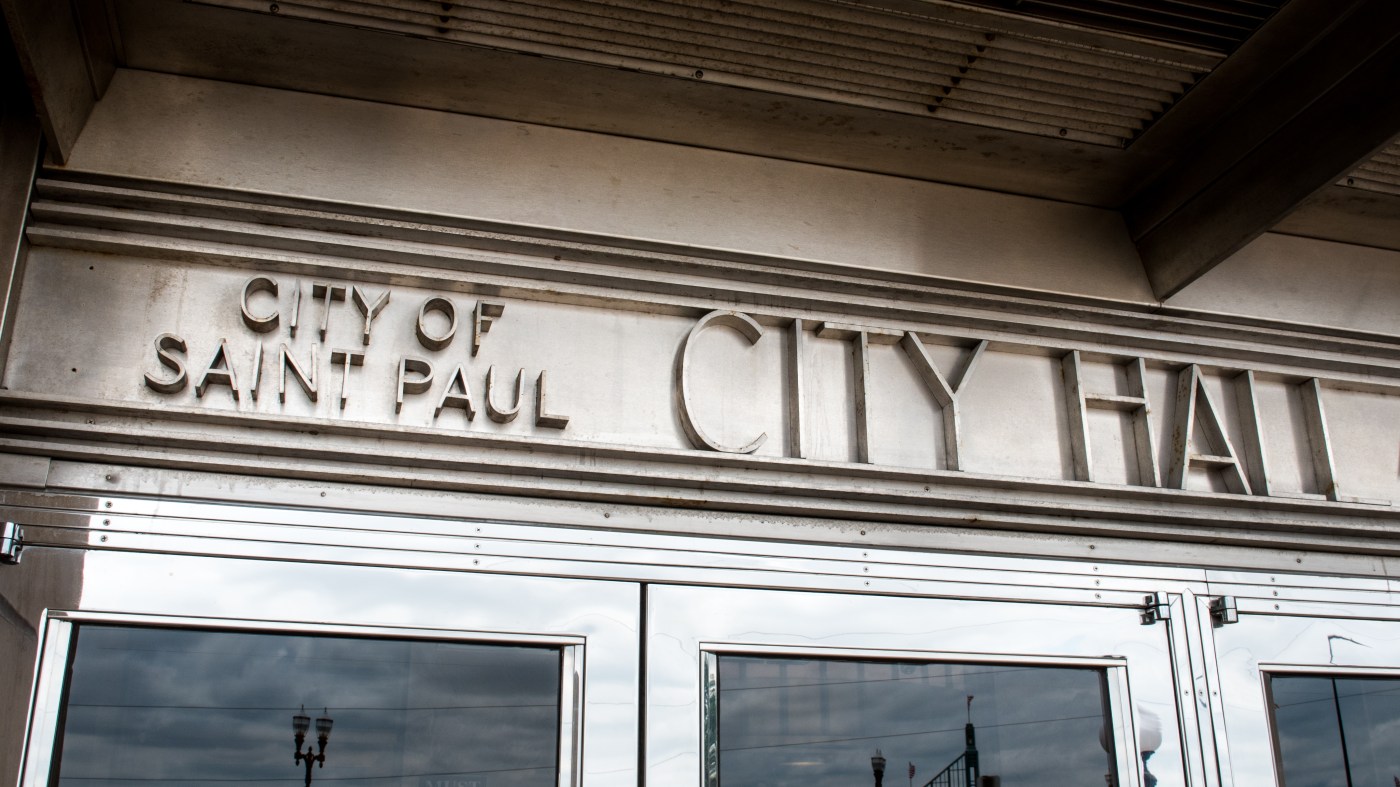
No, St. Paul’s drive-through eateries and pharmacies aren’t going away anytime soon, but a compromise proposal before the St. Paul City Council this month would further regulate them. The compromise comes more than a year after a proposed ban on new drive-throughs was put on hold.
The Capital City’s many drive-throughs have been the subject of discussion and consternation for years, with the issue coming to a head between about 2017 and 2022 when a notorious Starbucks drive-through off Snelling Avenue was blamed for heavy traffic backups into Marshall Avenue’s driving and bicycle lanes alike.
Former Minnesota Senate Majority Leader Amy Koch was hit by a vehicle in 2019 as she walked past the Starbucks drive-through exit lane, fracturing her left wrist in the incident.
“Snarshall,” as the intersection became known by some, resulted in Starbucks eliminating the drive-through entirely following years of failed traffic management efforts and heavy pressure from the city. A Taco Bell north of Snelling and University avenues has drawn its share of issues over litter, traffic and late-night noise.
Zoning study
The St. Paul Planning Commission initiated a zoning study around drive-throughs in March 2024, and after more than a year of hearings and staff review, a proposal that would have banned future drive-throughs was put on hold by the city council in November 2024.
Among other demands, pedestrian advocates had called for the city to require drive-through eateries to open their doors to sit-down customers, instead of reverting to a drive-through-only business model, as some do at night.
Business advocates had argued at the time that given the city’s difficulties in bouncing back from the pandemic, limiting business opportunities was the wrong strategy toward improving St. Paul’s tax base. Several restaurateurs told the city that during pandemic lockdowns, drive-through business was the only thing that kept them afloat.
The public council hearing, which was left open in November 2024, will effectively resume on Wednesday.
“A drive-through ban is off the table,” said City Council Member Saura Jost, in a written statement on Monday. “We’re raising the bar to improve quality of life with a focus on pedestrian safety. We aim to attract the development that we want to see and to avoid another Snarshall Starbucks.”
Given substantial changes to the drive-through proposal, the hearing likely will continue on Feb. 25, and a final council vote is possible that week or thereafter.
New rules around stacking, walk-up windows
Instead of banning drive-throughs, the ordinance amendment to be considered by the council this month spells out the required number of off-street “stacking” spaces in queuing lanes (six for banks and pharmacies, 12 for fast-food, 14 for coffee shops) and emphasizes that “in no event are vehicles permitted to stack into public sidewalks, trails, bicycle lanes, alleys or streets.”
All stacked and waiting cars would have to be contained on the property, and additional stacking beyond the minimums could be required by a zoning administrator following site plan review by city staff.
Discussions over the past two years or more have roped in members of the advocacy group Sustain St. Paul, which favors greater real estate density, sustainable land-use and pedestrian improvements, the city’s Business Review Council, the St. Paul Area Chamber and individual restaurateurs.
“This has been quite a dizzying and convoluted journey that’s been punted a couple of times, but I think it’s going to land in a pretty good place,” said Luke Hanson, co-chair of Sustain St. Paul, on Monday. “There’s a lot of competing interests that the city is trying to balance here.”
Some business advocates are still not fully on board. Compared to the 2024 proposal, “it’s more workable, but we still have concerns about it,” said John Perlich, a vice president of government affairs with the St. Paul Area Chamber, in an interview Monday.
“At a time when we need to strengthen our local economy, policy decisions should make it easier, not harder, for a business to invest and grow,” Perlich said. “The city should be doing everything that is possible to encourage business development and expansion, and this proposal still moves us away from that goal.”
A 2024 count found 77 drive-throughs in operation throughout St. Paul, and the rule changes proposed at the time would convert 17 of them into “non-conforming uses.” While they’d be allowed to remain in operation under grandfathering rights, business owners noted that non-conforming properties have a tougher time finding financing for improvements.
Critics have argued that drive-throughs are an impediment to disabled pedestrians and parents with children, who are forced to navigate between cars when drive-through traffic blocks pedestrian access. On the other hand, advocates on both sides of the issue have said individuals with mobility challenges are the very customers who would have the most trouble accessing food in a hurry if a drive-through went away.
“One of the perspectives we bring to this is the amount of tax revenues per acre that drive-throughs generate compared to other, more intense land-uses (such as apartment buildings), especially in a moment where everyone is feeling the pain of property taxes in St. Paul,” said Hanson, who acknowledged the city was working hard to promote public safety, support small businesses and improve pedestrian access. “I think drive-throughs are bad land use, they’re not great for access and walkability, but people with mobility issues really rely on them.”
What the new measure calls for
In addition to new rules around stacking, drive-throughs would be required to offer some level of pedestrian access, but not at all hours. In other words, drive-throughs could continue to operate into the night, long after their on-site dining areas close to the public. The thinking there is that requiring lightly-staffed eateries to keep doors open toward bar close could expose fast food workers to public safety concerns, and rather than take on that liability, many chains would simply prefer to shutter the location entirely or relocate outside the city.
Under the new changes, walk-up windows would not be required, but they are further defined in the proposal, which says walk-ups may not be situated in a way that interrupts pedestrian flow on sidewalks. A drive-through window would not be allowed to double as a walk-up.
For bank, pharmacy and credit unions, drive-through lanes and service windows would have to be located to the side or rear of buildings and at least 60 feet from a residentially-zoned property, unless that property sits across a major arterial street, or it’s somehow buffered by the building the drive-through is attached to. An exception would be if the residential units are situated in the same building.
If the drive-through is for food and beverages, the distance requirement increases to 120 feet.
Drive-through lanes would not be allowed within 300 feet of a light rail, streetcar or bus rapid transit station, or a planned station associated with a fully funded or federally-approved transit project.
In T3-T4 “traditional neighborhood” districts that blend retail and housing, the drive-through service windows must be part of a building that is at least four stories in height and 40,000 square feet in floor area.
Related Articles
MN Legislature: Bonding requests from east metro counties, cities
St. Paul City Council: Hotels should tell ICE they’re not welcome
Letters: Don’t mistake TIF subsidies for real growth in St. Paul
St. Paul: Lake Phalen event seeks to shine light over ICE
A St. Paul to Kansas City passenger train? St. Paul City Council urges a go
Leave a Reply