By SAFIYAH RIDDLE and VALERIE GONZALEZ
As the Trump administration intensifies immigration enforcement nationwide, a wave of high-profile arrests — many unfolding at private homes and businesses and captured on video — has pushed one legal question into the center of the national debate: When can federal immigration agents lawfully enter private property to make an arrest?
Related Articles
US accuses Russia of ‘dangerous and inexplicable escalation’ of war in Ukraine as Trump seeks peace
Trump holds off on military action against Iran’s protest crackdown as he ‘explores’ Tehran messages
FBI says it has found no video of Border Patrol agent shooting 2 people in Oregon
New video shows the minutes before immigration officer fatally shoots woman in Minneapolis
Court says Trump administration illegally blocked $7.6B in clean energy grants to Democratic states
That question has taken on new urgency in cities like Minneapolis, where thousands of federal agents are operating on the streets amid protests, confrontations and a fatal shooting, sharpening scrutiny of the legal authority immigration officers rely on when they arrive at the front door.
At the heart of the debate is a legal distinction largely unfamiliar to the public but central to immigration enforcement.
Most immigration arrests are carried out under administrative warrants, internal documents issued by immigration authorities that authorize the arrest of a specific individual but do not permit officers to forcibly enter private homes or other non-public spaces without consent. Only criminal warrants signed by judges carry that authority. Legal experts say the administration’s aggressive enforcement push, combined with public awareness of those limits, is increasingly turning door-knock encounters into flashpoints, fueling confrontations that are now playing out in cities across the country.
Here is what to know about the limitations on the warrants that authorize most immigration related arrests.
Immigration warrants typically don’t authorize entry onto private property
All law enforcement operations — including those conducted by Immigration and Customs Enforcement and Customs and Border Protection — are governed by the Fourth Amendment of the U.S. Constitution, which protects all people in the country from unreasonable searches and seizures. That means law enforcement is required to have a warrant before searching one’s private property or arresting someone, regardless of immigration status.
But not all warrants are the same. Typically, arrests carried out by Department of Homeland Security agencies are authorized by administrative warrants — sometimes known as immigration warrants — not judicial warrants.
Judicial warrants are issued by a court and signed by a magistrate or a state or federal judge. These warrants allow a relevant law enforcement agency to apprehend a specified individual in any context — regardless of whether the person is on public or on private property. In other words, law enforcement is legally allowed to enter and search a home or business to make the arrest without the consent of the property owner once a judge signs off on the arrest.
By contrast, the administrative warrants used in most immigration operations are sanctioned by an agency, officer or immigration judge, and don’t allow law enforcement to forcibly enter private property to detain someone.
That means people can legally refuse federal immigration agents entry into private property if the agents only have an administrative warrant.
A federal immigration officer deploys pepper spray as officers make an arrest Sunday, Jan. 11, 2026, in Minneapolis. (AP Photo/John Locher)
There are limited exceptions, some of which include if someone is in immediate danger, an officer is actively chasing a suspect or if someone is calling for help inside the residence. But those exceptions don’t apply in routine immigration arrests, legal experts say.
John Sandweg, a former ICE acting director, said officers are trained on what circumstances legally justify forced entry. But as the scope of ICE’s work has expanded, and more Border Patrol agents have begun conducting the work of ICE officers, there is a greater chance that agents will misapply the rules, he said.
“Your risks of all of these types of incidents increase dramatically when you take officers out of their normal operating environment and ask them to do things that they have not been trained to do, because it’s not part of their core missions,” Sandweg said.
Mounting tensions in Minneapolis
The thorny legal distinction between judicial and administrative warrants came to the fore on Sunday when immigration law enforcement raided a private home to make an arrest in Minneapolis, after clashing with protesters who confronted the heavily armed agents. Documents reviewed by The Associated Press revealed that the agents only had an administrative warrant — meaning there was no judge that authorized the raid on private property.
When asked, DHS Assistant Secretary Tricia McLaughlin didn’t provide a legal justification for the forced entry and arrest of the man, who is a Liberian national with a deportation order from 2023. She said his arrest was part of the administration’s efforts to arrest “the worst of the worst” and added that he had that a criminal history including “robbery, drug possession with the intent to sell, possession of a deadly weapon, malicious destruction and theft.”
McLaughlin didn’t specify whether he was convicted of any of those crimes, or whether his arrest was related to any criminal activity.
Vice president of policy at the National Immigration Law Center, Heidi Altman, said she couldn’t comment on that specific raid, but said that generally an officer entering a home without consent or permission could result in serious consequences.
“That is not just an illegal arrest. It’s numerous illegal actions by the officer themselves that could open up liability, not just for being sued, but potential criminal actions under state law as well,” she explained.
But in the current political climate, Altman said, it isn’t clear if there are any realistic avenues for accountability since the federal government would be responsible for investigating such a breech.
“There are layers of federal laws and regulations and policies prohibiting this kind of behavior. But then the second layer is: Is the federal government going to impose consequences?” she said.
On top of that, immigrants have less recourse after an illegal arrest or search, since the illegally obtained evidence can still be used in immigration court. It’s called the exclusionary rule, Altman explained, and the consequences that the officer may face would not undo the immediate consequences immigrants could face if they are quickly deported.
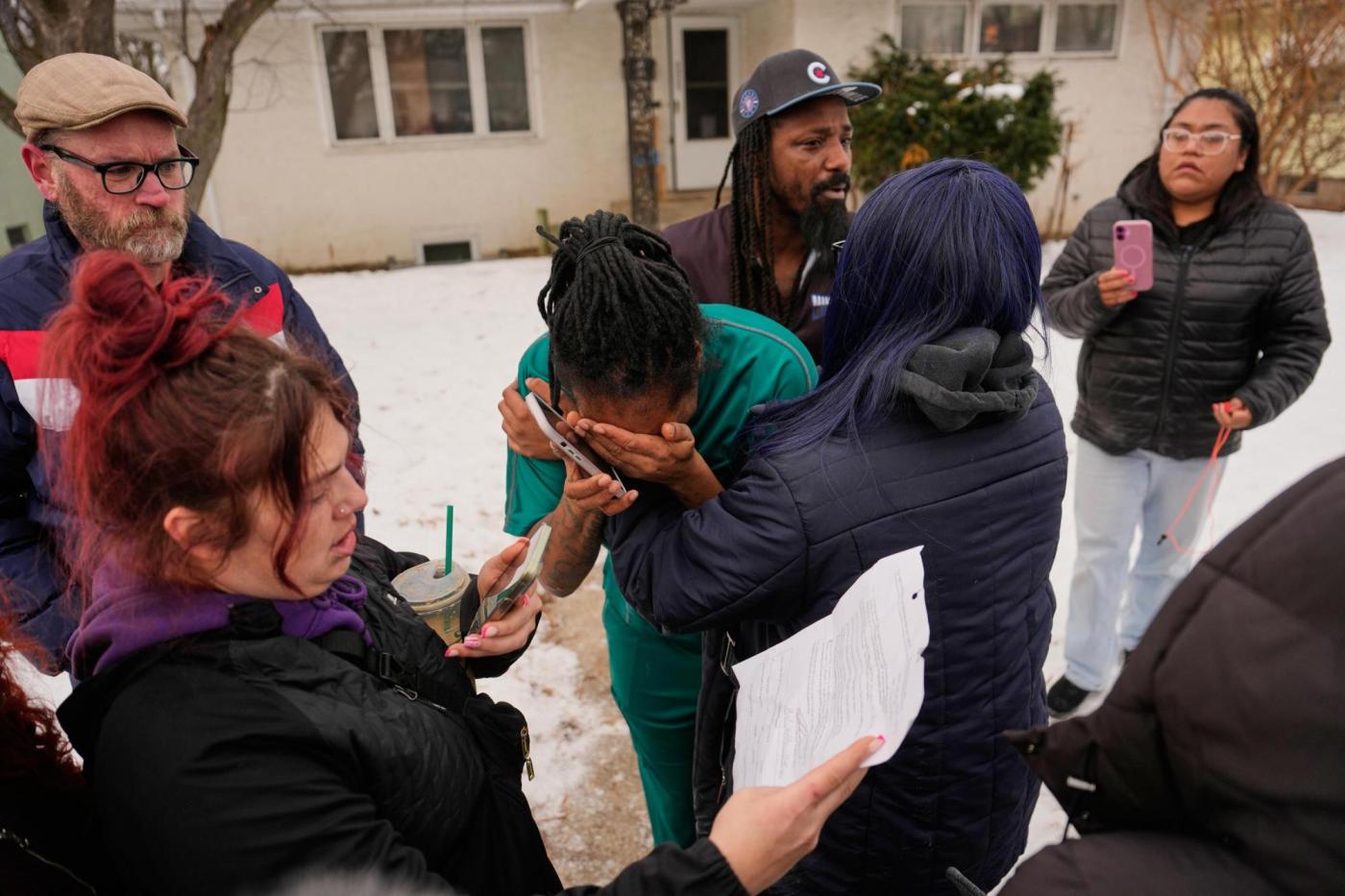
A family member reacts after federal immigration officers make an arrest Sunday, Jan. 11, 2026, in Minneapolis. (AP Photo/John Locher)
“As those legal challenges come and people are facing very, very quick detentions and deportations on the basis of these illegal arrests, there’s very little recourse in actual immigration court proceedings that allows people to have a judge disregard evidence or the actual arrest, even if it was done in this very violent, illegal manner,” Altman said.
‘Know-your-rights’ campaigns
ICE has long relied on “knock and talks” to make apprehensions, informally requesting residents to leave a home without giving any indication they plan to make an immigration arrest. As outlined in a 2020 lawsuit in which a federal judge found the practice illegal, officers tell their targets that they need them to step outside to answer a few questions. In one case, they told a woman that they were probation officers looking for her brother.
In response, activists, lawyers and local governments have launched “know-your-rights” campaigns around the country, attempting to educate people on the legal nuances of the extremely convoluted legal framework that is supposed to govern immigration law enforcement.
Many groups have published fact sheets and infographics on social media, while others facilitate meetings that go over constitutional protections that immigrants have — regardless of legal status — in interactions with federal agents.
Often groups will instruct immigrants to request to see a warrant before opening the door if an immigration officer knocks. The trainings also typically emphasize that an immigrant can refuse to open the door if law enforcement only has an administrative warrant.
Leave a Reply