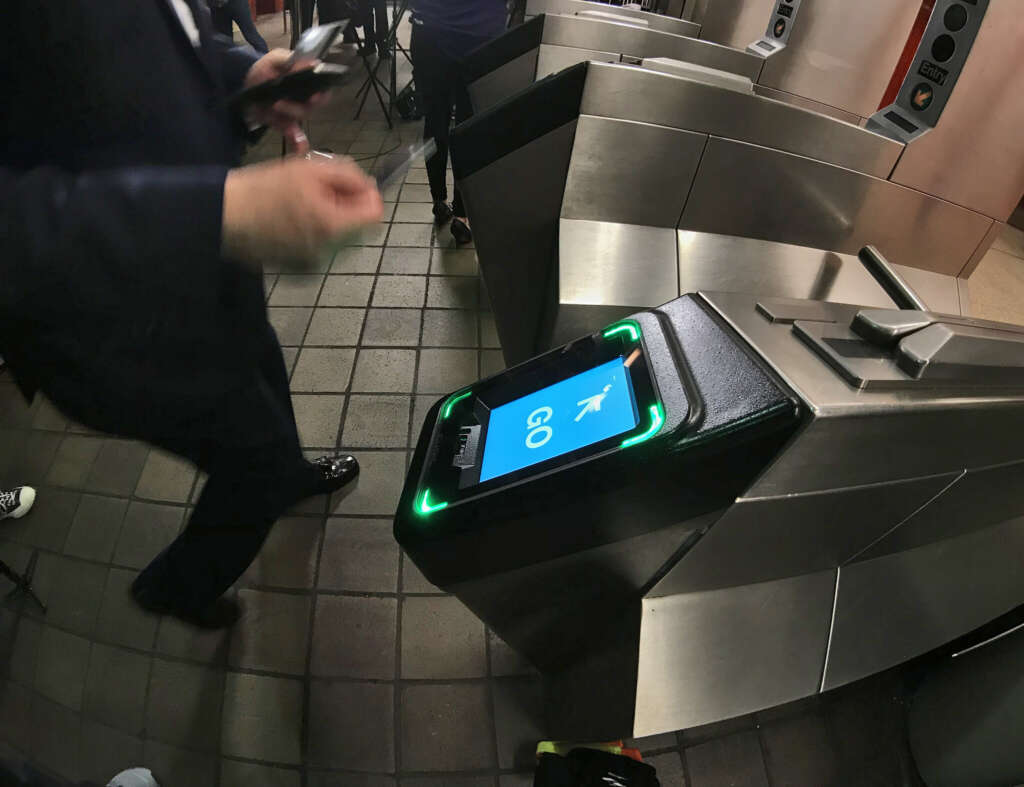
“With MetroCards no longer being sold after Dec. 31st, 2025, thousands of older New Yorkers must now navigate a system they did not choose and have not been guided through.”
(Marc A. Hermann / MTA New York City Transit)
The MTA’s transition from MetroCards to OMNY marks a major technological shift for New York City transit. But as the system evolves toward automation and convenience, one question remains: Who gets left behind?
For many older adults, especially those facing language and digital barriers, the rollout has brought confusion, anxiety, and new obstacles to accessing the public transportation they rely on daily for medical appointments, groceries, community programs, and social connection.
With MetroCards no longer being sold after Dec. 31st, 2025, thousands of older New Yorkers must now navigate a system they did not choose and have not been guided through.
Meanwhile, more changes are coming. In January 2026, fares will increase from $2.90 to $3, and from $1.45 to $1.50 for Reduced-Fare riders. At the same time, Mayor-elect Zohran Mamdani has pledged to make city buses fare-free, though cost and feasibility remain unclear. If New York is serious about equity and accessibility, OMNY must address the issues experienced by riders who depend on it.
At Homecrest Community Services, which has centers across Brooklyn in Bensonhurst, Sheepshead Bay, Sunset Park, and Bay Parkway, staff repeatedly hear the same concerns.
At a MetroCard Van event at Homecrest’s Bensonhurst Older Adult Center, staff heard firsthand from older adults about the challenges they face with OMNY. Some reported trying to swipe their new OMNY cards instead of tapping, while others were unsure if the beep and flashing light meant their fare went through. Without the MetroCard’s familiar balance display, many were left guessing whether they had enough value or had just paid twice.
The MTA has stated that next year’s updates will enable OMNY readers to display more visual cues. Riders can also check their OMNY balances online through the MTA’s website, which is also language accessible. However, it requires creating an account with an email address—something many older adults don’t have or find difficult to use. For them, OMNY vending machines are a more practical option. These machines offer language settings, but many who are less comfortable with technology find this initial step challenging.
“One client never uses her OMNY card,” said Rihan Wu, case manager at Homecrest’s Sunset Park Center. “Every time she rides, she asks someone else to borrow their card and pays them back in cash.” Her reason? She does not know how to use the machine.
Unlike the old photo Reduced-Fare Metrocards, the new OMNY cards have no identifying marker. “If I lose my card, how will anyone know it’s mine?” Yin Mui Pun, a 72-year-old community member, asked us. After losing her OMNY card once and facing a long, complicated process in an attempt to recover funds, Ms. Pun now adds no more than $10 at a time. “As a retiree, every dollar matters,” she said.
Starting in December 2024, OMNY Reduced-Fare cards were automatically mailed to eligible riders to replace the Reduced Fare MetroCard. However, in recent months, the mailing has stopped. While riders can still apply by mail, this process is often slow and unreliable. Now, older adults must visit a customer service center or a mobile sales vehicle to obtain a new or replacement card—a step that can be challenging for those with mobility or language difficulties.
Stephanie Kuang, deputy director of the social services division, shared how her 83-year-old client traveled to the 24/7 Customer Service Center at Coney Island to replace a lost MetroCard. Because the client does not speak English, Kuang provided a note explaining the situation and the service the client required.
Access-A-Ride users are also confused. Lisa Zhen, Homecrest’s director of social services division, reports complaints from clients that the notice sent to recipients with their new OMNY card does not explain that users must call Access-A-Ride to activate it. This means that many learn only at the turnstile that their card does not work.
When these issues surfaced repeatedly, Homecrest created a one-minute video in Cantonese and Mandarin showing how to use OMNY and check balances. While filming at the busy Bay Parkway N Train, multiple older adults approached us, asking for help reloading their cards. Community organizations should not have to fill the accessibility gaps left by a public transit system.
Given these issues, many older adults continue to rely on MetroCards as long as possible. As community advocates, we urge the MTA to address these gaps. The shift to OMNY could be a meaningful step forward, but only if it includes equity, multilingual support, and clear guidance for riders who depend on it most.
Wai Yee Chan is president and CEO at Homecrest Community Services. Alice Mo is the policy and advocacy manager at Homecrest Community Services.
The post Opinion: As MTA Moves From MetroCard to OMNY, Accessibility Must Come First appeared first on City Limits.
Leave a Reply