“Homelessness in New York won’t be solved by denial or tough love. We’ve tried those approaches, and they’ve all failed. The Mamdani administration has a choice: repeat the failures of the past or lead with compassion, collaboration and evidence.”
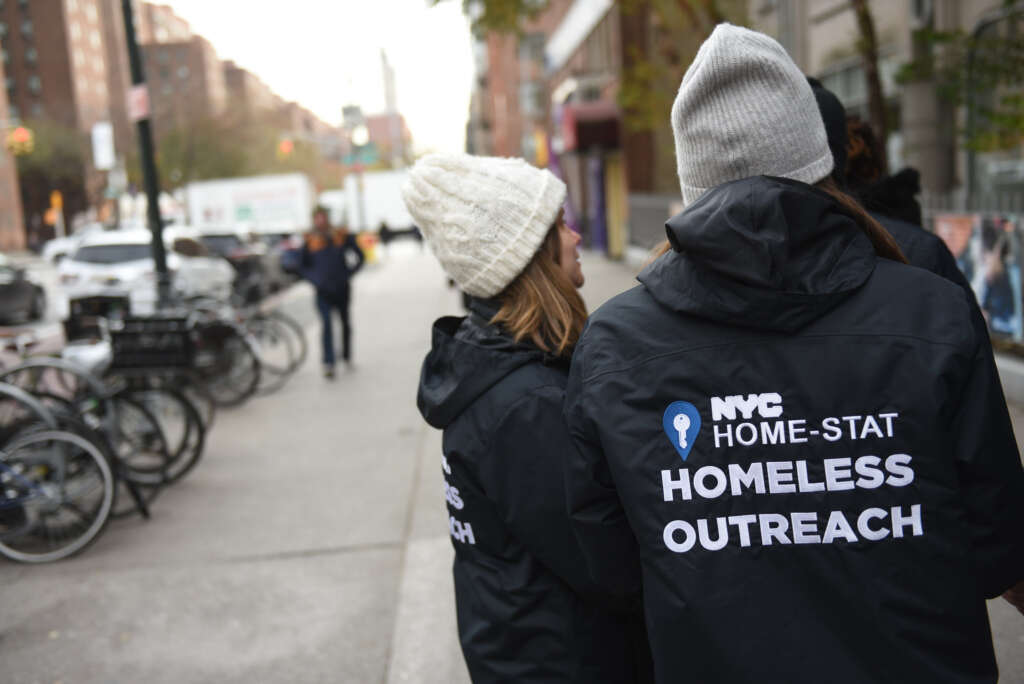
The city’s homeless outreach teams in 2019. (Michael Appleton/Mayoral Photography Office)
Last month, New Yorkers chose their next mayor. When Zohran Mamdani takes office, he will inherit a crisis that sees 125,000 people sleeping in shelters each night, enough to fill Madison Square Garden five times over.
Despite portrayals in the run-up to Election Day, New York’s homeless community is not a mob of violent criminals. In reality, New York’s unsheltered population is relatively small, representing less than 5 percent of the total homeless population across the five boroughs.
While some people do struggle with mental health issues and addiction, this is a public health crisis made worse by a housing crisis, not a public safety matter. More importantly, these unfortunate caricatures belie a larger, more uncomfortable truth: Shelter beds are overwhelmingly utilized by families, students and the working poor, who access temporary services because of sudden job loss, healthcare emergency, fire or another unanticipated crisis.
Our new mayor will soon confront this reality along with various funding overhauls by the federal government, including work requirements that will make it intentionally difficult for vulnerable populations to access social services.
These challenges demand bold, immediate action that supports individuals with chronic healthcare conditions while not jeopardizing services for families in their moment of need. Here are five areas where the new administration can lead:
Improve shelter facilities and fully fund programs that address the immediate needs of our city’s most vulnerable populations. My organization recently surveyed providers and found that, on average, they receive as little as $2 per meal to feed a homeless individual, which is less than half of what’s allocated for a National School Lunch program meal. It’s not about creating a culture of dependence; rather, a lack of investment in shelter residences and food quality discourage homeless individuals from seeking social services, which exacerbates an already complicated situation.
Update street outreach programs and coordination across government entities and nonprofit organizations like mine. It’s no secret that there’s been a recent uptick in New York’s unsheltered homeless population. Current policies and programs do not reflect shifting demand, which is why policy makers should streamline a fragmented system that currently includes more than two dozen outreach teams, government agencies and data systems.
Ensure that contracted nonprofit providers are paid on time and in full. In October 2025, my organization surveyed our nonprofit members and found that just one-third had $198 million in combined outstanding budget actions dating back to Fiscal Year 2019. We also found that multiple providers had paid more than $1 million in annual interest on lines of credit needed to keep their doors open.
Expedite long-term housing placements and invest in affordable housing programs. The shelter system is designed to be a waystation, not a permanent solution. Even more, keeping individuals in shelters long term limits bed space for other New Yorkers who may be facing housing insecurity. There are many moving pieces to this effort but it starts by accelerating permanent placements.
Finally, the Mamdani administration can address the homelessness crisis by bolstering workforce development programs and improving education and access to jobs. Federal Medicaid work requirements will soon kick in, which will cut off benefits for many homeless New Yorkers. We must adapt and develop new pilot programs in areas like worker training and placement, education, childcare and afterschool programs.
Despite New York City’s extremely tight housing market and other obstacles, our members helped almost 23,000 households move into permanent housing just last year. Last winter, a mother of two showed up at a shelter run by a member organization after a fire destroyed her apartment. She had never needed public assistance before. Within five months, our member helped her secure permanent housing and find employment. Her story is reality for thousands of New Yorkers each year.
Homelessness in New York won’t be solved by denial or tough love. We’ve tried those approaches, and they’ve all failed. The Mamdani administration has a choice: repeat the failures of the past or lead with compassion, collaboration and evidence.
All New Yorkers deserve the latter.
Kristin Miller is the executive director of Homeless Services United, a nonprofit coalition that’s committed to ensuring every New Yorker who is at risk of or experiencing homelessness has immediate access to shelter and high-quality services.
The post Opinion: How New York’s Next Mayor Can Tackle Homelessness on Day 1 appeared first on City Limits.
Leave a Reply