By CHINEDU ASADU, RUTH ALONGA and AAMER MADHANI, Associated Press
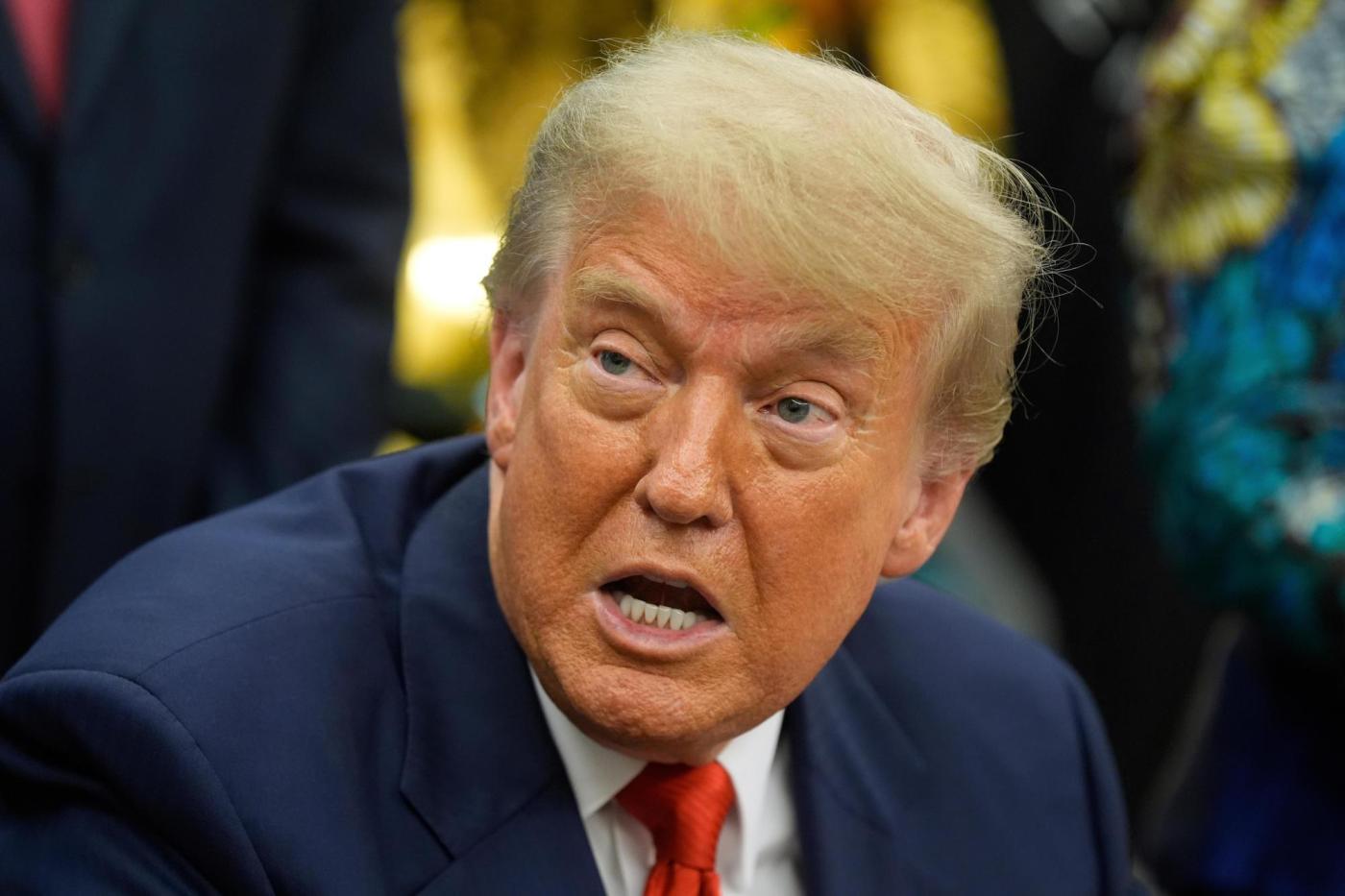
GOMA, Congo (AP) — U.S. President Donald Trump will host the leaders of Congo and Rwanda on Thursday for a deal signing aimed at ending the conflict in eastern Congo and opening access to the region’s critical minerals for the U.S. government and American companies.
Lauded by the White House as a “historic” agreement brokered by Trump, the so-called Washington Accords for Peace and Prosperity between Presidents Felix Tshisekedi of Congo and Paul Kagame of Rwanda follows monthslong peace efforts by the U.S. and partners, including the African Union and Qatar, and finalizes an earlier deal signed in June.
The Central African nation of Congo has been battered by decadeslong fighting with more than 100 armed groups, the most potent being the Rwanda-backed M23 rebels. The conflict escalated this year, with M23 seizing the region’s main cities of Goma and Bukavu in an unprecedented advance, worsening a humanitarian crisis that was already one of the world’s largest with millions displaced.
‘We are still at war’
Fighting, meanwhile, continued this week in the conflict-battered region with pockets of clashes reported between the rebels and Congolese soldiers, together with their allied forces. Trump has often said that his mediation has ended the conflict, which some people in Congo say isn’t true.
FILE – M23 rebels enter the centre of east Congo’s second-largest city, Bukavu, and take control of the South Kivu province administrative office, Sunday, Feb. 16, 2025. (AP Photo/Janvier Barhahiga, File)
Analysts say Thursday’s deal also isn’t expected to quickly result in peace. A separate peace deal has been signed between Congo and the M23.
“We are still at war,” said Amani Chibalonza Edith, a 32-year-old resident of Goma, eastern Congo’s key city seized by rebels early this year. “There can be no peace as long as the front lines remain active.”
Rare earth minerals
Thursday’s pact will also build on a Regional Economic Integration Framework that officials have said will define the terms of economic partnerships involving the three countries as agreed upon in November.
In search of ways to circumvent China in acquiring rare earth minerals, the Trump administration has capitalized on Congo’s need for security support to gain access to its minerals which are essential to manufacturing fighter jets, cellphones and more, and dominated by China.
China already accounts for nearly 70% of the world’s rare earth mining and controls roughly 90% of its processing globally.
Trump is expected to hold separate meetings with both Congolese and Rwandan leaders before three-way talks followed by the signing scheduled to take place at the U.S. Institute of Peace in Washington. Several African leaders are expected to attend the signing.
The U.S. Chamber of Commerce will on Thursday also host an event that will bring together American business leaders. The Congolese and Rwandan delegations will focus on potential investment opportunities in critical minerals, energy and tourism, according to Yolande Makolo, a senior adviser to Kagame.
Ongoing clashes
In eastern Congo, meanwhile, residents reported pockets of clashes and rebel advances in various localities. Both the M23 and Congolese forces have often accused each other of violating the terms of the ceasefire agreed earlier this year.
Related Articles
Affordable Care Act premiums are set to spike. A new poll shows enrollees are already struggling
Putin says there are points he can’t agree to in the US proposal to end Russia’s war against Ukraine
Trump is fighting the Institute of Peace in court. Now, his name is on the building
Nvidia CEO Jensen Huang visits Republicans as debate over intensifying AI race rages
US opens massive $796M consulate in Irbil to strengthen Kurdish ties
In the central plateaus across South Kivu province, fighting continued in recent weeks with thousands often on the run.
The hardship in the aftermath of the conflict has also worsened following U.S. funding cuts that were crucial for aid support in the conflict.
In rebel-held Goma, which had around 2 million people and was a regional hub for security and humanitarian efforts before this year’s escalation of fighting, the international airport is still closed, government services such as bank operations are yet to resume and residents have reported a surge in crimes and in the prices of goods.
“We are waiting to see what will happen because so far, both sides continue to clash and attack each other,” said Moise Bauma, a 27-year-old student in rebel-held Bukavu city.
Both Congo and Rwanda, meanwhile, have touted American involvement as a key step towards peace in the region.
“We need that attention from the administration to continue to get to where we need to get to,” Makolo said. “We are under no illusion that this is going to be easy. This is not the end but it’s a good step.”
Conflict’s cause
The conflict can be traced to the aftermath of the 1994 genocide in Rwanda, where Hutu militias killed between 500,000 and 1 million ethnic Tutsi, as well as moderate Hutus and Twa, Indigenous people. When Tutsi-led forces fought back, nearly 2 million Hutus crossed into Congo, fearing reprisals.
Rwandan authorities have accused the Hutus who fled of participating in the genocide and alleged that elements of the Congolese army protected them. They have argued that the militias formed by a small fraction of the Hutus are a threat to Rwanda’s Tutsi population.
Congo’s government has said there can’t be permanent peace if Rwanda doesn’t withdraw its support troops and other support for the M23 in the region. Rwanda, on the other hand, has conditioned a permanent ceasefire on Congo dissolving a local militia that it said is made up of the Hutus and is fighting with the Congolese military.
U.N. experts have said that between 3,000 and 4,000 Rwandan government forces are deployed in eastern Congo, operating alongside the M23. Rwanda denies such support, but says any action taken in the conflict is to protect its territory.
Chinedu Asadu reported from Abuja, Nigeria, and Aamer Madhani from Washington. Justin Kabumba contributed to this report from Goma.
Leave a Reply