It’s November, and that means Thanksgiving is on the brain. (Here at New York Times Cooking, we’ve been talking about it since July.)
It’s not too soon to order your turkey or to make reservations, but once you do that, let’s forget about the Most Important Meal of the Year. I’m here to talk about the 23 days between now and Nov. 27, on which we must feed ourselves and our people.
In the spirit of “if it ain’t broke, don’t fix it,” we looked back at the weeknight recipes our readers loved last November and plucked out a handful to share below. They’re easy, they’re affordable and they’re highly rated, which means you’re bound to find something you’ll love.
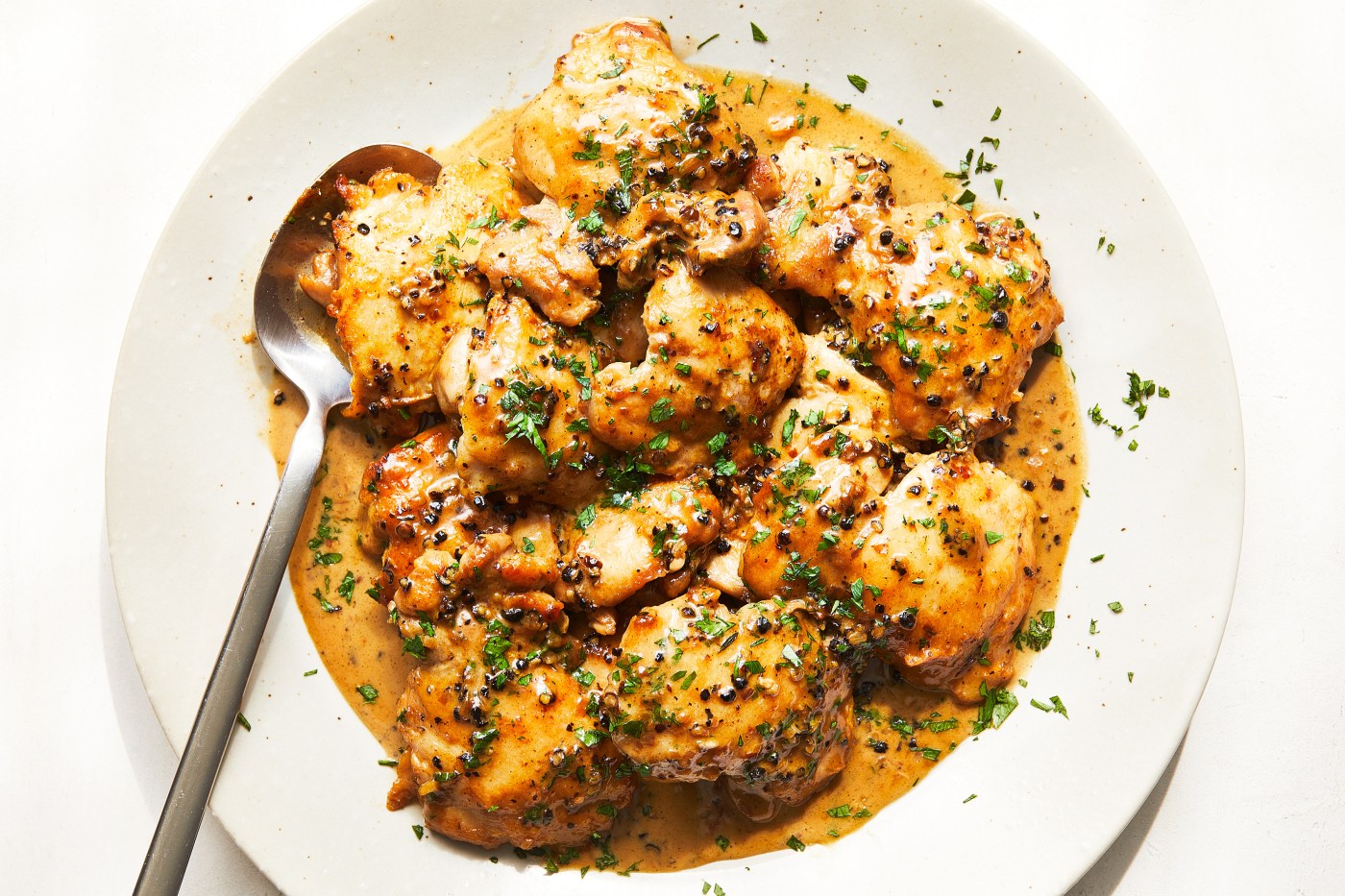
1. Chicken au Poivre
This playful take on steak au poivre features chicken thighs that are pan-fried until golden then simmered in a peppery pan sauce until tender and juicy. The caramelized browned bits left on the bottom of the skillet from searing the chicken add deeper flavor to the sauce. Although cognac is often used in classic au poivre, there is no booze in this version. Instead, a kick of lemon juice brightens the rich, velvety sauce. Serve the chicken over egg noodles or with crusty bread to sop up all that sauce. Tuck any leftovers into sandwich rolls with lettuce and tomato, or chop and toss with pasta and grated Parmesan for a quick lunch.
By Kay Chun
Yield: 4 servings
Total time: 45 minutes
INGREDIENTS
1 tablespoon whole black peppercorns
2 tablespoons extra-virgin olive oil
8 boneless, skinless chicken thighs (about 2 pounds)
Salt
2 tablespoons unsalted butter
2 tablespoons minced shallot
1 cup low-sodium chicken broth
1/2 cup heavy cream
3 thyme sprigs
1 tablespoon lemon juice
1 tablespoon finely chopped parsley, plus more for garnishing
Crusty bread or egg noodles (optional), for serving
DIRECTIONS
1. Place peppercorns in a small resealable bag. Using a mallet or the bottom of a saucepan, gently crush the peppercorns until coarsely cracked. (Alternatively, you can use a mortar and pestle.) Set aside.
2. In a 12-inch cast-iron or other heavy skillet, heat oil over medium. Season chicken with salt. In two batches, sear chicken until light golden all over, about 5 minutes per batch. Transfer to a plate. Pour off any remaining oil in the skillet.
3. Add butter and shallot to the skillet and cook, stirring, until butter is melted and shallot is softened, 1 minute. Add broth, heavy cream, thyme sprigs and cracked peppercorns and mix well, stirring to lift up any browned bits on the bottom of the pan.
4. Add chicken (and any accumulated juices), bring to a simmer and cook, turning and basting occasionally with the sauce, until cooked through and an instant-read thermometer inserted in the thickest part of the thigh registers 165 degrees, 6 to 8 minutes.
5. Divide chicken among 4 serving plates and discard thyme.
6. Add lemon juice to the skillet and stir until sauce is slightly thickened, about 2 minutes. Season with salt and stir in parsley.
7. Spoon the sauce over the chicken and garnish with more parsley. Serve with crusty bread or egg noodles, if desired.
2. Sweet and Sour Cauliflower
Sweet and sour cauliflower. Hetty Lui McKinnon subs in cauliflower for the meat in this 30-minute recipe. Food styled by Samantha Seneviratne. (Julia Gartland/The New York Times)
Reminiscent of classic sweet and sour dishes served at Chinese American restaurants, cauliflower seamlessly steps in for pork or chicken here. For beautifully burnished florets with crispy edges, the cauliflower is treated to a simple dusting of cornstarch, applied in stages to create a more even coating, and a gentle lick of oil before baking or air-frying. Punchy and tart, this sweet and sour sauce is a keeper. Ketchup is the key ingredient, and it brings sourness, sweetness and umami to a simple blend of garlic, rice vinegar, soy sauce and sugar. Eat with rice, noodles or on top of pan-fried tofu.
By Hetty Lui McKinnon
Yield: 4 servings
Total time: 30 minutes
INGREDIENTS
6 tablespoons cornstarch (for the cauliflower) plus 1 teaspoon (for the sauce)
1 large cauliflower (about 2 pounds), cut into bite-size florets
Salt and pepper
Extra-virgin olive oil
3 tablespoons ketchup
3 tablespoons sugar
2 tablespoons rice vinegar
2 tablespoons soy sauce or tamari
1 garlic clove, finely chopped
2 scallions, thinly sliced
Rice or noodles, for serving
DIRECTIONS
1. If using an oven, heat it to 425 degrees. If using an air fryer, heat it to 400 degrees, if preheating is recommended for your air fryer.
2. Place 3 tablespoons cornstarch in a large bowl. Add the cauliflower, season with a big pinch of salt and pepper, and toss to coat. Drizzle in 2 to 3 tablespoons oil and toss until well coated. Add 3 tablespoons cornstarch and toss. Drizzle in another 1 to 2 tablespoons oil and toss well again, making sure there is no dry cornstarch on the cauliflower.
3. If using an oven, grease a sheet pan with a drizzle of olive oil. Arrange the florets in a single layer on the baking sheet and roast for 10 minutes. Remove from the oven, flip the cauliflower to encourage even cooking, and return to the oven for another 8 to 10 minutes, cooking until it is tender and golden around the edges.
4. If using an air fryer, you may need to work in batches depending on the size of your machine. Arrange the cauliflower in a single layer on the rack, and air fry for 16 minutes, tossing the cauliflower halfway through, to encourage even crisping. Cook the remaining cauliflower.
5. While the cauliflower cooks, make the sweet and sour sauce: Place the ketchup, sugar, vinegar, soy sauce and garlic in a small pot. Heat over medium, stirring, until the sugar melts and the mixture starts bubbling around the edges, about 1 minute. Whisk the remaining 1 teaspoon cornstarch with 2 tablespoons of water, then slowly pour the cornstarch slurry into the pot, stirring constantly, until the mixture thickens, about 1 minute.
6. To serve, transfer the cauliflower to a bowl and drizzle the sweet and sour sauce over the florets. Top with scallions. Serve with rice or noodles.
3. Baked Salmon and Dill Rice
Baked salmon and dill rice. In this brilliant, mostly hands-off recipe from Naz Deravian, dilly rice is baked in the oven until almost done. Food styled by Rebecca Jurkevich. (Linda Xiao/The New York Times)
Fragrant dill rice is a natural accompaniment to salmon, and a complete meal of the two is made easy here by baking them together in one dish. Add fresh or dried dill to basmati rice, which is eventually topped with salmon covered in a tangy, sweet and spicy paste of mayo, lemon zest, honey and dried chile flakes. To ensure the rice is perfectly fluffy without overcooking the fish, the grains are baked until most of the water is absorbed before the salmon is added over the top.
By Naz Deravian
Yield: 4 servings
Total time: 40 minutes
INGREDIENTS
2 tablespoons extra-virgin olive oil
1 1/2 cups white basmati rice, rinsed and drained
Kosher salt (such as Diamond Crystal) and black pepper
4 ounces fresh dill, tough stems removed and finely chopped (about 1 cup), or 1/3 cup dried, plus more for serving
2 large garlic cloves, finely grated
1 large lemon, zested (about 1 teaspoon)
1 tablespoon mayonnaise
1 tablespoon honey
1/4 teaspoon ground turmeric
1/4 teaspoon red-pepper flakes, plus more for serving
4 (6-ounce) salmon fillets (1 inch thick at their thickest parts), skin on or off
DIRECTIONS
1. Place an oven rack in the center position and heat the oven to 400 degrees. In a kettle or a small saucepan, bring 2 3/4 cups water to a boil.
2. To a 9-by-13-inch baking pan, add the olive oil and spread it around the pan. Add the rice, 1 teaspoon salt and the dill, and stir to combine. Spread the rice evenly across the pan. Add the boiling water, stir and cover tightly with foil. Place in the oven and bake until most of the water has been absorbed, 12 to 15 minutes.
3. Meanwhile, in a small bowl, combine the garlic, lemon zest, mayonnaise, honey, turmeric and red-pepper flakes. Season both sides of the salmon fillets well with salt (about 1 1/2 teaspoons total) and pepper. Spread the mayonnaise paste on top (or flesh side) of the salmon fillets.
4. Remove the pan from the oven and very carefully lift the foil. Place the salmon fillets on top of the rice, paste side up, reseal and place back in the oven. Bake until the rice is fluffy and the salmon is tender, 15 to 20 minutes. Garnish with more fresh dill and red-pepper flakes.
4. Baked Alfredo Pasta With Broccoli Raab and Lemon
Baked alfredo pasta with broccoli rabe and lemon. This baked pasta from Ali Slagle is comforting without being too heavy. Food styled by Monica Pierini. (Linda Xiao/The New York Times)
One of the great things about baked pastas is that you can get two different textures in one dish. Take the typical pasta Alfredo that’s prepared in a skillet: It’s delightfully creamy and lush, but the same, bite after bite. But add a green vegetable to that Alfredo pasta, pile it into a dish, top it with melty cheese and crunchy breadcrumbs, then bake it, and you get a vegetarian dinner that’s got it all. If broccoli raab isn’t your thing, you can substitute cut asparagus or broccoli florets.
By Ali Slagle
Yield: 4 to 6 servings
Total time: 35 minutes
INGREDIENTS
Kosher salt
8 tablespoons unsalted butter, cut into 1-inch pieces
1/2 cup panko breadcrumbs
2 cups finely grated Parmesan
1 teaspoon fresh lemon zest (from 1 lemon)
Black pepper
1 pound casarecce, cavatappi or other small tubed or curly pasta
1 bunch broccoli raab, trimmed, then cut into 1/2-inch pieces
1 cup heavy cream
1 small garlic clove, grated
6 ounces fresh mozzarella, cut into 1/2-inch pieces
DIRECTIONS
1. Heat the oven to 500 degrees. Bring a large pot of generously salted water to a boil. Place the butter in a 9-by-13-inch/3-quart pan or baking dish and transfer it to the oven to melt while the oven heats; remove it from the oven once it’s melted.
2. In a small bowl, stir together the panko, 1/4 cup Parmesan and the lemon zest. Add 1 tablespoon of the melted butter from the baking pan, stir until the panko is moistened with butter, then season with salt and pepper.
3. When the water’s boiling, add the pasta and cook until al dente, about 2 minutes less than the package instructions suggest. During the last minute of cooking, add the broccoli raab. Reserve 1/2 cup pasta water, then drain the pasta and broccoli raab.
4. Whisk the cream, garlic and pasta water into the melted butter in the baking dish until smooth. Add the remaining Parmesan in large handfuls, vigorously whisking until smooth and combined. Add the pasta, broccoli raab and half the mozzarella. Taste, and season well with salt and pepper. Stir until very combined.
5. Top with the remaining mozzarella, then sprinkle evenly with the panko mixture. Bake until the mozzarella has melted and the panko is golden brown, 10 to 15 minutes.
5. Sheet-Pan Sausages and Brussels Sprouts With Honey Mustard
Sheet-pan sausages and Brussels sprouts with honey mustard. This recipe calls for using honey mustard (store-bought or homemade) to coat sausages, brussels sprouts and potatoes, and then baking until everything’s sticky and crisp-edged. Food styled by Monica Pierini. (Linda Xiao/The New York Times)
This hearty pan of sticky, honey mustard-glazed sausages, Brussels sprouts and potatoes only adds to the argument that sheet-pan dinners make the best weeknight meals. As the sausages roast, they yield a delicious fat that coats and seasons the caramelized vegetables. Use any fresh sausage you like, as long as it pairs well with the honey mustard. Feel free to substitute or add other vegetables like squash, cherry tomatoes, broccoli, carrots or cabbage. The mustard seeds and nuts provide texture and crunch, but leave them out if you prefer.
By Ali Slagle
Yield: 4 servings
Total time: 30 minutes
INGREDIENTS
1 pound fresh sausage, such as sweet or hot Italian, or bratwurst
1 pound Brussels sprouts, trimmed and halved lengthwise
1 pound small potatoes, like baby Yukon gold or red potatoes, halved
2 tablespoons extra-virgin olive oil, plus more as needed
Kosher salt and black pepper
4 teaspoons honey
1 tablespoon Dijon mustard
1 tablespoon yellow mustard seeds (optional)
1/4 cup almonds or walnuts, chopped (optional)
DIRECTIONS
1. Heat oven to 450 degrees, and place a sheet pan in the oven. Score the sausages in a few places on both sides, making sure not to cut all the way through. Transfer to a large bowl with the Brussels sprouts, potatoes and 2 tablespoons olive oil, and stir until coated. (If the mixture seems dry, add a little more oil.) Season with salt and pepper.
2. Spread the mixture in an even layer on the heated baking sheet, and arrange the vegetables cut-sides down. Roast 15 minutes, until the Brussels sprouts and potatoes start to soften. (The sausages will not be cooked through yet.)
3. Meanwhile, in a small bowl, stir together the honey, mustard and mustard seeds, if using.
4. Drizzle the honey mustard over the sausages and vegetables, and toss or shake to coat. Flip the sausages. Sprinkle with almonds, if using. Roast until the sausages are cooked through and the vegetables are golden and tender, another 10 minutes or so. Season to taste with salt and pepper.
Related Articles
Recipes: Cranberries are much more than a Thanksgiving side dish
17 years later: Krispy Kreme to return to Twin Cities
Minnesota native reflects on 25 years as Washington Post food critic
Tommy Chicago’s Pizzeria in Mendota Heights is closing next month
One good recipe: Fig and Peach Tart
Leave a Reply