
By MICHELLE L. PRICE and MARY CLARE JALONICK
WASHINGTON (AP) — A U.S. intelligence assessment completed shortly before the United States and Israel launched a war in Iran had determined that American military intervention was not likely to lead to regime change in the Islamic Republic, according to two people familiar with the finding.
Related Articles
These lawmakers were shaped by combat after 9/11. Now they’re grappling with a new Mideast war
Europe rallies around Cyprus during Iran war as Macron visits to show support for island
Fox News apologizes for showing old video of a hatless Donald Trump at a dignified transfer ceremony
US stocks recover much of an early drop as market remains twitchy after oil spikes to nearly $120
Armed or unarmed? US and Iran spar over status of Iranian warship sunk by a submarine
The National Intelligence Council’s assessment in February concluded that neither limited airstrikes nor a larger, prolonged military campaign would be likely to result in a new government taking over in Iran, even if the current leadership was killed, according to the two people, who spoke on condition of anonymity to describe the classified report.
The determination undercuts the administration’s assertion that it can complete its objectives in Iran relatively quickly, perhaps in a matter of weeks. The administration has asserted that it was not seeking regime change in Iran, even as President Donald Trump considers whom he would like to see lead the country.
The intelligence assessment concluded that no one powerful or unified opposition coalition was poised to take over in Iran if the leadership was killed, according to the people familiar with the report. It determined that Iran’s establishment would attempt to preserve continuity of power if Supreme Leader Ayatollah Ali Khamenei was killed, the people said.
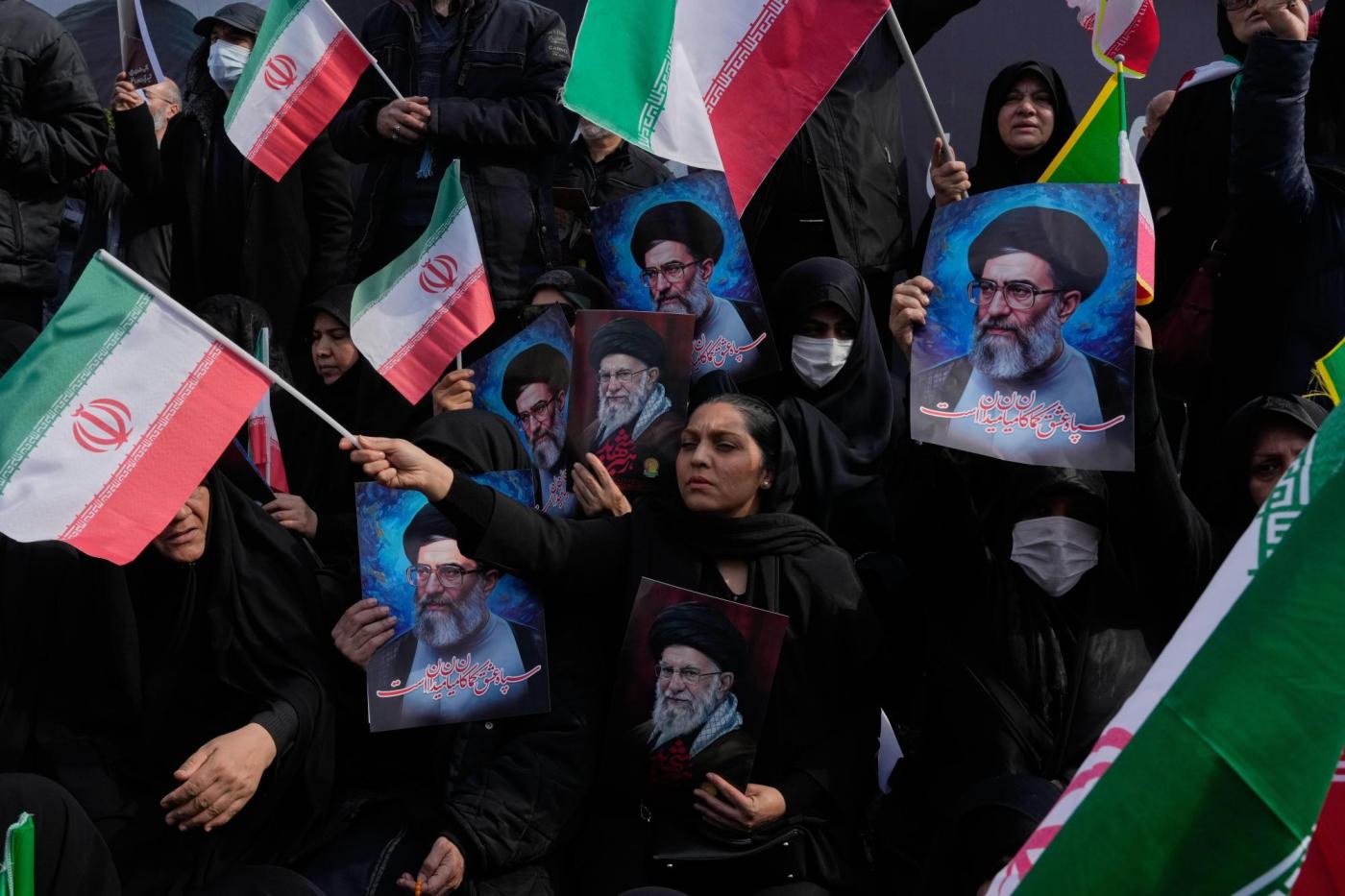
In line with the assessment’s findings, Iran’s leading clerics on Sunday chose a new supreme leader, Mojtaba Khamenei, to succeed his father, who was killed in the war’s opening salvo. The son is believed to hold views that are even more hardline than his father, and his selection is a strong sign of resistance from Iran’s leadership and an indication the government won’t step aside quickly.
A poster of Ayatollah Mojtaba Khamenei, the successor to his late father Ayatollah Ali Khamenei as supreme leader is placed on an anti-riot police car as policemen stand on top of the car, during a rally to support him in Tehran, Iran, Monday, March 9, 2026. (AP Photo/Vahid Salemi)
The details of the assessment were reported earlier by The Washington Post and The New York Times.
Trump and other top administration leaders have given different justifications for the strikes that began on Feb. 28, saying they were necessary to set back Iran’s nuclear weapons program or to preempt an Iranian ballistic missile attack. While Defense Secretary Pete Hegseth has said the war is not aimed at regime change, Trump has said it’s something he wants to see.
A message seeking comment from the Office of the Director of National Intelligence was not immediately returned Monday. Director Tulsi Gabbard fired the council’s acting chairperson last year after the release of a declassified NIC memo that contradicted statements the Trump administration has used to justify deporting Venezuelan immigrants.
Trump, dating back to his first term, has been deeply skeptical of the U.S. intelligence community and has frequently dismissed its findings as politically motivated or part of a “deep state” effort to undermine his presidency.
Associated Press writers Aamer Madhani in Doral, Florida, and David Klepper in Washington contributed to this report.
Leave a Reply