
In St. Paul’s Highland Park, a polluted leftover portion of the former Twin Cities Assembly Plant remains owned by the Ford Motor Co., and state pollution control officials are still pondering with the auto company what to do about the contaminated dump site.
Dubbed “Area C,” the 22-acre land parcel sits capped at the base of the river bluff adjacent to Hidden Falls Regional Park, between Mississippi River Boulevard and the river, and is currently used as a parking lot.
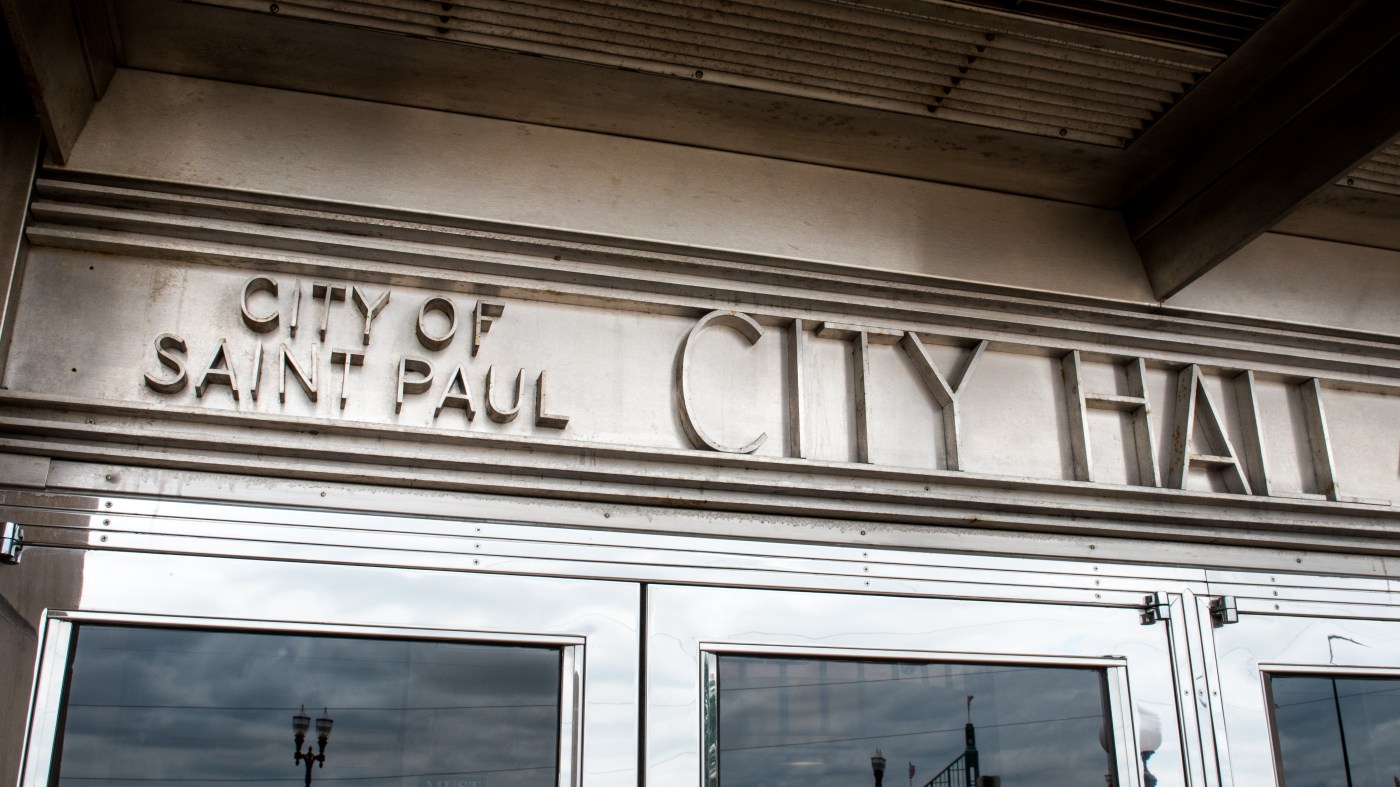
The St. Paul City Council recently came to the unanimous conclusion that the time for pollution monitoring and other containment measures is over, and the state’s preferred alternative — an $8.8 million partial cleanup, mostly along its southern slope — while less costly, won’t go far enough to protect the river.
Council calls for full cleanup
Instead, the council is calling for full cleanup, despite an estimated $71 million price tag, and has raised the possibility of turning the site into an official extension of Hidden Falls Regional Park. The city is leaning on the Minnesota Pollution Control Agency to require Ford to cover the cost of fully excavating and restoring the site itself.
“I think it’s the best option,” said council member Saura Jost, who noted Mayor Kaohly Her, state rep. Dave Pinto and state Sen. Erin Murphy also are supportive of a full cleanup.
Jost, who also submitted comments to the MPCA on her own behalf, noted that major flooding could someday spread hazardous waste that is buried dozens of feet down, and the site could eventually pose a threat to slope stability.
“I also have concerns about the surrounding ecology,” said Jost, addressing the city council in late February. “Having a little more investigation and analysis … is important.”
The site was removed from the federal Superfund list of nationally recognized contaminated properties in 1990, but it still remains part of the state’s voluntary investigation and cleanup program. The land contains several monitoring wells to measure groundwater contamination, Jost said.
In an email Thursday, a spokesperson for Ford Land, Ford Motor Co.’s real estate division, said the MPCA “will determine which cleanup alternative should be implemented” and Ford will “develop a detailed plan for implementing the chosen clean-up option and will execute the plan.” They referred all other questions to the MPCA.
Final cleanup plan may come later this year
State officials believe a less intensive approach is in order. Based in part on 10 years of groundwater monitoring, the MPCA has called for removing industrial waste from Area C’s south slope and stabilizing the site.
“This plan reduces potential risks to people and the Mississippi River from existing contamination, focuses clean-up on the areas of greatest concern, and improves the site’s appearance,” reads a statement issued Wednesday by an MPCA spokesperson.
A final cleanup plan could be chosen later this year. Ford would then be expected to develop an implementation plan, and begin work in 2027.
The Friends of the Mississippi River issued a written memo to the MPCA on Tuesday outlining why they believe the state has the legal authority to require Ford to pursue a complete site restoration under the Minnesota Environmental Response and Liability Act.
“At this time, the MPCA is recommending against a full cleanup for the site,” said Colleen O’Connor Toberman, Land Use and Planning Program director for the Friends of the Mississippi River, in an interview Tuesday. “In my mind, a partial cleanup leaves the risk that Ford won’t be around to pay for future needed cleanup down the road. If Ford doesn’t pay now, the public may end up paying for it later instead.”
“Right now, they can afford to do it,” Toberman added.
Six alternatives, six price tags
The Ford Motor Co. commissioned a 134-page feasibility study for Area C, which was revised last October, and it outlines six options ranging from no cleanup in Alternative 1, and slope stabilization in Alternative 2, to the costliest approach — the $71 million full cleanup described in Alternative 6.
Arcadis, the engineering and consulting firm that assembled the report, recommended the less intensive measures outlined in Alternative 3, which involves some waste excavation, slope stabilization and long-term monitoring, for a total cost of $2.4 million.
The Minnesota Pollution Control Agency is leaning toward Alternative 4, which would cost $8.8 million and involve “excavation and removal of all reasonably accessible industrial waste,” as well as annual inspections and long-term groundwater monitoring.
Critics such as the Friends of the Mississippi River have said Alternative 4’s half-measures would fail to address the hazardous waste in the middle of the pile, focusing instead on removing surface debris along its southern edges while installing erosion controls.
The Arcadis report finds an impenetrable surface cover outlined in the next option, Alternative 5, to be unfeasible due to the site’s topography and other floodplain issues.
The city council voted 7-0 on Feb. 25 to formally ask the MPCA to require Ford to carry out the full $71 million cleanup, as spelled out in Alternative 6.
In its Feb. 25 resolution, the council deemed Area C “an ongoing threat to the groundwater, soil, air, and the local ecological system of our city and region,” and called on the state “to protect human, plant, and animal life,” as opposed to continued monitoring, testing and containment alternatives.
Decades of dumping
The MPCA held a public meeting on its recommendation on Jan. 15 at the Highland Community Center, which drew a rally of concerned residents outside the building.
Ford, which began assembling Model T vehicles from its Highland Park plant in 1925, ceased production there in 2011, and the city has since worked with a master developer, the Ryan Cos., to assemble housing, office buildings, retail spaces, playgrounds and infrastructure in what’s now known as the 122-acre Highland Bridge development.
Despite Ford’s storied history in Highland Park, Area C remains a trouble spot. Ford spent decades dumping hazardous waste, including paints, solvents, heavy metals, construction rubble and contaminated soil on the river floodplain into the 1960s, none of which was addressed when soils at Highland Bridge were cleaned to residential standards.
The U.S. Army Corps of Engineers, after reconstruction of Lock and Dam No. 1 in the late 1970s to the early ’80s, added construction debris on site, creating layers of material above the hazardous waste from the plant, which further complicates a full cleanup, Toberman said. The city then dumped its own construction debris after a rebuild of Mississippi River Boulevard in the late ’80s.
The council resolution calls for the removed materials to be placed in a modern disposal facility designed to isolate hazardous waste. The city’s Hidden Falls/Crosby Farm Regional Park Master Plan calls for Area C to be added to Hidden Falls Regional Park if and when contamination is addressed.
Ford earned $6.8 billion last year before interest, taxes and one-time costs, according to industry monitors, but the auto maker still experienced a net loss of more than $8 billion, its largest shortfall in almost 20 years, after subtracting those expenses.
Related Articles
St. Paul City Council approves new rules for drive-throughs
St. Paul City Council weighs extending eviction notice to 60 days
St. Paul City Council: Nelsie Yang replaces HwaJeong Kim as vice president
Letters: What constitutes ‘public outcry’ in St. Paul?
St. Paul City Council expands rent aid program
Leave a Reply