
By MATT BROWN
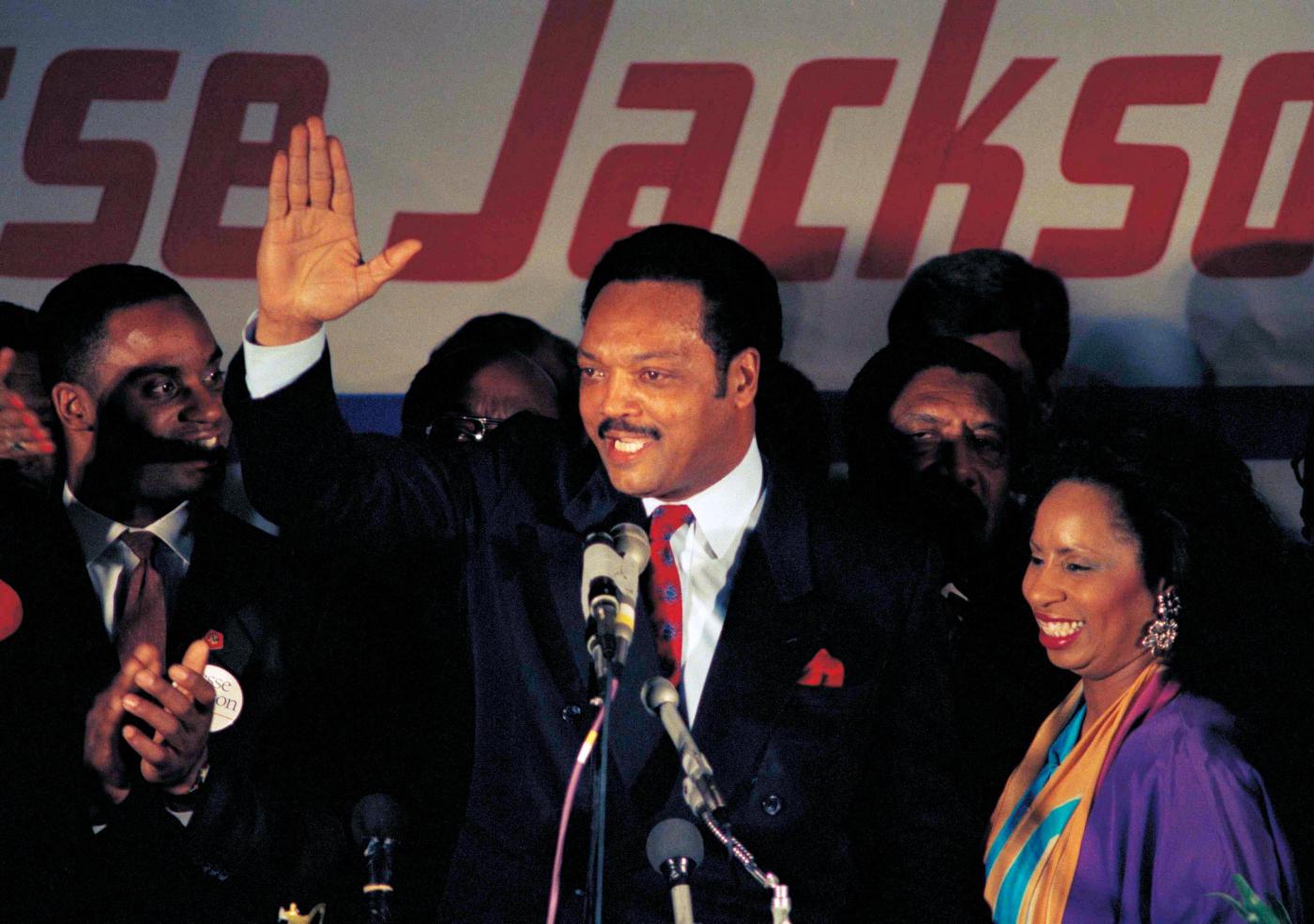
When the Rev. Jesse Jackson announced his second presidential bid in 1988 in Pittsburgh, he saw the campaign as a chance for the country to realize its highest ideals.
“If I can become president,” said Jackson, who grew up poor and Black in segregated South Carolina, “every woman can. Every man can. I’m giving America a chance to make a choice to fulfill the highest and best of an authentic and honest democracy.”
While unsuccessful, the campaign captured the imaginations of countless Americans who were inspired by Jackson, who died Tuesday at 84.
Decades later, generations of young people who watched his historic campaigns or learned about his career have become veteran activists, clergy members, civic leaders and lawmakers. Many say that his unapologetic message of equality and justice informs their work today.
“Here I was, a kid growing up in public housing, and I got to witness this Black man running for president. He gave me a glimpse of what is possible, and he taught me how to say, ‘I am somebody’,” said Democratic Sen. Raphael Warnock of Georgia, referring to one of Jackson’s slogans adopted from a poem.
Warnock also serves as the senior pastor of Ebenezer Baptist Church in Atlanta, the congregation once led by the Rev. Martin Luther King Jr. The Georgia Democrat said Jackson’s example was “needed now more than ever” in response to the Trump administration’s actions on elections, global affairs and immigration.
“His voice is now silent, but his example is eternal, and that work is left to us,” Warnock said.
A life of advocacy
Jackson’s life included work as a globe-trotting humanitarian, a champion for a progressive economic agenda and leadership of the Civil Rights Movement that was once led by King, Jackson’s mentor. Jackson was present when King was assassinated at a Memphis hotel.
Jackson’s 1988 presidential bid pushed many Americans to contemplate whether, two decades after King’s killing, one of his protégés could be elected to the White House. His message of equality in the Democratic primary resonated with a broad set of voters and blindsided party leaders, who reformed the primary system in response to the surge of engagement.
Strategists credit those reforms with enabling the election of another Black candidate from Illinois to the presidency two decades later.
Barack Obama agreed in a statement praising Jackson’s life.
Former first lady Michelle Obama “got her first glimpse of political organizing at the Jacksons’ kitchen table when she was a teenager,” Obama wrote. “And in his two historic runs for president, he laid the foundation for my own campaign to the highest office in the land.”
Related Articles
Trump wants his Board of Peace to solve world conflicts. It still has a lot of work to do in Gaza
Bernie Sanders and Gavin Newsom become adversaries over push to tax California billionaires
Following Trump’s lead, some GOP states seek to limit environmental regulations
Trump administration appeals order to restore George Washington slavery exhibit in Philadelphia
Public health, green groups sue EPA over repeal of rule supporting climate protections
The connection did not stop Jackson from criticizing Obama or mentoring activists who challenged the first Black president’s administration.
“He continued to reach out to young Black activists throughout the protests that started in 2014,” said DeRay McKesson, a racial justice activist who organized in Ferguson, Missouri, as part of the Black Lives Matter movement. “As an activist and organizer, I appreciate that Jesse, just like the generation of people he came up with, had a deep understanding of structural change.”
Jackson remained a political force after his presidential bids. From the Chicago headquarters of his organization, the Rainbow PUSH Coalition, he mentored leaders for decades. After his death, scores of activists, political operatives and members of Congress credited their careers to Jackson.
Democratic Rep. Troy Carter of Louisiana was a young staffer to New Orleans Mayor Sidney Barthelemy when he first met Jackson.
“Over the years, since our first meeting, he encouraged me in every step of my political career. His legacy will endure in every life he inspired,” Carter said.
Former Vice President Kamala Harris eulogized Jackson in a statement that remembered how his 1988 presidential run built a sense of community among supporters. When she was a law student in San Francisco, she recalled, people “from every walk of life would give me a thumbs-up or honk of support” upon seeing her car’s “Jesse Jackson for President” bumper sticker.
“They were small interactions, but they exemplified Reverend Jackson’s life work — lifting up the dignity of working people, building community and coalitions, and strengthening our democracy and nation,” wrote Harris, who went on to become the first Black woman to be nominated by a major political party for president.
Even people with opposing views acknowledged Jackson’s impact as a civil rights giant and a stalwart force for progressive, humanitarian values.
“I don’t have to agree with someone politically to deeply respect the role Jesse Jackson, a South Carolina native, played in uplifting Black voices and inspiring young folks to believe their voices mattered,” Sen. Tim Scott of South Carolina, the lone Black Republican in the Senate, wrote on social media. “Those that empower people to stand taller always leave a lasting mark.”
A mentor to a new generation
Tennessee state Rep. Justin Pearson was 8 years old when he first learned about Jackson from a picture book on Black history that his mother gave him. Jackson’s face was on the cover.
Pearson, 31, thanked Jackson for “creating space for people like me to be where I am.” He met Jackson after Republicans expelled him and another Black Democratic lawmaker after they joined a protest for gun control at the Tennessee Statehouse.
Pearson, who represents Memphis in the statehouse, later joined Jackson on a trip to lay a wreath at the site where King was killed. Pearson has appeared alongside Jackson at other civil rights events throughout the South. Even at memorials filled with towering figures, he said, Jackson stood out.
“You have a lot of civil rights elders who you read about, but it means something different when you have somebody who you can talk to, who can be present, who is there physically,” said Tennessee state Rep. Justin Jones, the other lawmaker who met Jackson after being expelled. Both men were later reelected to their seats.
Jackson “was committed to raising the rising generation of civil rights voices and leaders and legislators, and somebody who has a whole movement that is standing on his shoulders,” said Jones, 30.
Stacey Abrams was 10 years old in Gulfport, Mississippi, during Jackson’s first presidential bid. The daughter of ministers, Abrams remembers being “transfixed” by a “larger than life figure who did not look like everyone else.”
Now a former minority leader of the Georgia House, Abrams mounted two unsuccessful bids for governor. Each time, she sought to rally a wide range of voters, including voters of color and lower-income voters, in a strategy that emulated Jackson’s political philosophy. Jackson advised her throughout both bids.
“I’ve been one of, I would say, thousands of people who received counsel and support from Jackson, but also got a phone call that said, ‘I’m thinking about you,’ or an offer to come and be a part of something he was doing,” Abrams said.
“I think that’s the legacy that’s most important, that he didn’t stand as a single figure who wanted to be alone. He built community.”
Leave a Reply