
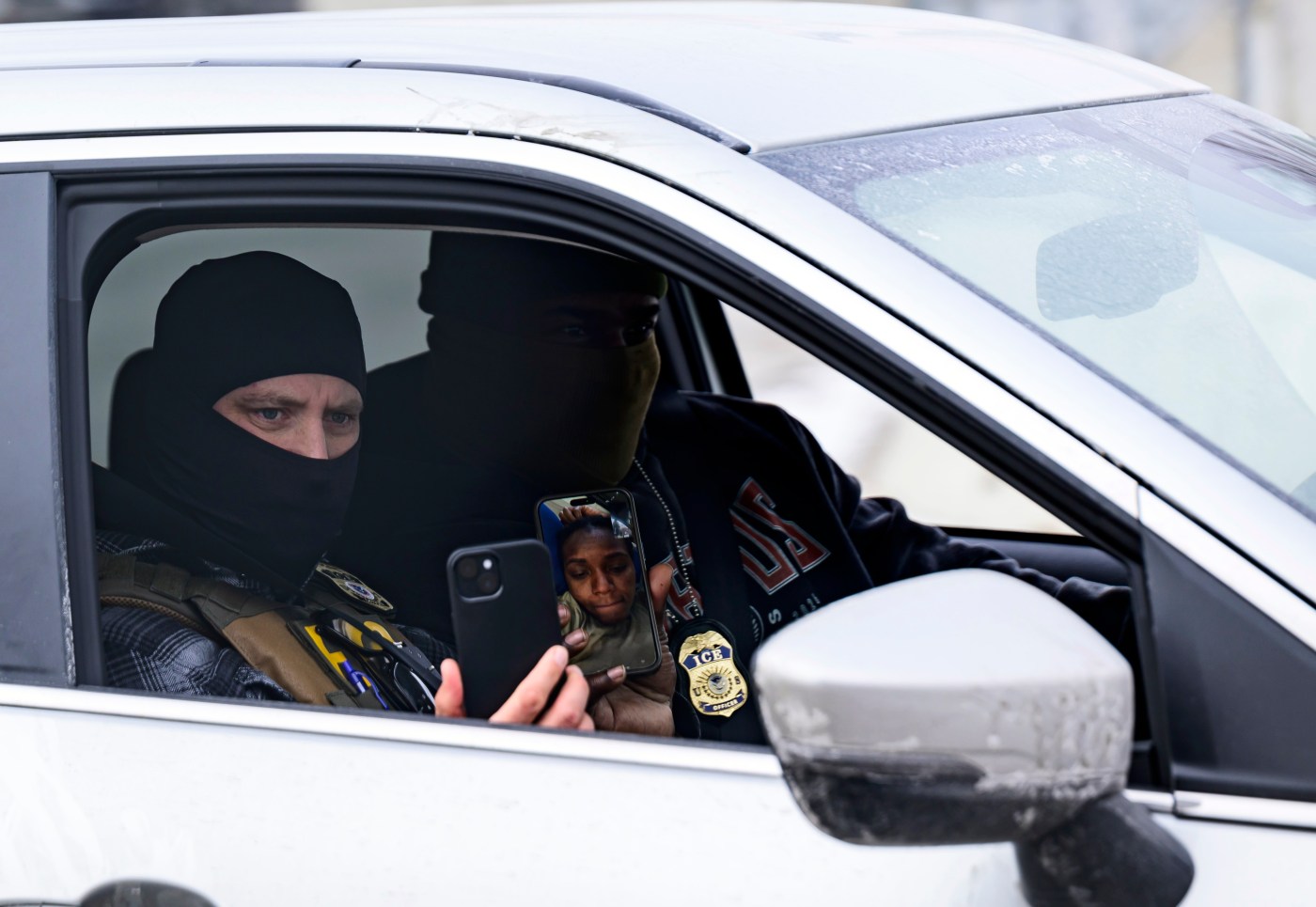
I can’t watch blood on a screen anymore. My body turns away before my mind can catch up. What unsettles me just as deeply is the anti-immigrant mood on the ground. Most people I know have a story: a warning, a close call, a neighbor who didn’t come home. So I reach for safer distractions — who’s headed to the Super Bowl, what I’ll make for dinner — anything loud enough to drown out what is unfolding in my hometown. But the noise can’t mask the truth: Fear is spreading through refugee and immigrant communities, and something essential has shifted beneath our feet.
My family immigrated to the United States in 1976 and resettled in Minnesota shortly after. I grew up here. I went to school here, becoming the first in my family to attend college. I built my life here. For nearly three decades, I worked in the nonprofit sector, securing public and private resources for families who live without buffers — people for whom long-term planning is a luxury and survival is a daily calculation. I know firsthand what it means to arrive in a new country: to learn a difficult language, navigate unfamiliar systems, find work, feed a family and try to feel safe in neighborhoods shaped by disinvestment. My empathy for immigrants and refugees is not abstract. It comes from my own experience and years spent working alongside the very communities now filling national headlines.
Right now, I carry two reactions at once. One is the response of the educated, once-secure citizen. I followed the rules. I paid taxes, bought a home, voted, volunteered and participated fully in civic life. I was raised to believe — almost as a civic article of faith — that all people are created equal, and I organized my life around that assumption. During the first term of this same president, I protested in downtown Minneapolis when immigrants were first targeted. I believed my status mattered. I was naturalized. I could vote. I could protest openly. On paper, I was no different from anyone else. Equal under the law, if perhaps burdened with a funny name.
This time feels different. Confidence has given way to caution — an instinct deeper than any civics lesson. I scan rooms now. I choose my words carefully. I notice exits. Not because I’ve done anything wrong, but because refugees like my family learn across generations that security is conditional and belonging can be revoked when fear becomes politically useful. Recently, my father insisted that I carry my passport or naturalization papers at all times. His advice wasn’t paranoia. It was history speaking, passed down through lived trauma rather than textbooks.
The United States withdrew from Southeast Asia in 1973, a year after my birth, leaving behind the Hmong people who had fought alongside American forces in Laos and rescued downed U.S. pilots. What followed was systematic persecution: villages destroyed, families hunted through jungles, mountains, and rivers. There was no government protection, no appeal, no safety net. Policy turned into abandonment, enforced through violence. That memory never disappears. It waits.
Today, many immigrants in Minnesota feel that same pressure returning in the dead of winter — a sense of being watched, made vulnerable, and subjected to ICE intimidation in everyday spaces. That fear is especially jarring in a state shaped by large Somali, Hmong and Latino communities whose labor, culture, and presence are woven into Minnesota’s economic and civic life. This is a place built not only by resettlement agencies or public programs, but by daily acts of belonging: neighbors working side by side, raising families, and looking out for one another. It is the same Minnesota that celebrated Suni Lee, the daughter of Hmong refugees, standing atop the Olympic podium, wrapped in gold and embraced as unmistakably American.
That shared ethic is why the recent ICE shootings have cut so deeply. When Renée Good and Alex Pretti were killed on our streets, Minnesotans did not see an abstract political debate. They saw neighbors harmed in their own communities. South Minneapolis, still carrying the memory of George Floyd, recognized the pattern immediately. These were not faceless agitators. They were people standing up for one another because something here had gone profoundly wrong in a state long defined by mutual responsibility — where safety and dignity are believed to belong to everyone.
Across the world, people already understand what many Americans are being forced to relearn: Protest carries risk, and power resists scrutiny. When fear is deliberately amplified, violence often follows. Americans, including those who lead, are not exempt from human nature simply because we live behind borders or inside institutions we assume will hold. History is crowded with lessons from tyrants who unleashed violence not out of necessity, but because they could. Rights are fragile. Norms erode quickly — sometimes within a single generation. National exceptionalism makes it easy to believe these things happen elsewhere, to other people, until they do not.
And yet something else is happening too.
Despite the fear and disruption brought by ICE’s enforcement surge, the tide is turning. Minnesota is showing its true character. The quiet ethic often called Minnesota Nice is outshining the intimidation meant to silence dissent. The protests filling our streets — chants, whistles, vigils, all-night gatherings — have been unmistakably human. Poets and writers. ICU nurses and teachers. Small-business owners and neighbors. Our elected leaders are standing up as well, demanding accountability and pushing back against the normalization of fear. As an immigrant walking among these crowds, I have never felt set apart because of my race, my accent, or my story. Here, people see you first as a neighbor, a worker, a human being.
In this moment of national moral reckoning, Minnesota has reminded the country — and me — of its values. The name “Mní Sóta” comes from the Dakota, the original people of this land. It speaks of water and reflection, of place and continuity. We are all, in different ways, immigrants here. What matters now is not who deployed fear, but whether we refuse to look away from it — whether we choose to name it, confront it, and protect one another in spite of it. Minnesota is doing that, openly and together.
Valeng Cha, Maplewood, has spent 30 years securing public and private funding for health, human services, youth development, and higher education initiatives. His work has focused on strengthening organizations serving low-income and immigrant communities. He currently owns a small business, TimberBuilds LLC, in Maplewood.
Related Articles
Working Strategies: To stress or not to stress? Some prespective
Hamid Kashani: What to know about the massacre in Iran
Letters: The surge isn’t about immigration or fraud, and some protests hurt the cause
Real World Economics: Follow the money down the river
Mark Glende: How much do I love ‘I Love To Read Month’? Well …
Leave a Reply