
While some Minnesota cities are turning over their new Local Affordable Housing Aid to their counties, one south metro city is working to keep its funds — and its residents — at home.
The city of Burnsville is using $1.5 million in LAHA funding to develop affordable housing programs that are specifically catered to the community’s needs, said Travis Bistodeau, deputy community development director for the city.
Created in 2023 by the Minnesota Legislature and funded by a 0.25% metro area sales tax, LAHA helps local governments develop and preserve affordable housing and help those experiencing homelessness, according to the Minnesota Department of Revenue.
LAHA funds are distributed based on the city’s share of cost-burdened households, Bistodeau said. Burnsville, which has a relatively high number of cost-burdened households, received about $405,000 of LAHA funding in 2024. In 2025, Burnsville received $1.1 million, the most of any city in Dakota County. Final amounts have not been announced for 2026, but Bistodeau said the city expects to receive about $1 million annually for the foreseeable future.
“Most Dakota County cities have made a decision to pass a portion or all of their LAHA dollars over to Dakota County for spending,” Bistodeau said.
Eagan, for example, committed $175,000 of the roughly $346,600 it received in 2024 LAHA funding to Dakota County, said Sara Horwath, director of communications and engagement for Eagan, in an email.
The county collected about $1.3 million in 2024 LAHA funds from Apple Valley, Eagan, Farmington, Hastings, Inver Grove Heights, Lakeville, Mendota Heights, Rosemount and South St. Paul, said Sara Swenson, director of administration and communications for the county’s Community Development Agency, in an email. Those funds will be used for county-wide home improvement loans and radon mitigation grants, Swenson said.
Burnsville, however, has taken a different approach.
“We have essentially programmed 100% of our dollars specific to Burnsville’s unique needs,” Bistodeau said.
The first of the city’s four programs is already up and running and the other three are expected to launch later this year.
Low-interest improvement loans
The city’s first LAHA-funded housing assistance program, which launched in September, offers two types of low-interest home improvement loans for families earning 80% or less of the area’s median income (for a one-person household, that’s $72,950; a two-person household is $83,400; a three-person household is $93,800; and a four-person household is $104,200).
The program, which is allocated $400,000 annually, provides low-interest loans for “most permanent interior and exterior improvements, maintenance or remodeling projects,” according to the eligibility requirements. These improvements can include a new roof, replacing siding or replacing mechanical equipment, Bistodeau said.
The Home Improvement Loan, which has a 3% interest rate and terms ranging from 10 to 20 years, is available in amounts from $5,000 to $50,000.
The Senior Deferred Home Improvement Loan, which has a 2% interest rate and a 30-year term, is available in amounts from $5,000 to $15,000. To be eligible for this loan, at least one borrower must be 65 or older.
Since the program’s launch, nine home improvement loan applications have been submitted, Bistodeau said.
Down payment assistance
The down payment assistance program will help families that earn 80% AMI or less get into their own home, Bistodeau said, adding that you do not have to be a first-time homebuyer to qualify.
This program, which has been allocated $200,000 annually, is intended to fund half of a traditional 20% down payment, Bistodeau said. For example, if a house is priced at $100,000, the city would put up $10,000 of the $20,000 down payment.
Related Articles
A month of learning, advocacy, frustration for St. Paul Mayor Kaohly Her
Prosecutors began investigating Renee Good’s killing. Washington told them to stop.
Immigrant whose skull was broken in 8 places during ICE arrest in St. Paul says beating was unprovoked
St. Paul: Lake Phalen event seeks to shine light over ICE
A St. Paul to Kansas City passenger train? St. Paul City Council urges a go
The maximum home sale price under this program is $410,000, Bistodeau said, which was set to keep up with inflation. At the end of 2025, the median sale price of a home in Burnsville sat at $385,000, according to Redfin.
“The beauty of this is the loan is 100% forgivable if the family chooses to stay in the home for 30 years,” Bistodeau said. Should the homeowners choose to sell before then, the loan balance would be due.
Besides being fully forgivable after 30 years, no interest is charged to the borrower and all payments are deferred, so repayment is made in full only upon ownership change prior to 30 years.
“The (program’s) purpose is to open up homeownership opportunities in Burnsville for those who otherwise might not be able to make the leap from renting to owning,” Bistodeau said. “It also encourages neighborhood stability by encouraging folks to stay in their home, invest in their neighborhood and stay in our city long term.”
Rehab blighted homes
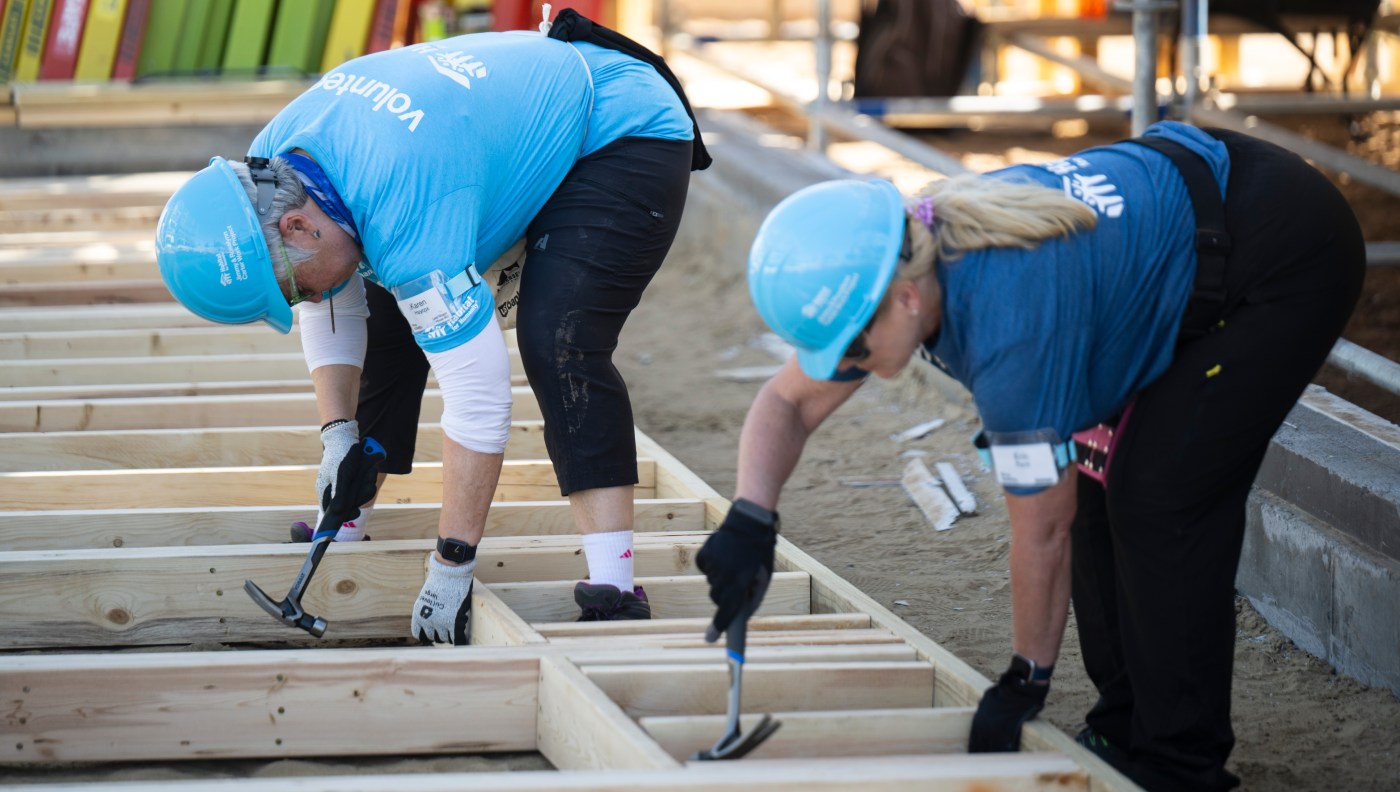
Burnsville city staff are working on a partnership with Habitat for Humanity to rehabilitate blighted homes in the city.
The idea behind the program, which will be funded to the tune of $500,000 annually, is to have Habitat for Humanity purchase vacant or blighted single-family homes, rehabilitate them to minimum standards and then sell the homes at an affordable rate to homebuyers earning 80% or less of the AMI, Bistodeau said.
“Habitat would come in, use our construction and volunteers to make improvements to a home and then make them available to homebuyers who are at 80% AMI or below,” said Beth Pfeifer, vice president of real estate development for Habitat for Humanity.
“We are super excited about this,” Pfeifer said, adding that the Burnsville program will be patterned after similar programs in Roseville and Edina.
Rehabilitating a house can take on many different forms, Pfeifer said, like replacing aging kitchen appliances, lead and asbestos abatement, radon mitigation or adding on a bedroom. “It depends on the house, which is a great thing about the project,” she said.
In some cases, they may consider adding solar panels, she said. “We really want to make sure that a home is affordable not only in terms of the mortgage, but in terms of utility costs and expenses that go into maintaining homeownership,” Pfeifer said.
“It’s a really great way for cities to take their current housing stock that might be in need of a little TLC and ensure that those homes stay affordable,” Pfeifer said.
As it’s currently sketched out, the city would help Habitat cover the upfront cost of a home, but the home would never be owned by the city. Once the home is rehabilitated, Habitat would sell it at an affordable price and the city would be refunded by Habitat.
Once all is said and done, the city’s final contribution would be $100,000 or less, Bistodeau said.
“We will ensure those homes remain affordable through a deed restriction for 30 years,” Pfeifer said.
“If the family who bought the home wants to sell the property before that restriction expires, they pay the city back our $100,000, but if they choose to stay in it, that $100,000 is forgiven,” Bistodeau said.
Details of the program and partnership are still being ironed out as it’s in the beginning stages of development, Bistodeau and Pfeifer both emphasized.
Emergency housing vouchers
The fourth program, an emergency housing voucher, was designed to assist low-income families who have suffered an emergency situation, Bistodeau said.
The program, which has been allocated $40,000 annually, will provide free hotel stays for up to two weeks, Bistodeau said.
The $40,000 figure was chosen through conversations with emergency responders and local school districts, Bistodeau said. “The school districts come across families in the winter who are displaced for a variety of reasons.”
Burnsville Fire Chief BJ Jungmann said he’s encountered individuals, seniors, multi-generational families and families with children experiencing homelessness in the community.
Related Articles
Farmington mayor abruptly resigns after expletives fly at city council meeting
Minnesota Hockey Hall Of Fame clears planning commission hurdle
Fare For All, an affordable pop-up grocery store, ending service to metro
One year after death, authorities release video hoping for information on William ‘Ike’ Eickholt
Mark Glende: How much do I love ‘I Love To Read Month’? Well …
The vision for this program is that it be used in an emergency or tragedy, Jungmann said, using an apartment fire as an example.
“When multiple families are displaced due to an apartment fire, they don’t always have a place to go,” Jungmann said. “Unfortunately when these things happen, it’s not a quick process to repair a building from something as significant as a fire.”
While it’s not a long-term solution, Bistodeau said, “rather than having nowhere to go, they have a temporary shelter.”
The emergency voucher program is expected to go live sometime this year, Bistodeau said.
Leave a Reply