
There was no Giannis Antetokounmpo deal ahead of Thursday’s NBA trade deadline, to Minnesota or anywhere else. The Bucks elected to hold on to their superstar until this summer, at the very least.
The Timberwolves didn’t feel like they were close to pulling that one off this week, as Milwaukee never seriously engaged in discussions.
Yet Minnesota still managed to emerge from the trade deadline with an important piece in Chicago guard Ayo Dosunmu, a capable defender whose offensive game has blossomed to the point where he’s averaging 15 points a game on 45% shooting this season. He was exactly the type of player the Wolves needed to round their rotation into one that can legitimately compete through three rounds of the Western Conference playoffs.
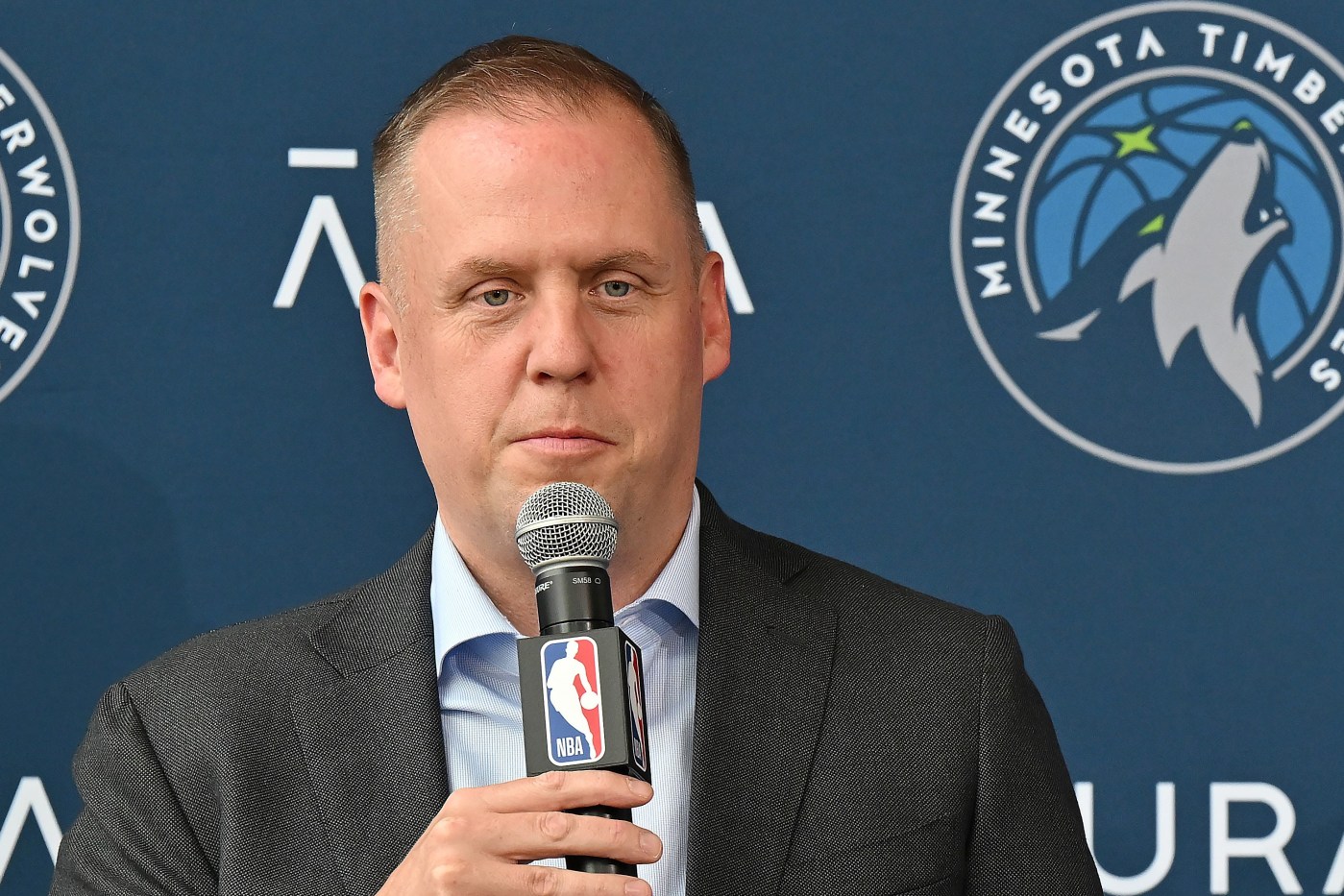
That’s only one way in which the move served as a masterclass in roster construction from Timberwolves basketball boss Tim Connelly, who walked the line of roster improvement and financial obligation.
The trade Minnesota made Tuesday — a deal that sent Mike Conley and a pick swap in exchange for cash considerations — wasn’t made to clear the runway for a blockbuster. It was a salary dump to satisfy ownership’s wishes to lower a luxury tax bill. That’s been an overarching directive: cut down on expenses.
There’s nothing illegal about frugality in pro sports; numerous teams spent the past few days wiggling their way out of the luxury tax. But it’s not necessarily something that builds a fan base, especially when it undermines what new majority owners Marc Lore and Alex Rodriguez have preached since entering the fold in Minnesota, and was reiterated upon gaining official control of the organization last summer, when Lore and Rodriguez expressed no hesitation to pay the tax if it meant fielding a competitive roster.
“Because it’s creating enterprised value over the long term,” Lore said. “And I think that’s the way we think about it. Investing in the team, in winning, creates long-term franchise value. And it’s not over the next three to five years, but 10, 20, the next 50 years even. We’re prepared to invest, we’re prepared to lose money to create a … sustainable winning culture.”
Minnesota has been to consecutive Western Conference Finals, with former majority owner Glen Taylor paying the luxury tax as recently as last season. The Timberwolves are again firmly in the hunt in 2026.
As Anthony Edwards demonstrated again in the fourth quarter of Minnesota’s stirring comeback Wednesday in Toronto, if you have No. 5, you have a chance. There are no locks in this year’s NBA, especially with the injury-riddled rosters on many of the league’s top teams.
This is a championship window for many clubs, Minnesota included.
But it was clear the Wolves’ roster needed something. The bench that buoyed the team last season wasn’t nearly as productive this year with Donte DiVincenzo moving into the starting lineup and Nickeil Alexander-Walker moving to Atlanta.
The Timberwolves reportedly could have netted Coby White in the deal that sent Conley to Chicago and declined. Other moves were available to improve Minnesota’s rotation earlier in the week, but not approved.
In last June’s draft, the Wolves sat atop the second round on Day 2 but traded their way down the board in the name of cash considerations.
Headline-grabbing investments have been made in the forms of new arena lighting and paying Kevin Garnett to return to the fold. Those excited the fan base. They aren’t nothing.
But costs have been trimmed in other areas, varying from staffing to small details that impact player experience.
Those cuts coincide with a recent season ticket renewal request rollout that featured massive price hikes, with some fans reporting increases of nearly 40%. One of the talking points for that decision was the luxury tax bill for ownership that, as of this week, is now significantly smaller.
But it does still exist, as Connelly coaxed a late commitment to stay above the cap in the name of competitiveness, which opened the door for the Dosunmu acquisition. That, in the end, is a credit to ownership for its willingness to bend. It also was a brilliant stroke of front office maneuvering from Minnesota’s president of basketball operations, one that came at a critical time to keep the Timberwolves moving forward as their franchise superstar continues his evolution.
The current modus operandi probably isn’t sustainable. The draft asset cupboard is now effectively empty, with most of the few remaining scraps available at the week’s outset now sold off. Everyone has to get on the same page moving forward if the goal truly is high-level, year-over-year success. And it should be for a team with a young, winning nucleus that includes one of the game’s best players.
The Wolves need to develop their young players into contributors who earn and receive opportunities to help the team contend, or at the very least maintain enough value where they don’t require attached picks to be moved elsewhere.
Dosunmu is a short-term solution, but could be a long-term one — if he proves to be a fit — should Minnesota financially commit to the free agent-to-be this summer. That’s where ownership comes in.
Above all else, the new men in charge must prove themselves willing to fund a winning foundation, no matter the cost. Like they said they would.
But talk is cheap. Running a successful NBA team is not. Not if you’re in the business of contending for championships.
Related Articles
In the Land of 10,000 Sports Heartaches, who left to win a championship?
Timberwolves trade for Bulls guard Ayo Dosunmu
Anthony Edwards scores 30 points as Timberwolves rally to beat Raptors
Timberwolves: Could Mike Conley be back soon? A path exists
Hornets bringing Coby White back home to North Carolina in trade with Bulls, AP source says
Leave a Reply