
By MAYA SWEEDLER, Associated Press
WASHINGTON (AP) — There’s increasingly one place that U.S. senators want to be — anywhere but Washington.
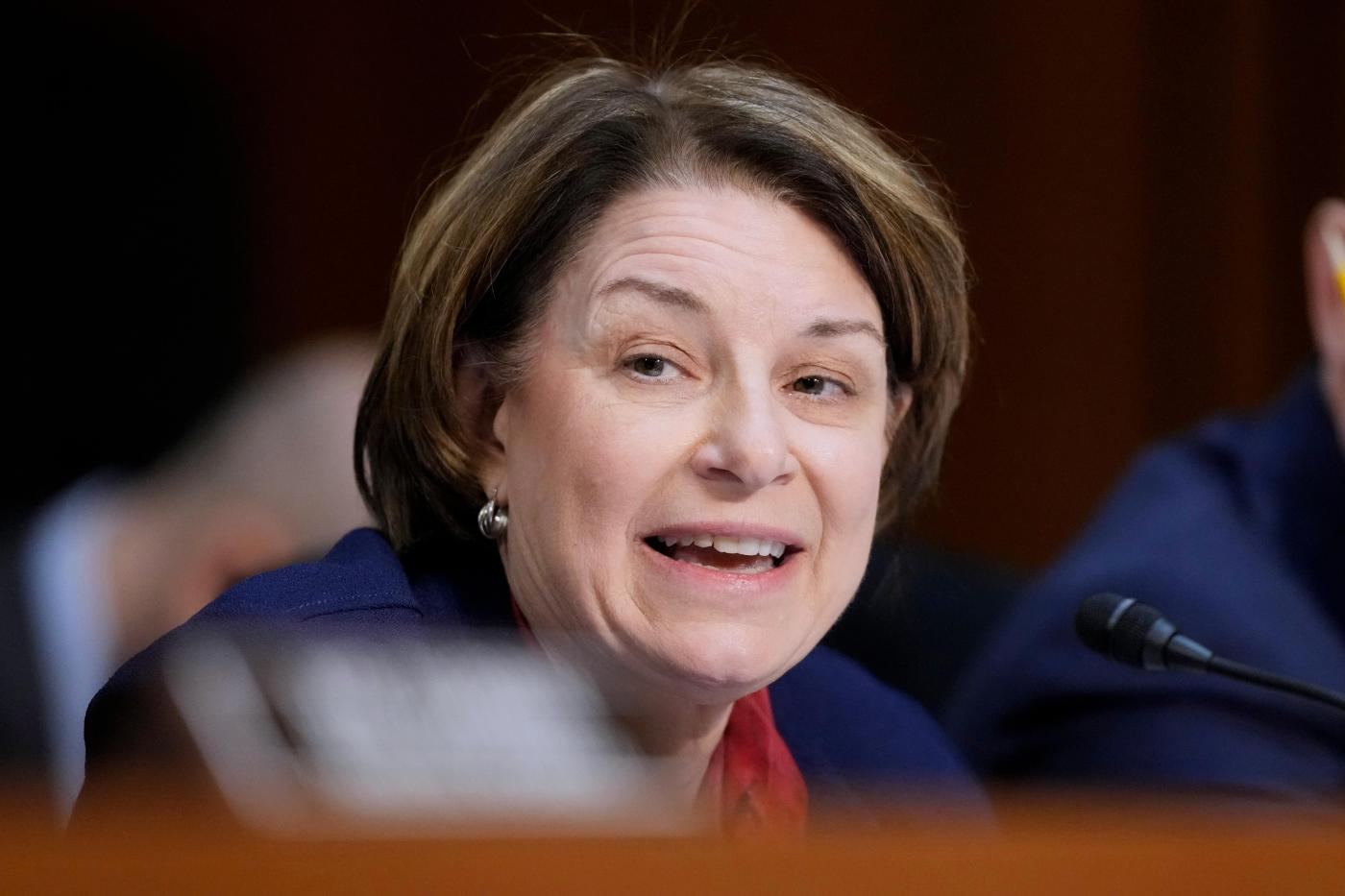
Democrat Amy Klobuchar of Minnesota became the fourth sitting senator to seek leadership of a home state in 2026 when she announced her campaign on Thursday. That’s the most in recent history, according to an Associated Press analysis of congressional retirements.
She joins Colorado Democrat Michael Bennet, Tennessee Republican Marsha Blackburn and Alabama Republican Tommy Tuberville, who are all doing the same thing.
The increase in senators looking toward statehouses underscores how sharply the balance of political ambition has shifted away from Washington. Although the Senate was once seen as the capstone of a long political career or a premier perch for launching presidential bids, it has become increasingly stagnant and dysfunctional.
What’s the allure of the governor’s office?
Governorships now offer what the Senate usually cannot — the ability to govern, build a record and shape a national profile.
“Everybody asks me, ‘Why are you doing this?’” Tuberville recently told the AP. “Because I think I can do more good in that seat than I can in this one.”
FILE – U.S. Sen. Tommy Tuberville, R-Ala., speaks about plans to run for the governor of Alabama in 2026, May 27, 2025 at Byron’s Smokehouse in Auburn, Ala. (AP Photo/ John David Mercer, File)
The four senators who have already announced their campaigns are part of a broader exodus from Congress’ upper chamber. Eleven have announced their intent to retire next year, which includes nine in the final year of their term.
Bennet has long voiced frustration at glacial progress in Washington, but his decision to run for Colorado governor still surprised many politicos in his home state.
In an interview, he said there’s no way to address problems like affordability from the Senate.
“Donald Trump’s Washington, D.C. will never be responsive to those challenges,” Bennet said. “He’s literally hanging gold on the walls of the Oval Office.”
Bennet also noted that Trump, a Republican, has “declared war” on Colorado, vowing to make the state pay for continuing to imprison a county clerk who was convicted of breaking the law while trying to help prove the bogus claim that the 2020 election was mired by fraud. Trump, who lost the 2020 election to Democrat Joe Biden, also recently vetoed a water project intended to help the state’s rural areas.
FILE – Sen. Michael Bennet, D-Colo., questions former Rep. Tulsi Gabbard, President Donald Trump’s choice to be the Director of National Intelligence, during the Senate Intelligence Committee hearings for her confirmation at the U.S. Capitol, Jan. 30, 2025, in Washington. (AP Photo/John McDonnell, File)
The concerns reflect how national partisan battles have increasingly defined even state-level politics, which used to revolve around local issues and have less of a partisan tinge. Bennet and his Democratic primary rival, state attorney general Phil Weiser, have each argued they’re best equipped to push back against Trump.
“It’s very important to have people who understand those national fights and who won’t cower in the face of that,” Bennet said.
Highest turnover in the Senate in more than a decade
Tuberville, who was first elected in 2020, said he didn’t think there’s any common denominator among the senators running for governor.
“You know, the reason I’m going back is, I think I can do more in the short term than I can in the long term up here,” he said. He added that, as governor, “you’re CEO of the state, and your vote counts more,” while in the Senate, “you’re one of 100.”
Even if no more senators were to retire, this cycle would still have the highest turnover in the Senate in more than a decade. The last time more than a dozen senators left in one year was after the 113th Congress, when — in part due to President Barack Obama tapping senators for positions in his Democratic administration — 13 senators retired, resigned or died.
Senate becomes ‘a more noxious place for lawmakers’
“There’s a push and a pull factor,” said Matt Dallek, a political historian at George Washington University. “The push factor is the Senate in particular has become a more noxious place for lawmakers, because all the downsides to serving in public office and in the Senate are no longer mitigated in a significant way by the upsides of passing legislation.”
Related Articles
Unmentioned but present, Trump is a common denominator in efforts to strengthen Asia-Europe ties
Chinese national who exposed human rights abuses in his homeland is granted asylum to remain in US
EPA plan would begin rolling back ‘good neighbor’ rule on downwind pollution from smokestacks
Mayors warn that Trump’s hardline immigration tactics could dent trust in law enforcement
Federal troop deployments to US cities cost taxpayers $496M and counting
“Being governor, aside from the obvious fact that you’re chief executive as opposed to one of 100, is increasingly alluring,” Dallek said. “At the state level, a lot more can get done. Often states have to balance their budgets, they need to work on bipartisan legislation, and I think that there’s a sense among lawmakers that it’s in the states — these so-called labs of democracy — where governance is possible.”
He pointed to Gov. Greg Abbott of Texas and Gov. Ron DeSantis in Florida, both Republicans, as examples of governing templates on topics ranging from immigration to cultural issues.
According to the U.S. Senate Historical Office, 22 senators have served as governors after leaving the Senate since the direct election of senators began in 1913. Of those, seven moved directly to the governor’s mansion from the U.S. Senate.
Most recently, Mike Braun of Indiana won his state’s governor’s race in 2024 while serving as the state’s junior senator.
Associated Press writers Joey Cappelletti in Washington and Nick Riccardi in Denver contributed to this report.
Leave a Reply