
By MARK SHERMAN and LINDSAY WHITEHURST, Associated Press
WASHINGTON (AP) — When the Supreme Court granted an unusually quick hearing over President Donald Trump’s tariffs, a similarly rapid resolution seemed possible.
Related Articles
Rubio is set to warn of future military action if Venezuela’s new leaders stray from US goals
Homeland Security Secretary Kristi Noem faces rising calls for her firing or impeachment
Trump administration announces 15 new drugs for Medicare price negotiation program
Judge issues temporary order barring removal of boy, 5, and father who were detained in Minnesota
Judge rules Massachusetts offshore wind project halted by Trump administration can continue
After all, Trump’s lawyers told the court that speed was of the essence on an issue central to the Republican president’s economic agenda. They pointed to a statement from Treasury Secretary Scott Bessent warning that the “longer a final ruling is delayed, the greater the risk of economic disruption.”
But nearly three months have elapsed since arguments in the closely watched case, and the court isn’t scheduled to meet in public for more than three weeks.
No one knows for sure what’s going on among the nine justices, several of whom expressed skepticism about the tariffs’ legality at arguments in November. But the timeline for deciding the case now looks more or less typical and could reflect the normal back-and-forth that occurs not just in the biggest cases but in almost all the disputes the justices hear.
Several Supreme Court practitioners and law professors scoffed at the idea the justices are dragging their feet on tariffs, putting off a potentially uncomfortable ruling against Trump.
“People suspect this kind of thing from time to time, but I am not aware of instances in which we have more than speculation,” said Jonathan Adler, a law professor at the College of William & Mary in Williamsburg, Virginia.
The timeframe alone also doesn’t point to one outcome or the other.
One possible explanation, said Carter Phillips, a lawyer with 91 arguments before the high court, “is that the court is more evenly divided than appeared to be the case at oral argument and the fifth vote is wavering.”
Even if the majority opinion has been drafted and more or less agreed to by five or more members of the court, a separate opinion, probably in dissent, could slow things down, Phillips said.
Just last week, the court issued two opinions in cases that were argued in October. All nine justices agreed with the outcome, a situation that typically allows decisions to be issued relatively quickly. But a separate opinion in each case probably delayed the decision.
The court is generally moving more slowly in argued cases, perhaps because of the flood of emergency appeals the Trump administration has brought to the justices. The first argued case wasn’t decided until January this year. Typically, that happens in December, if not November.
Over the last 20 years, the average turnaround time for a Supreme Court opinion was just over three months, according to data gathered by Adam Feldman, creator of Empirical SCOTUS. The timeline has increased in recent years, with the court releasing half or more of its cases in June.
Decision times can vary widely. The court can move quickly, especially in cases with hard external deadlines: The landmark Bush v. Gore case that effectively decided the 2000 presidential election took just over a day. The recent case over TikTok took seven days.
On the higher end, when the justices are on their own timelines, cases can take much longer to resolve. Gundy v. U.S., a case argued in 2018 about how the sex offender registry is administered, took more than eight months to be decided.
Major decisions on expanding gun rights, overturning Roe v. Wade and ending affirmative action in college admissions were handed down six to eight months after the cases were argued.
Also undecided so far is a second major case in which the court sped up its pace over redistricting in Louisiana and the future of a key provision of the Voting Rights Act.
The tariffs case took on added urgency because the consequences of the Trump administration’s policy were playing out in real time, in ways that have been both positive and negative.
“Like many, I had hoped that the Supreme would rush the decision out,” said Marc Busch, an expert on international trade policy and law at Georgetown University. “But it’s not a surprise in the sense that they have until June and lots of issues to work through.”
The separation of powers questions central to the case are complicated. Whatever the majority decides, there will likely be a dissent and both sides will be carefully calibrating their writing.
“It is the language at the end of the day that’s going to make this more or less meaningful,” he said.
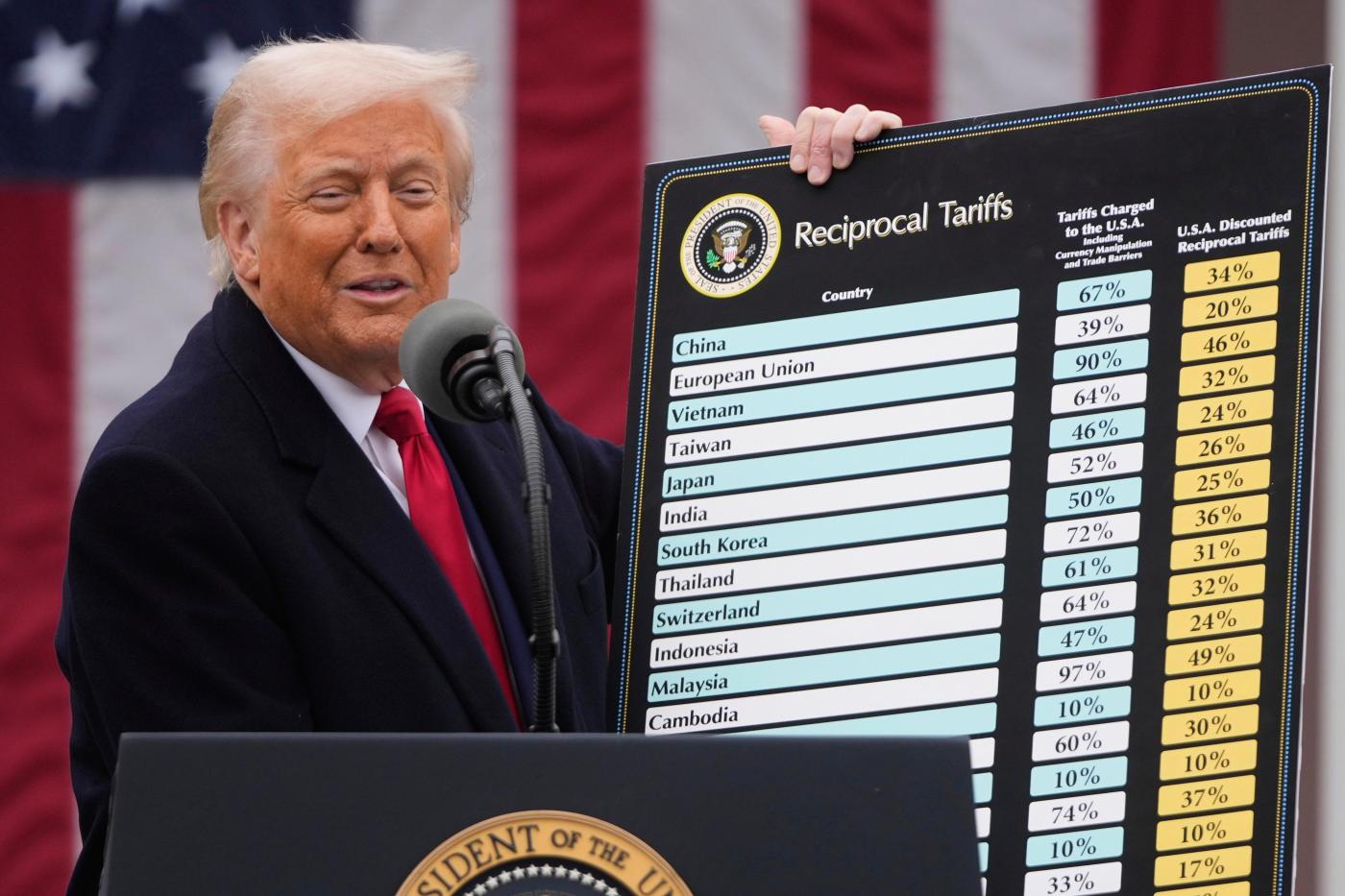
Meanwhile, as the justices weigh the case, Trump continues to invoke the threat of tariffs, extol their virtues and refer to the case as the court’s most important.
“I would hope, like a lot of people, the justices have been watching the tariff threats over Greenland and realize the gravity of this moment,” Busch said.
Leave a Reply