
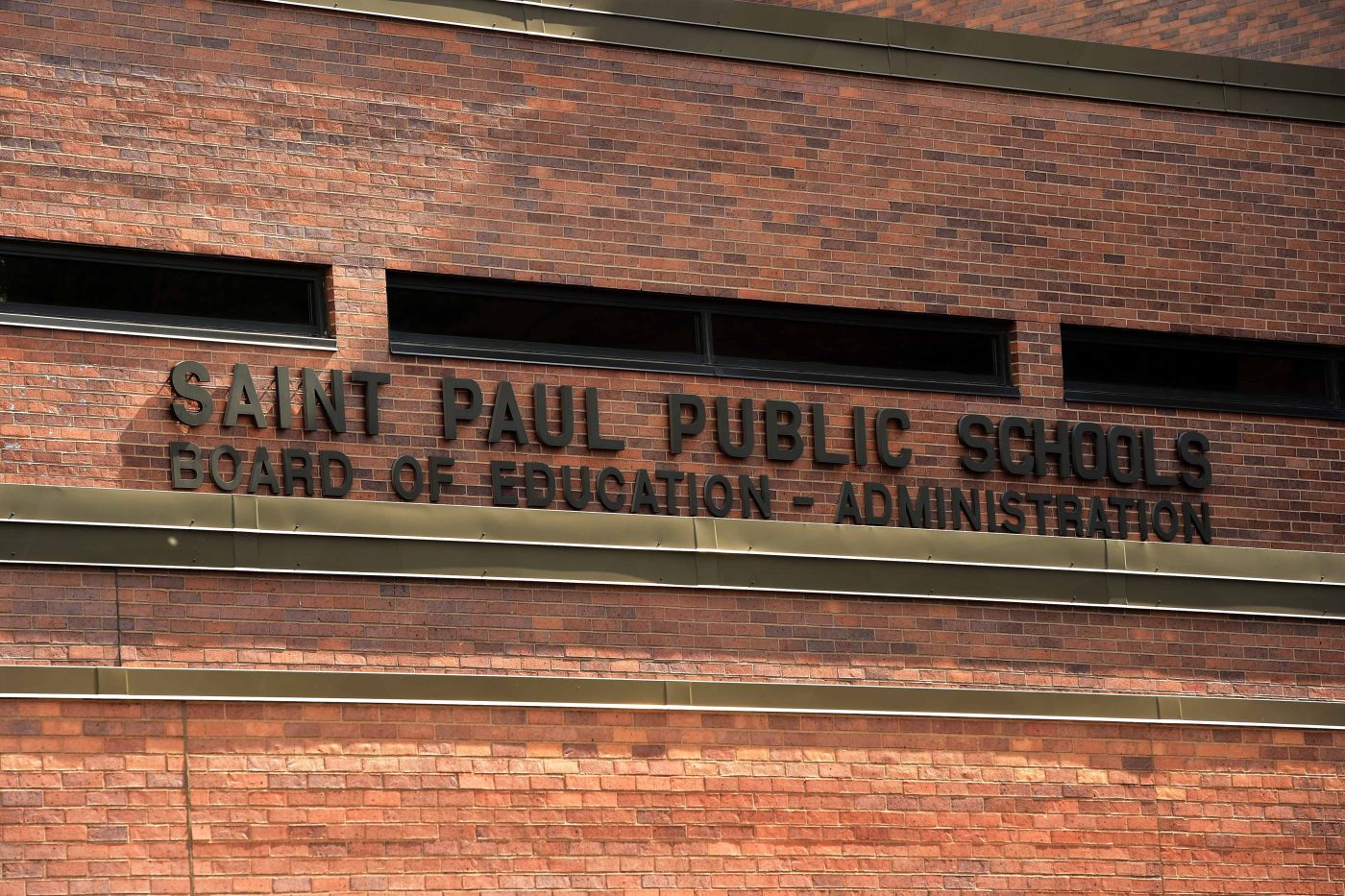
More than 6,000 St. Paul public school students have registered to learn online in the past week as the federal government’s immigration enforcement operation continues.
St. Paul Public Schools’ temporary online learning option takes effect Thursday and the deadline for families to register was Sunday. All 69 district schools have been closed through this Wednesday to give teachers time to prepare an online curriculum. Students registering late for the virtual option may have a delayed start time. The district has 33,000 students in total.
The district introduced the temporary online learning option last week which allows students to register without transferring out of their school. Prior to that, students could request enrollment in the district’s online school if they felt unsafe attending class, which required transferring into SPPS Online School.
The percentage of students who have enrolled in virtual learning ranges from a low of 30% at some schools to up to 75% at others, said district superintendent Stacie Stanley. A school likely would need for 80% to 90% of its students to enroll in the option before moving to a fully-online option would be considered, Stanley said.
For information on the virtual learning program go to spps.org/virtual. For more information on SPPS policies on immigration issues go to spps.org.
Related Articles
Trump administration drops legal appeal over anti-DEI funding threat to schools and colleges
Trump administration delays plan to withhold wages for student loan borrowers in default
The Education Department is opening fewer sexual violence investigations as Trump dismantles it
St. Paul Public Schools to offer online learning at all schools
Students protest ICE enforcement, walk out of classes, rally at the Capitol
Federal enforcement impact
At a Tuesday night meeting board members reiterated the district’s desire and responsibility to take care of students in a time of unpredictability due to the federal enforcement activity. That includes helping students who have lost in-person classroom time catch up once they return to school, said board member Halla Henderson.
“I know that we don’t know when this will end, but I think being able to continue to reassure community that not only do we have your back, but we’re going to stand there with you and we’re going to do everything we can to protect you and to make you feel safe and to make sure that you have access,” Henderson said.
The district’s temporary learning plan will be reviewed weekly, with an end date depending on “when our children know that they can journey to and from school, when our families know that they can drop their children off safely at school, without having fear,” Stanley said.
Board members also have been working with the teachers’ union to ensure real-time virtual learning for students, citing negative impacts that virtual learning has previously had on students’ learning and mental health during the COVID pandemic.
More Spanish-speaking students absent
Approximately 55% of students who speak Spanish at home were absent from school last Friday, according to district data. That’s up from the average of 27.4% of Spanish-speaking students absent each day in the district between Dec. 1 and Jan. 8. More than 3,000 students in the district speak Spanish at home.
“ICE has been documented patrolling and targeting our language immersion schools and our immigrant dense neighborhood schools, specifically on the east side and north end,” said Sandy Velazquez, a district parent and a district Latino parent advisory council member, at Tuesday’s board meeting. “While virtual options are helpful, they do not erase the paralyzing fear parents and students feel. The fear that a loved one might disappear or, as we have already tragically witnessed, be killed.”
The presence of ICE does not just affect undocumented immigrants, Velazquez said.
“They target anyone ICE perceives as ‘other,’ whether because of their color of the skin, their accent or simply because they are standing in solidarity as legal observers,” Velazquez said. “Despite this, we see the helpers in our community. We are deeply grateful to the SPPS teachers and staff who are working overtime to support families torn apart by unjust attentions while trying to maintain normalcy for their students.”
Outreach to provide food
Meanwhile, the district also is working with community partners to make sure there is outreach to families, such as those who may need food resources as many opt to not go to work or school.
The board has also worked with state lawmakers so the district can develop a plan if U.S. soldiers are sent to Minnesota, Stanley said, something that is “not an experience that has happened in Minnesota,” in her lifetime.
“And so we are working very, very closely with our police department, their internal safety and security department to make certain that we can minimize – we are not going to be able to eliminate the trauma. Our kids are already traumatized,” Stanley said. “I receive email from students, literally – I think it would be appropriate to use the word begging – me to do something to remove the presence of ICE in our communities, not for themselves, for their friends, for their neighbors.”
Alli Kildahl with the St. Paul Federation of Educators’ immigration defense committee said the district also needs to do more to support staff working with immigrant families, online students needing access to school resources, such as school counselors, and staff who do not feel safe commuting.
That could include additional pay for bilingual staff, security for dismissal and arrival times and bus stops and financial assistance through the district’s office of Family Engagement and Community Partnerships, Kildahl said.
Board member Carlo Franco also called on the governor’s office to push for a temporary waiver on the state’s 15-day limit that requires school districts to unenroll students who have missed 15 consecutive days of instruction.
Statewide strike
Statewide, thousands of Minnesotans are expected to participate in a statewide economic strike this Friday.
However, schools will not close on Friday, officials said.
“Jan. 23 is a regularly scheduled school day for Saint Paul Public Schools. In this moment, the most powerful thing we can do for all of our students is provide the stability, safety, and continuity of their school community,” district officials said Wednesday.
Related Articles
St. Paul Public Schools to offer online learning at all schools
Students protest ICE enforcement, walk out of classes, rally at the Capitol
SPPS: Online classes offered for students, board calls for ICE to leave
Minneapolis Public Schools offer remote learning through Feb. 12
St. Paul Public Schools shares federal activity procedures, cancels events in Minneapolis
Leave a Reply