
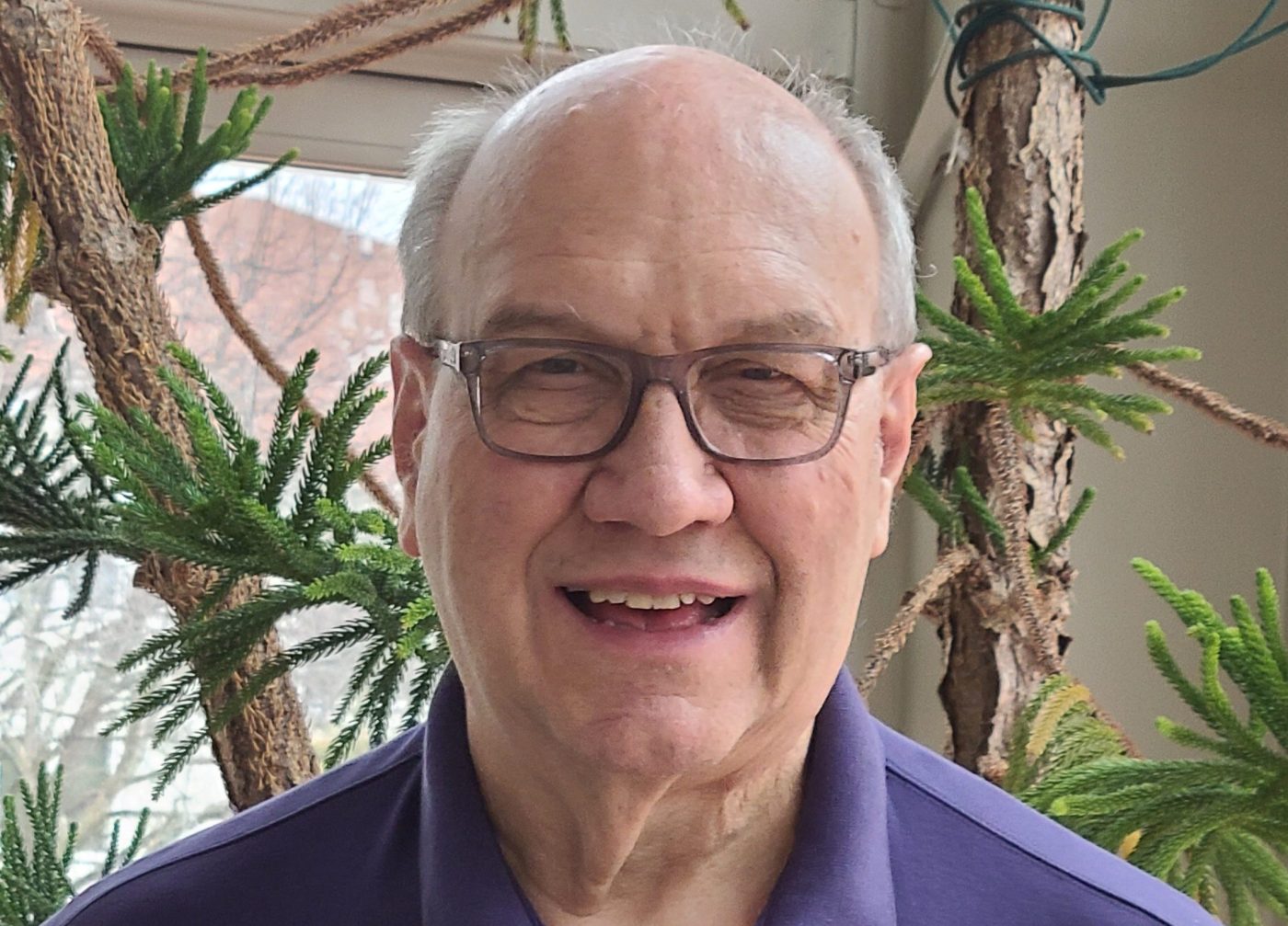
Edward Lotterman
Ancient Greek sages argued that, “Whom the gods would destroy, they first make mad!”
The disclosure last week that the Trump administration’s Justice Department is initiating a criminal investigation of Federal Reserve Chair Jerome Powell bears out the wisdom of that ancient adage.
When this action was initiated, and exactly by whom, is not clear. Powell disclosed it with a stinging online rebuke last Sunday. When queried, Trump responded with a jaw-dropping, “I don’t know anything about it.”
So we’re expected to believe that a U.S. presidential administration would initiate a history-making action, counter to the advice of virtually all economists, and one very capable of touching off a worldwide financial market crisis, without the boss even knowing about it? What about, “the buck stops here”?
Simply put, Trump is lying. Because if he’s not, and he really doesn’t know anything about it, it reveals a level of disorganization and dysfunction within the administration that dwarfs anything Powell might be investigated for — which seems related to his testimony to Congress about the costs of renovations to the Fed headquarters.
But everyone knows, even if they don’t admit it, that it’s really about control. It’s not even really about interest rates, which Trump says he wants lowered. It’s about the fact that the president wants to control the Fed, and Powell is standing in the way. Oh, and the law is too, by the way, but when has that bothered Trump?
What is clear is that while the Greek thinkers were right, the wise preacher in the Old Testament who said, “There is nothing new under the sun,” is flat wrong. For a century, scholars have followed a useful distinction made by Chicago economist Frank Knight, who said that when there is a future situation in which we do not know what will happen, it will involve either risk or uncertainty.
“Risk” is a situation in which we don’t know what will happen, but there is actuarial or statistical information that gives us a basis for estimating the probability of different outcomes. No one knows if or when a tornado will splinter our condo or if someone will come across the centerline and smash into our SUV. But we do know that the probability of a tornado is greater in Minnesota than in California, and that the probability of a car crash depends to some extent on how often and where we drive. Nearly anyone can buy insurance against these outcomes.
Financially, farmers and financiers can buy derivative contracts like futures or credit default swaps that insure against the risk of commodity price fluctuations or loans defaulting. So modern economies have many tools to manage risk.
“Uncertainty” comes when we do not know the future and there is no data on which to estimate probabilities of good or bad events happening. We could not predict the assassination of an archduke and his wife touching off a world war. Or that operator miscalculations in handling a poorly designed nuclear reactor would expose tens of thousands of people to radiation. Will an asteroid land in the Bermuda Triangle or the one formed by London, Paris and Berlin? Will a virus like Ebola or Marburg jump to humans and spread out exponentially?
One cannot insure against such uncertainty. However, within resources available, countries can build disaster and health response capabilities to mitigate physical and biological catastrophes.
Trump has pioneered something new under the sun, a national government composed of minions that seems hell-bent on creating chaos.
Within one weekend our president announced that he, personally, will run Venezuela, a country twice the land area of Ukraine and nearly the same population. He truculently reiterated that we will forcibly take Greenland from one of our closest allies, possibly ending NATO. He threatened military action against Iran and a blockade of any petroleum sales to Cuba. In his spare time, his administration hinted at changes to voting procedures for the 2026 election to be held this fall.
And then, somewhere along the line, someone in Trump’s orbit decided to possibly upend a monetary policy system that, on balance, has greatly benefited our nation since 1935 — ostensibly without even telling him (?). What the hell?
Common sense should have told everyone from Trump on down to his attorney general to Bill Pulte, the third-tier head of the Federal Housing Finance Agency (who may have been the instigator) to just wait it out. Powell’s term as chair expires on May 23, when Powell, like all but one of his predecessors, might have just resigned from the board altogether. But Powell’s term as governor runs until Jan. 31, 2028. Don’t be surprised if he now flips Trump the bird by staying on the board, as a matter of principle, denying the president an open slot to increase his flunky minority.
How does this all really play out? Well, if Powell indeed is indicted, convicted, or otherwise removed for any malfeasance the inquiry may find, many pundits this week have waved the bloody shirt of hyperinflation — that a Trump-appointed chair would immediately lower interest rates, opening the monetary sluice gates releasing a torrent of new dollars. That is not likely and reflects fundamental misunderstandings of how the Fed works. A Fed chair has much less power than even many well-informed people realize. They are more than just the first among equals, but they are not dictators. When it comes time for a Federal Open-Market Committee vote on monetary policy, there are 11 other votes. The five district bank presidents are entirely outside of government and safe from any political threats.
But the larger, longer-term and probably irreversible danger would be an erosion of the United States as the financial center of the world, and the role of the U.S. dollar as the world’s undisputed reserve currency. In this regard, Trump and his minions seem oblivious to the havoc they could create. Either that, or these are the intended outcomes, which is more cynical and more malevolent than I even give these people credit for.
Writing in the 1920s, a decade of despair, frustration and loss of faith in institutions even worse than our current malaise, poet T.S. Eliot wrote: “This is the way the world ends / Not with a bang but a whimper,” fittingly from a poem titled, “The Hollow Men.”
Trump’s actions today, and the actions of others leading up to today, are how U.S. financial and economic dominance in world affairs will end. It won’t be from sudden hyperinflation or an apocalyptic crash. Rather it will be from 50 years of slow complacency over rising federal deficits, failure to prudently regulate financial markets, and now an administration seeming bent on destroying global trust, not only in our markets and our dollar, but in our willingness to work cooperatively with other nations to achieve and maintain political and economic stability. Political courage is needed, especially from the cowardly, groveling Congress.
Hollow men indeed.
Related Articles
Real World Economics: Geography, topography shaped our prosperity
Real World Economics: Tales of economic growth speak volumes
Real World Economics: Banking, investment are great but need regulation
Real World Economics: A reminder on what the Fed rate cut really is
Real World Economics: Making the case for bank regulations
St. Paul economist and writer Edward Lotterman can be reached at stpaul@edlotterman.com.
Leave a Reply