
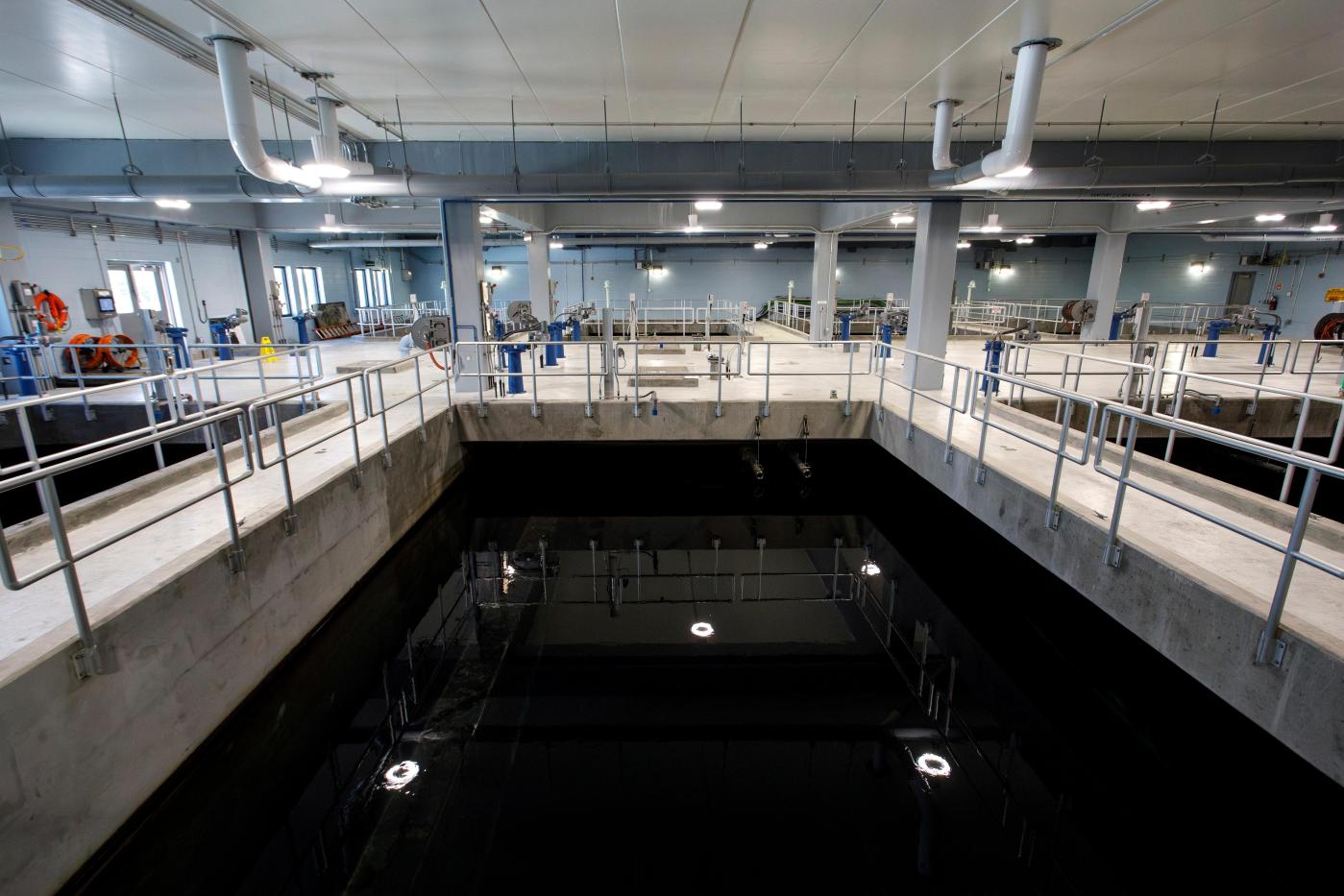
Apple Valley city officials will be asking the state to pitch in $40 million this legislative session for a water-treatment plant that would ensure what’s coming out of the tap is safe to drink for future generations.
The project, which would cost an estimated $106 million in total, would upgrade the city’s current treatment facilities in order to remove commonly called “forever chemicals” from Apple Valley’s municipal water.
Officials from cities and counties across the state have been preparing funding requests to the Minnesota Legislature for 2026 state bonding dollars, matching funds for various infrastructure, higher education, environmental, public safety and other public works projects. The 2026 session begins Feb. 17.
The man-made forever chemicals, known as perfluoroalkyl and polyfluoroalkyl substances (PFAS), are a family of nearly 5,000 compounds that have been used in many different ways, across many different industries over the last few decades. This includes items like nonstick cookware, water-repellent fabrics and food packaging resistant to oil and grease. Favored in commerce and industry for their durability and heat resistance, PFAS also resist breaking down naturally in the environment.
Long-term, repeated exposure to these chemical compounds has been linked to increased risk of some cancers, developmental delays in children and reproductive effects in pregnant women, according to the U.S. Environmental Protection Agency.
Addressing the presence of forever chemicals in groundwater has become more of a focus for cities in recent years. Among this year’s bonding requests, the cities of Stillwater, Oak Park Heights and Hastings also are making requests related to PFAS-related water treatment.
The city of Hastings is asking for about $39 million, split between two water-treatment facilities, to remove PFAS and nitrates from the city’s drinking water.
The city of Burnsville is making a request to upgrade its water-treatment plant, but the $8.75 million request does not include treatment for forever chemicals at this time. It does, however, include $6 million for site acquisition in the event of needing to expand treatment facilities to address PFAS-type contamination.
New EPA limits
For many municipalities, the issue came to the forefront in April 2024 when the EPA lowered the maximum contamination levels for PFOS and PFOA from 70 parts per trillion to 4 parts per trillion. With that threshold, seven of Apple Valley’s 16 wells exceeded the EPA’s maximum contaminant level.
Two of those wells have been shut down, Apple Valley Public Works Director Matt Saam said.
In 2018, 3M Co. agreed to give the state $850 million for water-quality programs in the east metro, settling a then eight-year lawsuit with the state of Minnesota that charged 3M with damaging groundwater by releasing these types of chemicals into the environment. In 2004, traces of the chemicals were discovered in the drinking water of 67,000 people in Lake Elmo, Oakdale, Woodbury and Cottage Grove, the Pioneer Press reported at the time.
Currently, Apple Valley’s water passes federal safety thresholds using a blending treatment process. Water is pumped back to the treatment plant and mixed with water from the city’s other wells, thereby lowering the parts-per-trillion levels before it flows out to homes.
In Hastings, all six of the city’s wells — as well as a seventh that is soon to come online — exceed the EPA’s maximum contamination levels, making any blending treatment impossible. City officials have tried to expedite the process, starting construction on a new treatment facility last year.
In 2024, the Minnesota Pollution Control Agency found a definitive link between municipal well No. 5 in Hastings and the 3M site, allowing the city to receive $15 million through the state’s East Metro 3M settlement fund. Hastings has also received $8 million in grant funding.
Even still, cost estimates for the three treatment plants together total $70 million.
Residents have been left to buy bottled water, or install costly whole-home filtration systems, in addition to experiencing city water rates that increased 21 percent this year. Without additional funding, those rates will increase more than 150 percent from 2024 to 2028.
‘Contaminated water’
The need is critical, Hastings City Administrator Dan Wietecha said.
“This means, in essence, we’re drinking contaminated water until we get these plants built,” Wietecha said. “We can’t wait on grant applications, or bonding decisions.”
When addressing forever chemicals, Apple Valley city officials likewise said that temporary fixes won’t solve a long-term issue.
“In a town of just under 60,000 people, we can’t just continue to blend water and shut down wells as a solution going forward,” Saam said.
The source of Apple Valley’s contamination is still unidentified, Saam said.
Related Articles
Waiting for a mentor: Nate
New Dakota County Board chair says 2026 will be a ‘buckle-up’ year
Waiting for a mentor: Jada
Burnsville man, 23, charged with attacking 74-year-old woman on park trail
Hilton removes name from Lakeville hotel amidst ICE controversy
While PFAS contamination has been an issue for many cities in the east metro during the past two decades, cities in the south metro bordering Apple Valley have yet to see similar issues.
Total project costs in Apple Valley are estimated to reach $106 million, and Saam said city officials are “turning over every rock” they can to also find alternate funding sources like federal grants, in addition to asking for help from the state.
“This was not a naturally occurring thing in nature,” Saam said. “This was a man-made thing, someone put that into the environment here, and now our residents and people have to address it, through no fault of their own.”
Leave a Reply