
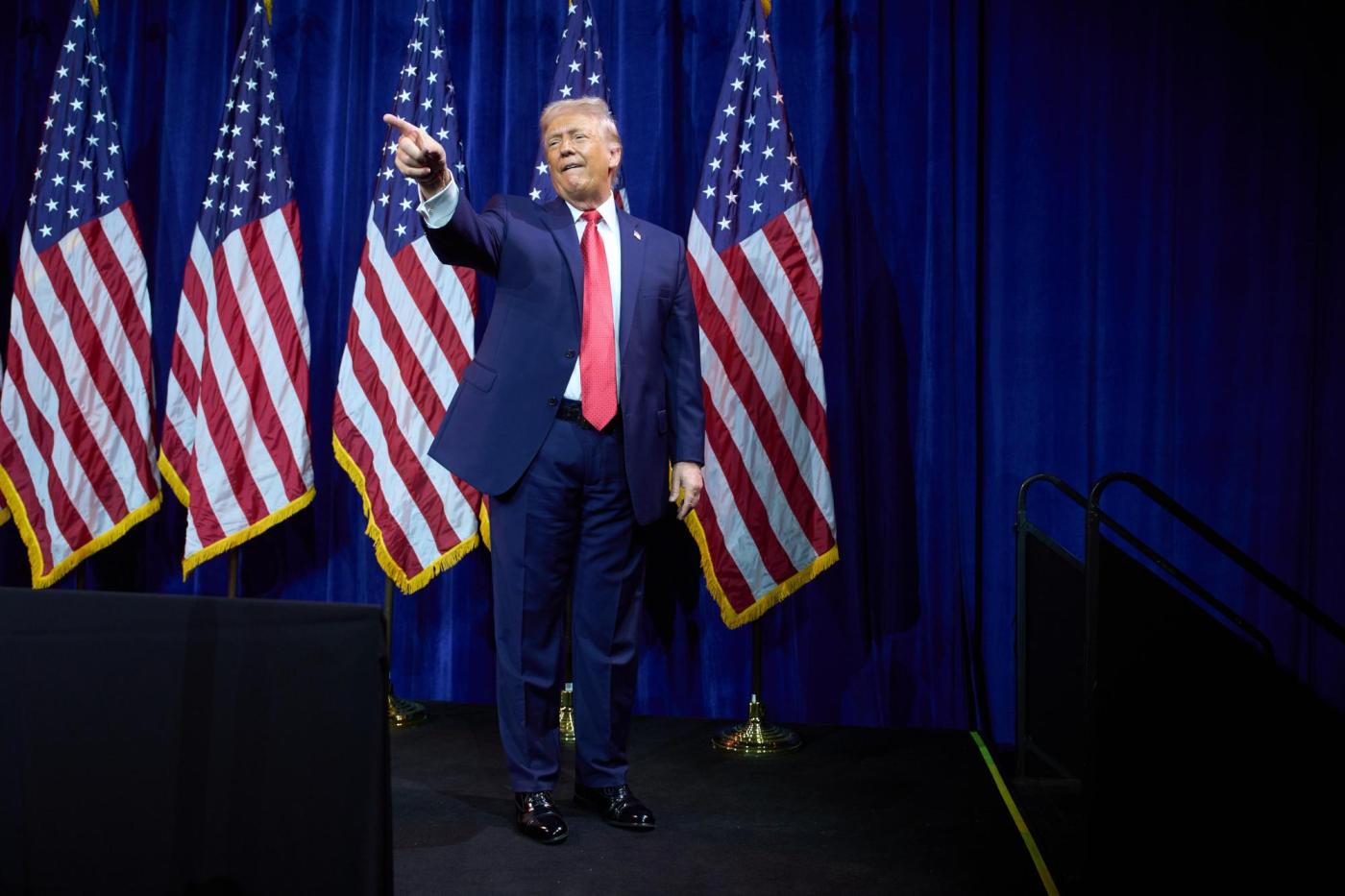
By BILL BARROW
President Donald Trump said Tuesday he wants Republicans to reach a deal on health care insurance assistance by being willing to bend on a 50-year-old amendment that bars federal money from being spent on abortion services.
Related Articles
At least 24 Venezuelan security officers killed in US operation to capture Maduro, officials say
Trump administration thanks the media for keeping quiet before the strike that captured Maduro
After Maduro capture, Trump’s tough talk evokes a return to the days of American imperialism
Trump says the US ‘needs’ Greenland for Arctic security. Here’s why
Abortion stays legal in Wyoming as its top court strikes down laws, including first US pill ban
“You have to be a little flexible” on the Hyde Amendment, Trump told House Republicans as they gathered in Washington for a caucus retreat to open the midterm election year. “You gotta be a little flexible. You gotta work something. You gotta use ingenuity.”
With his suggestion, Trump, who supported abortion rights before he entered politics in 2015, is asking conservatives to abandon or at least ease up on decades of Republican orthodoxy on abortion and spending policy. At the same time, he is demonstrating his long-standing malleability on abortion and acknowledging that Democrats have the political upper hand on health care after Republicans, who control the White House, the Senate and the House, allowed the expiration of premium subsidies for people buying Affordable Care Act insurance policies.
As negotiations on Capitol Hill continue, some Democrats are pushing to end the Hyde restrictions as part of any new agreements on health care subsidies.
Trump’s road map on the Hyde Amendment came more than an hour into a stem-winding speech intended as a part strategy session and part cheerleading as Republicans attempt to maintain their threadbare House majority in the November midterms.
The president touted the House GOP proposal to replace ACA subsidies — which taxpayers typically steer directly to insurance companies after selecting their policies — into direct payments that taxpayers could use for a range of health care expenses, including insurance. The expanded ACA subsidies expired on Dec. 31, 2025, hitting millions of policy holders with steep premium increases.
“Let the money go directly to the people,” Trump said, before casually slipping in a reference to the Hyde Amendment.
“We’re all big fans of everything,” he said. “But you have to have flexibility.”
Turning directly to GOP leaders, Trump added, “If you can do that, you’re going to have — this is going to be your issue.”
But the GOP faces considerable pressure from parts of its coalition that want absolute opposition to any policy that might ease abortion restrictions.
At Americans United for Life, a leading advocacy group that opposes abortion rights, Gavin Oxley penned an op-ed this week for “The Hill” titled, “Republicans must hold the line: No Hyde Amendment, no deal on health care.”
“If they play their cards right,” Oxley wrote, “Republicans just might earn back enough of their base’s trust to sustain them through the 2026 midterms.”
The Hyde Amendment, named for the late Rep. Henry Hyde, originally applied to Medicaid, the joint federal-state insurance program for poor and disabled Americans, and barred it from paying for abortions unless the woman’s life is in danger or the pregnancy is the result of rape or incest. Hyde first introduced it in 1976, shortly after the Supreme Court’s 1973 Roe v. Wade decision, which legalized abortion nationwide.
Over the years, Congress reauthorized Hyde policy as part of spending bills that fund the government. Democrats who support abortion access often joined Republicans who opposed abortion rights as a bipartisan compromise to pass larger spending deals. But as the two parties hardened their respective positions on abortion, Democrats became more uniform opponents of the ban, most famously when presidential candidate Joe Biden reversed his long-standing support for Hyde on his way to winning the 2020 Democratic nomination and general election.
Republicans, meanwhile, have maintained their near absolute support for the amendment.
The anti-abortion movement was initially skeptical of Trump as a presidential candidate in 2015 and 2016. But he has mostly aligned with the key faction of the Republican coalition, especially on Supreme Court appointments that led to the 2022 decision overturning Roe.
Leave a Reply