
By Lulu Jaeckel
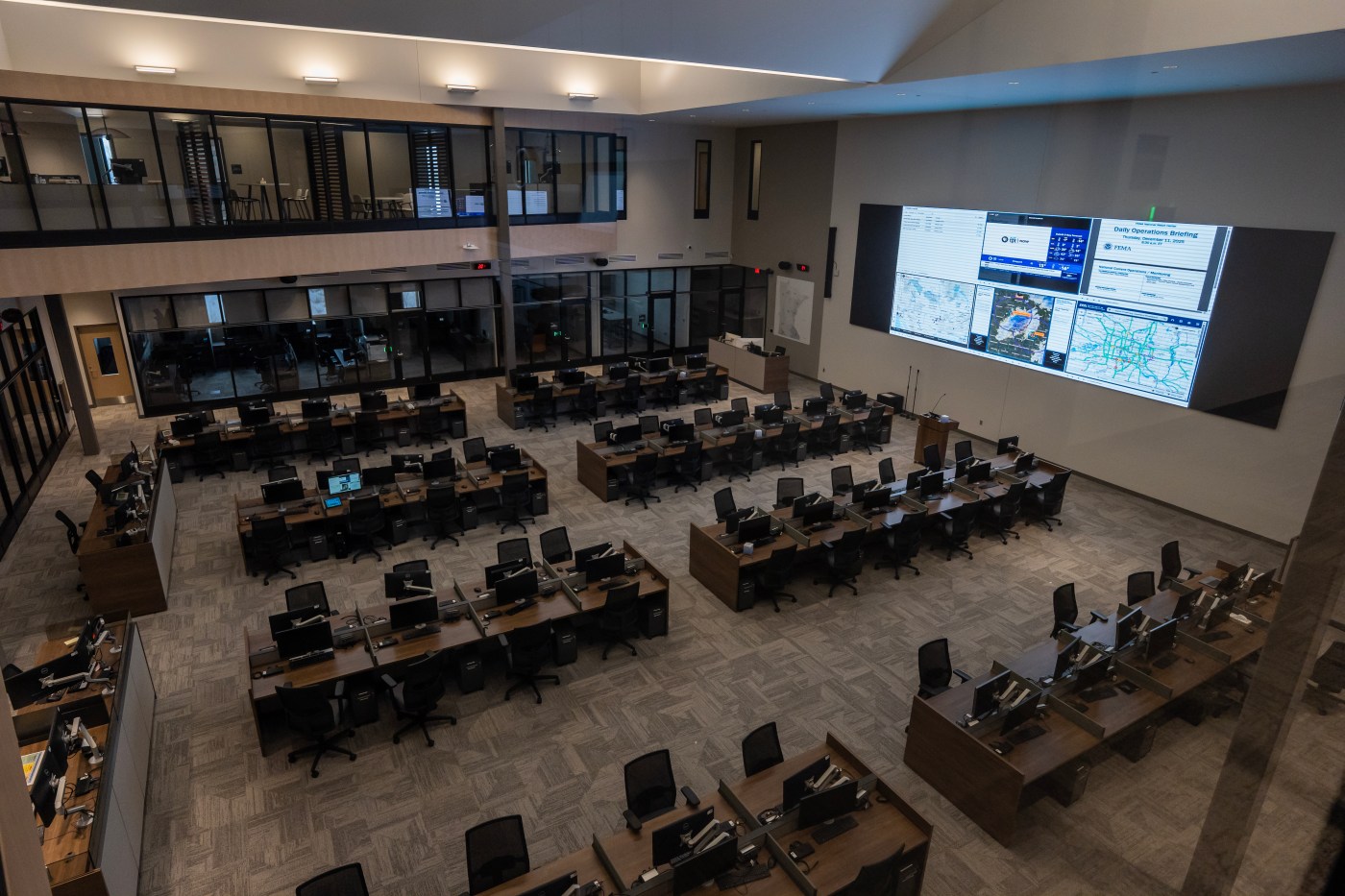
Minnesota has relocated its emergency operations center from downtown St. Paul to Blaine, expanding space and adding modern energy systems to strengthen statewide disaster response.
The new 36,650-square-foot center replaces its predecessor at 445 Minnesota St. with upgrades in safety, resilience and energy performance, said Kat Barrett, communications specialist for the Minnesota Department of Public Safety.
“The old St. Paul facility was getting worn out, was limited by where it was located and wasn’t designed to handle the stronger, more modern systems needed for today’s emergency management,” Barrett said.
The new facility also houses the department’s Homeland Security and Emergency Management division headquarters.
Storm-worthy, energy efficient
Designed and built by Wold Architects and Engineers, a national architecture and engineering firm, the new center features an exterior built to withstand 165 mph winds and power systems that can keep it operating for up to 72 hours during an outage.
The new Minnesota State Emergency Operations Center has a tornado shelter and is built to withstand up to 250 mph gusts. (Claudia Staut / Pioneer Press)
The center also uses a geothermal heating and cooling system and a large solar array, which help regulate the building’s temperature and provide renewable power for computer systems, communication systems and lighting. This reduces energy costs and minimizes environmental impact.
“During an emergency, reliable power isn’t just helpful, it’s critical to keeping Minnesotans safe,” said Riley Slimmer, project manager for the new building. “That’s why the new state EOC was built to stay running no matter what, using smart, sustainable energy systems that protect both people and resources.”
The Legislature appropriated $29,545,000 in 2020 and $11,392,000 in 2023 for this project, Barrett said. The center officially opened on Aug. 22.
Activated for ‘worst days’
The previous Emergency Operations Center in St. Paul was activated for 459 consecutive days during the COVID-19 pandemic, Barrett said.
State EOCs activate for natural disasters, severe weather, public-health emergencies and major infrastructure failures.
When the EOC is not active, it’s always in watch status, Barrett said. During watch status, they track power outages, watch weather-related events and train staff, state agencies and local jurisdictions to prepare them for when the EOC becomes active.
“When disasters strike and local resources are overwhelmed or exhausted, we’re called into action and in to help,” said Kristi Rollwagen, director of Homeland Security and Emergency Management, in a press release. “This new facility gives us what we need to keep Minnesotans safe – not only on their worst days but for the long haul.”
Related Articles
Report: ICE considering Woodbury immigrant detention center
Governor orders flags to half-staff for Monday funeral of recent St. Paul firefighter grad
Minnesota Attorney General’s Office seeks public input on cryptocurrency ATMs
Enbridge to pay $2.8M over aquifer breach during pipeline construction
Archbishop Hebda: Immigration officials won’t target holiday church services
The new EOC in Blaine has 70 employees, five more than the old EOC in St. Paul.
Wold designed the center to ensure uninterrupted operations during crisis, regardless of outdoor conditions, Barrett said.
“In times of crisis, one of the best resources we have to protect Minnesotans is our dedicated team of emergency managers who coordinate with local, county and federal partners,” said Gov. Tim Walz, in the press release. “The new State Emergency Operations Center will be the hub for state agencies and their partners to come together and prepare for and handle any emergencies that come our way. This is an investment in the safety of every community across the state.”
Leave a Reply