
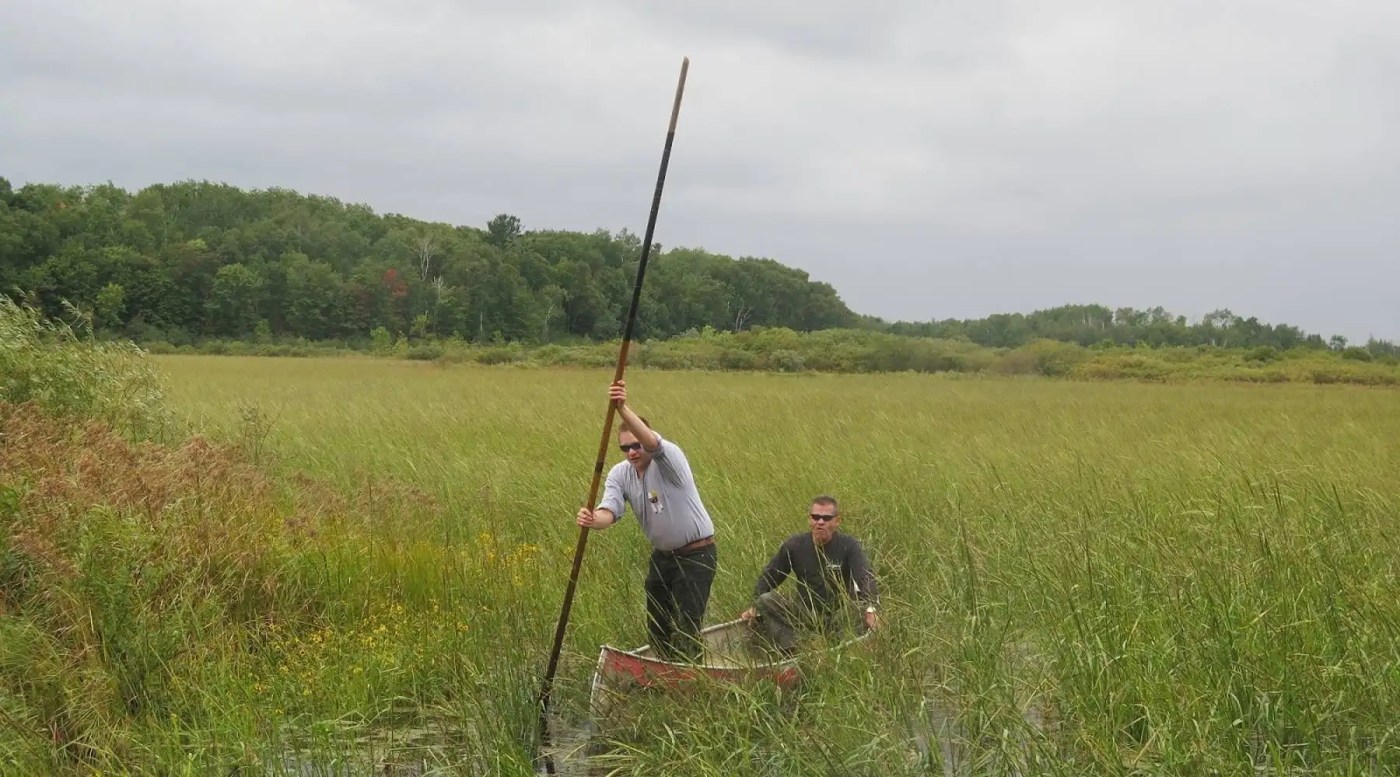
Minnesota state officials have announced plans to conduct further analysis of the impacts of sulfate pollution on wild rice in Minnesota lakes and rivers. The announcement comes amid concerns that Minnesota’s standard that limits how much of the pollutant mines and other facilities can release into waters where wild rice grows — adopted in 1973 — is out of date.
The Minnesota Pollution Control Agency said it will evaluate recent peer-reviewed scientific studies to validate the impacts of sulfates on wild rice while also working with third-party experts to better understand the variation of naturally occurring sulfate levels in different areas across the state.
The MPCA says the two analyses will take about six to nine months to finish and “could inform” the agency’s approach to implementing the state’s standard, which limits sulfate discharges to 10 milligrams per liter.
“At the end of this, we will have a better idea if there are different tools or approaches that we need to undertake with regards to implementing the sulfate wild rice standard,” explained MPCA Commissioner Katrina Kessler.
The announcement comes about three months after MPCA officials hosted a contentious public meeting on the Iron Range over proposed industrial wastewater permits for U.S. Steel’s Keewatin Taconite mine, known as Keetac, that for the first time imposed limits on sulfate discharges to comply with the state standard.
Environmental groups and Indigenous people have been demanding for years that the state enforce the standard, citing evidence showing that sulfate converts to sulfide in the sediment of lakes and rivers, and is toxic to wild rice. Called manoomin in the Ojibwe language, it is culturally significant to the state’s Ojibwe Nations, and wild rice is Minnesota’s official state grain.
But mine workers, labor union representatives and state legislators from northeast Minnesota have argued that the state’s sulfate pollution standard is flawed and out of date. They say installing pollution control equipment is cost-prohibitive, so enforcing the standard could force mines to close, potentially devastating the region’s economy.
U.S. Steel has asked the MPCA for a variance that would allow the mine to exceed the sulfate standard. The company argues it would cost more than $800 million to install the water treatment technology needed to meet the sulfate limit, with annual operating costs exceeding $100 million.
Mining officials argued at the public meeting in September that those investments would increase Keetac’s cost of production by $17.50 per ton, an amount that would make the mine significantly less competitive in a global marketplace.
“When people — hundreds of commenters — call for a reevaluation of the science,” said Kessler, “I think it is responsive for us to say, ‘OK, if they’re not confident in the state government’s implementation of the science or the state government’s understanding of the science,’ then it is important for the state to hire third-party researchers to scrutinize what the latest science says about the impacts of sulfate on wild rice.”
The state has conducted a similar analysis before. In 2011, following a lawsuit filed by the Minnesota Chamber of Commerce to eliminate the standard, the state legislature asked the MPCA to study the rule and see if it needed updating.
Six years later, the agency proposed a complex, flexible formula that would determine different sulfate limits for each specific lake or stream. But a state administrative law judge rejected the proposal.
Paula Maccabee, executive director of the environmental group WaterLegacy, said the research conducted then showed the importance of keeping the standard in place to protect wild rice.
Assuming that the same level of scientific integrity and rigor is used this time, Maccabee said, “I think they’re going to get the same answers, that science supports the need for a sulfate standard to prevent slow decimation of wild rice by sulfide in the sediments.”
Maccabee also hopes that researchers consider that some Minnesota waterways may even require a sulfate limit stricter than the state standard. Sulfate not only impacts wild rice, but also converts mercury to a toxic form that accumulates in fish, endangering the health of people who eat the fish.
“I’m hoping that the science is not for the purpose of delay but for the purposes of making sure that our aquatic life and our state grain are properly protected,” Maccabee said.
While the studies are conducted, the MPCA says the state’s current sulfate standard will remain on the books, and the agency will evaluate permitting decisions on a case-by-case basis.
Part of the reason why the state has struggled with how to enforce the sulfate standard, Kessler said, is because wastewater treatment plants are not designed to remove sulfate from the water.
And the cost of adding the technology to treat for sulfate is expensive. Groups have warned that enforcing the standard could have much broader impacts beyond the mining industry, because municipal wastewater treatment plants, paper mills, agricultural processing plants and other facilities also discharge sulfate.
“And when you’re asking entities to spend lots of money, it’s very important that we’re doing it in a way that is grounded in science,” said Kessler, “as well as (providing) opportunities for treatment and funding into the future.”
Related Articles
After helium discovery, hunt for Minnesota hydrogen ramps up
Stauber, House Republicans target environmental groups opposed to Twin Metals
Cleveland-Cliffs to search for rare earths in Minnesota, Michigan
Leave a Reply