
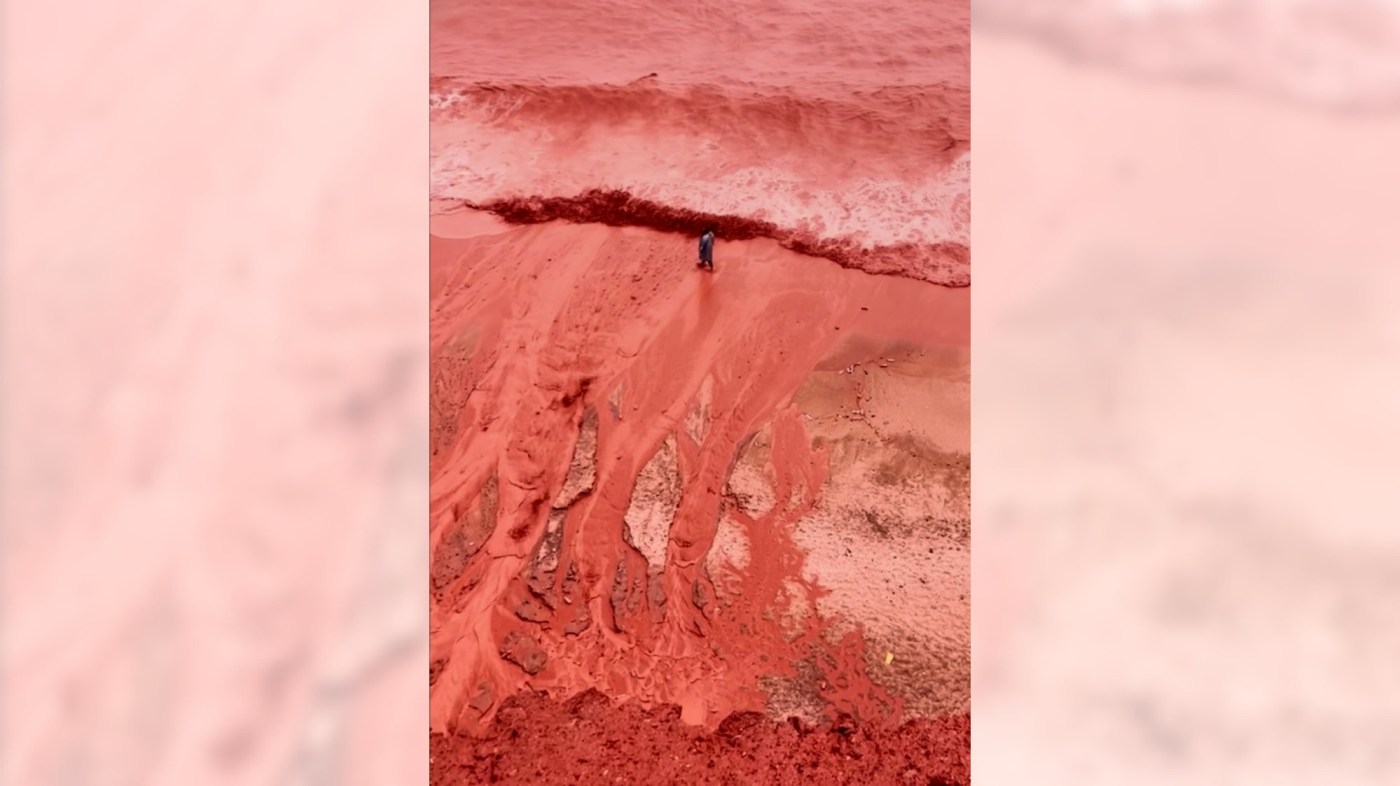
TEHRAN, Iran (AP) — Rainfall on Iran’s Hormuz Island briefly transformed the coastline of its famed Red Beach into a striking natural scene this week, as red soil flowed into the sea and turned the water shades of deep red.
Related Articles
Rubio hits 2 more International Criminal Court judges with sanctions over Israel prosecutions
US official defends Trump’s nuclear test comments by citing mounting risks from other states
Russia is trying to overwhelm Europe with its sabotage campaign, Western officials say
In 2025, Trump told FIFA, Olympics and NCAA to get in line. For the most part, they complied
Today in History: December 18, U.S. troops leave Iraq
The beach is known for its vivid red sand and cliffs, created by high concentrations of iron oxide.
When rain falls, as it did starting on Tuesday, streams of red soil flow toward the shoreline, coloring both the beach and the surrounding water and creating a sharp contrast with the blue waters of the Persian Gulf.
The phenomenon regularly attracts tourists, photographers and social media attention.
Beyond its visual appeal, the red soil — locally known as gelak — is exported in limited quantities and used in the production of cosmetics, pigments and some traditional products.
Hormuz Island lies in the Strait of Hormuz, where the Persian Gulf meets the Gulf of Oman, about 1,080 kilometers south of Iran’s capital, Tehran. Rainfall is relatively rare on the arid island, and happens mainly during the winter and early spring.
The island has become a popular destination with visitors drawn to its unusual landscapes.
Leave a Reply