
By JOSH BOAK and MICHELLE L. PRICE, Associated Press
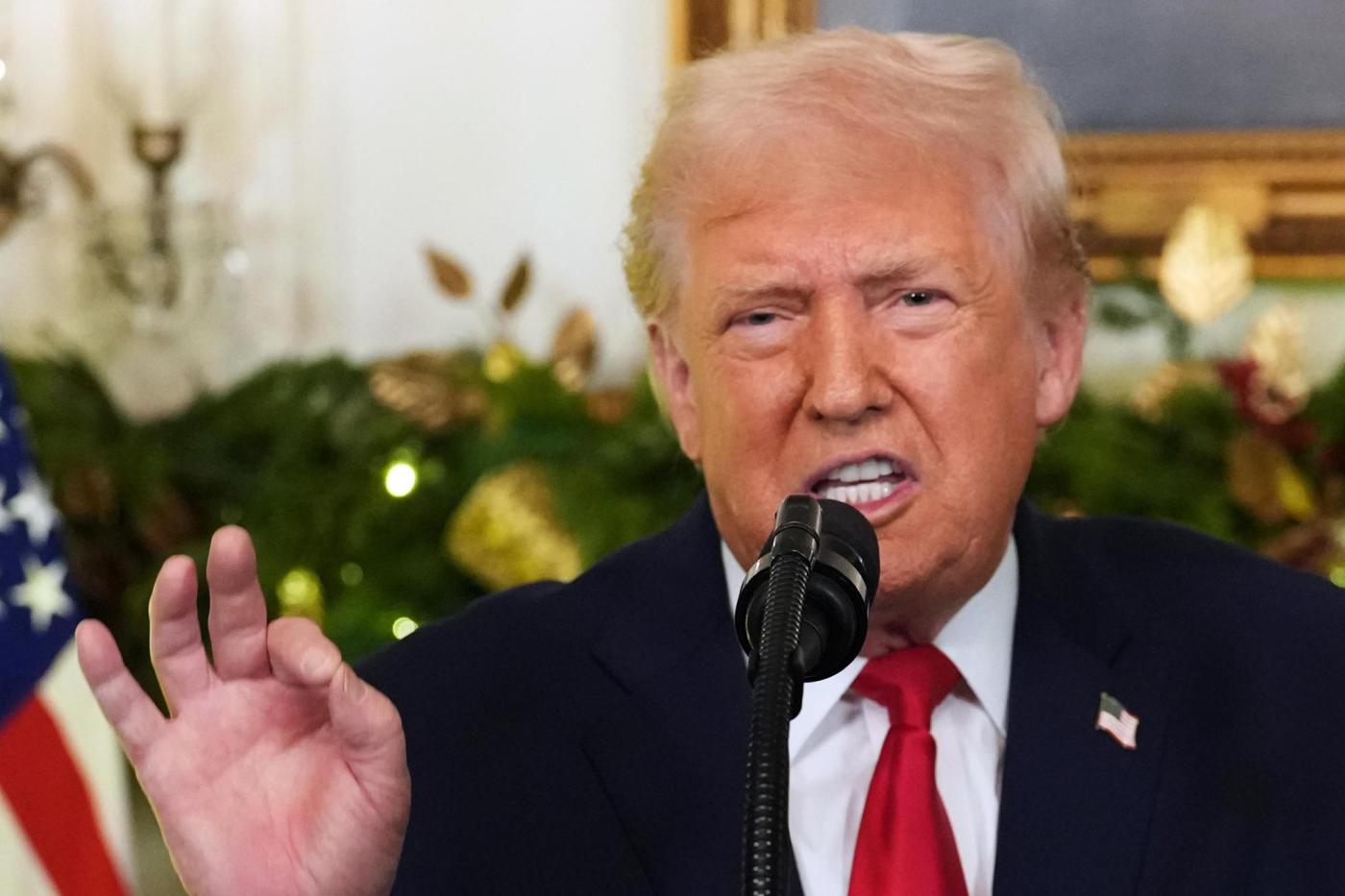
WASHINGTON (AP) — The “Warrior Dividend” that President Donald Trump announced during his televised address to the nation Wednesday is not a Christmas bonus made possible by tariff revenues, as the president suggested.
Instead, the $1,776 payments to troops are coming from a congressionally-approved housing supplement — money they were already set to receive — that was a part of tax cut extensions and expansions bill signed into law in July. Trump’s administration identified the source of the “dividend” payments Thursday.
In his remarks, Trump alluded to his “One Big Beautiful Bill Act” playing a role, but suggested that tariffs were largely responsible for the payments already on the way to 1.45 million members of the military.
“We made a lot more money than anybody thought because of tariffs and the bill helped us along. Nobody deserves it more than our military,” he said in announcing what he described as a “dividend.”
Trump has teased the idea of using his sweeping tariffs on imports to give Americans dividends ever since he imposed them in April. But these new payments are being disbursed by the Pentagon from a $2.9 billion military housing supplement that was part of Trump’s “One Big Beautiful Bill Act” to augment existing housing allowances, according to a senior administration official who requested anonymity to describe the payments.
The amount of the payments is a nod to next year’s 250th anniversary of the signing of the Declaration of Independence in 1776. In total, the measure is expected to cost $2.6 billion.
Trump’s announcement comes as he’s faced pressure to show he’s working to address rising costs for Americans, with prices remaining stubbornly high as the president has imposed double-digit tariffs on imports from almost every country. Trump has promised to lower prices, but he has struggled to do so. Inflation hit a four-decade high in June 2022 during Joe Biden’s presidency and then began to fall. But inflation has stayed elevated under Trump in part because of his tariffs.
Related Articles
Feds pave the way for Big Tech to plug data centers right into power plants in scramble for energy
House backs bill to speed permitting reviews for new energy and infrastructure projects
Trump signs executive order that would reclassify marijuana as a less dangerous drug
Trump’s handpicked board votes to rename Washington performing arts center the Trump-Kennedy Center
Democrats keep 2024 election review under wraps, saying a public rehash won’t help them win in 2026
It’s not the first time Trump has brandished ‘dividends’
Sending money to voters is a timeworn tool for politicians and one that Trump has repeatedly tried to use, including this year.
Trump has for months suggested every American could receive a $2,000 dividend from the import taxes — an effort that seemed designed to try to shore up support for tariffs, which the president has said protect American industries and will lure manufacturing back from overseas.
But that particular pledge appeared to exceed the revenues being generated by his tariffs, according to a November analysis by the right-leaning Tax Foundation. The analysis estimated that the $2,000 payments being promised to taxpayers could add up to between $279.8 billion and $606.8 billion, depending on how they were structured.
The analysis estimated that Trump’s import taxes would produce $158.4 billion in total revenue during 2025 and another $207.5 billion in 2026. That’s not enough money to provide the payments as well as reduce the budget deficit, which Trump has also claimed his tariffs are doing.
Earlier this year, as his Department of Government Efficiency was slashing the U.S. government and its workforce, Trump had briefly proposed sending a DOGE “dividend” back to U.S. citizens.
Neither the tariff dividend or DOGE dividend has come to fruition, and members of Trump’s own party as well as officials in his administration have expressed some skepticism about the idea. There is also the risk that the payments being promised by Trump could push up inflation, as they would likely spur greater consumer spending. Republican lawmakers argued in 2021 that the pandemic relief package from then-President Biden — which included direct payments — helped trigger the run-up in inflation.
Associated Press writers Konstantin Toropin and Lisa Mascaro contributed to this report.
Leave a Reply