
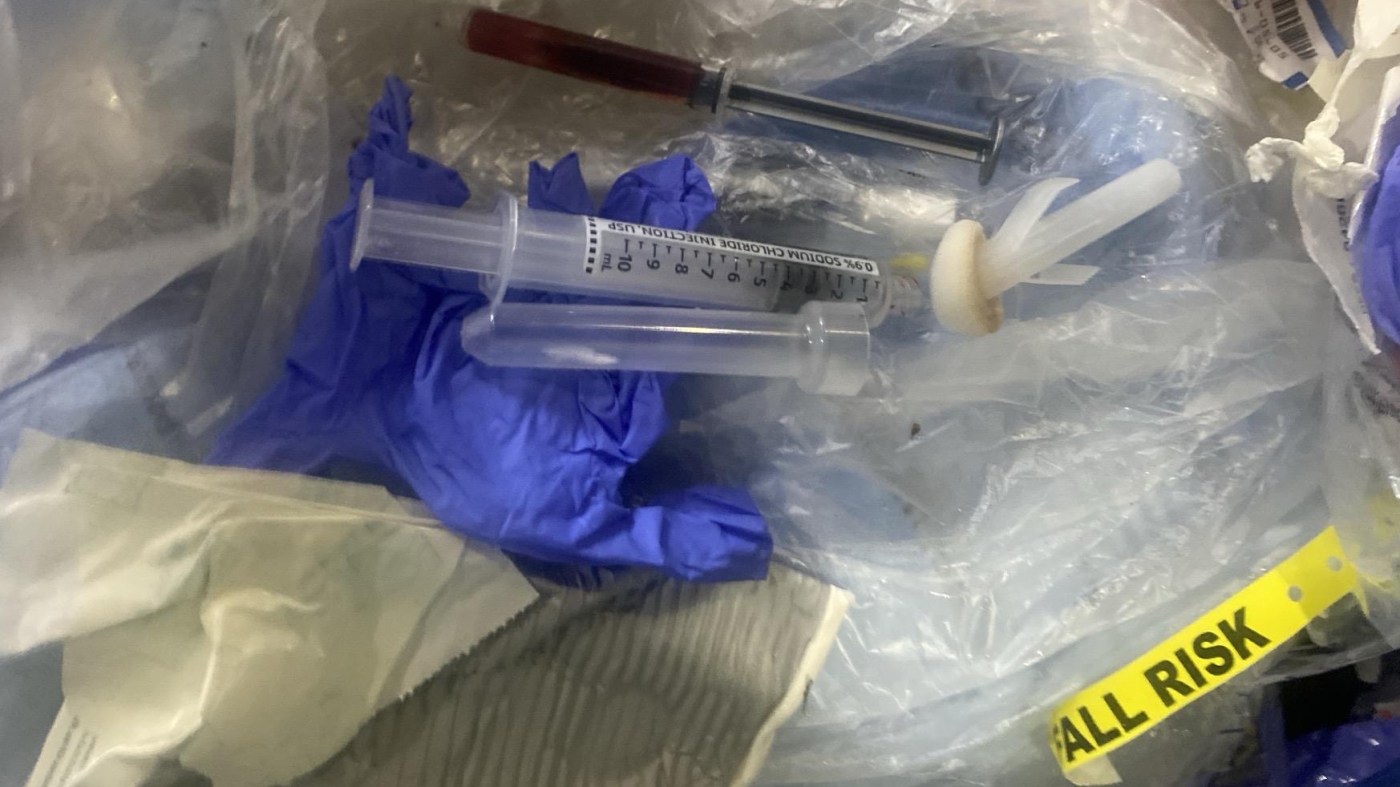
Blood-soaked bandages, bodily fluids and body parts have been found mixed in with waste and recycling products at the Ramsey/Washington Recycling and Energy Center in Newport, according to the facility.
Medical facilities in the area have been improperly disposing of the infectious waste, according to facility management. Those items, as defined by the Minnesota Pollution Control Agency, include any sort of waste “that poses a human health and environmental risk due to its biological characteristics.” That includes bodily fluids, tissues and body parts — all of which the Recycling and Energy Center said it has received.
“This is unacceptable and poses significant health and safety hazards to waste workers, including those at the R&E Center,” according to a statement put out this week. “It also poses risks to staff at the medical facilities where this material is being improperly managed.”
Under Minnesota law, infectious waste is prohibited from being sent to municipal waste facilities, according to the Newport facility. Medical centers that accumulate infectious waste are supposed to separate the waste, store it away properly and dispose of it using authorized methods and vendors in accordance with their infectious waste management plan.
Alongside the health and safety risks, finding infectious waste in the mix slows down operations for workers — and can be very disturbing.
“Infectious waste is dangerous because it can contain pathogens, harmful chemicals, and sharps that can transmit diseases and contaminate the environment,” Recycling & Energy Center director Sam Holl said. “Proper management and disposal of this type of waste is critical for the mental and physical health and safety of our staff, their families and our environment. ”
Who’s to blame?
At least 12 major hospitals and outpatient clinics in the region have not followed the proper protocol, according to the Newport facility. Management declined to name which medical facilities have contributed as investigations are ongoing through the Minnesota Pollution Control Agency and the Minnesota Department of Health.
“Most facilities we have reached out to have expressed the intent to properly dispose of infectious waste and have indicated that they are working on plans to correct procedures,” Holl said. “Facilities have also been in contact with the MPCA, MDH, and their waste haulers. However, this remains an ongoing issue.”
When the Recycling & Energy Center receives a load that looks to contain infectious waste, it notifies the medical facility, along with the Pollution Control agency, the Department of Health, the waste hauler and counties at the same time. But that routine has not been adequate.
“The usual notifications do not appear to be curbing the flow of infectious waste we are receiving,” Ramsey County Commissioner MaryJo McGuire said in the facility’s statement.
McGuire also serves as board chair for the Ramsey/Washington Recycling and Energy Center.
“The frequency of these incidents has created significant hazards, emotional strain and increased operational costs,” McGuire said. “Our shared priority must be protecting staff safety while maintaining compliance with all standards.”
‘Eager for their attention’
Related Articles
New student loan rule could dissuade people from advanced nursing degrees
Nebraska plans to be the first state to implement Trump’s new Medicaid work requirements
Teen drug use remains low, but survey finds small rise in heroin and cocaine use
When measles hit West Texas, school absences soared and it wasn’t just sick kids who were out
Like many holiday traditions, lighting candles and fireplaces is best done in moderation
According to Holl, all of the medical facilities that handle infectious waste have management plans in place. Those plans are not being followed consistently.
Holl said he is unsure why there has been an uptick in deliveries of infectious waste since November.
“Proper management and disposal of infectious waste requires sustained focus by medical facilities,” Holl said. “We are eager for their attention to this matter, both now and in the future. … Proper disposal and compliance will require increased, ongoing monitoring and training at these facilities.”
The Recycling and Energy Center is working with the Minnesota Pollution Control Agency and the Minnesota Department of Health to address the issue.
Leave a Reply